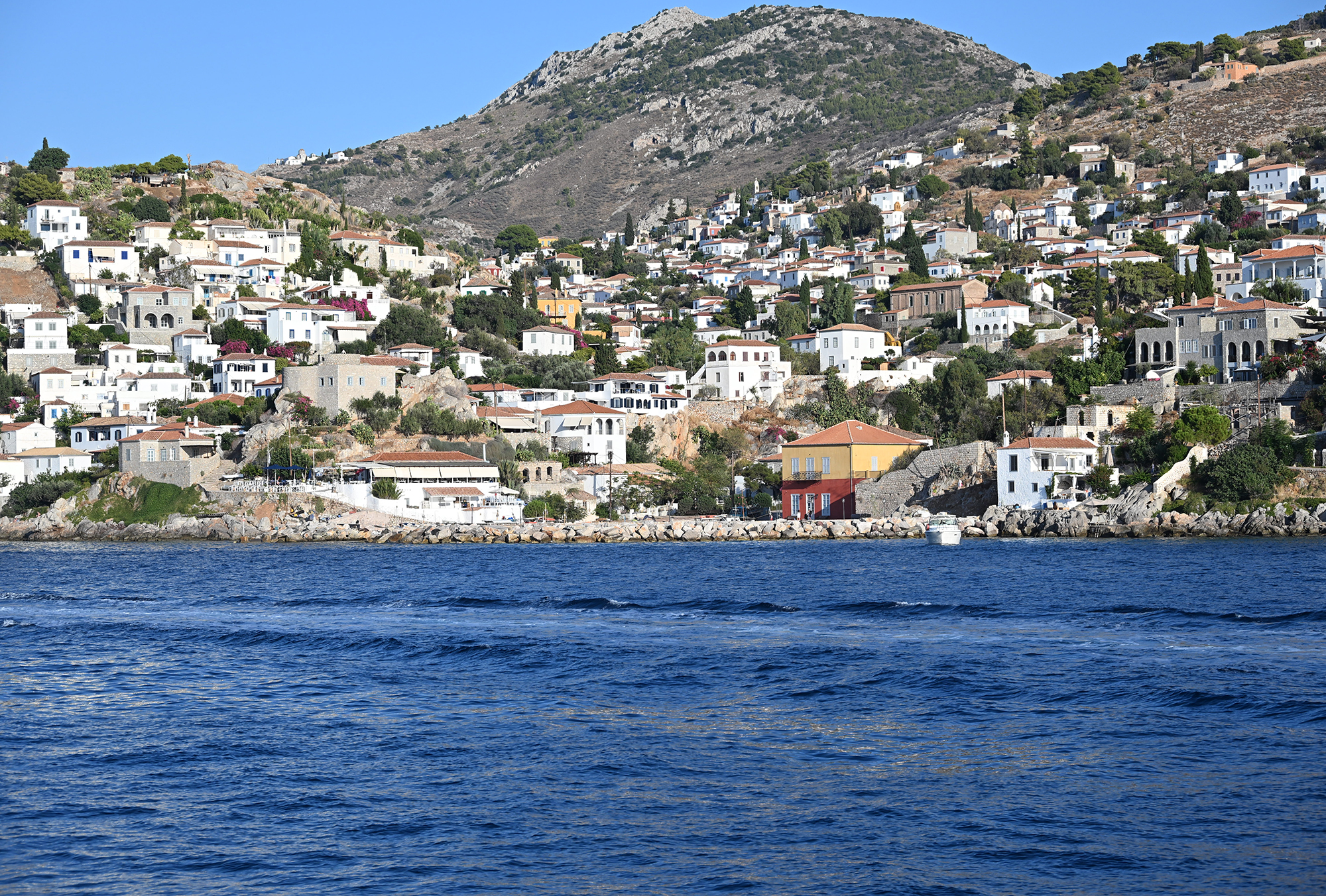
It’s no secret that Hydra is not a big place so, when you visit often, and talk/write about it, you will unavoidably start to repeat yourself. I tried to focus on new things that shaped this year’s experience, but when I revisited older texts, I found similar information here and there. If you’re here to get to know more about the island, feel free to check out previous entries as well- they span five years, some of the details now obsolete, some still relevant. If you find any of it useful, I feel that my job is done.
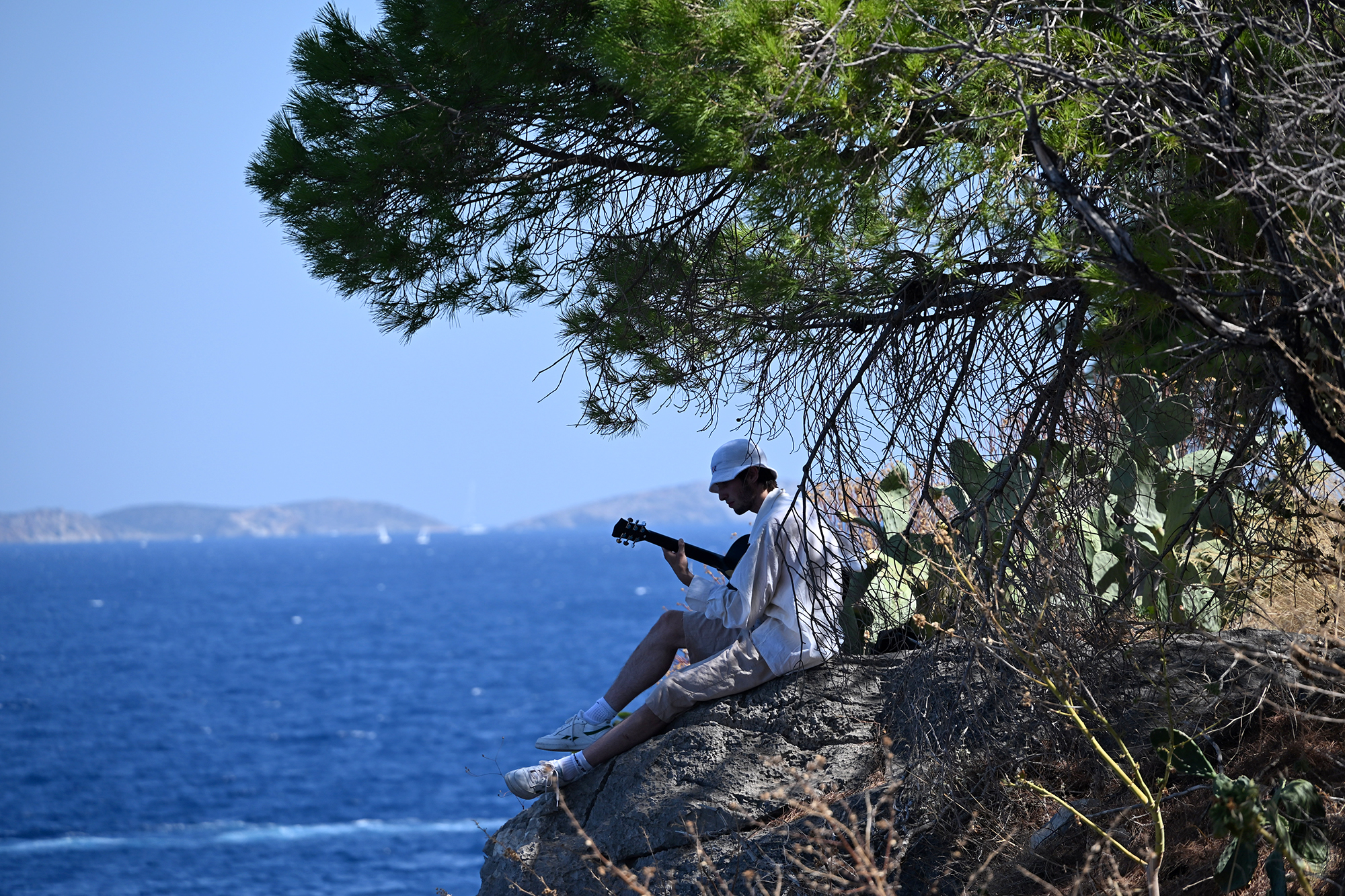
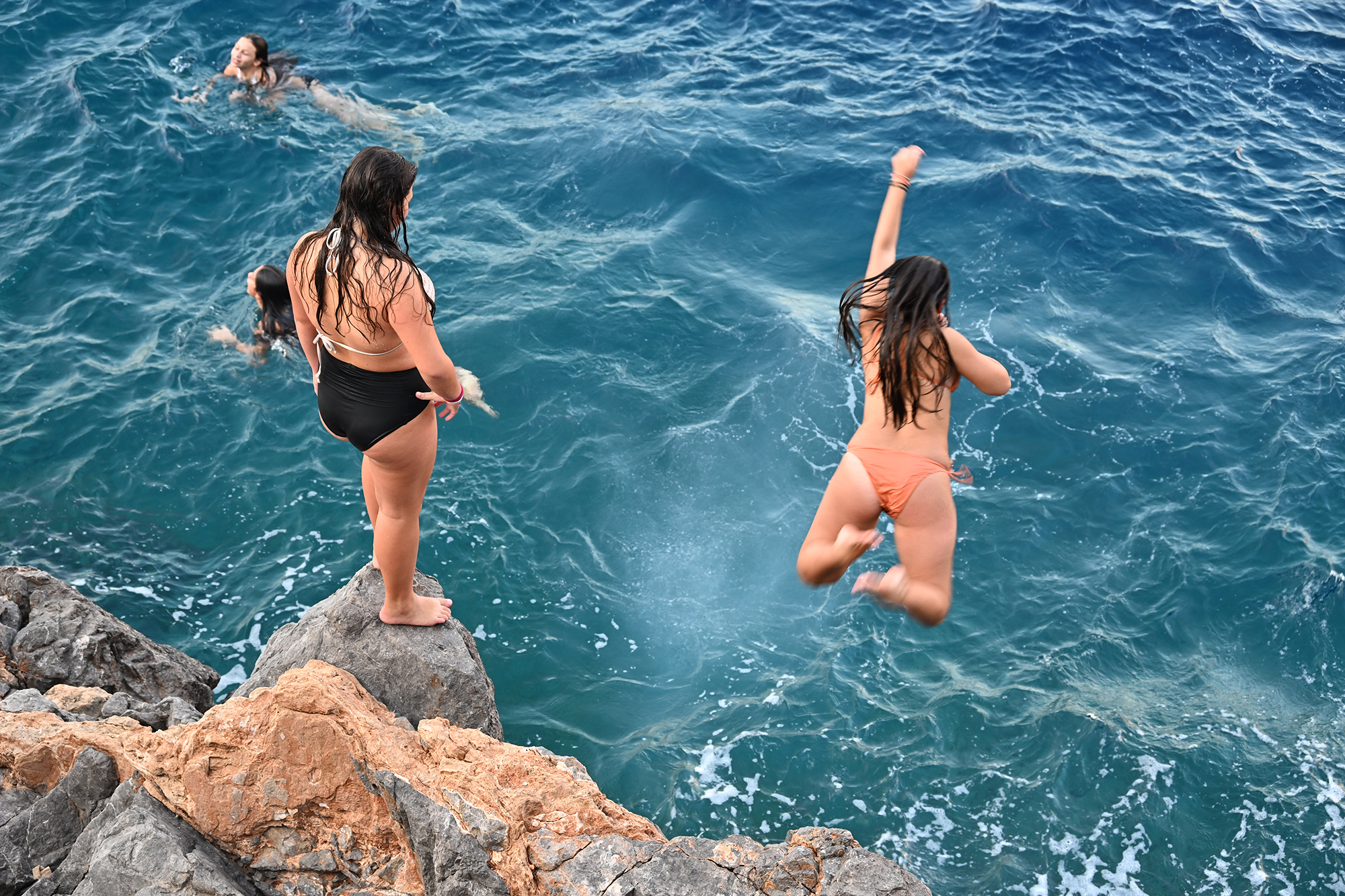
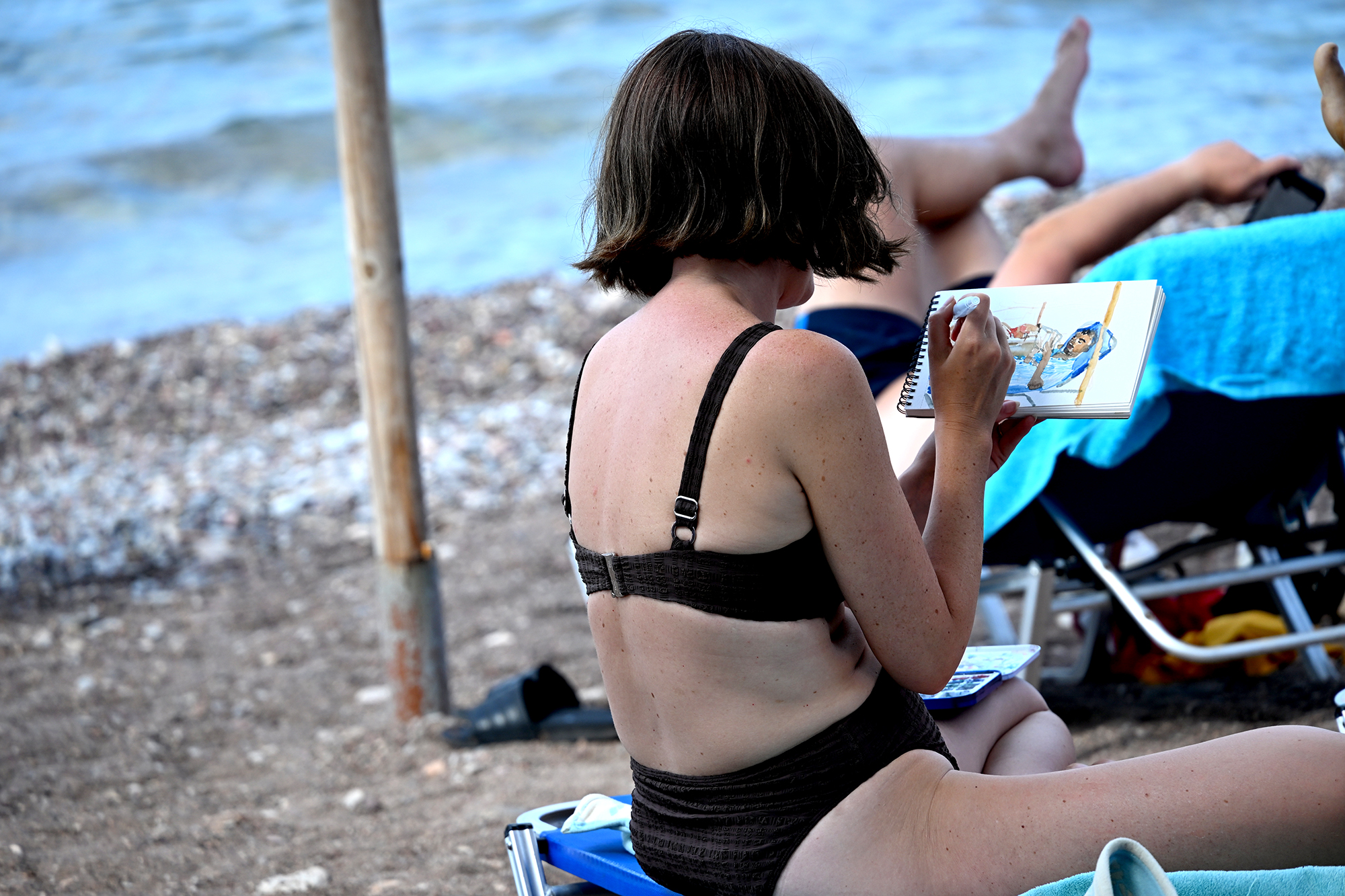
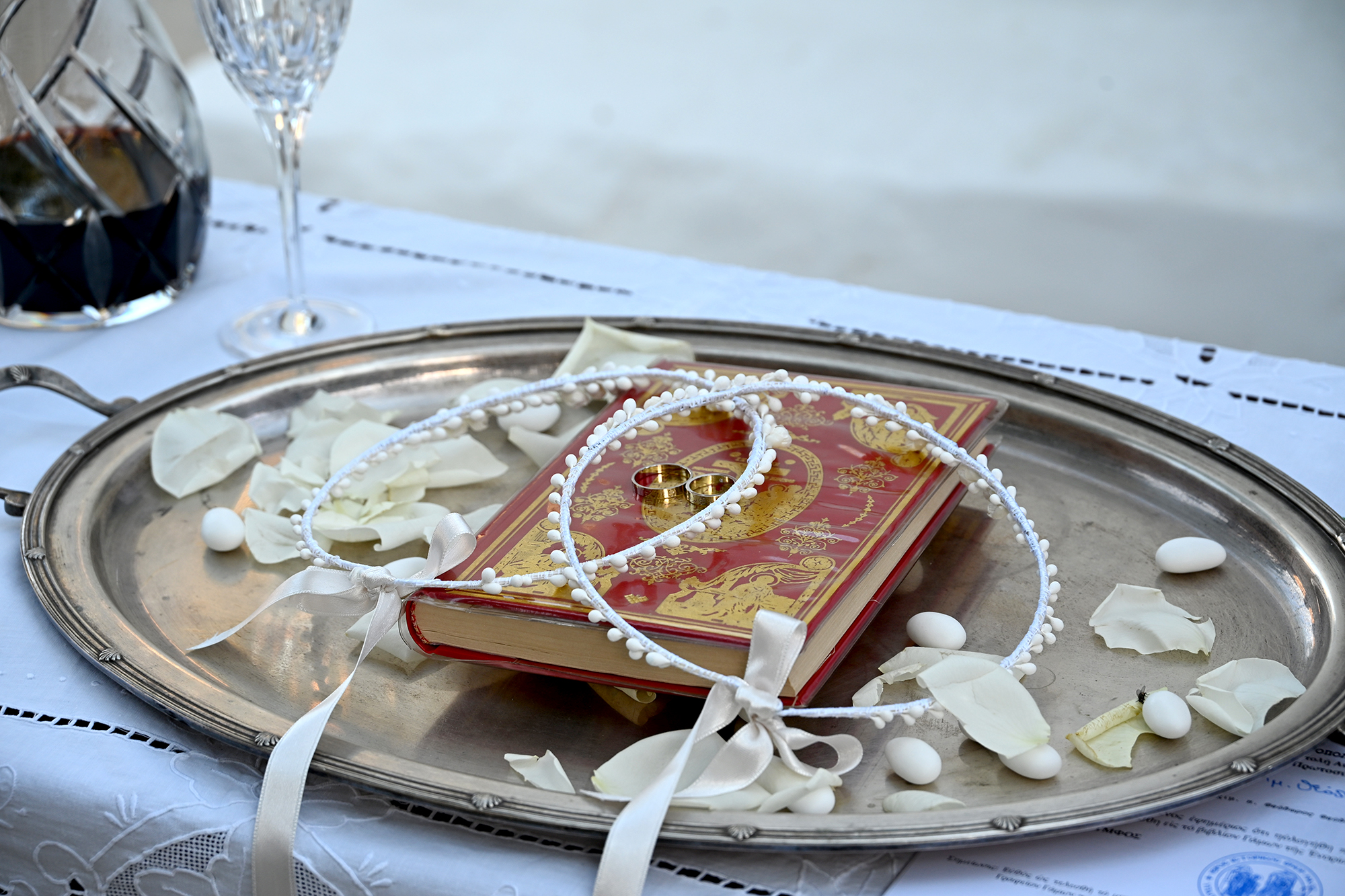
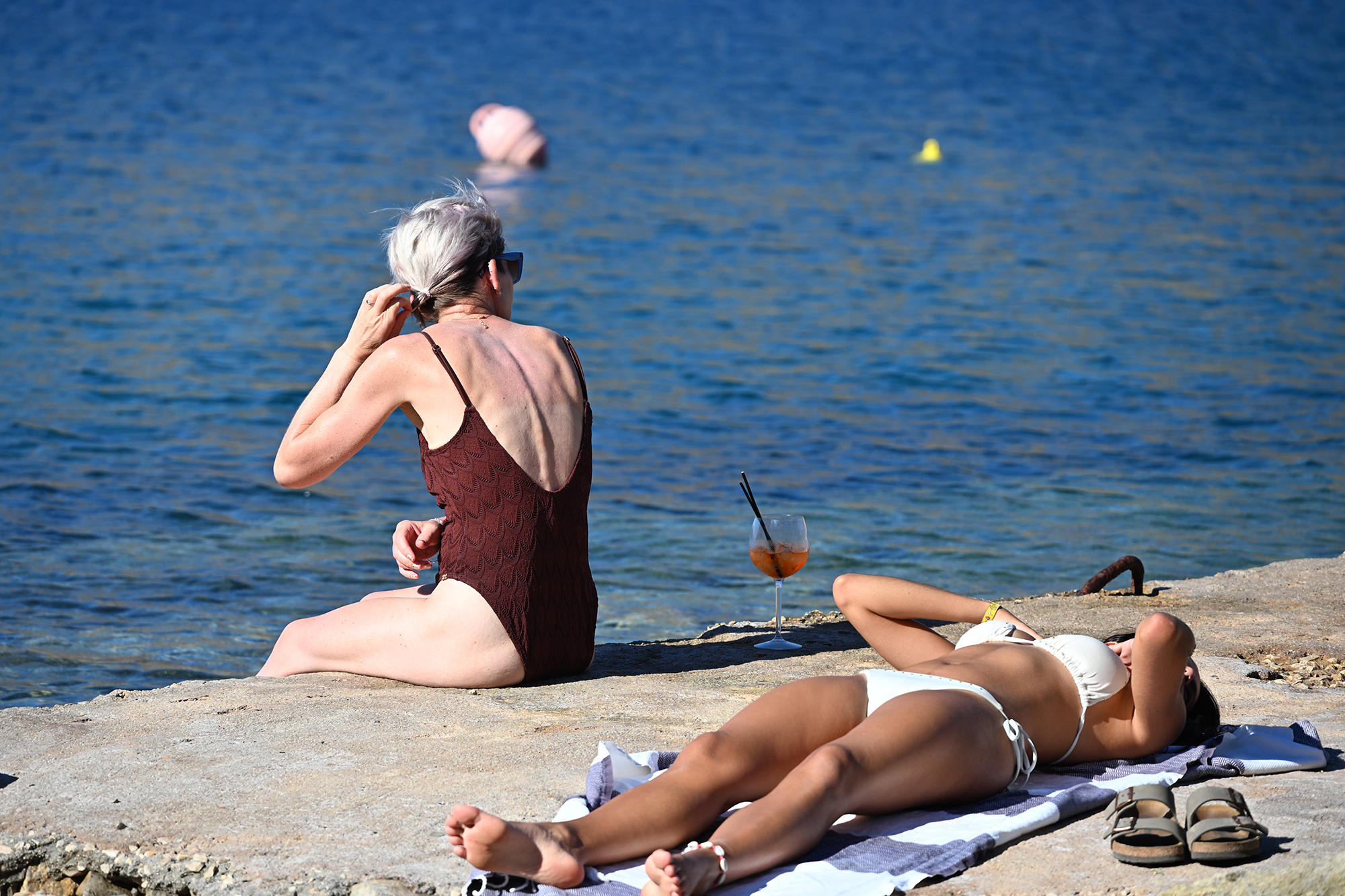
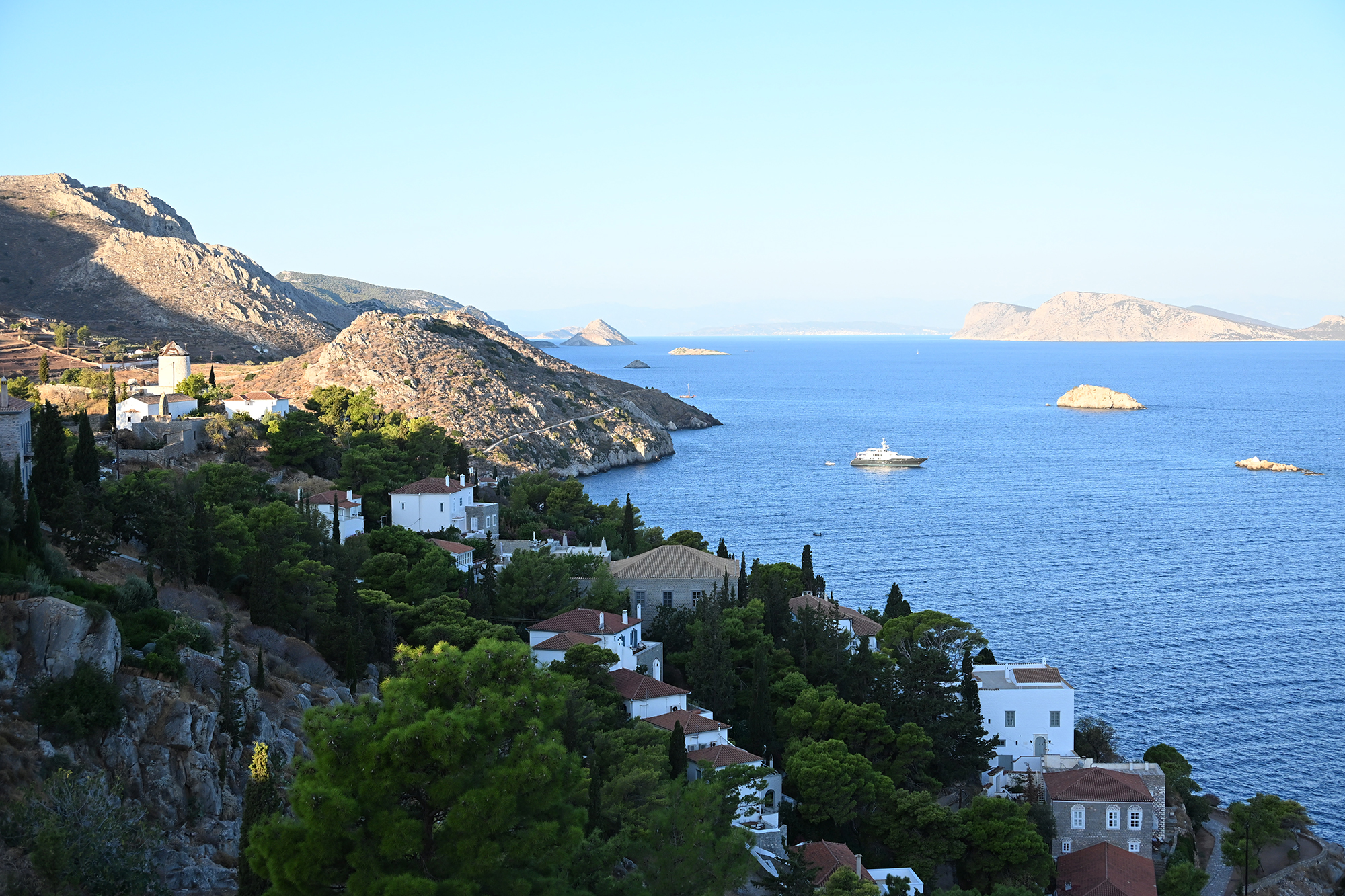
Weather-wise, this might have been the best stretch of any of our visits- for several days, not a single cloud could be seen, prompting a Frenchwoman reclined on a sunbed to exclaim that this is what the French expression ‘beau fixe’ was invented for. It’s quite likely that someone may have painted her like one of their French girls- the amount of people sketching, writing and playing their guitars in random spots on Hydra never diminishes. Quite to the contrary, perhaps due to the weather, the island felt the most crowded we’ve ever experienced it, especially on the first September weekend, which had about one wedding per chapel, and there’s hundreds of them on the island. Sunbeds, and more specifically their prices, seemed to drive people crazy, especially the French and Italians with an anarchist vein. I do understand some of the rationale behind questioning sunbed prices, especially the more extortionate ones, but I do need to underline to the revolutionary ladies and gentlemen that they won’t defeat the evils of capitalism by not paying one hard working Greek and choosing to demonstratively wallow in the sand on their towels instead.
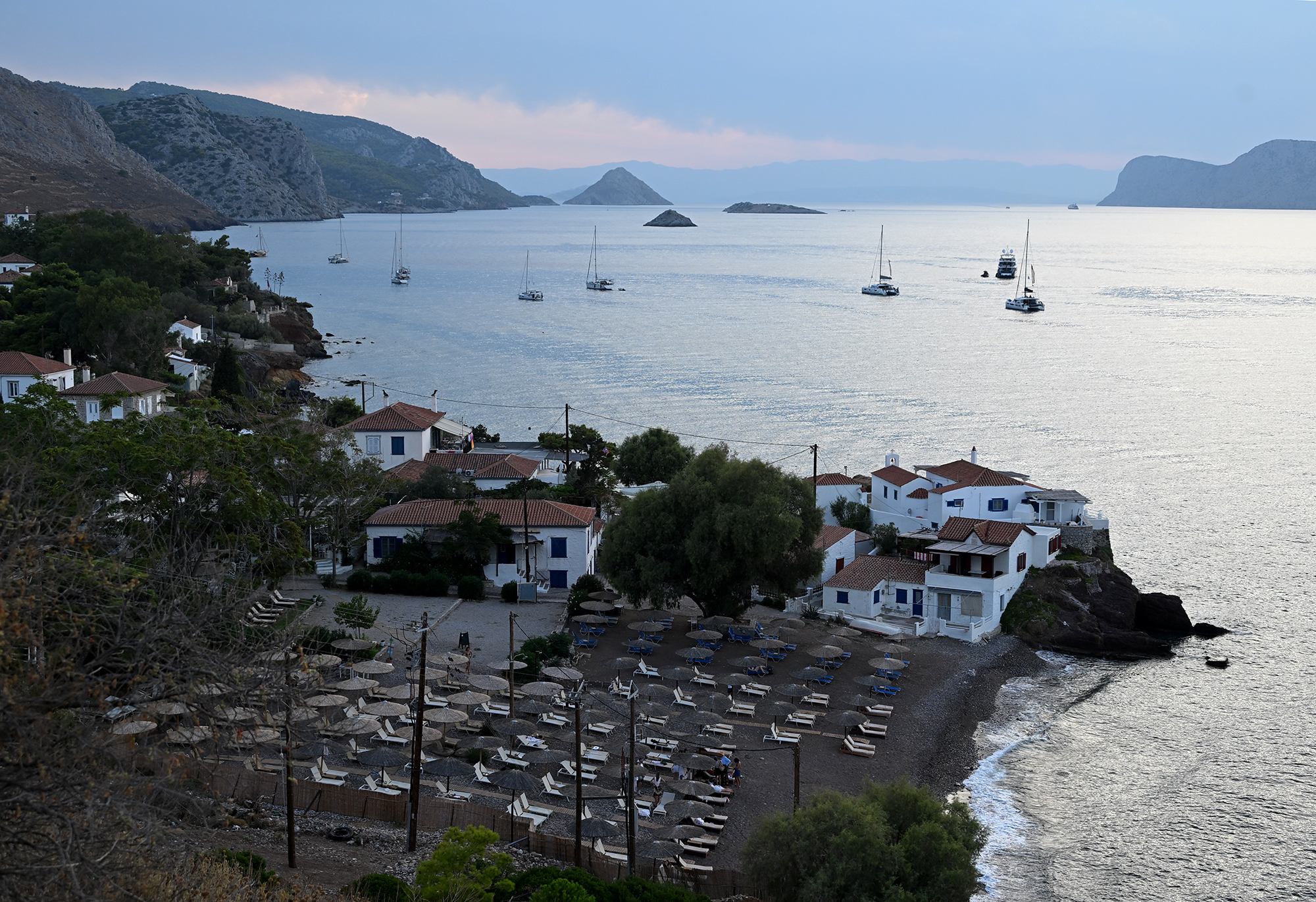
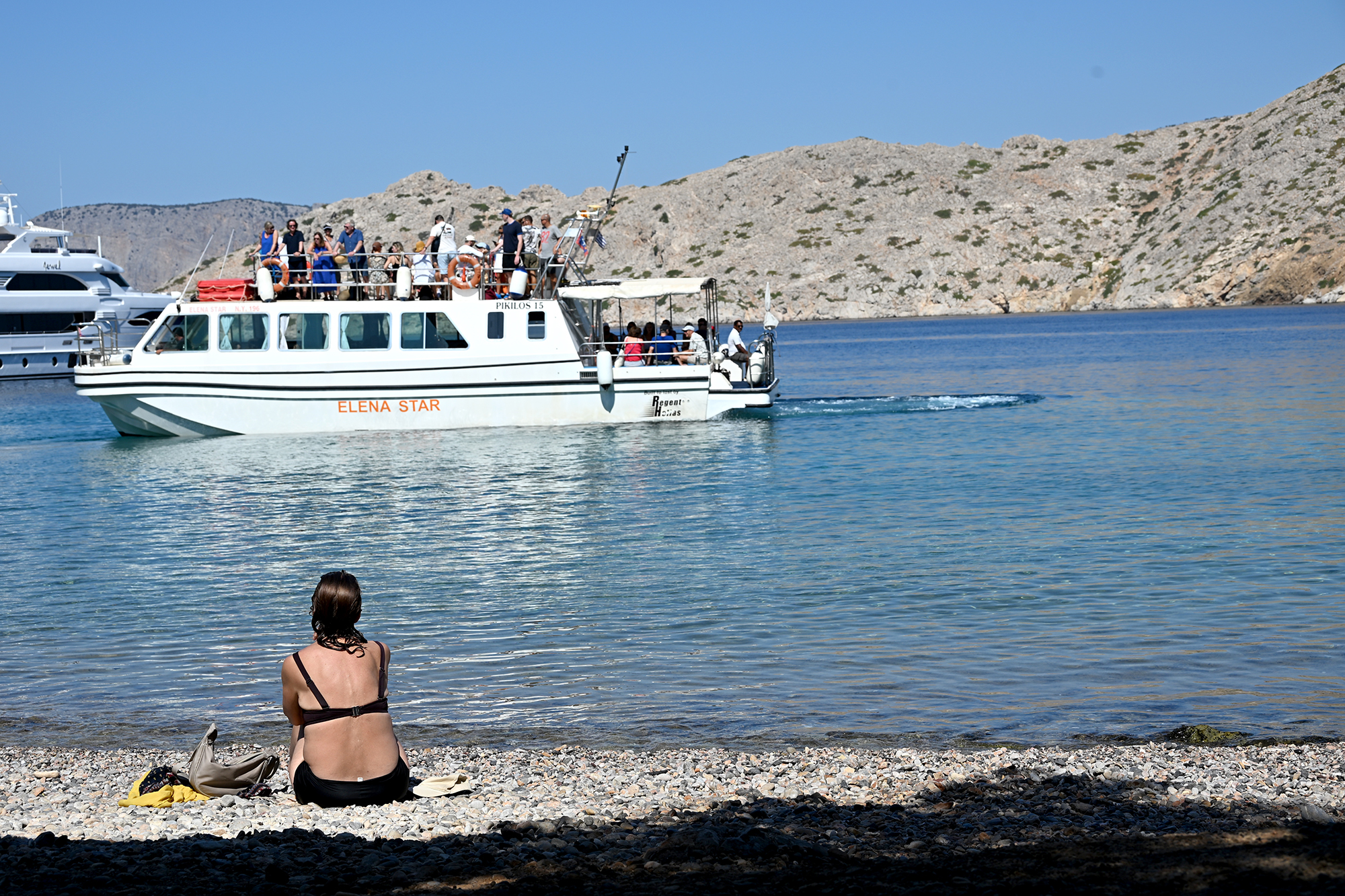
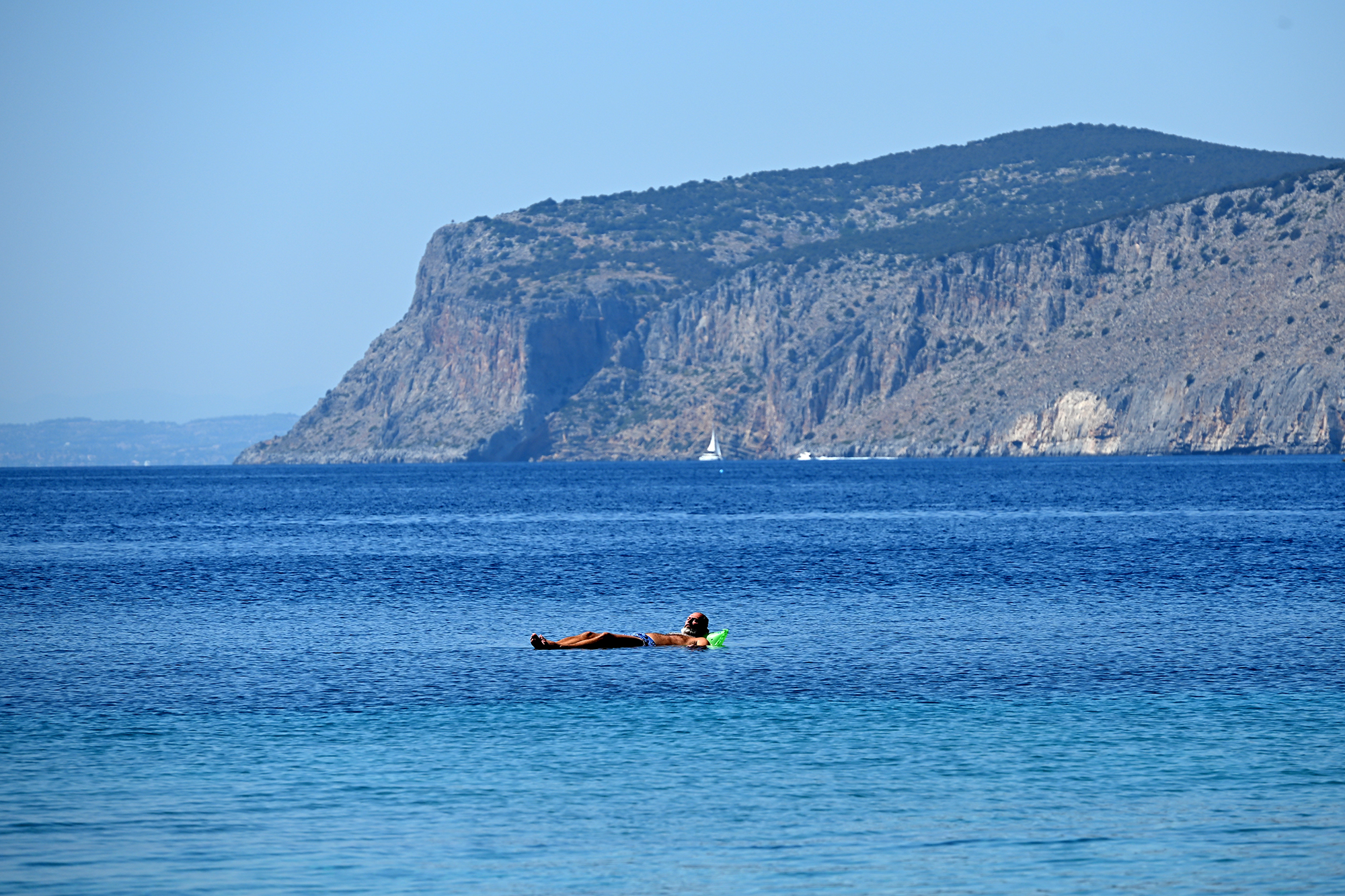
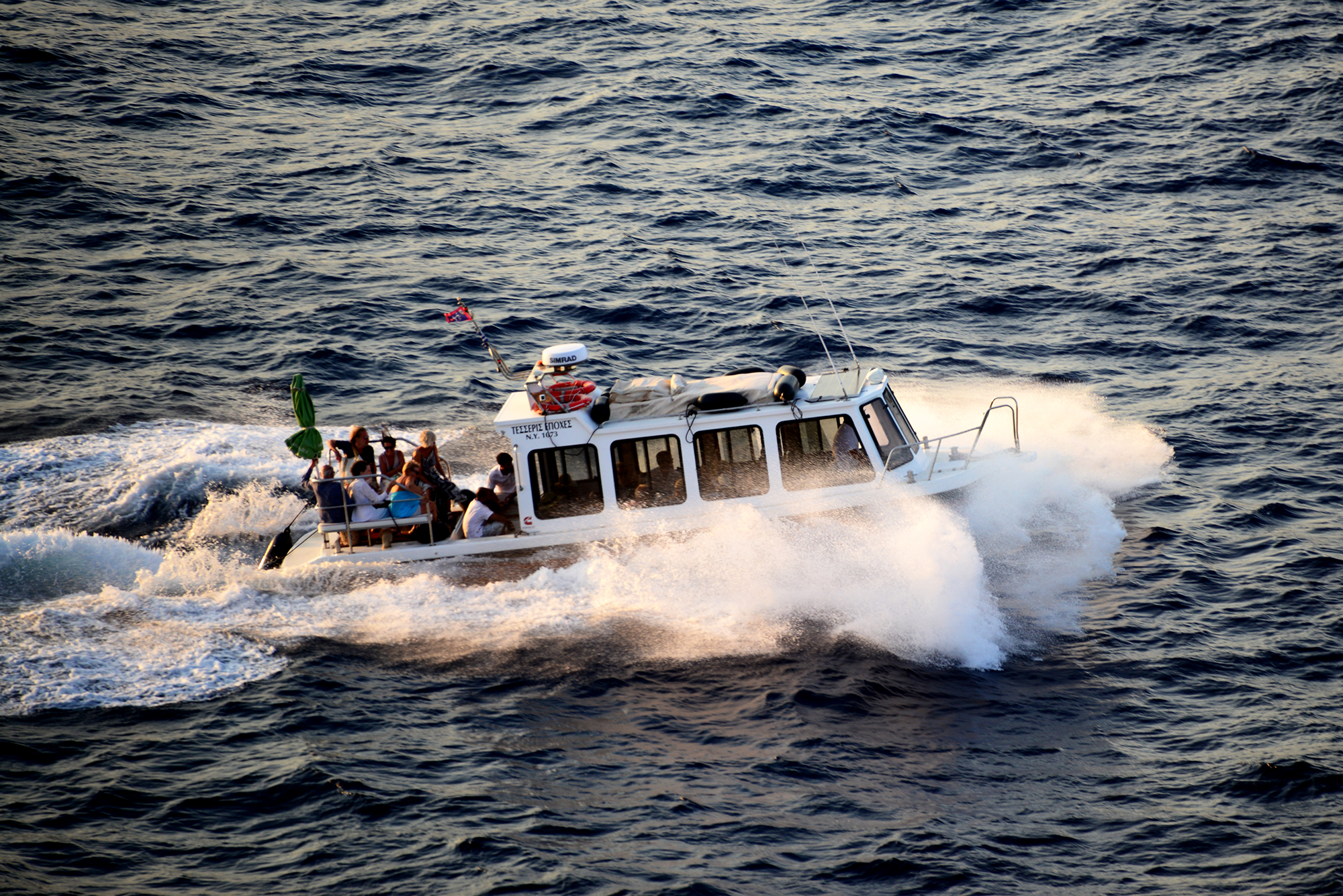
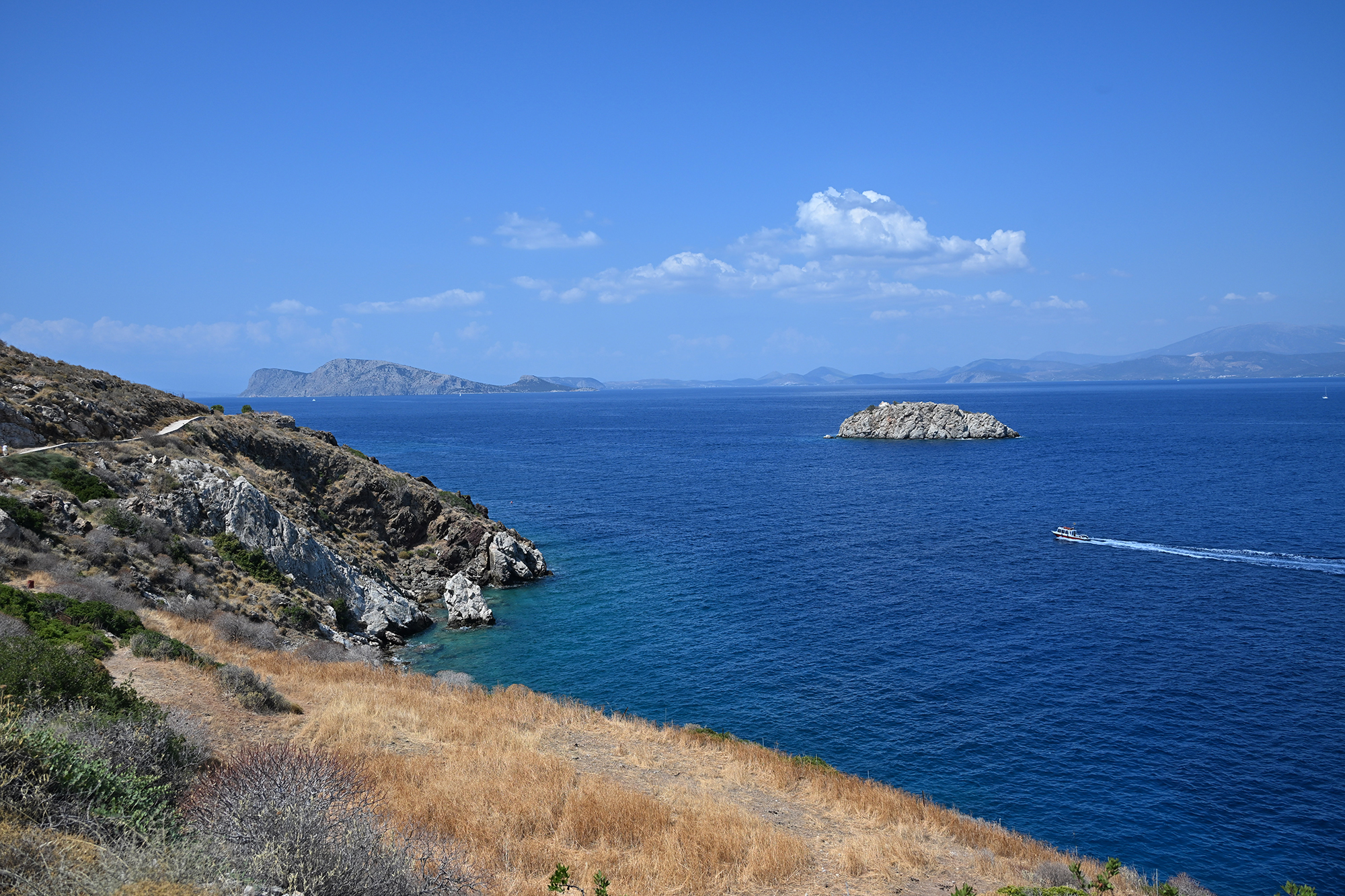
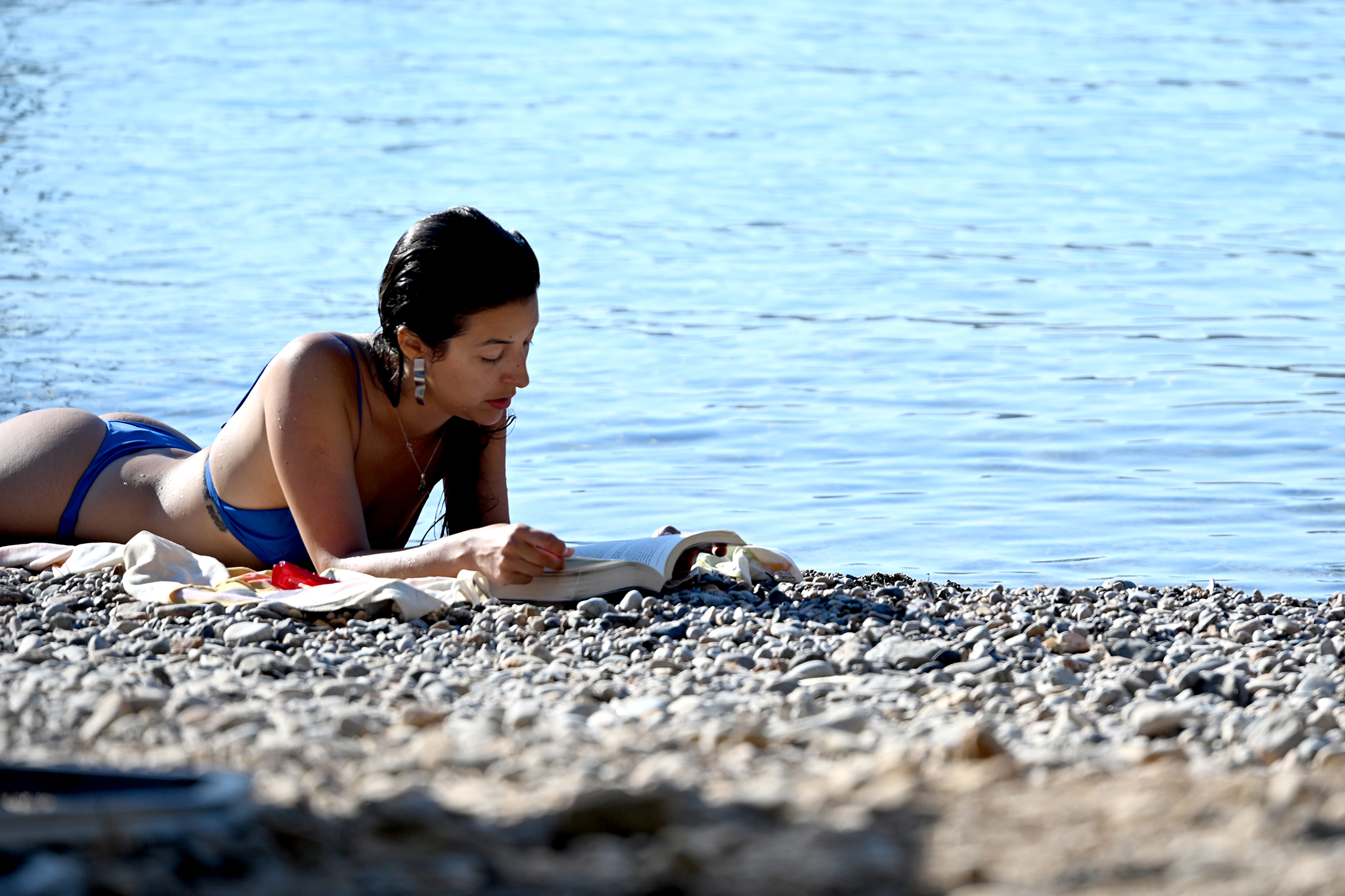
The prices, for the record, were from 20 to 30 euros for the pair of sunbeds plus an umbrella- we did not go to any of the more ‘luxury’ beaches, such as the Four Seasons or the ‘rich’ side of Mandraki, though it has to be mentioned that Mandraki in general has seen a price hike, so the best budget friendly option remains Vlychos. We also ventured to Bisti beach- a round trip with sunbeds and some snacks (there is no restaurant at Bisti, only a small bar that serves sandwiches and salads) will set you back around 50 euros per person, and you have to factor in being ‘stuck’ until the boat returns for you in the afternoon. We were there on a slow weekday, so only about half of the sunbeds were in use, and the water was calm and warm, so it felt very much worth it, but very busy days in high season are likely overcrowded. The other ‘secluded’ beach, Agios Nikolaos, which is bigger, might be a better bet in July and August, the same boat can take you to either of the locations. It’s also worth mentioning that you can choose- as on any of the beaches on Hydra, to lie on your towel and bring your own snacks, in which case you’ll only need to pay for the boat, which is 17 euros, in the current season, for the round trip. There is a hiking route connecting Bisti to the port, and it’s commended as being highly scenic, but the non stop time to reach the beach is estimated at around four and a half hours, something to think twice about in the hot season.
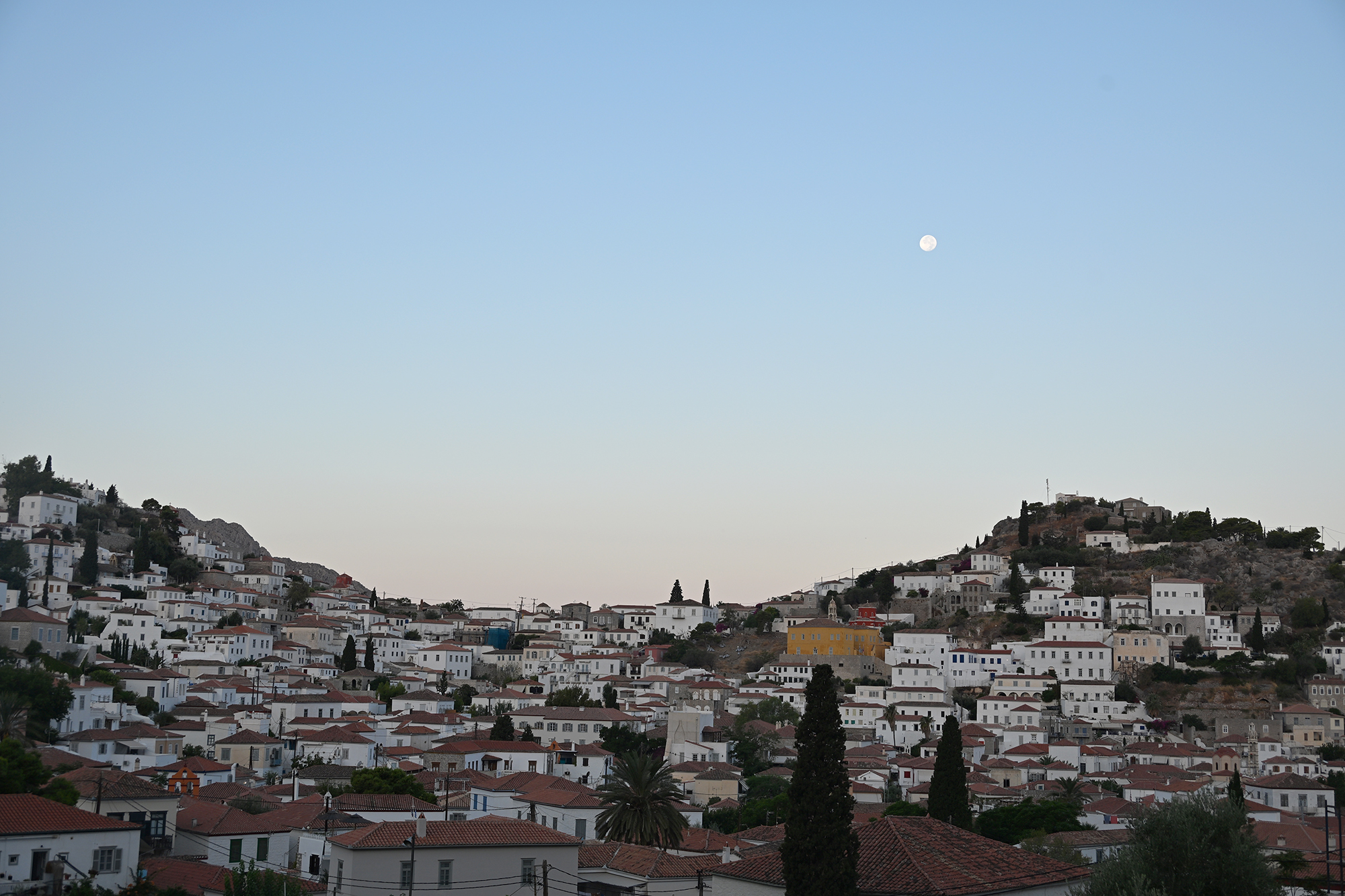
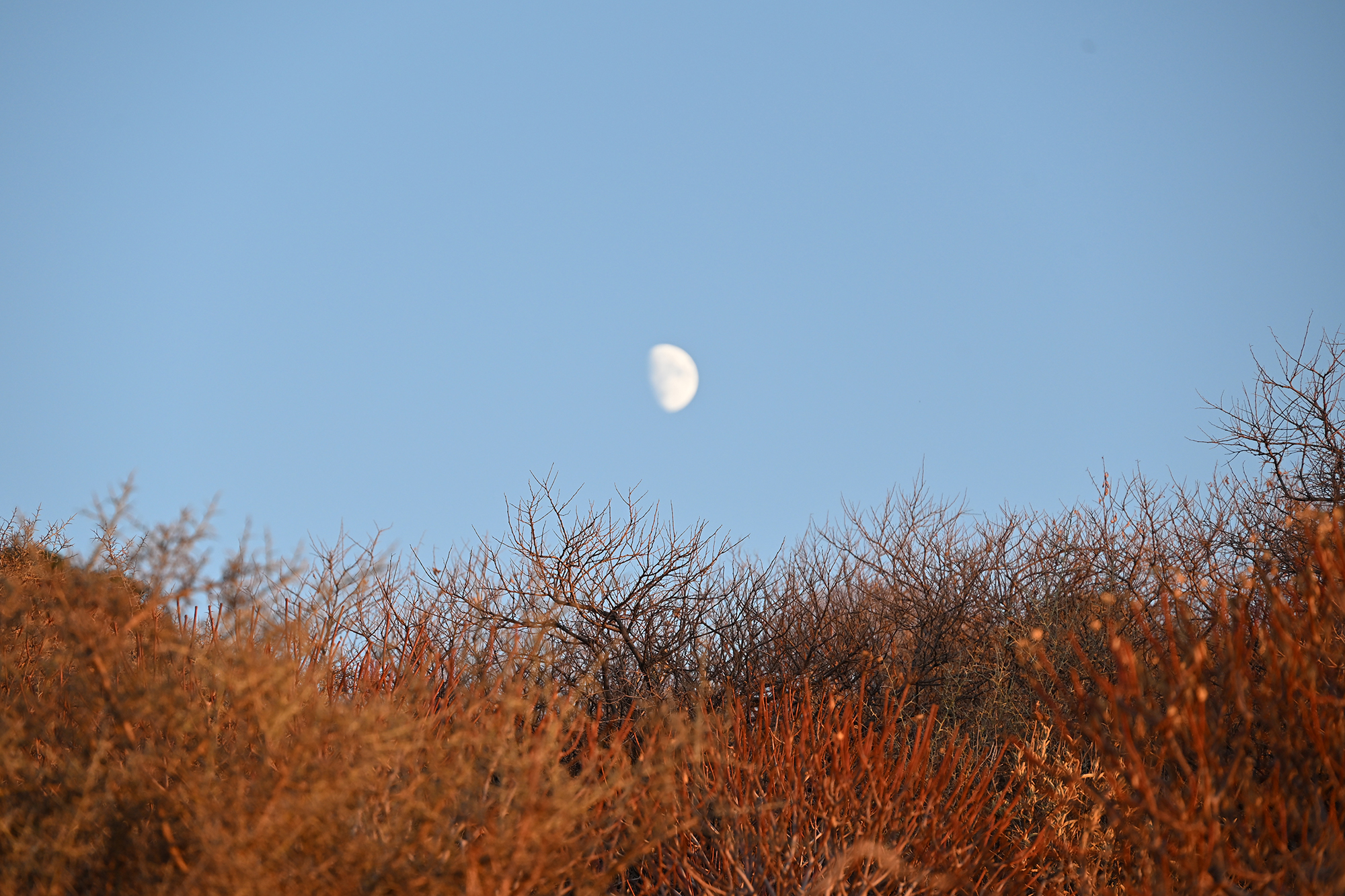
There was also a total eclipse of the moon on September 7, which we did not see, because at the time, compared to the port, the moon was ‘on the other side’ of the hill, something which locals knew, but we didn’t. I realised I would not be able to predict where the moon would be at a given time in Arad or Budapest either. Our nights are drowned in electric lights, and we rarely look at the sky. So, I took to following the heavens, at night. I studied how the moon shifted her course over the two weeks, how, if I woke at different times, the constellations would have moved as well. I tried to figure them out but could only do so with the help of my phone, still uncertain if I got them right. I had a great reading companion for this endeavour- Charlotte Higgins’s Greek Myths, for the night sky is also alive with the tales of Ancient Greek goddesses and heroes. It’s an inexhaustible topic, too, and Higgins manages to weave a new twist into the stories.
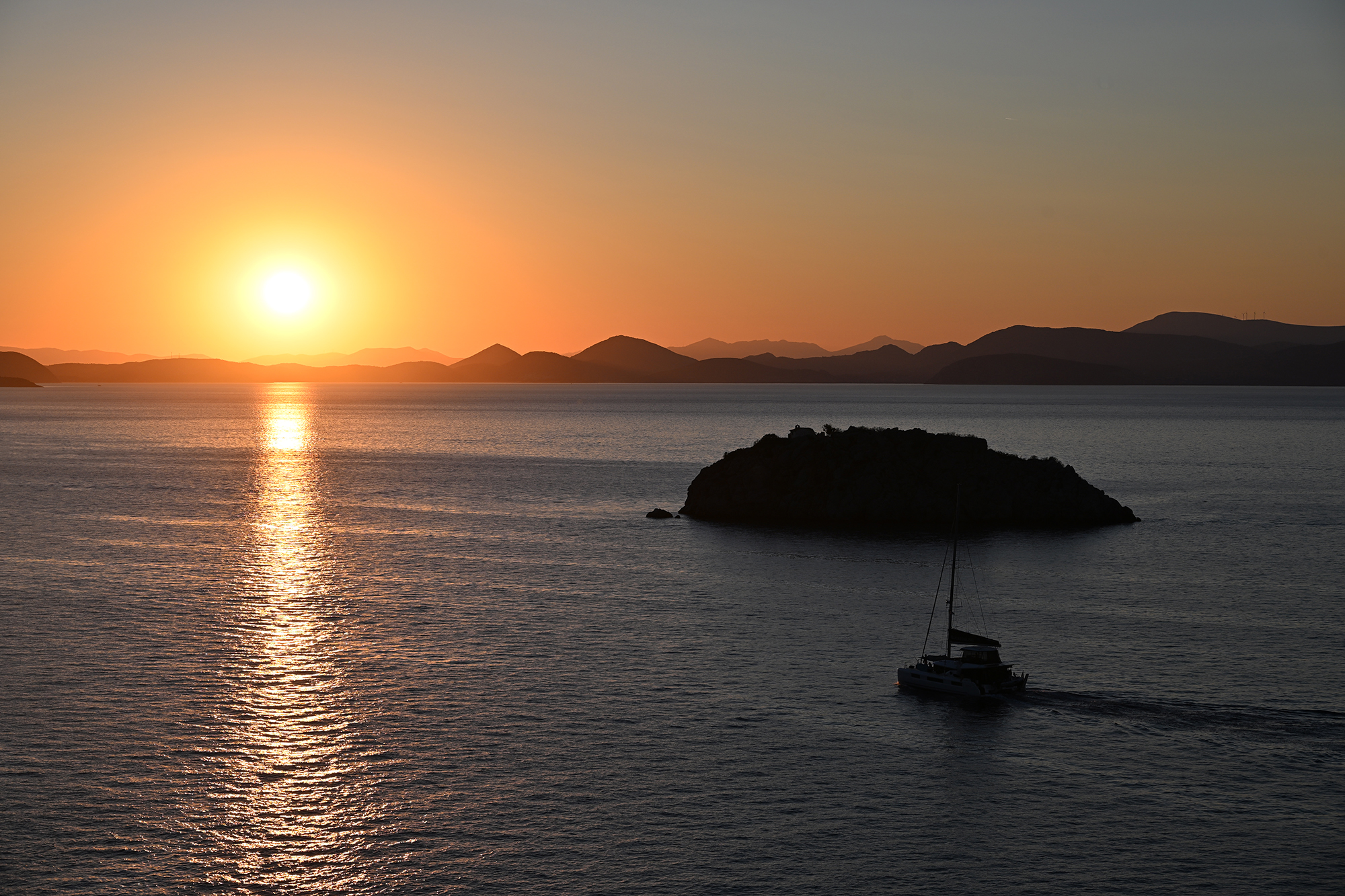
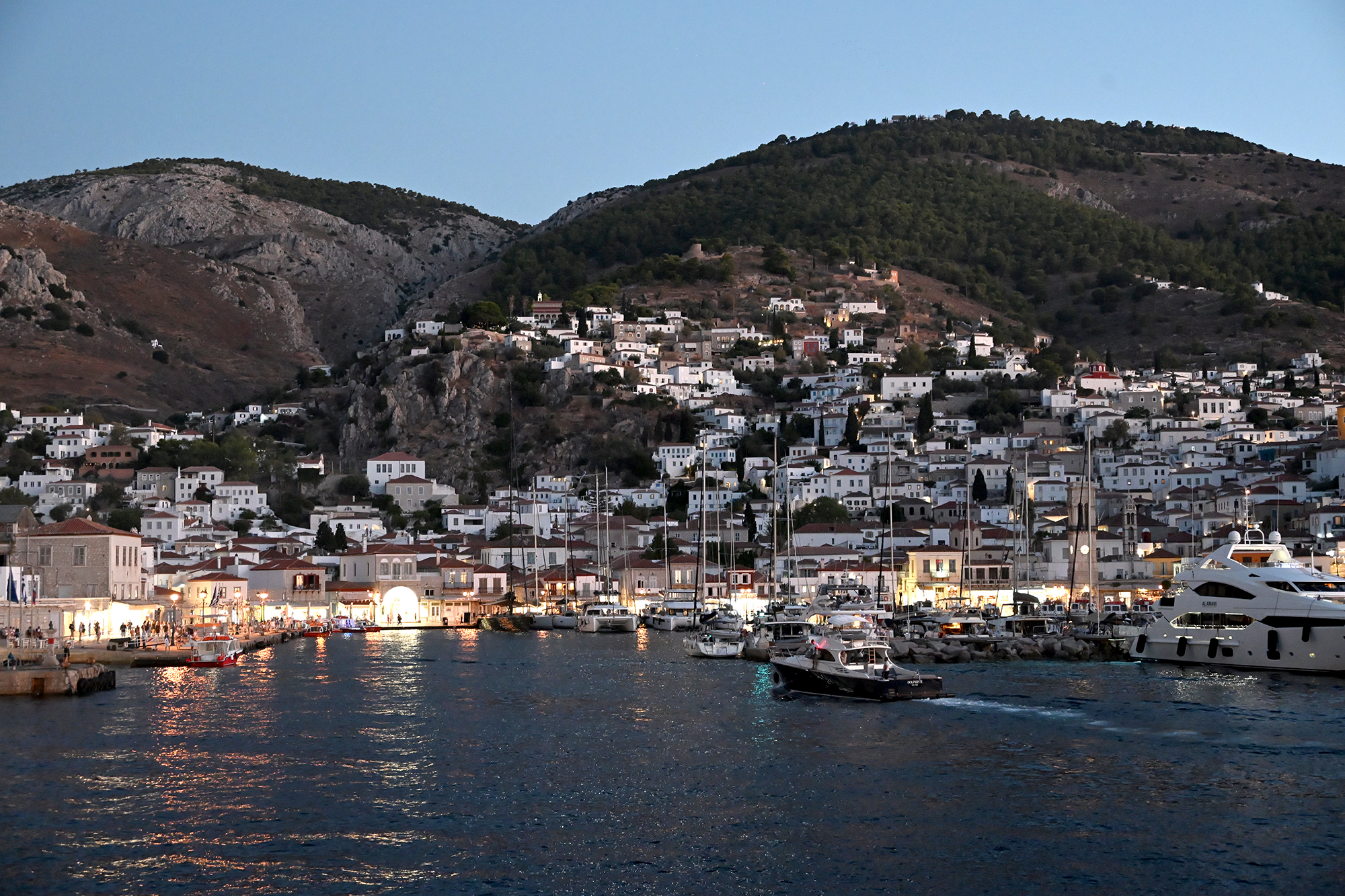
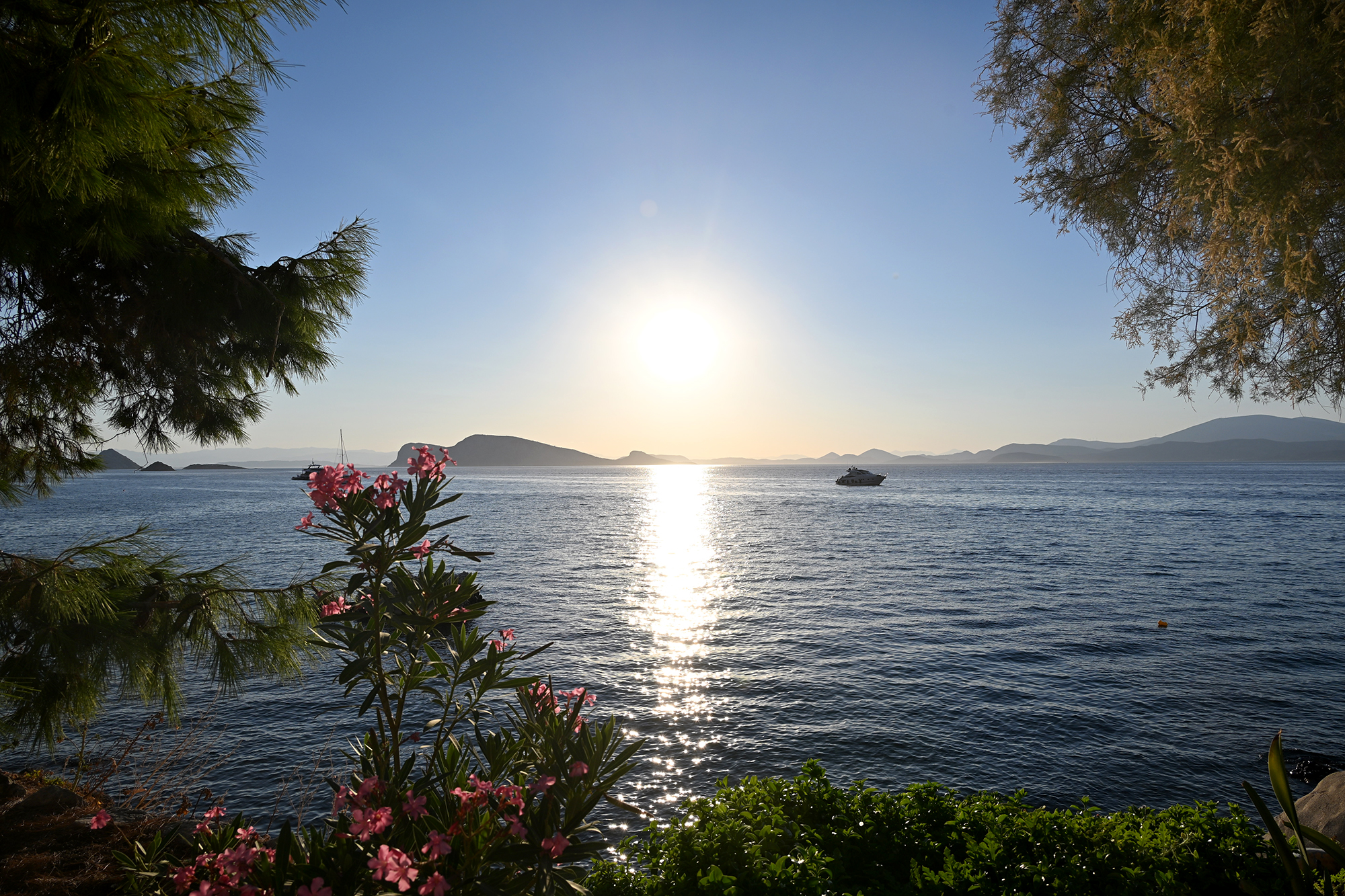
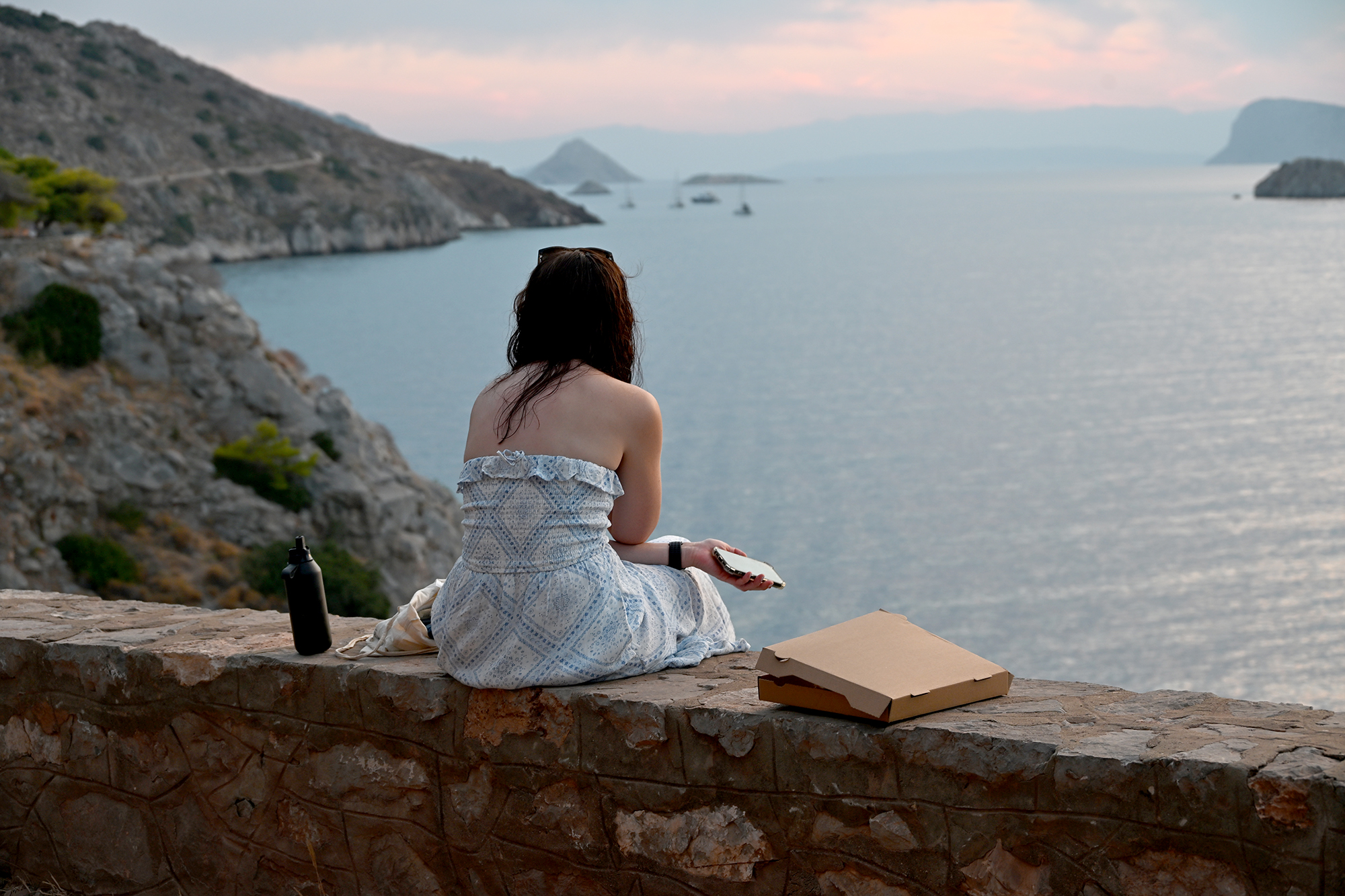
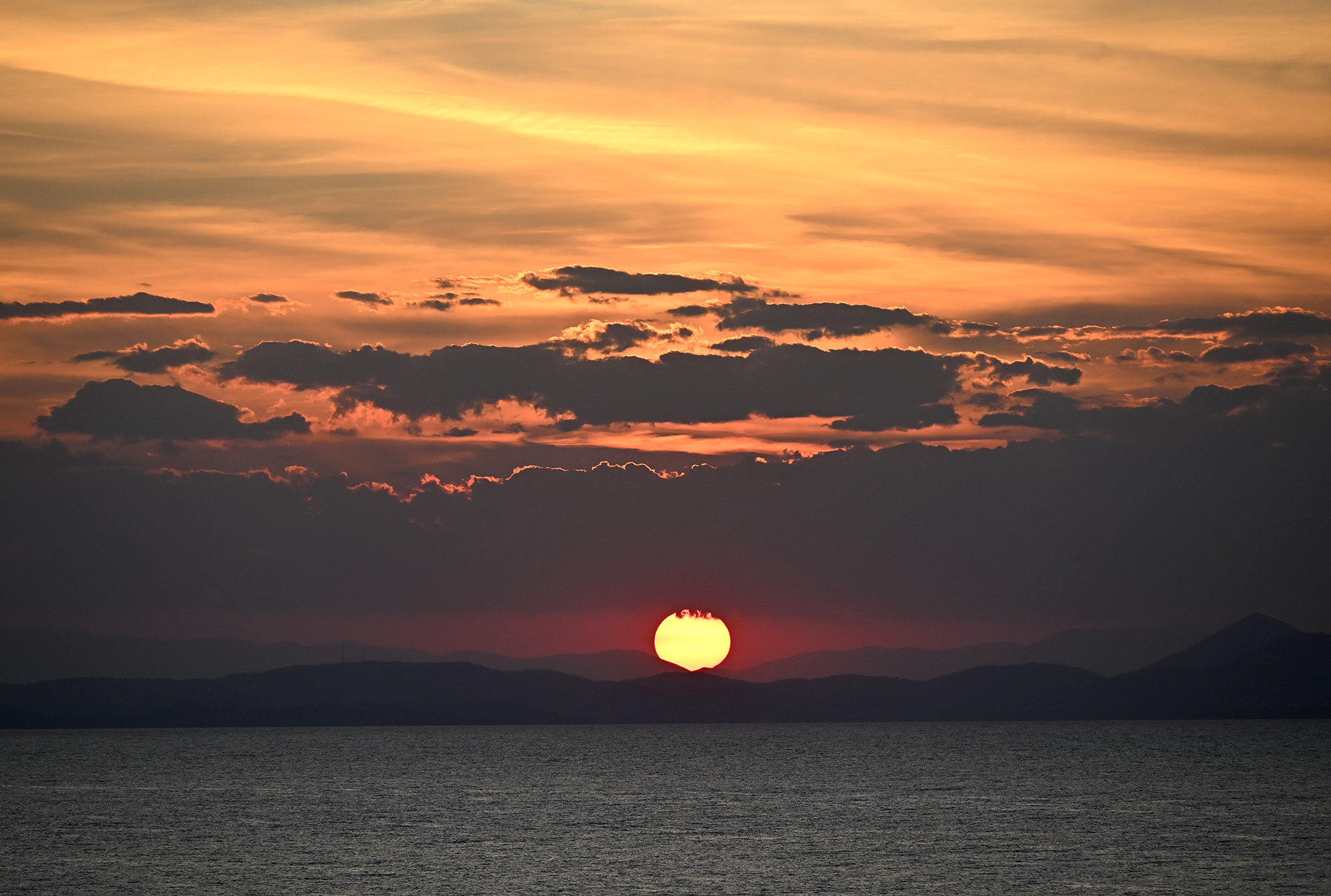
If you wonder why I would wake up randomly at night while relaxing on a picture perfect island, it’s because my brain has some browsers that are never shut, for example the one wondering from what point in time we could call homo sapiens humans ‘like us’. Some reading revealed that this would be roughly 12.000 years ago, known as the Neolithic revolution, when agriculture was invented. And the outcome of this train of thought was that for about 11.850 of these years our nights were completely dark, and if you sat on the spot that is now Sunset restaurant, from where you see the lights of the mainland and of the boats making their crossing and the blinking signals of planes descending towards Athens airport, you would, on moonless nights, see nothing but the dark stretching across sea and land, and our brains are likely still reeling from this sudden loss of night.
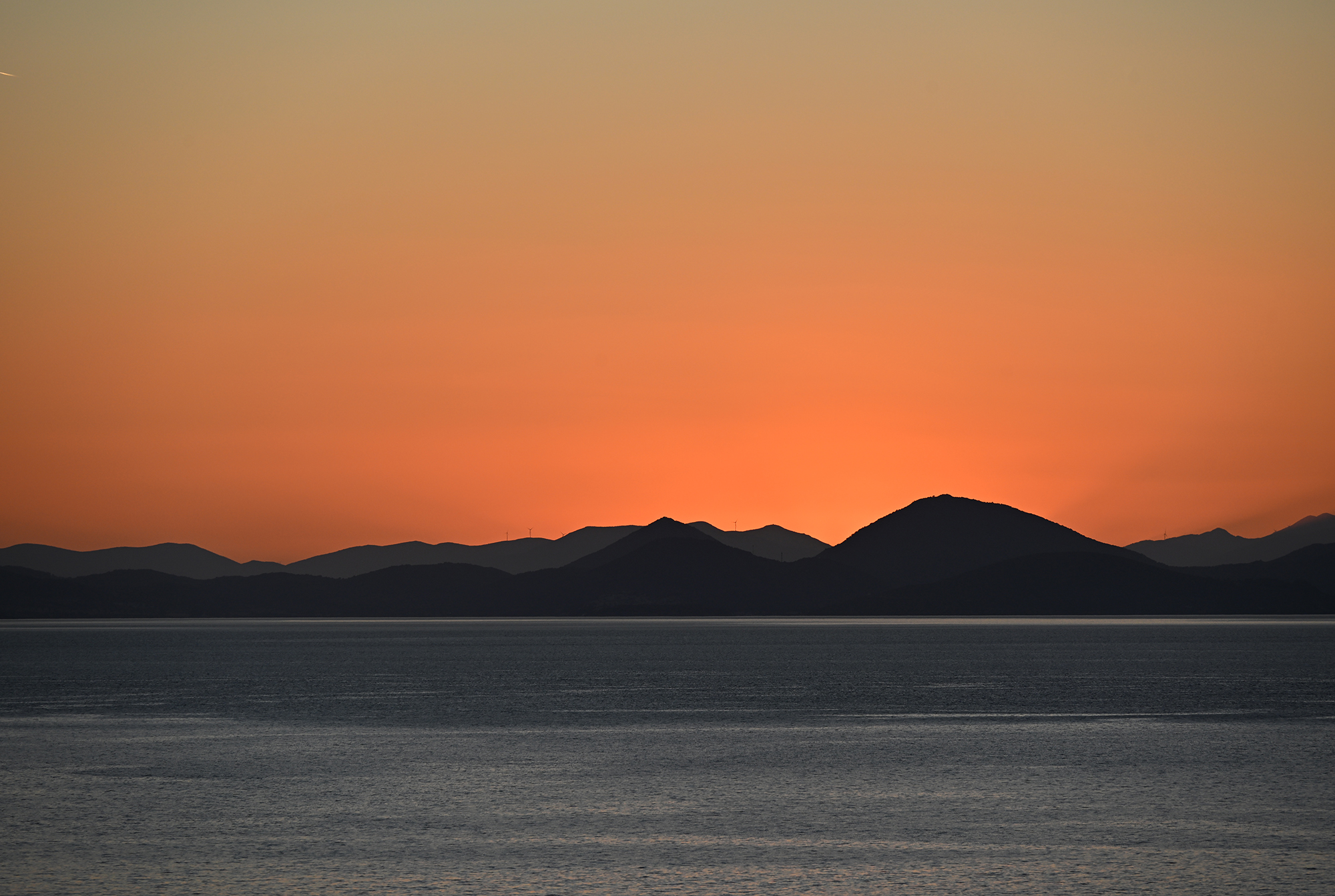
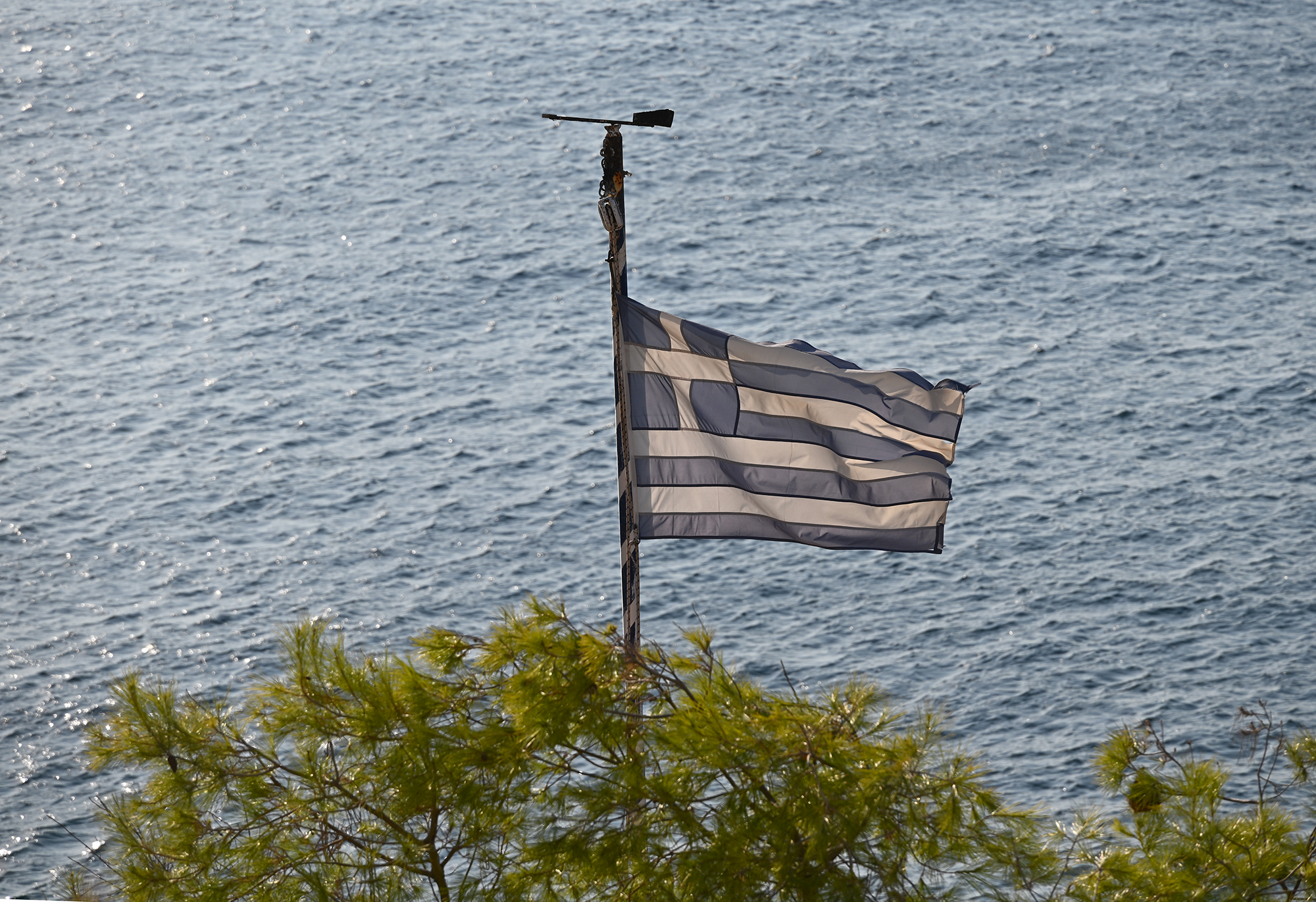
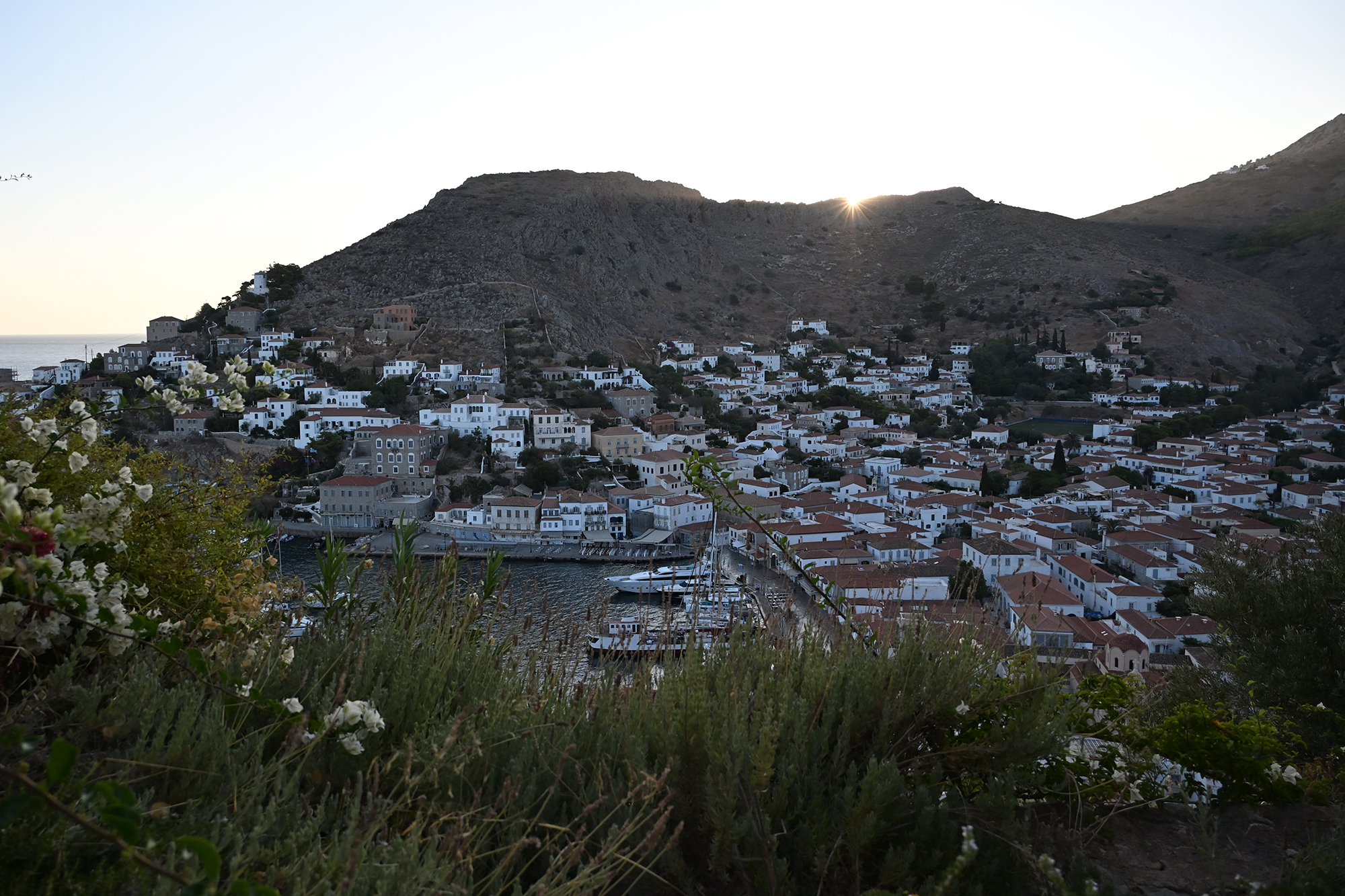
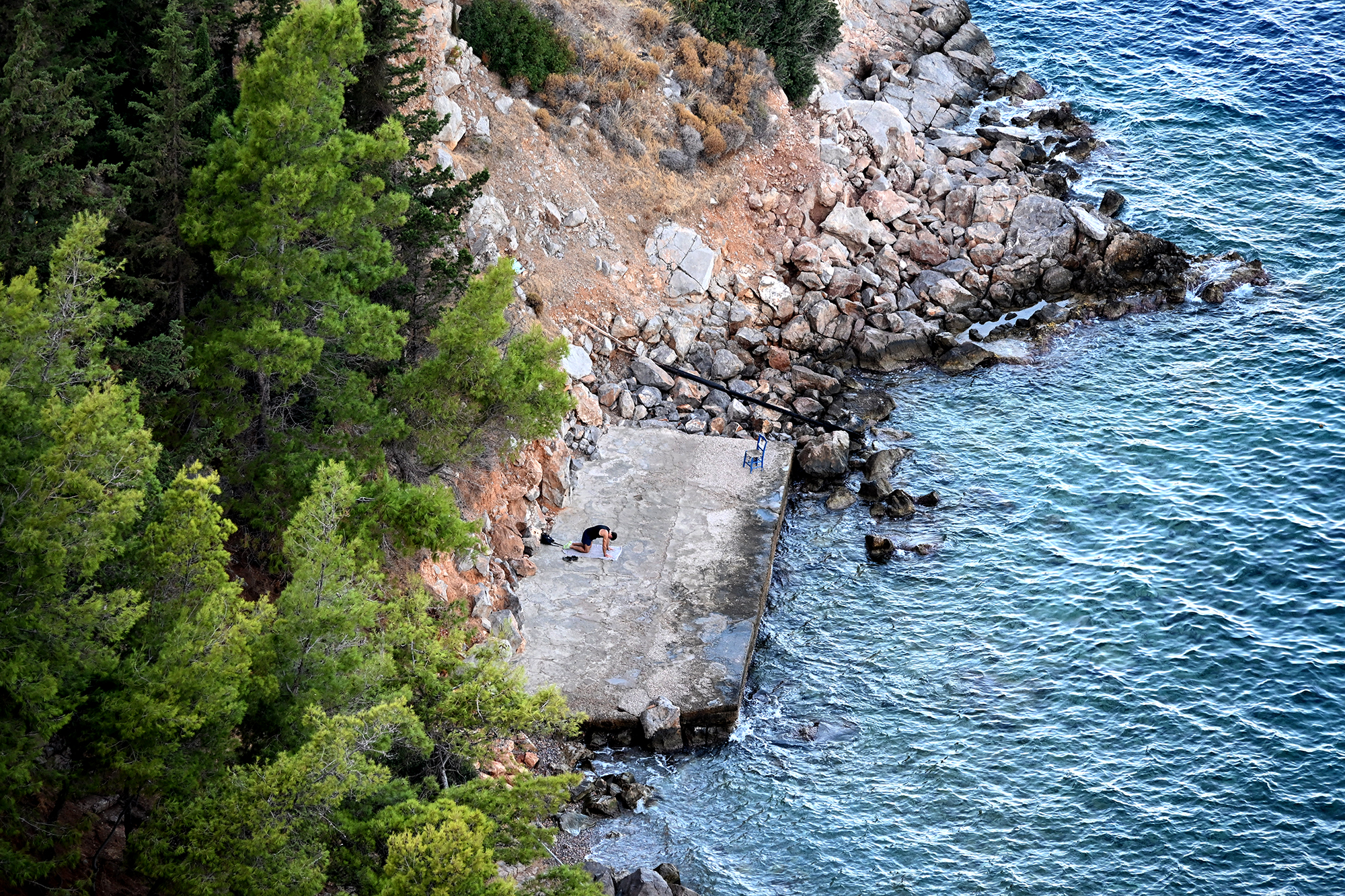
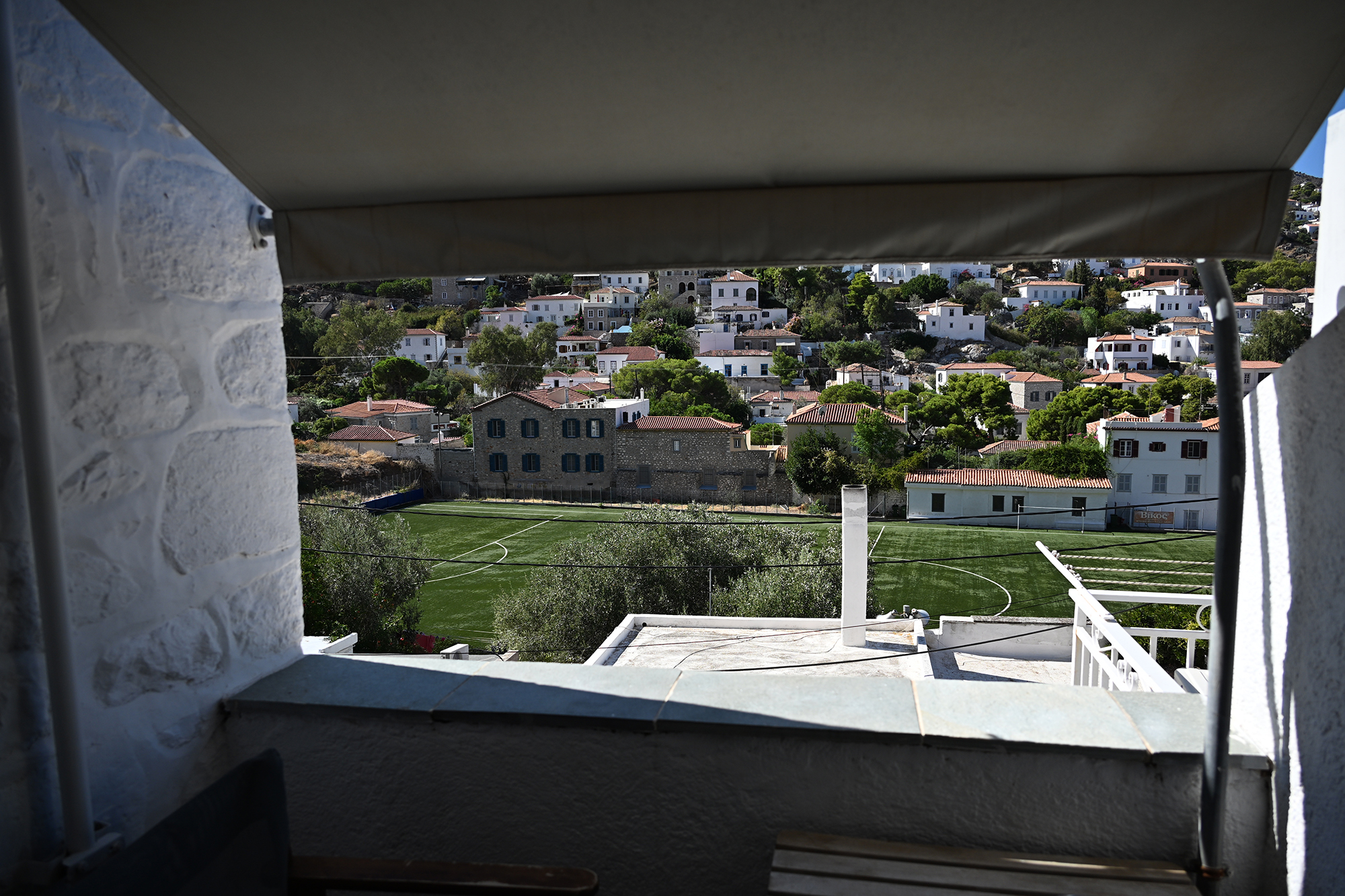
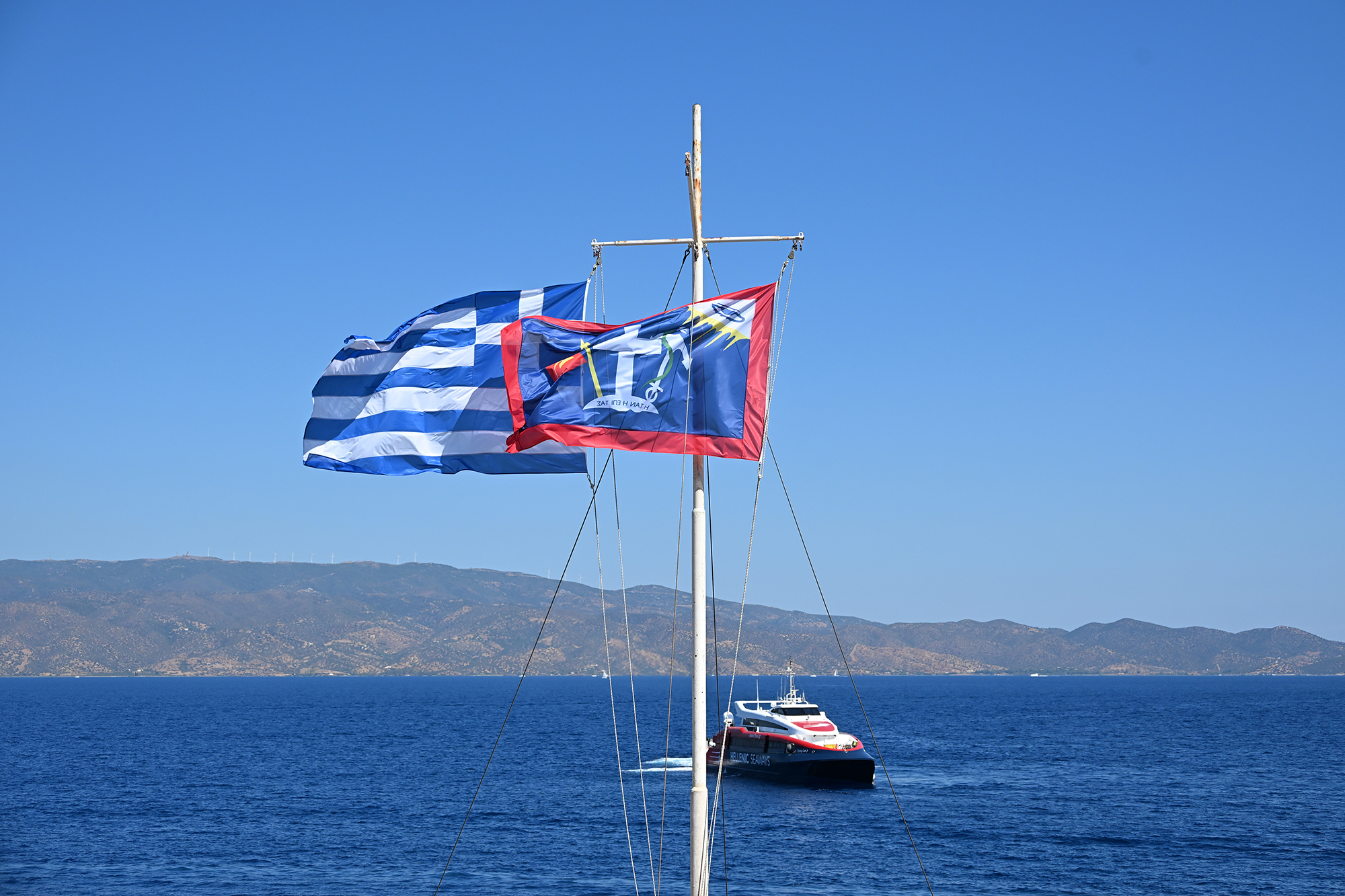
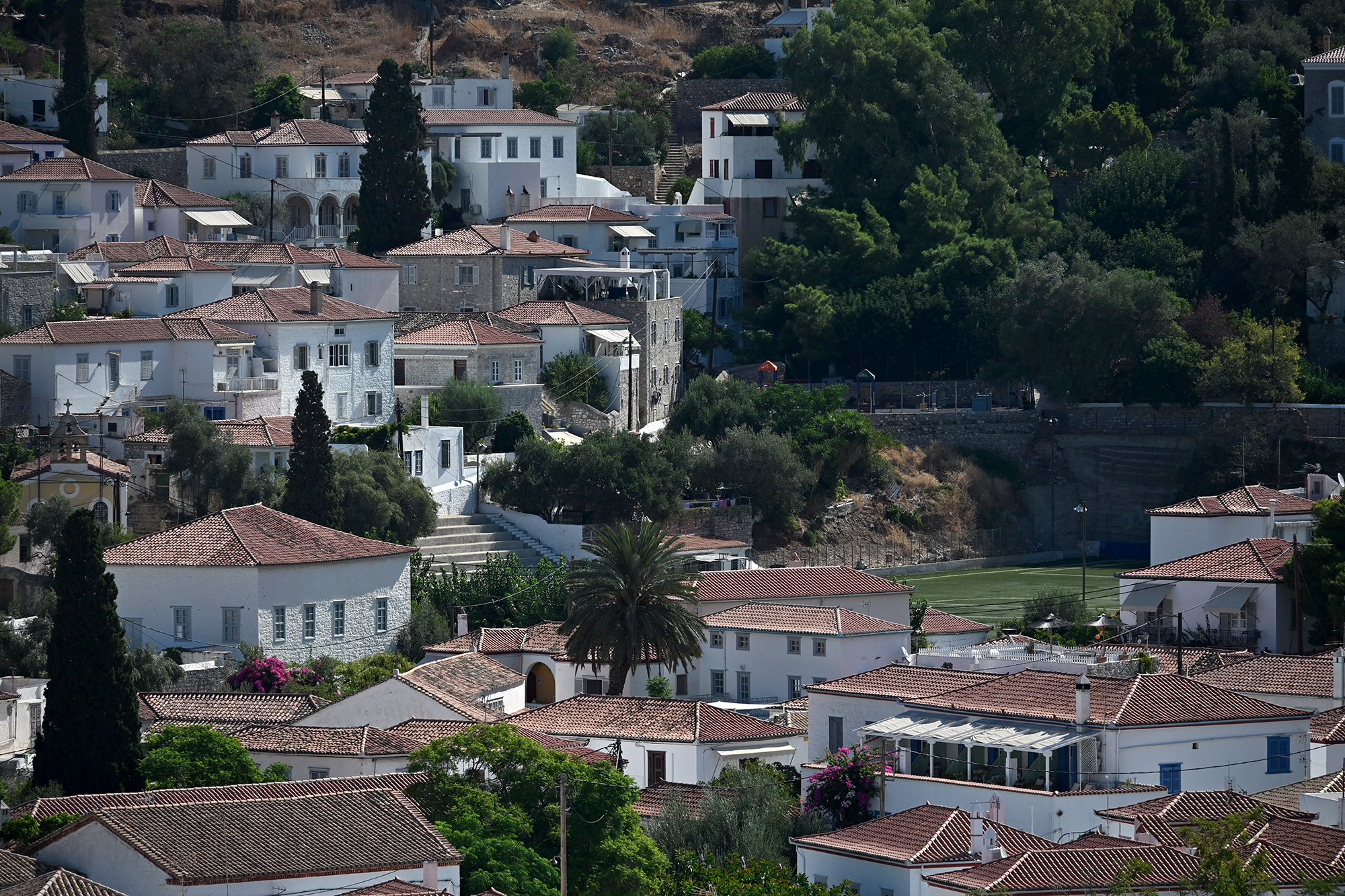
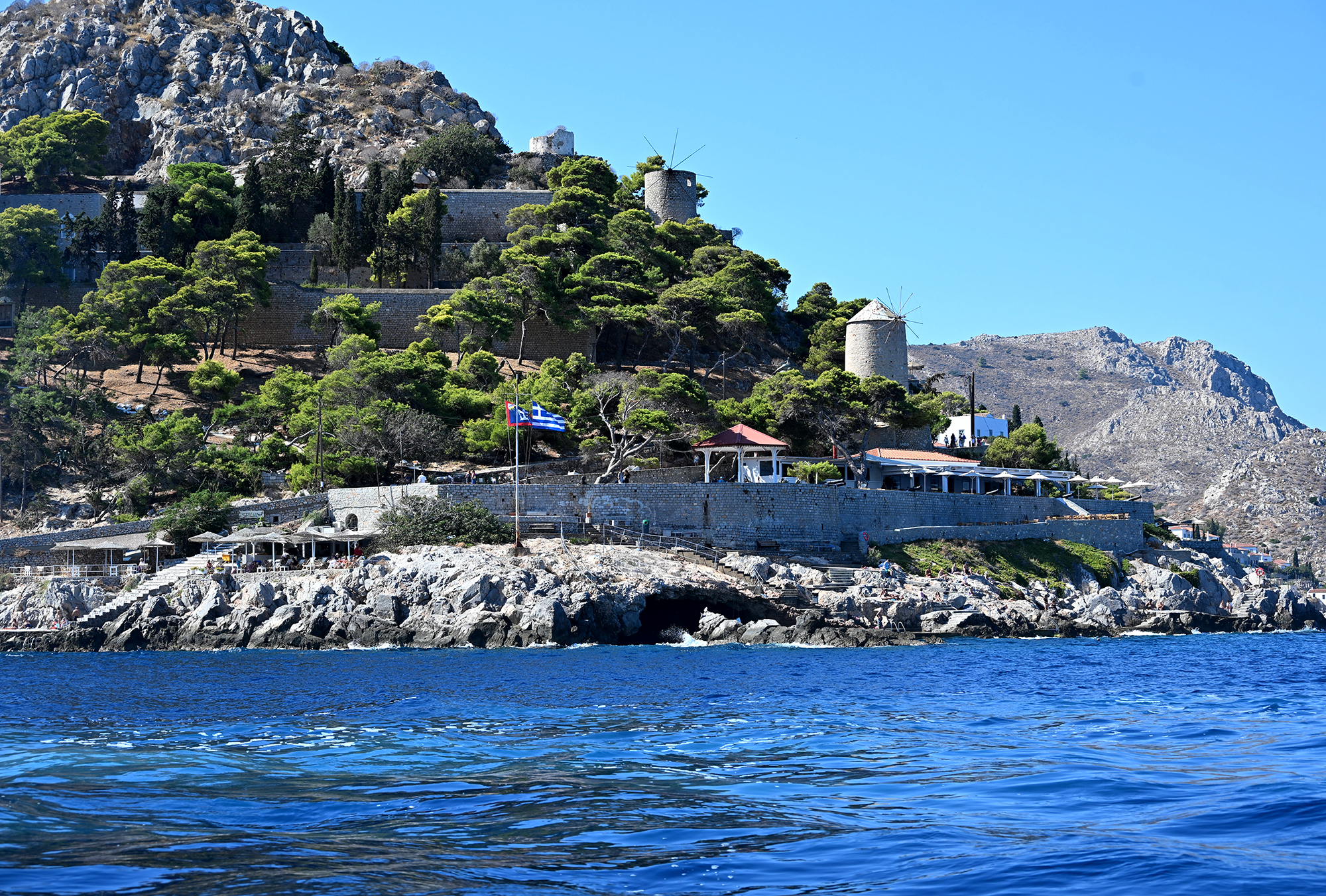
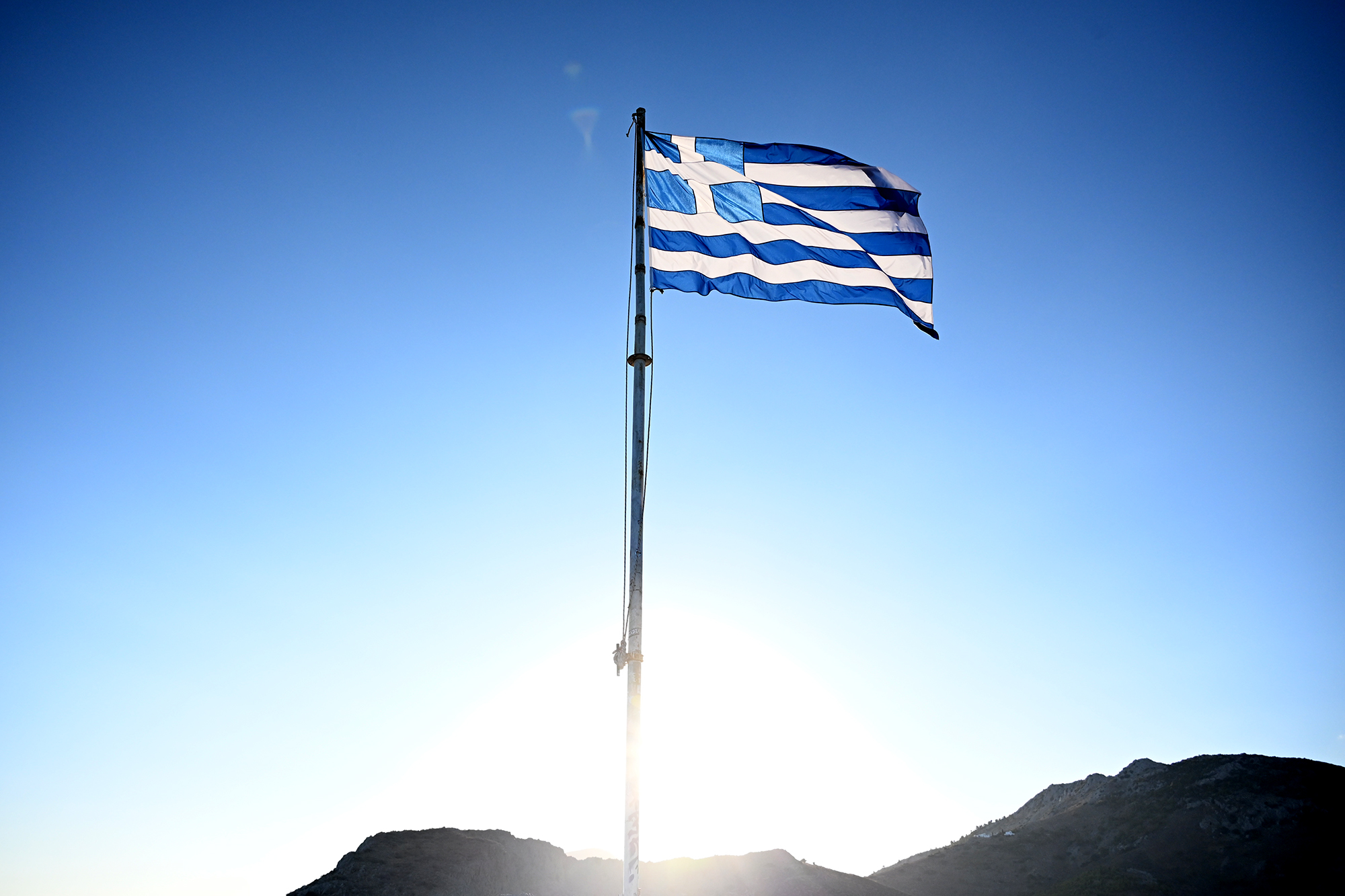
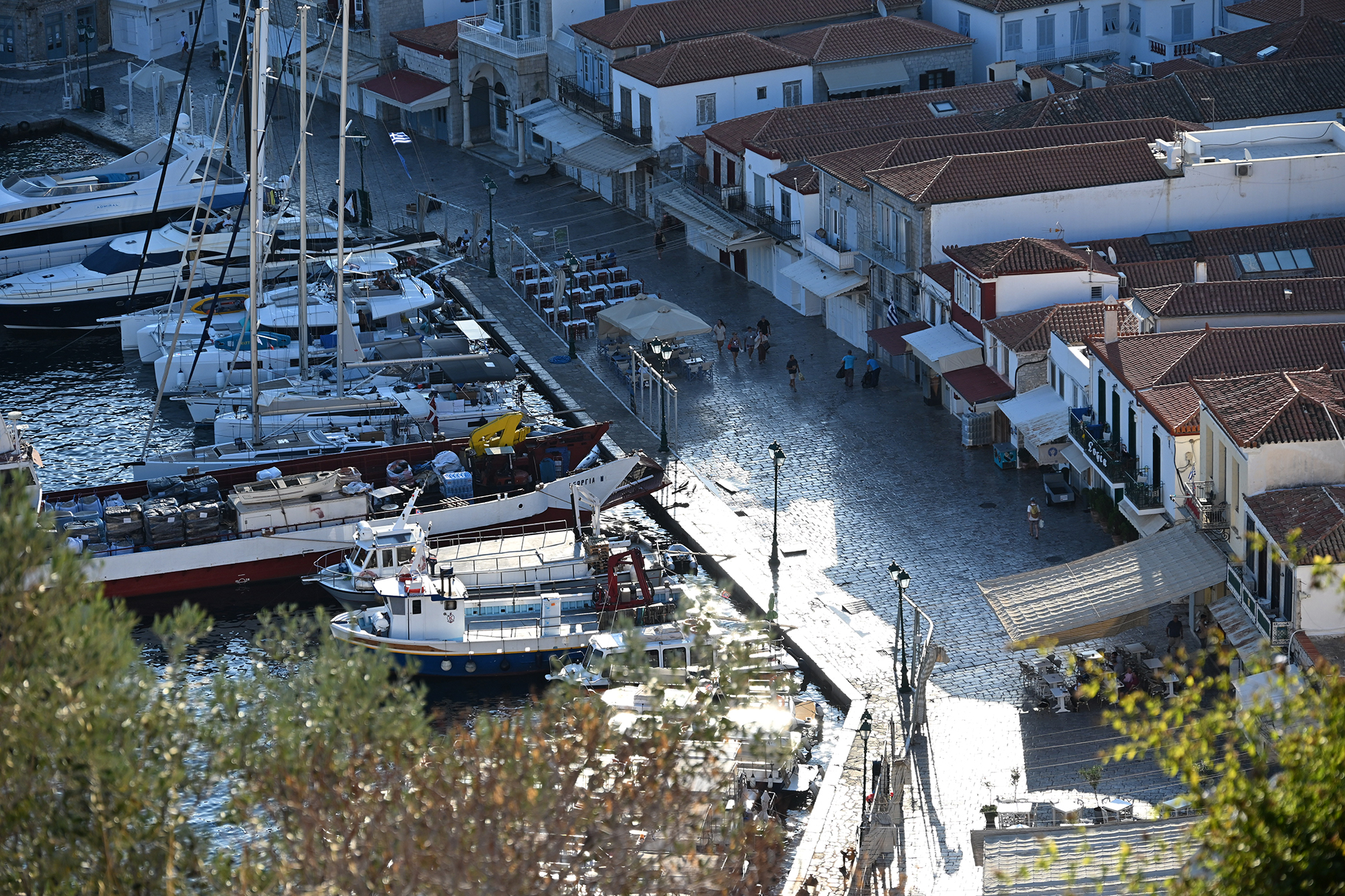
Come morning, I would follow the sun- it also rises behind the hill, so at first you only intuit, from the change in light, that it has risen. Except if you’re a monk/nun/wellness freak/German hiker and find yourself atop the mountain for the sunrise, but I am yet to join any of those categories. Instead, I would watch as the rays of the sun slowly made their way across the astroturf football pitch, gradually chasing the early morning runners away. My most heroic attempt was to climb to the flag that guards the port and offers a lovely view of the docks as they slowly get in motion for the day. I felt good about myself, being there so early, only to meet people already on their way down, and then on the rocky beach nearby Kamini (theoretically still off limits due to the instability of the rock face, with emphasis on theoretically) a man was doing one of those million step morning yoga stretches that would probably take me all day.
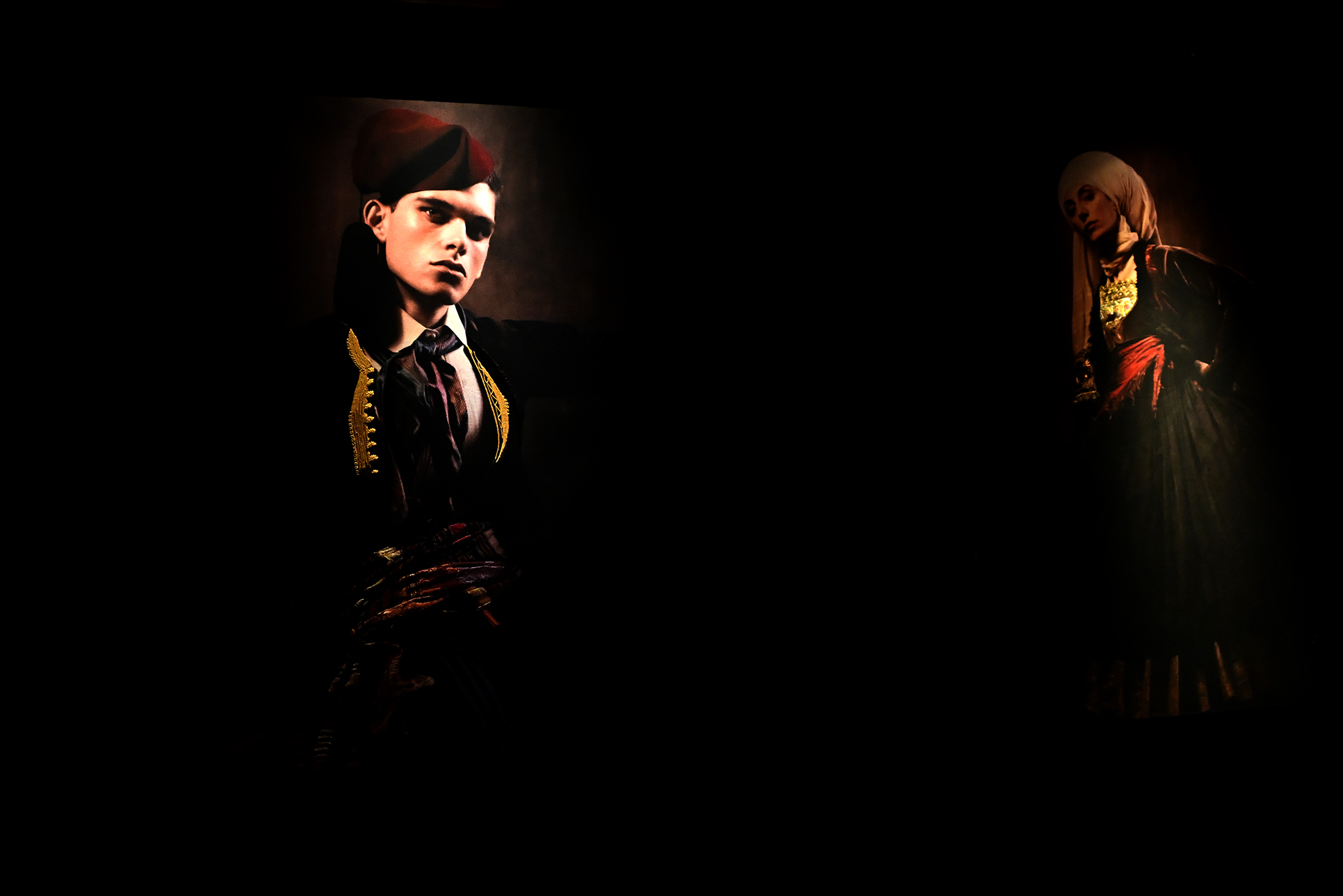
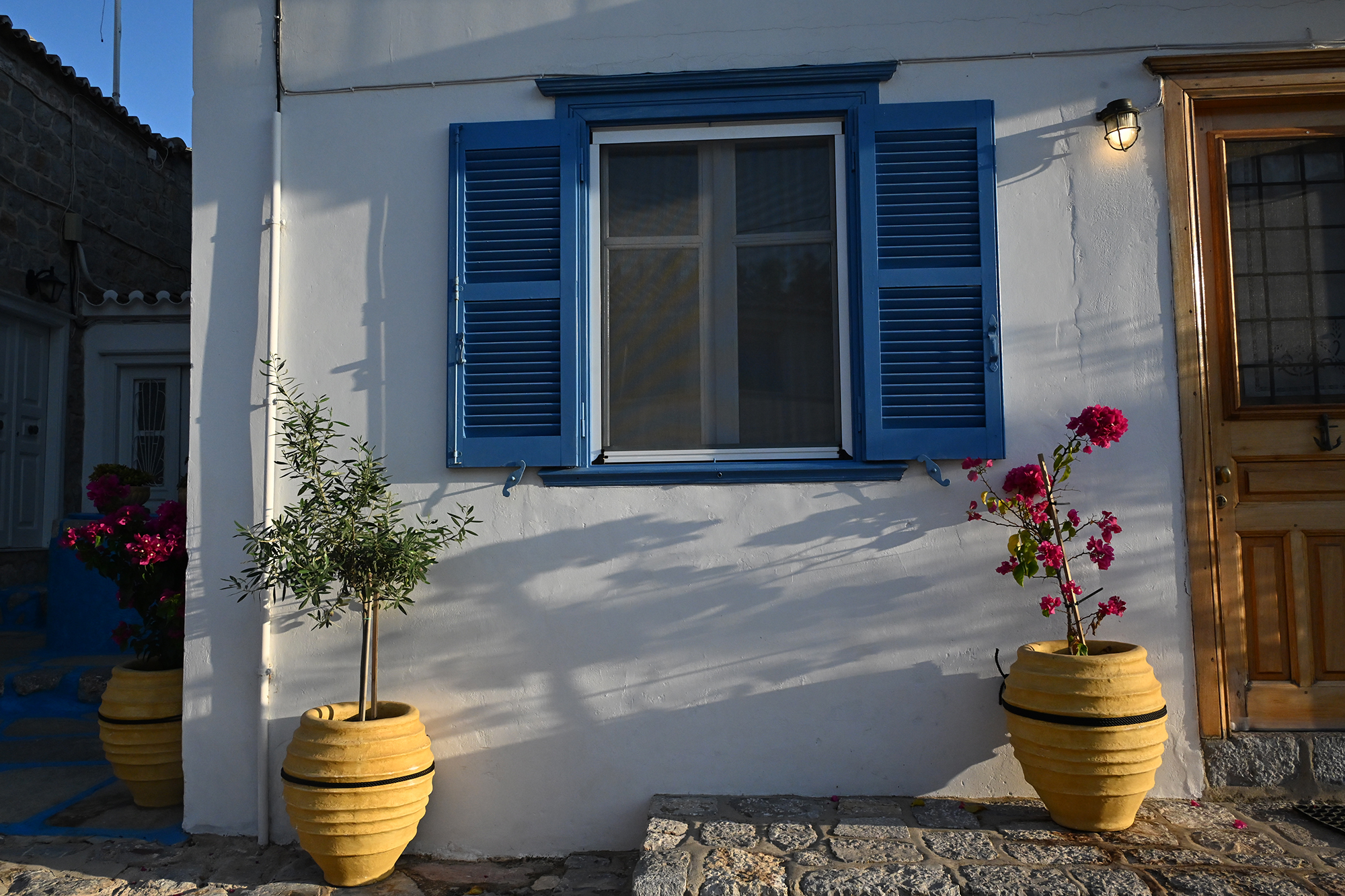
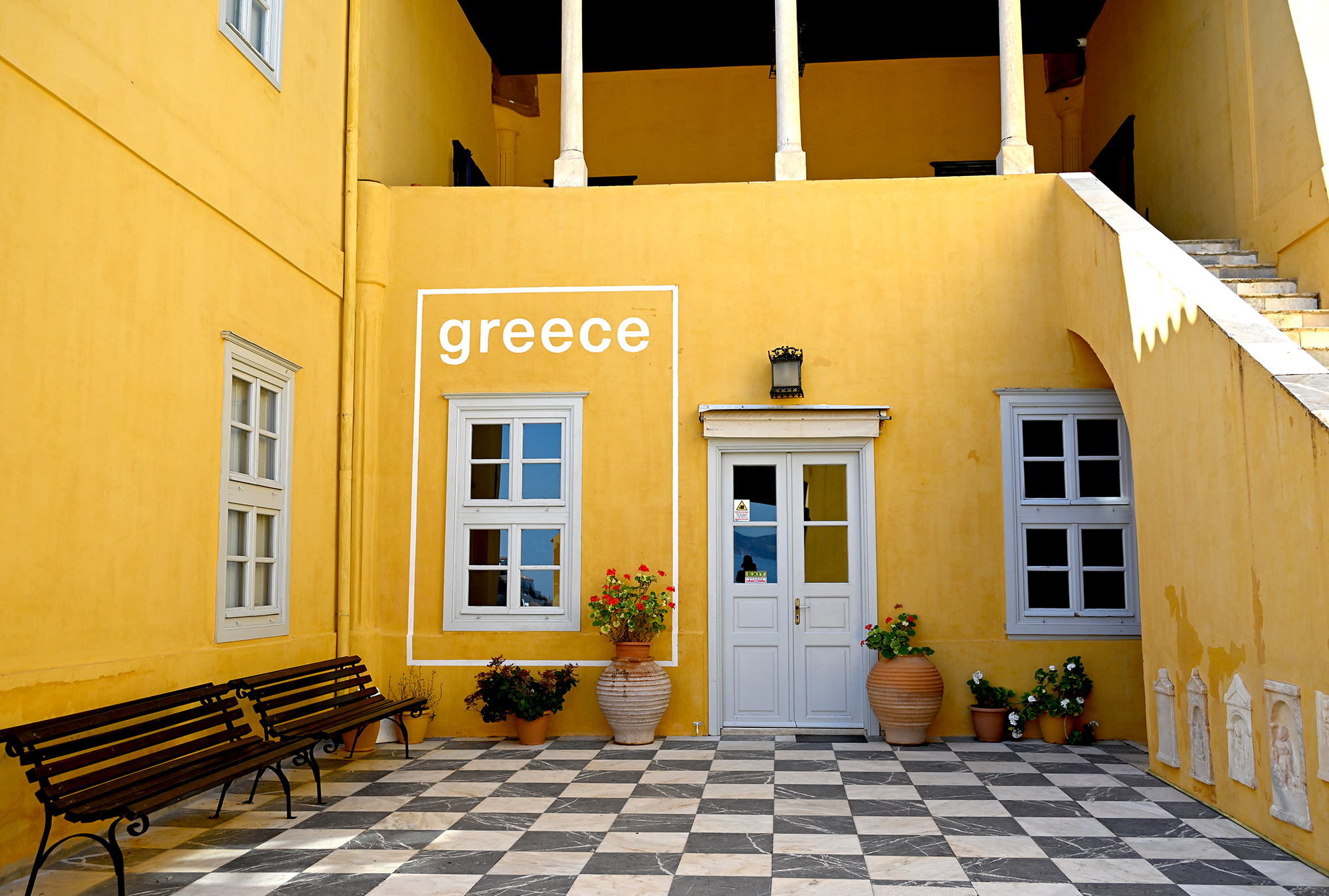
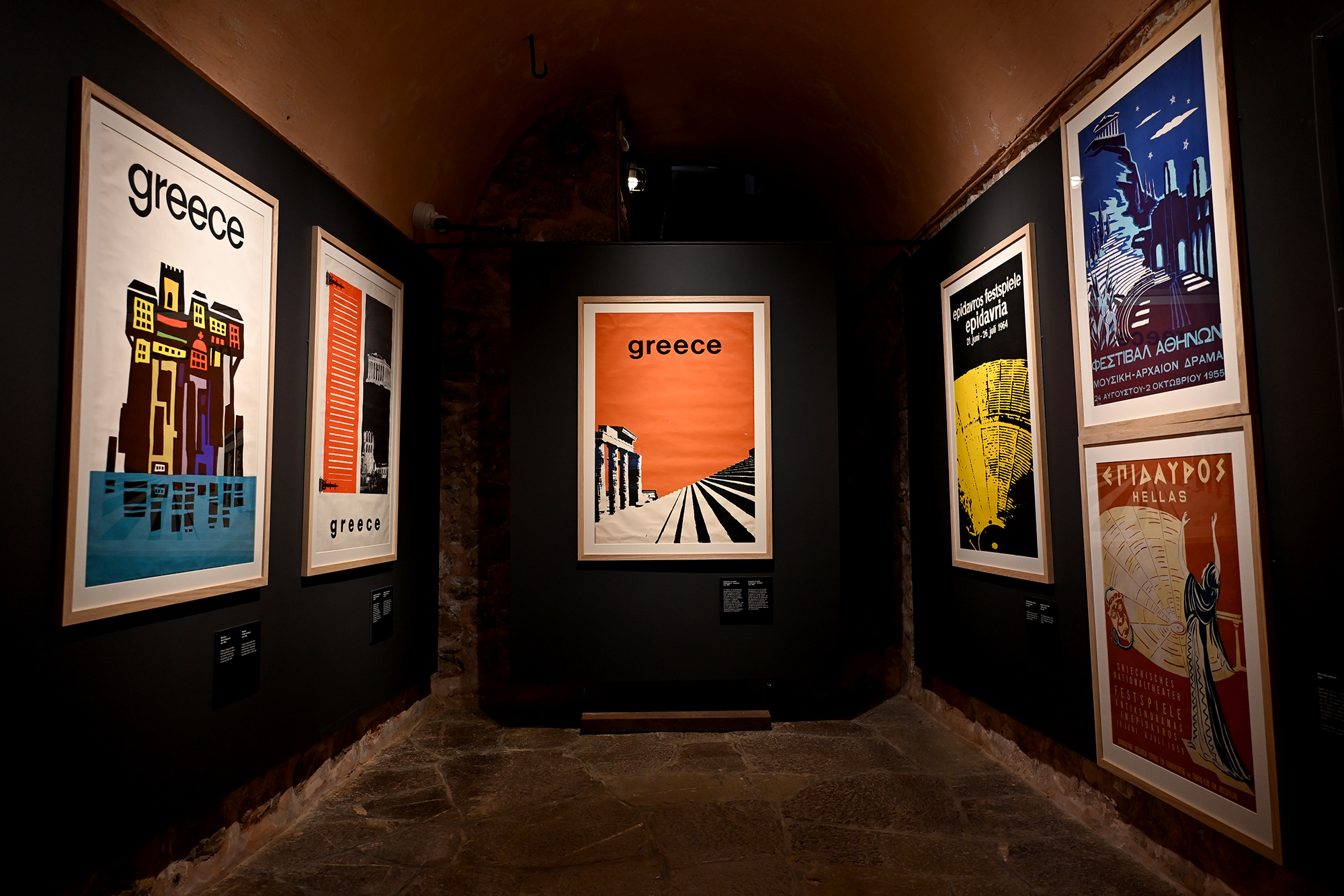
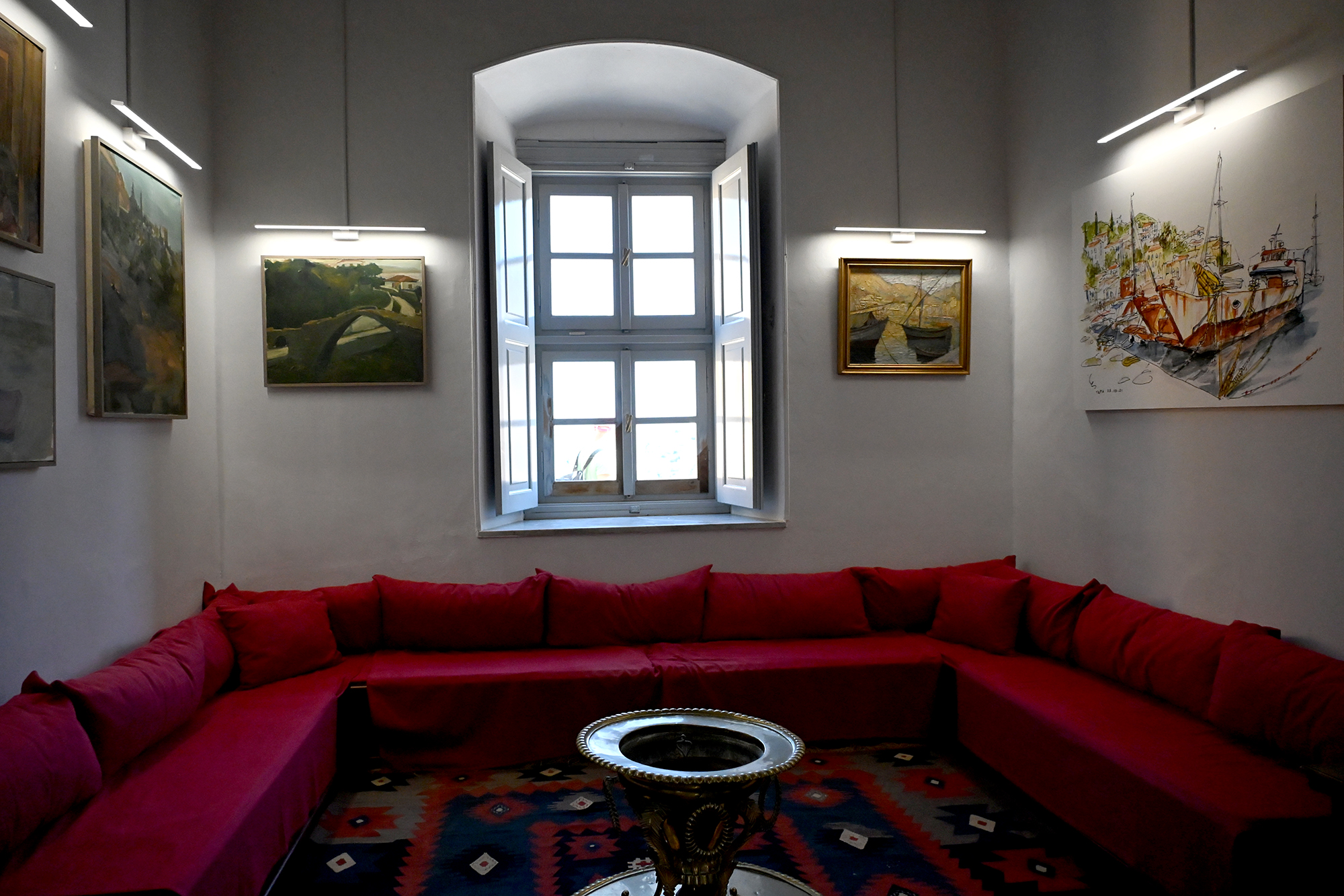
On a different note, slowly but surely, I am becoming as familiar with the exhibits of Hydra museums as I was with those in Arad in high school, when we were taken for mandatory yearly pilgrimages to the mammoth grotto in the natural history museum and the portraits of stern statesmen in the history museum. Incidentally, there are stern statesmen aplenty in the Hydra Historical Archives as well, and some of them stare back at you in the Lazaros Koundouriotis mansion uphill. Further to these, there’s the Tetsis home and studio, which was once a grocery store, and also the atelier of Hydra-born painter Panayiotis Tetsis, who donated the house to the Historical and Ethnological Society of Greece in 2007. The latter two come as a bundle with the same ticket (currently costs 10 euros) and are intriguing not only because of the collections housed, but also as examples of classical Hydriot architecture. The Koundouriotis mansion will occasionally spice up its permanent collection with a topical, temporary one, and this year the focus was on the early days of Greek tourism, with posters and leaflets covering the period from the 1930s to the 1960s.
However, ‘They don’t have nice vases!’, as an American lady exclaimed during one of my visits, and indeed, they don’t. Hydra was rarely mentioned in ancient texts, and its heyday, historically speaking, was the 19th Century, when its navy was one of the most prominent in the region, so its museums rightfully reflect that. To quote another American (it’s not that I eavesdrop on them in particular, it’s just that they’re usually loud enough to be heard at a fair distance) ‘they were, like, pirates, you know’. Skilled at seamanship with all it entails would be a fairer way to put it. Speaking of overhearing Americans, a particularly excited one was planning his Hydra stay over a large plate of sea food and mentioned that they should perhaps pay a short visit to that ‘other island, Sepsis, or what’s it called’. I can only assume that would be Spetses, and I will never call it anything else but Sepsis from now on.









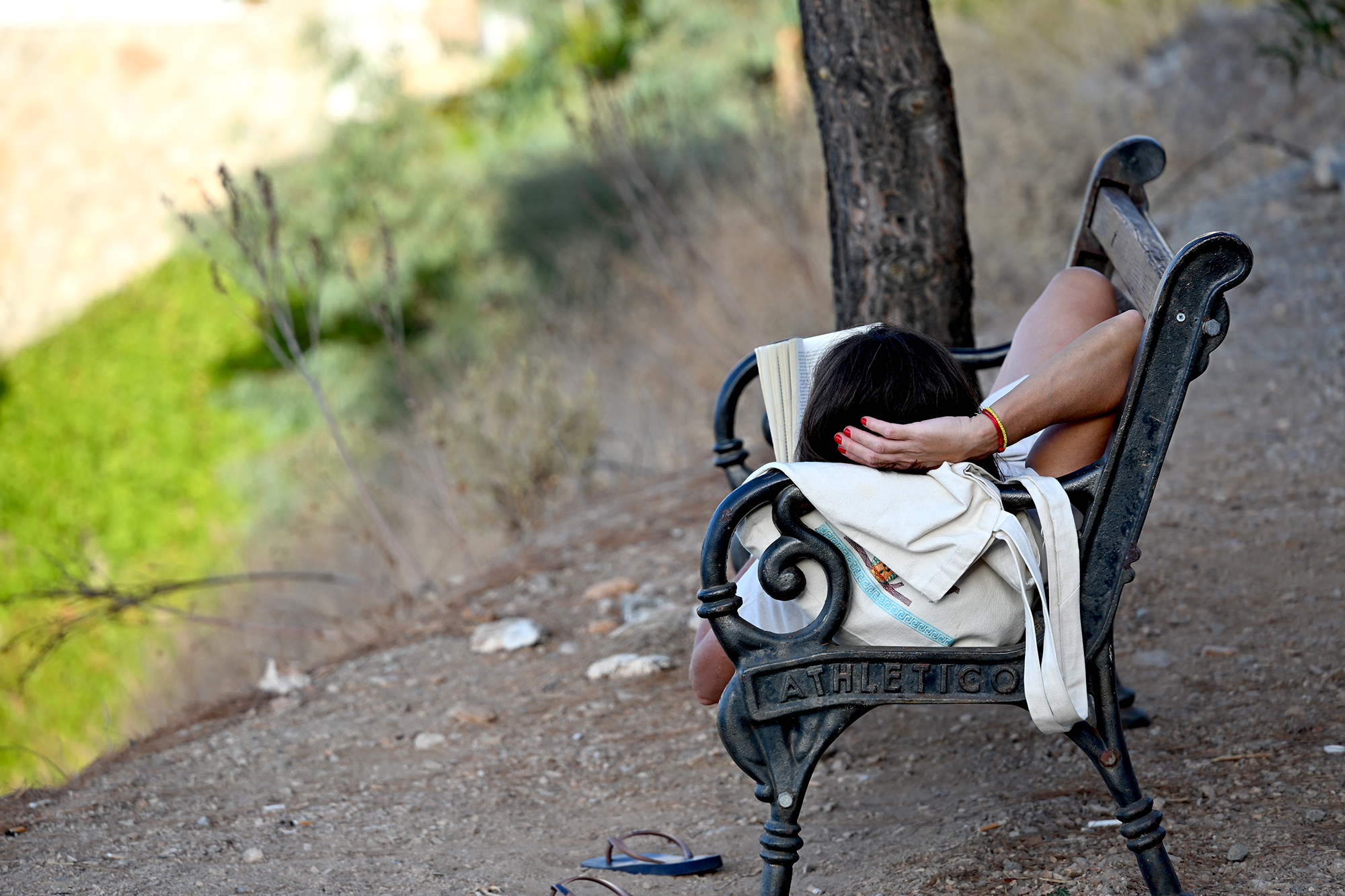
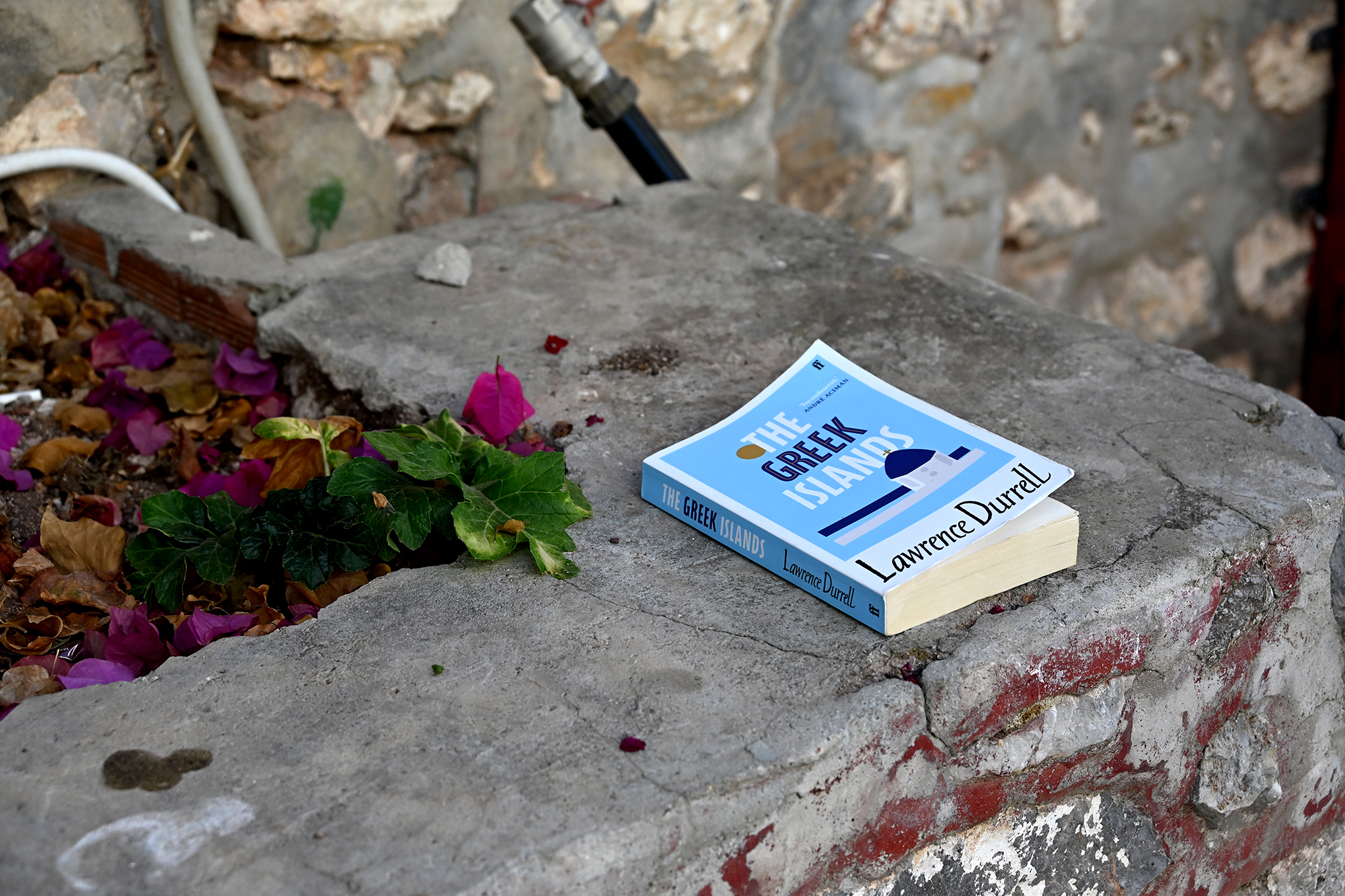
For the past years, come September, the building of the Historical Archives houses the Hydra book club– part bookstore, part event hub, and the best way to ensure that packing my bags for the return becomes a logistic nightmare. The problem here, as Taylor Swift would put it, is me, because I already arrive on Hydra with books, a carefully selected and calculated collection. The basic math is: always pack one more book than is objectively readable, just in case you suddenly start reading very fast. Or get stuck, perhaps. At first, this seemed a sensible strategy, as, beyond the book club, which is open in September and October, there is no genuine bookstore on Hydra. The one establishment that comes closest to the description is around the corner from Tassos’s café, and is the fusion of a newsagent, a stationery shop and a bookstore, stocking mostly popular titles not only in Greek. but English, French and German as well. In the first years, I did raid it for the missing titles of my Patrick Leigh Fermor collection, but by now, I have exhausted its resources- I still occasionally go for stationery, and they do have everything you could conceivably need on that front. The book club, with its carefully selected collection, is a different kind of animal, though. This year it brought me Brenda Chamberlain’s exquisite A Rope of Vines, an account of the Welsh painter’s time on the island. While rendering the island’s atmosphere impeccably, it transcends the genre of ‘Hydra memoir’ and moves confidently into the territory of books quietly searching for the meaning of life. It sounds grand for such a thin, sparse book, but I find myself returning to it ever since.
Another pleasant discovery, in a completely different genre, was Makis Malafékas’s Dans les régles de l’art- pardon my French here, but, unfortunately, there is no English translation available for it yet. This book found me, as opposed to the other way around, or, in a more ominous twist, the algorithm found it for me, adding up things I might like, and it was spot on. It is a twisty noirish detective tale spun between Athens and Hydra, with the incidental sleuth resembling an updated Phillip Marlowe, both in his slightly bumbling ways (they unavoidably get beat up really badly at some point) and dry humour. If there ever was an entertaining beach read, this is it. This was not the only Raymond Chandler related moment of our stay. In L’Americano (still the best cocktail bar on the island, long live the spicy Negroni) you can find a wall decorated with famous first lines and I yet again concluded (some aforementioned Negronis may have been involved) just how skilled Chandler was at achieving the perfect atmosphere of his books. The quotes include a lot of undisputed classics, whereas Chandler’s comes from one of his less known books, Killer in the Rain, a collection of short stories published only after his death. As most of the content was later reworked into other stories and novels, Chandler was not sure it should be published at all. Which would have meant missing out on this absolute gem of a sentence:
It must have been Friday because the fish smell from the Mansion House coffee-shop next door was strong enough to build a garage on.
Other beach reads included Tony Spawforth’s What the Greeks Did for Us, which is probably more interesting if you know less about Greece (he admits to that himself in the introduction), but does make some entertaining connections with the premise that Ancient Greek thinking is still very much present in our current world, and a collection of Nikos Kazantzakis’s travel writings. The only English edition I could find, Journey to the Morea: Travels in Greece, was published in 1965, my copy is a more recent Italian reissue. Some of it feels charmingly dated and a little exalted for my taste, but then again, Kazantzakis never shied away from big passions.
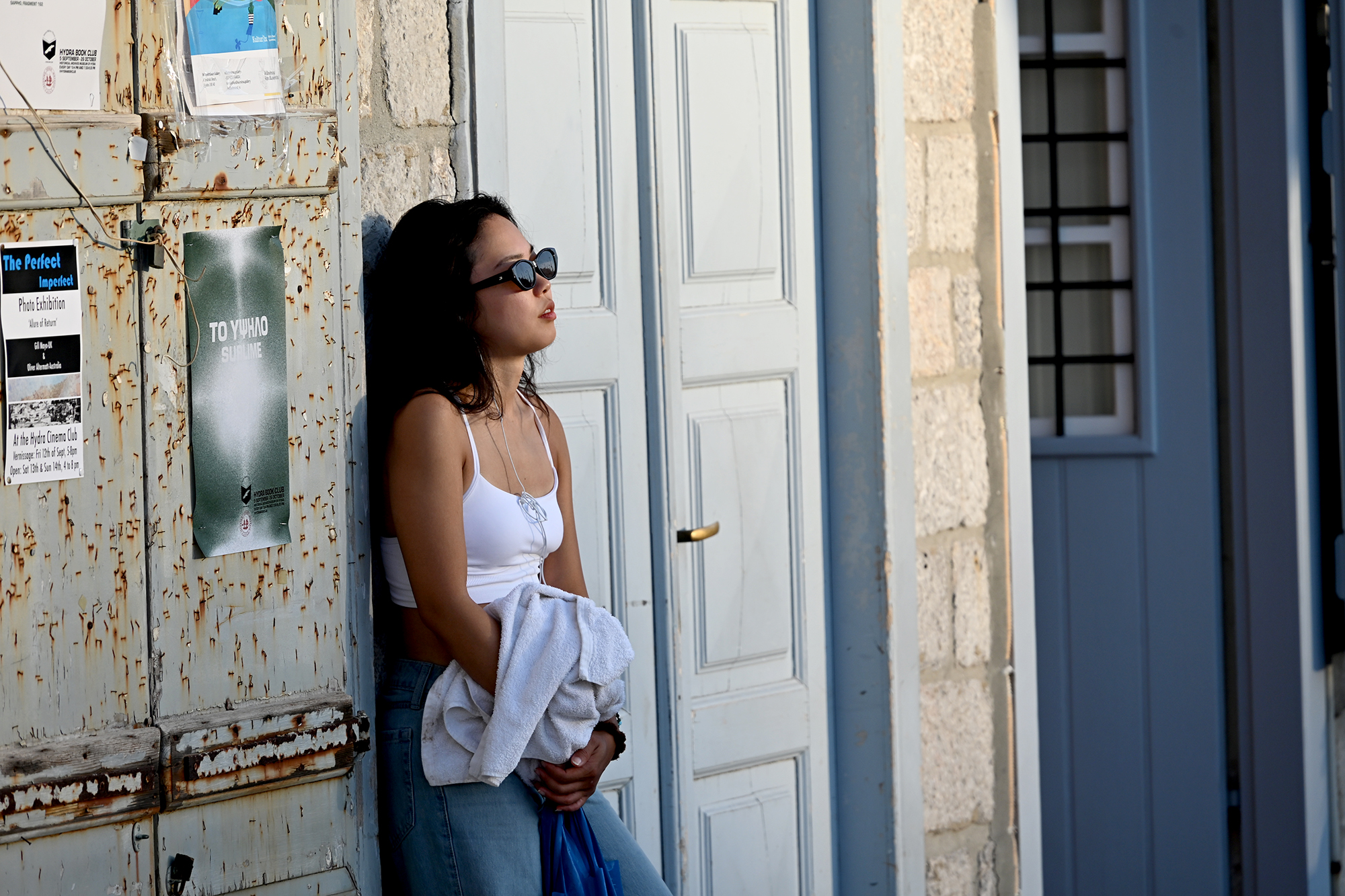
Once more I missed out on the installation in the Old Slaughterhouse (the opening hours are whimsical, to say the least), which is doubly shameful, as this year’s invited artist was Andra Ursuța, a Romanian American sculptor who was born in a small town very close to mine. I do remain on the fence about some aspects of modern art, but Hydra’s impromptu art scene is really about choice: you’ll see posters for various events, and then you can make up your mind about what to attend- I am terrible and sometimes choose a nice meal over an occasion that would also entail socialising.
There was also an unexpected backdrop to our stay: the European basketball championship, which saw Greece roll their way to the semis, where they were undone by archrivals Turkey. It is no secret that the blog’s industrious co-photographer is Turkish, so I am glad to yet again report that beyond politics, on the ground, Graeco-Turkish relationships remain excellent, and locals were extremely gracious in acknowledging Turkish superiority in this particular game- both nations then shared the chagrin of seeing the German machine excel at yet another sport in the final. Greece were at least offered the consolation of defeating a feisty Finland for bronze. This happened as we were having our last drinks in the port before boarding the ferry back to Athens and I have to report I no longer say goodbye to Hydra, for there is no doubt in my mind that I will be back. Again, and again.















 Pocket Diary Budapest