There is absolutely no way to be polite about this. I went to Poros like the unprepared buffoon that I am- or, more precisely, I can be. Generally speaking, I have two travel modes: full blown OCD and total nihilism, with nothing in between. Either I have a maniacally designed plan, or I just show up. The outing to the island of Poros was of the latter kind.
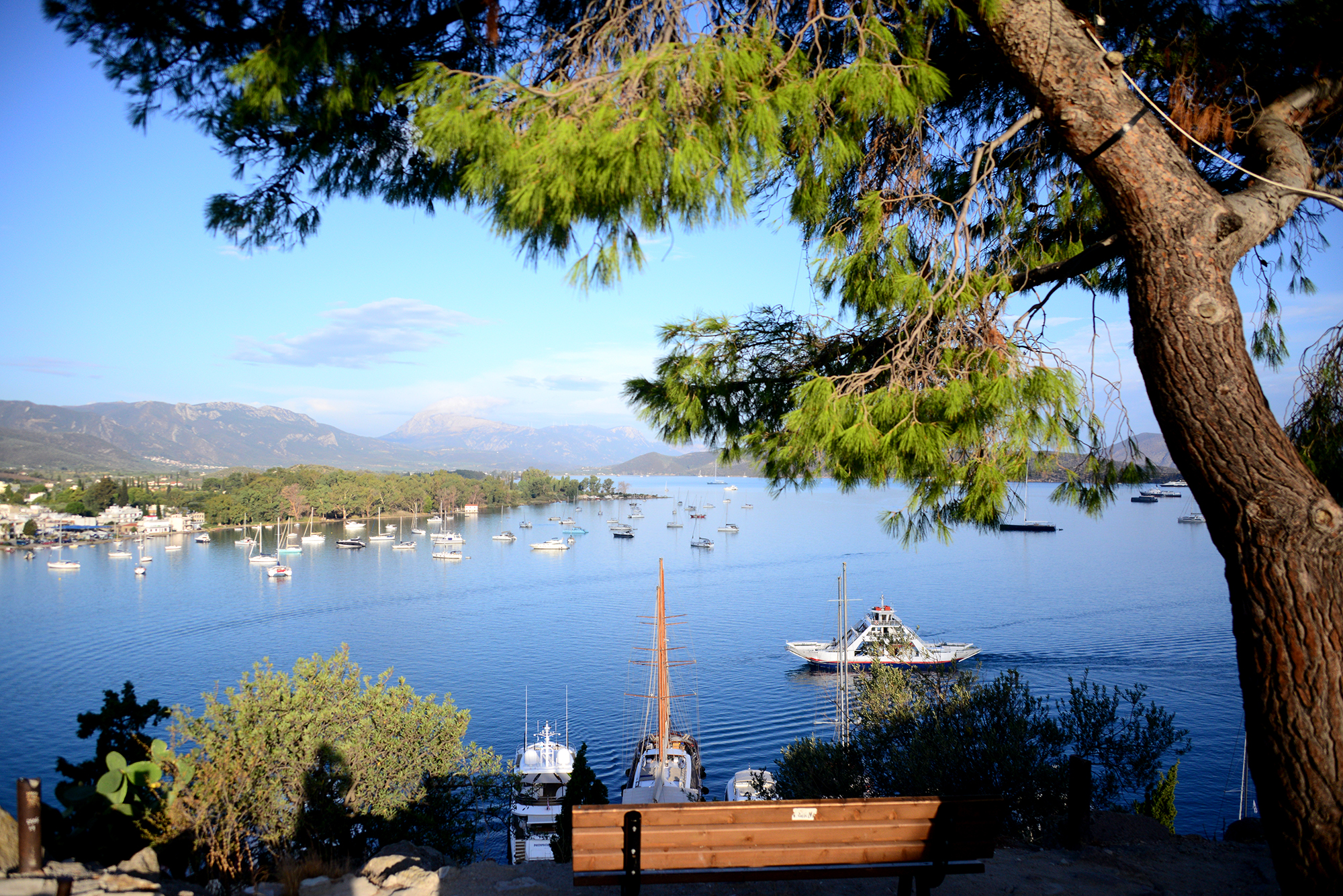
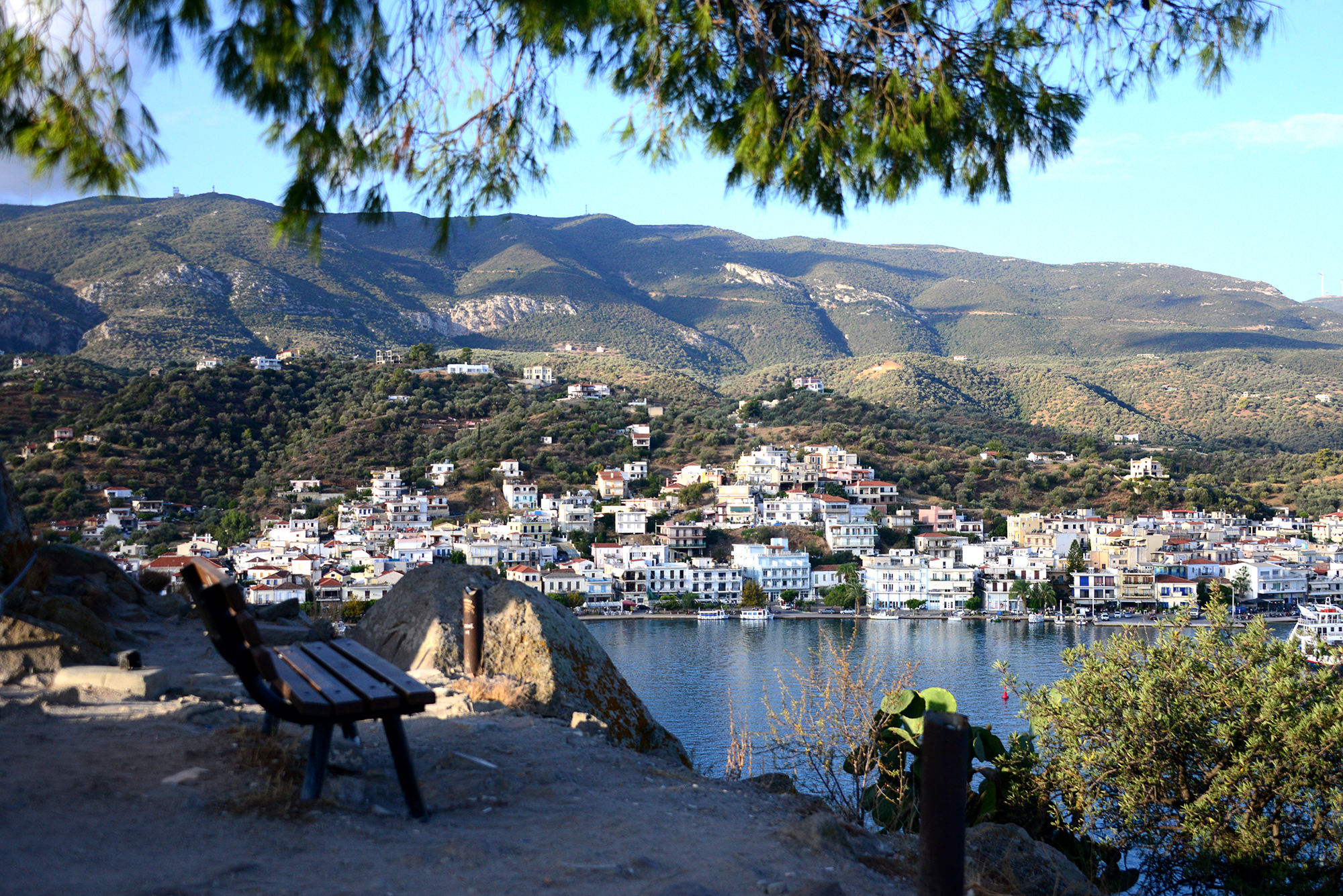
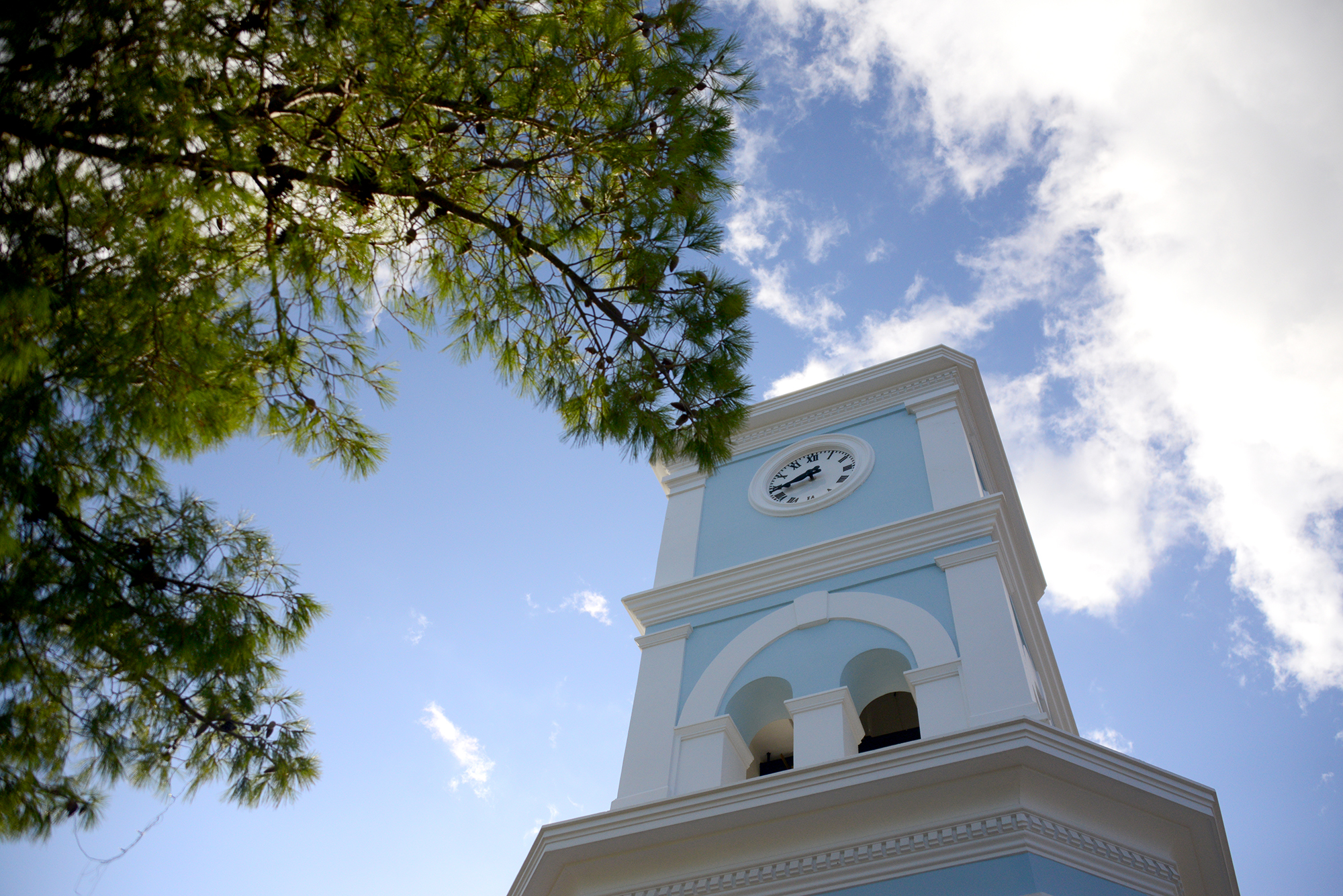
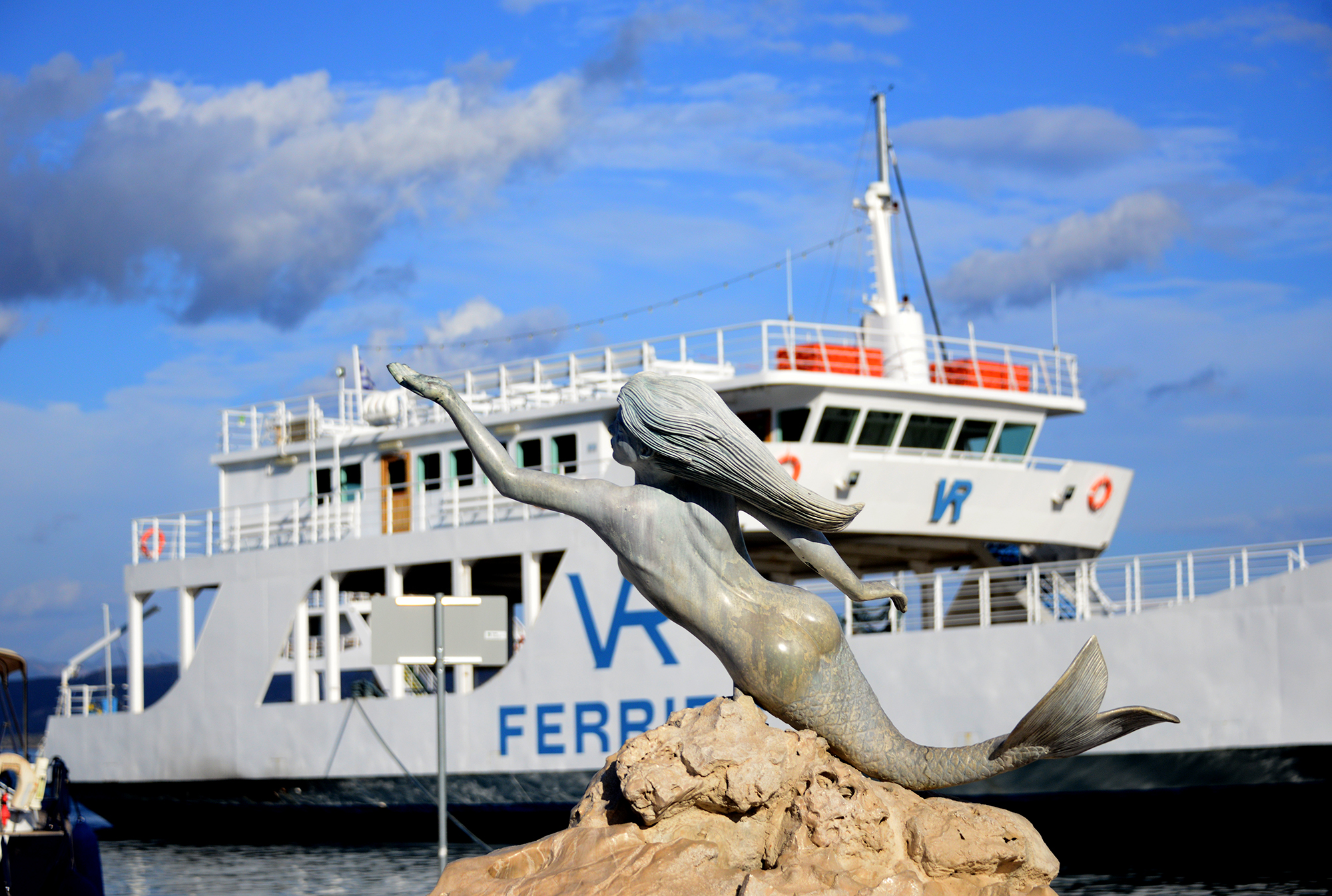
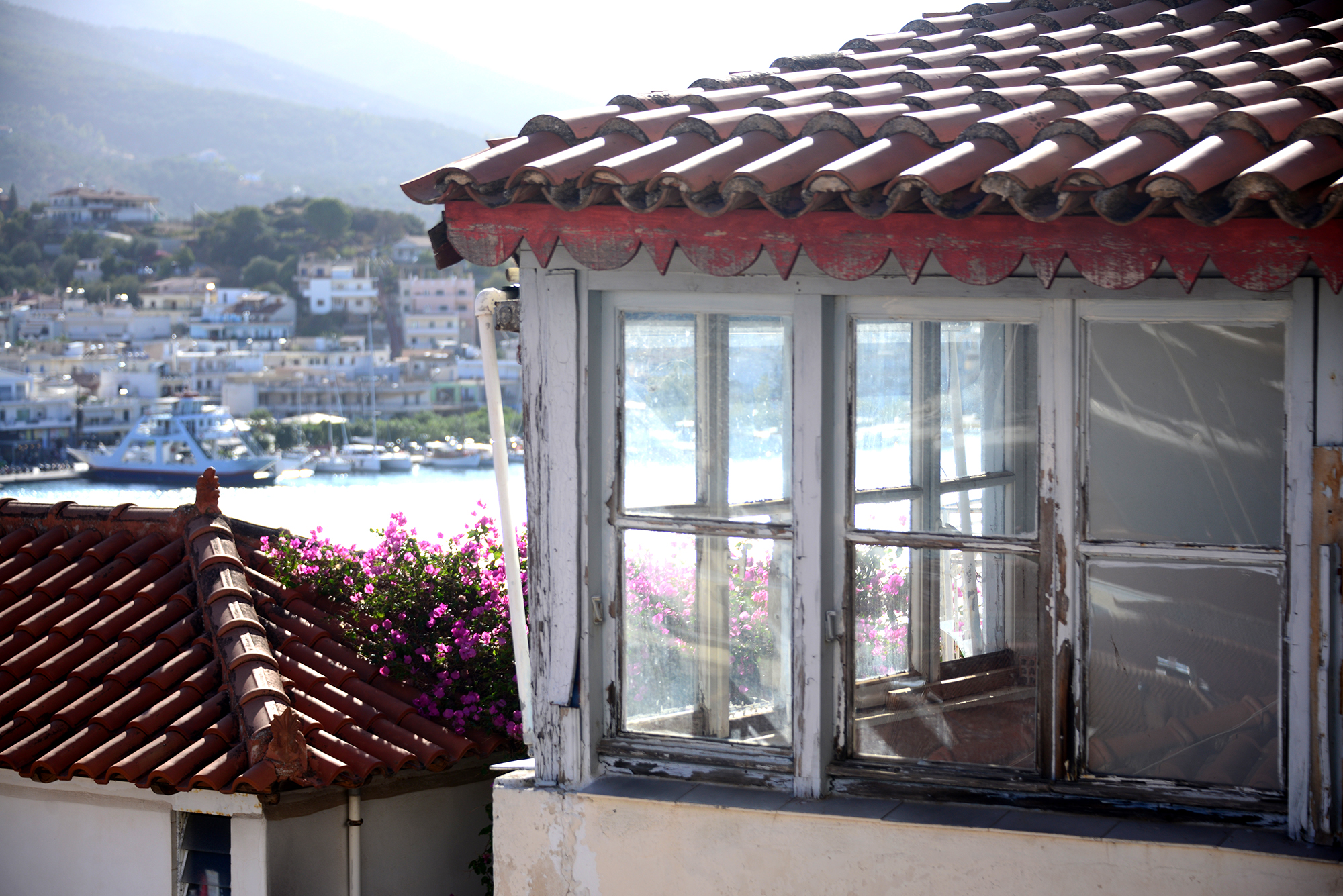
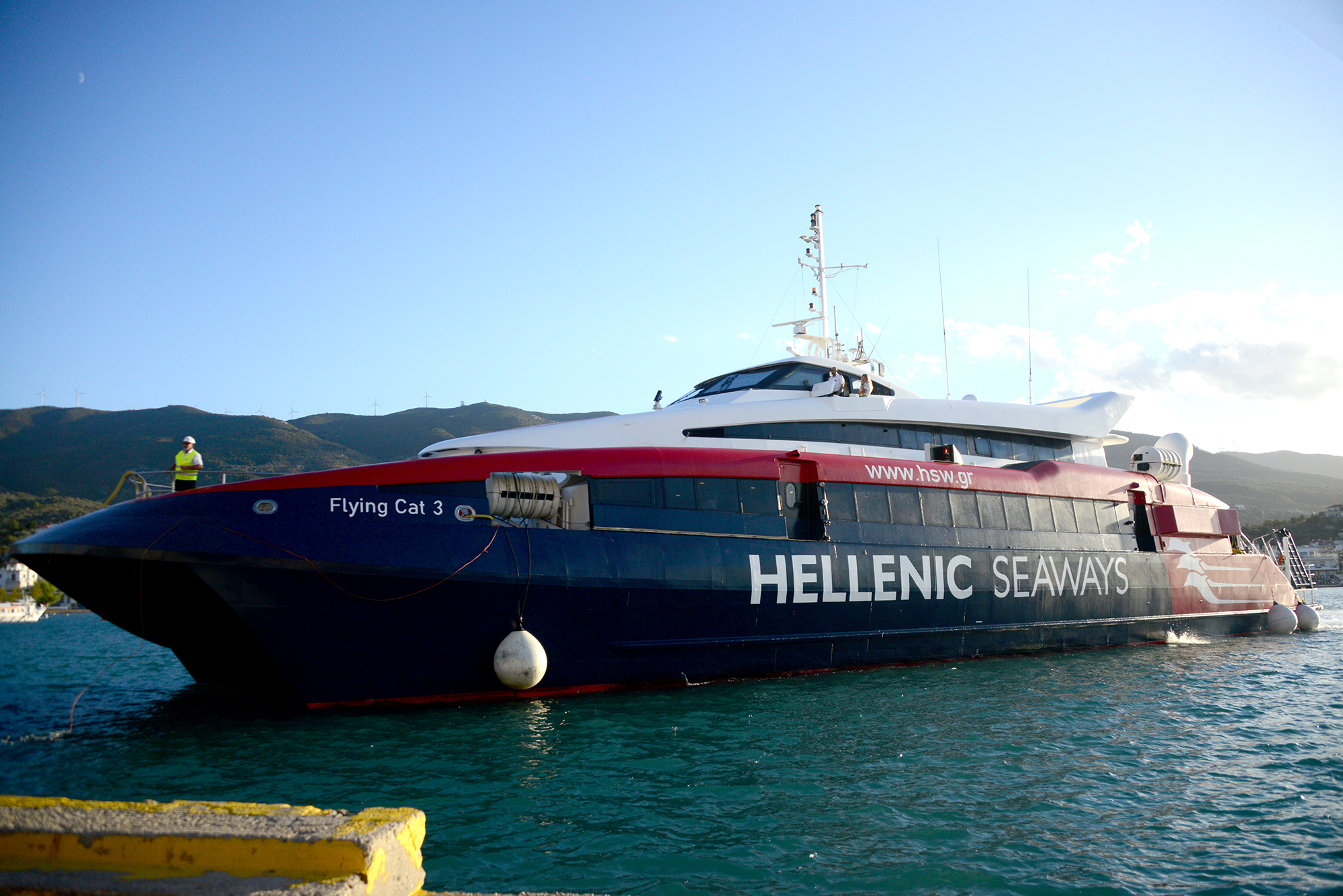
One morning, when the weather promised to be overcast with the chance of a fleeting shower, I decided this felt more like a sightseeing day than a beach day, so I went to the port in Hydra, hopped on the early ferry and hoped for the best. I’d loved the idea of Poros from the ferry, the urgent voice of the steward informing us that we are now arriving in the port of Poros, arrival with immediate departure, arrival with immediate departure. It looked like a neat, manicured little port with candy-coloured cubical houses, jolly terraces and a baby blue bell tower guarding the passage of ships through the narrow strait which divides Poros from the mainland and the town of Galatas.
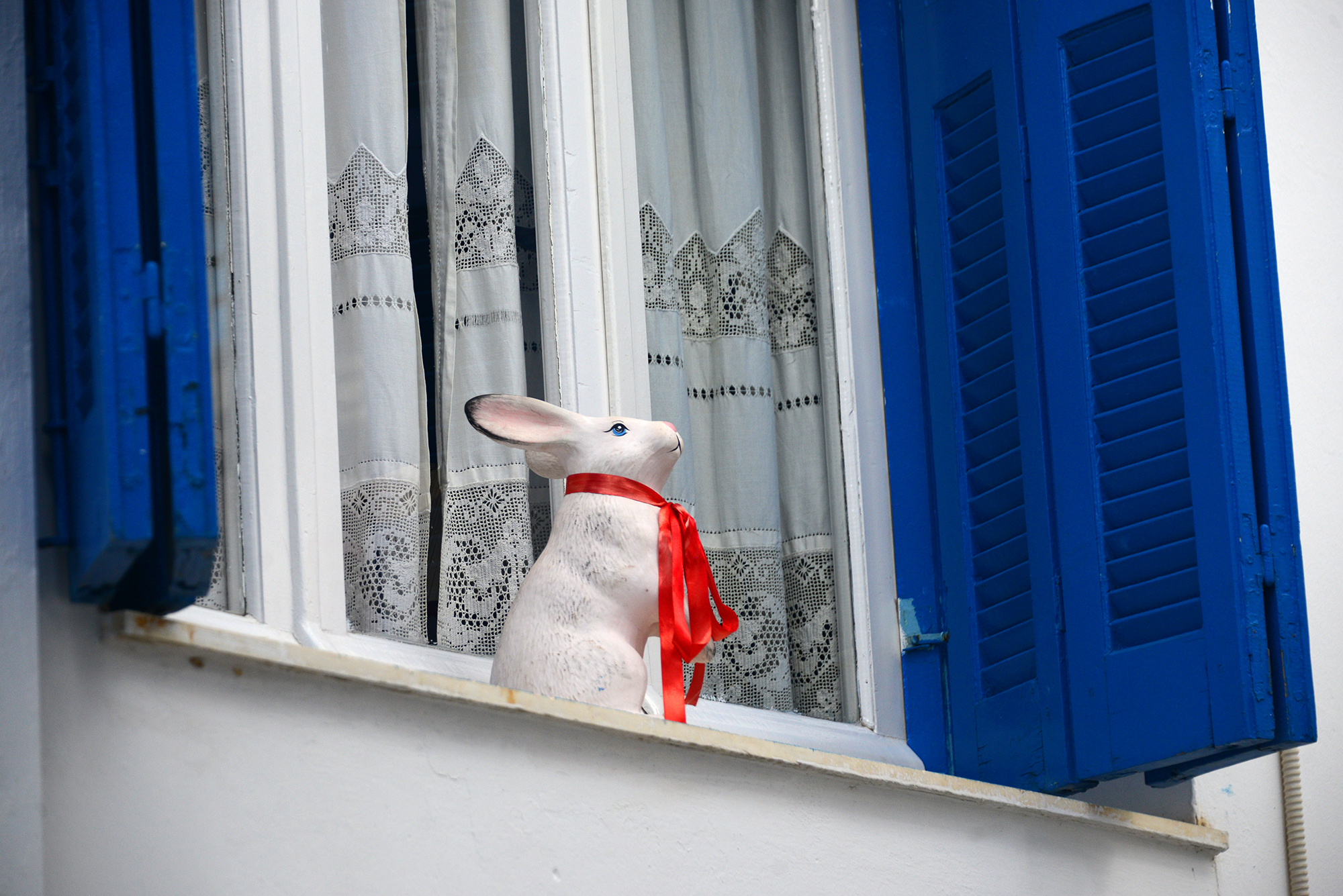
There was only one other person getting off in Poros, which seemed intriguing to me, as I assumed a day trip from Hydra to Poros makes sense, but then the upcoming day taught me that this was not necessarily the case. Another surprise came when I figured that Poros is, in fact, not one, but two islands: the southern, smaller, one, which is the island you see from the port, is called Sphaeria, whereas the northern one, divided from it by a very narrow straight, is called Kalaureia. Even more surprises were to come: the one museum of interest located on the island, The Archaeological Museum, is open every day, except for Tuesday. You guessed it very right; I was there on a Tuesday. Having somewhat recovered from this unexpected setback, I climbed to the bell tower, on what I later realised was the decidedly less scenic route. I had come prepared for magnificent ancient statues, what I got was a weird white rabbit proudly displayed in a window. The locals were ogling me with suspicion, the strange tourist rambling their peaceful streets obscenely early on a day which was becoming increasingly overcast. Guest houses were being advertised here and there, alongside establishments which provided hot showers and a towel for the wary traveler. The place clearly felt like a point of transit rather than a destination.
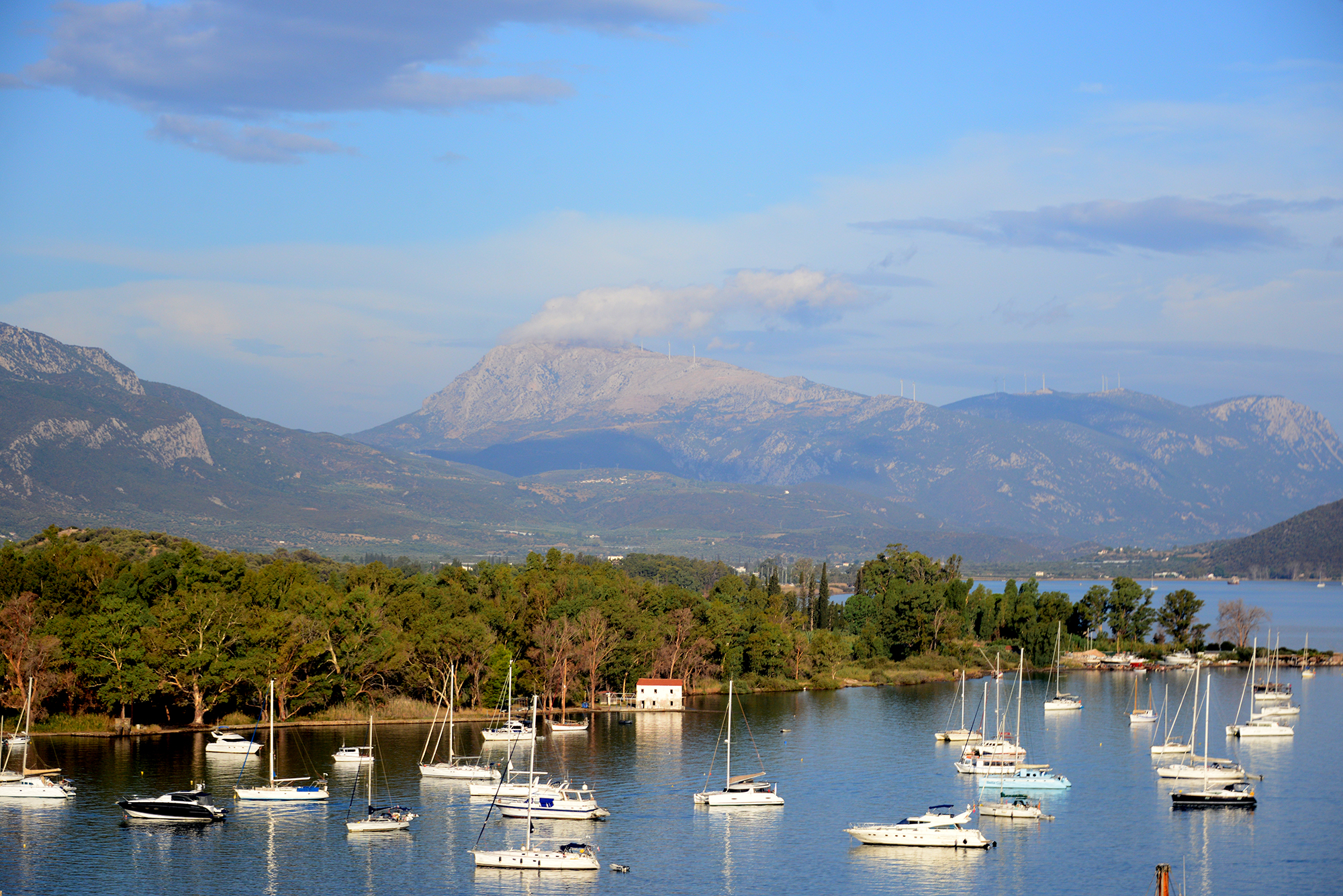
I settled on a terrace, adamant to make the most of this day, come what may. But, just as on Spetses a few years ago, the racket of cars and traffic, after the silent bliss of Hydra, was becoming unbearable. The wind picked up and was blowing napkins and plastic cutlery off tables. Our waiter rushed out to collect the flying debris and directed his sad gaze over the hills on the mainland. The horizon was birthing dark clouds at the alarming rate only island climates allow for. Perhaps this was the end of the world feeling the good people of Poros experienced more than two millennia ago, before the last major eruption of the Methana volcano. For those starting to feel a little alarmed, there is no need to worry, about the volcano, at least. The last notable, underwater, eruption happened in 1700, and bar a few suspicious rumblings in 1922, the Methana volcanoes have been lying dormant. At this point, the elderly American couple having brunch at the table next to mine decided to go back to their hotel and sleep it off, whatever IT was, and I felt compelled to hop on the next ferry to Hydra and sleep IT off too.
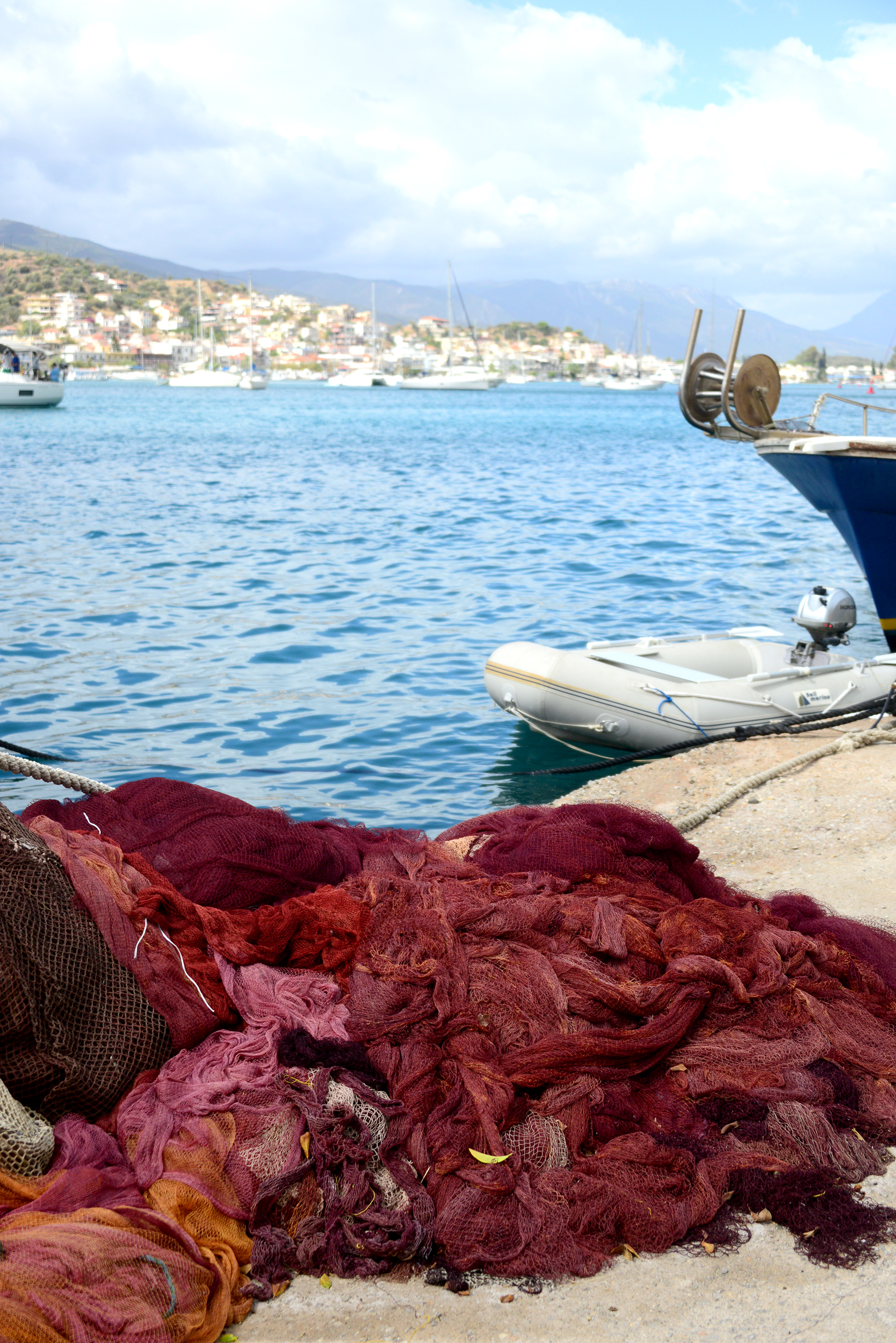
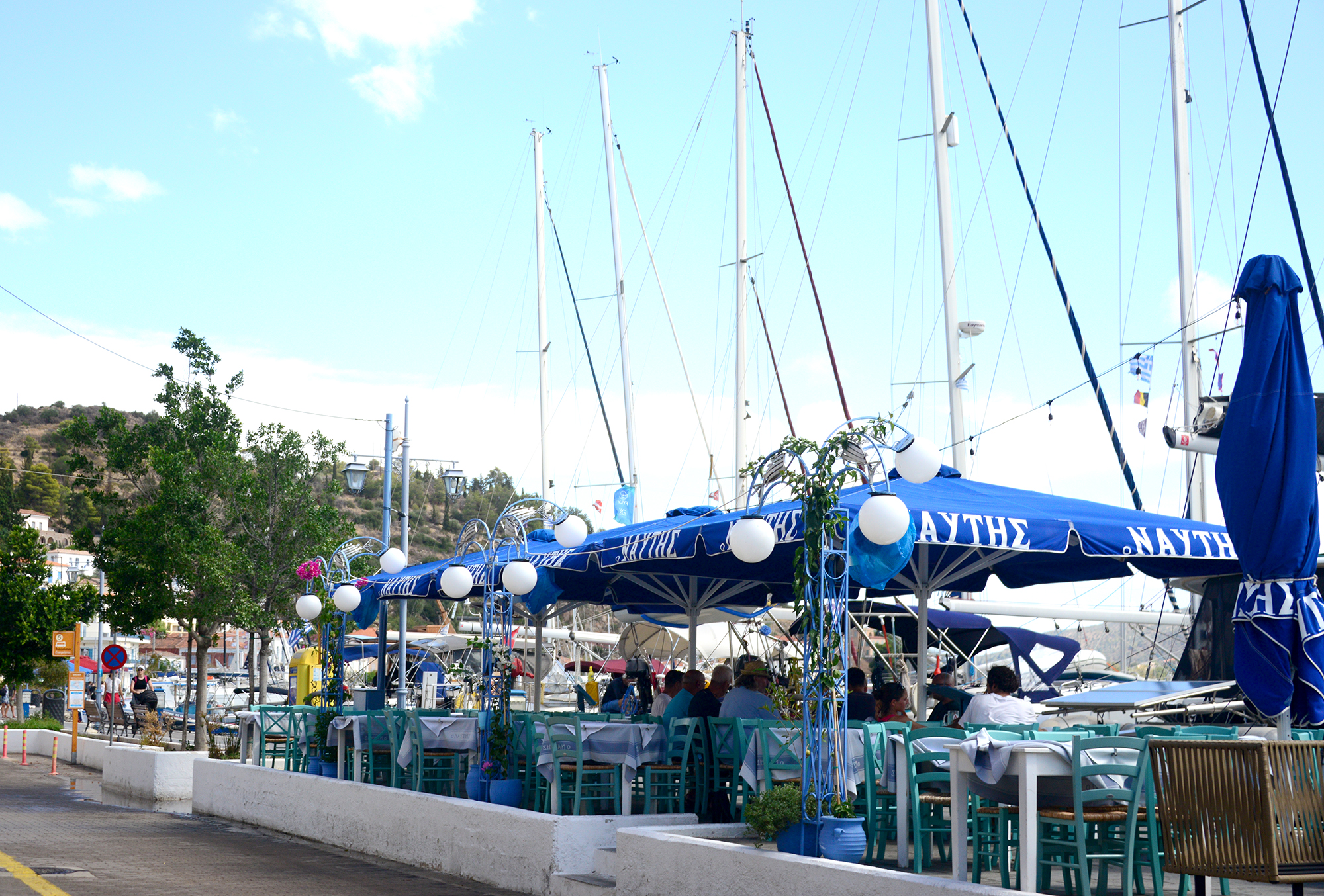
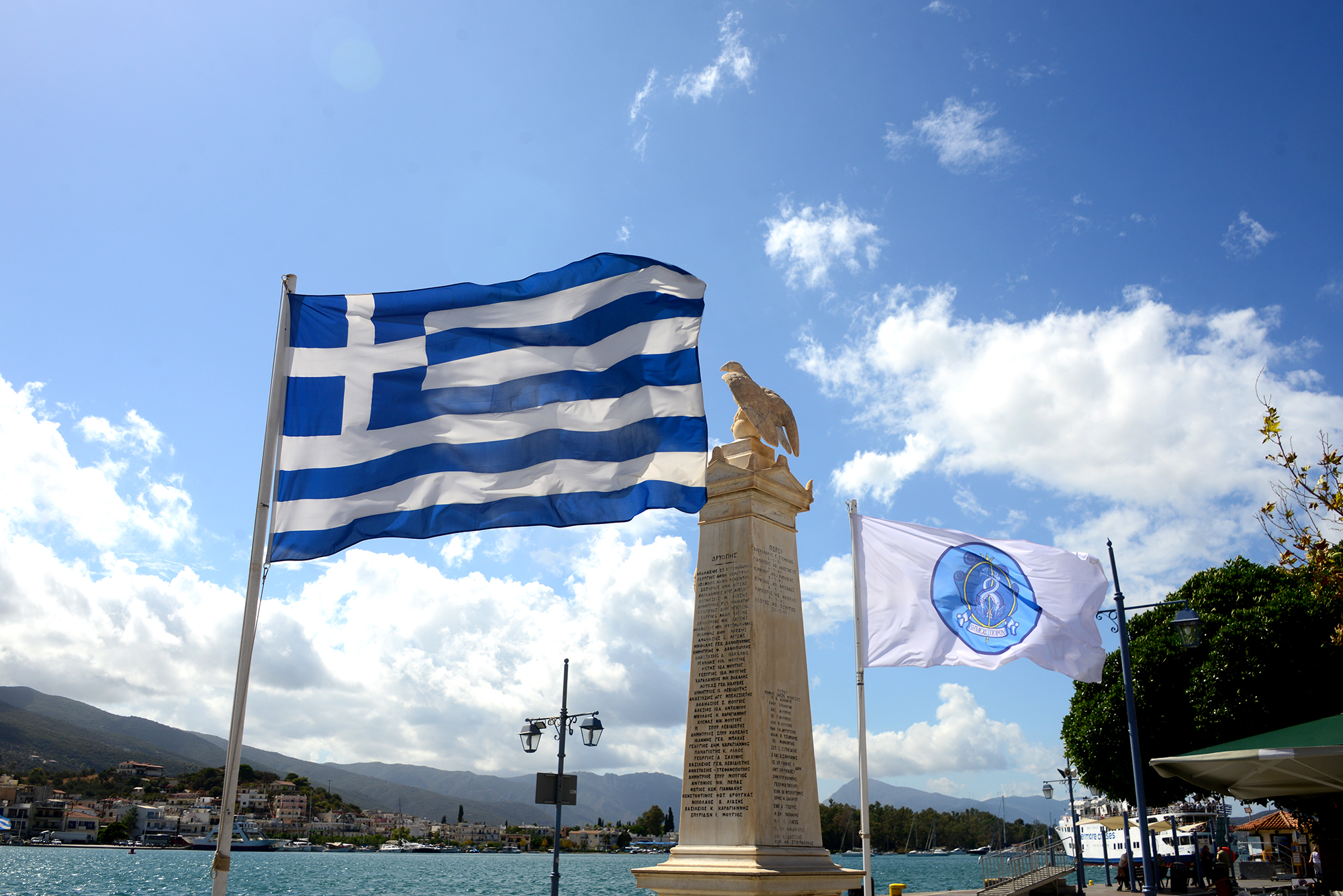
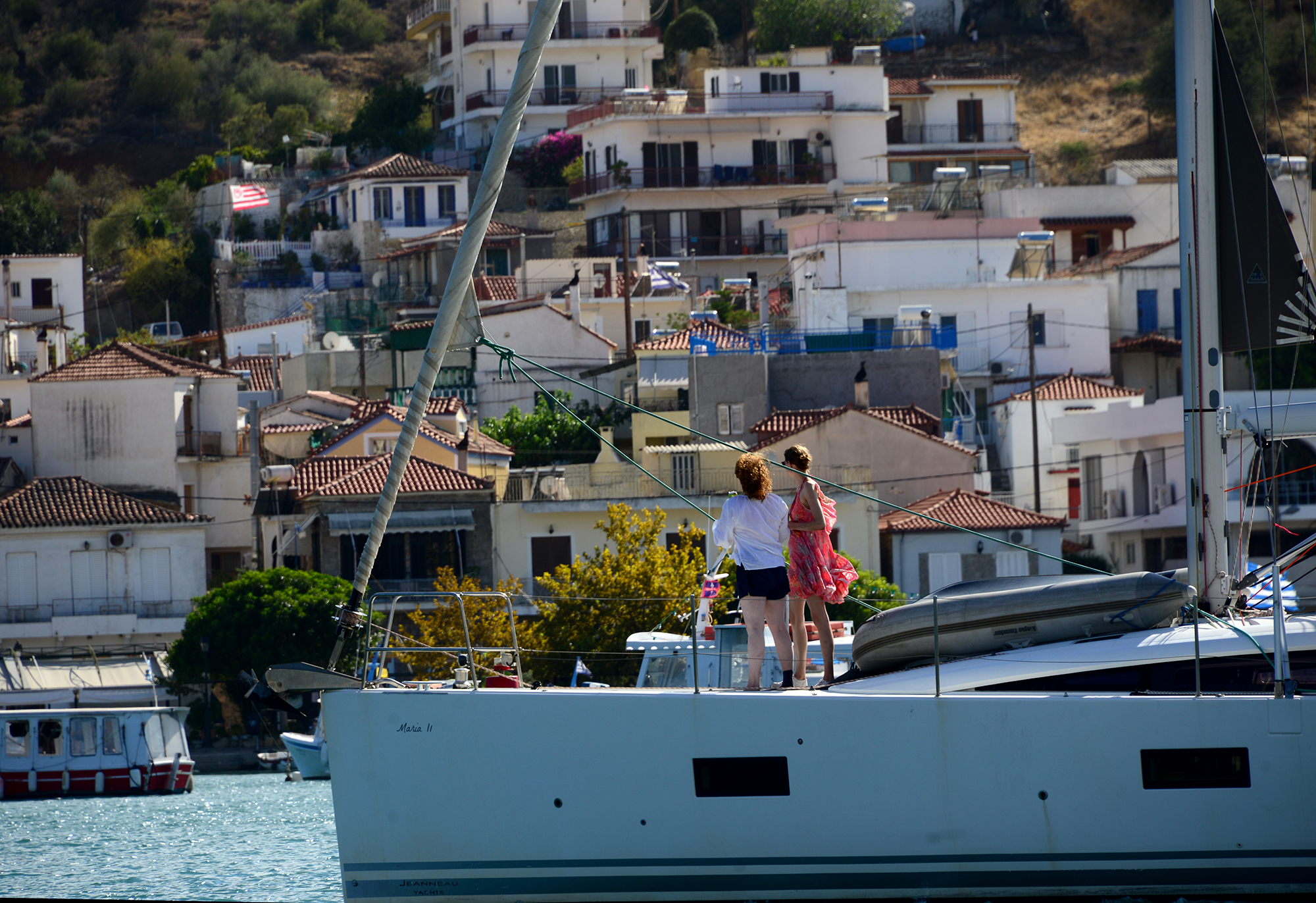
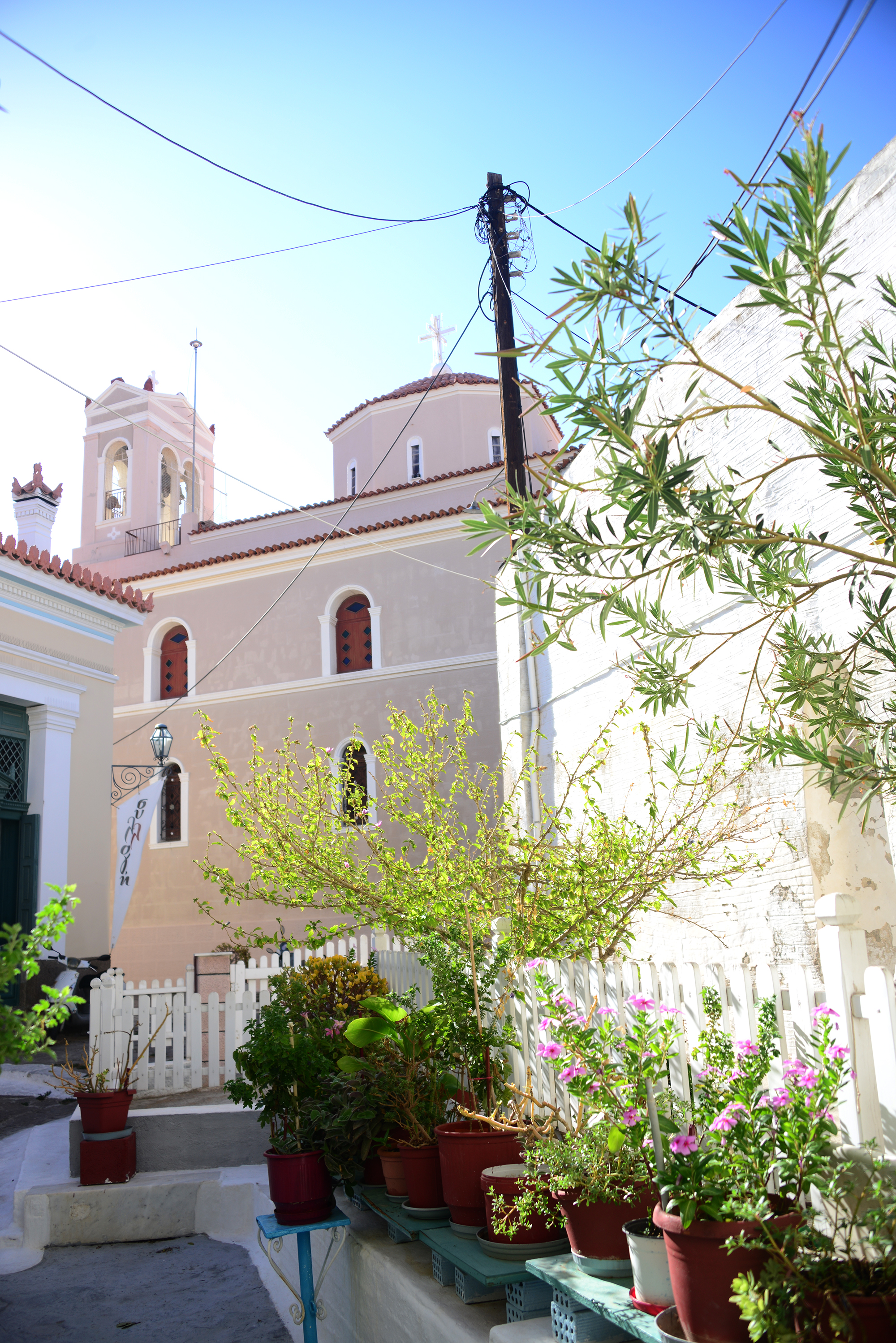
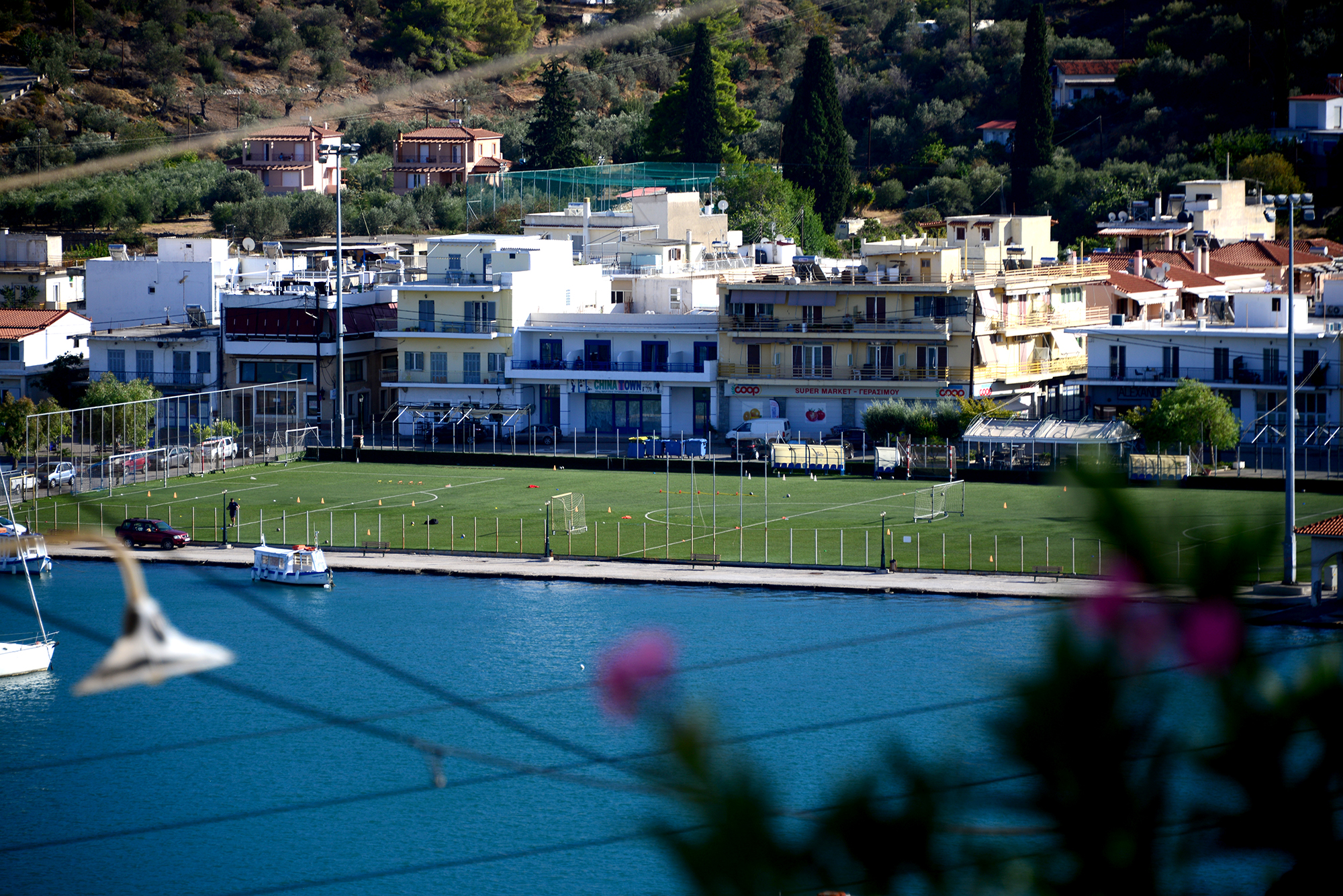
Instead, I went for a walk along the pier, under what had now turned into a positively ominous, black sky. I concluded, based on ample evidence, that a lot of boating, of the leisure and fishing sort, is perpetrated on Poros. Then suddenly the island of Sphaeria ended, with the church of Timios Stavros perched at the far end, and a few brave swimmers dipping in the sea before the imminent arrival of rain. Most terraces had not opened for the day, and looked like they might opt out of it altogether if the gods insisted on inclement weather. I therefore settled in Taverna Nautis (The Sailor), where two Swedish men were already about three beers deep, and wondering if the sky would clear by 3 PM, when they have a boat trip planned. The waiter, philosophically, concluded that the sky might clear, but also, it might not. The Oracle of Delphi could not have done a better job at delivering ambiguous prophecies. And then the downpour arrived, washing us off the terrace. The Swedes retreated to their boat, moored nearby, whereas I joined the staff inside. This was an unexpectedly lovely arrangement, and a couple of glasses of retsina made it even more lovely, until, in a sudden move, I sent one of my earrings flying across the room, and it seemed to have been swallowed by a black hole. After a lengthy search, I was ready to give up, but the waiter, a good man, and thorough, did not. The earring was duly located under a slip of paper someone had forgotten under one of the tables. I felt that this was a good omen, and, again, a testament to how Greeks will make sure to help you out, whether you are in a small or a large calamity.
I am delighted to report that by 3 PM the sun had come out so, very likely, the Swedes could go on the trip they’d planned. I, however, had by now completely given up on visiting either the Sanctuary of Poseidon (located on Kalaureia, a 10 euro taxi ride away), any of the beaches (The Love Bay sounded like an enticing option), or the Russian naval base, things a more disciplined traveler would have planned meticulously. Given these underwhelming developments, all exclusively of my own making, I felt compelled to commiserate with Demosthenes, the famed Athenian orator and nemesis of Alexander The Great, who reportedly came to Kalaureia to kill himself. But having a fickle heart sometimes pays off. Soon, I was childishly happy for the clear blue skies, and for having caught glimpses of the fabulous light that Marc Chagall had raved out. Every Greek island seems to have some initially clueless artist of world renown whose life it changed, and Poros lays claim to Chagall, who briefly lived and painted on the island in the early 1950s.
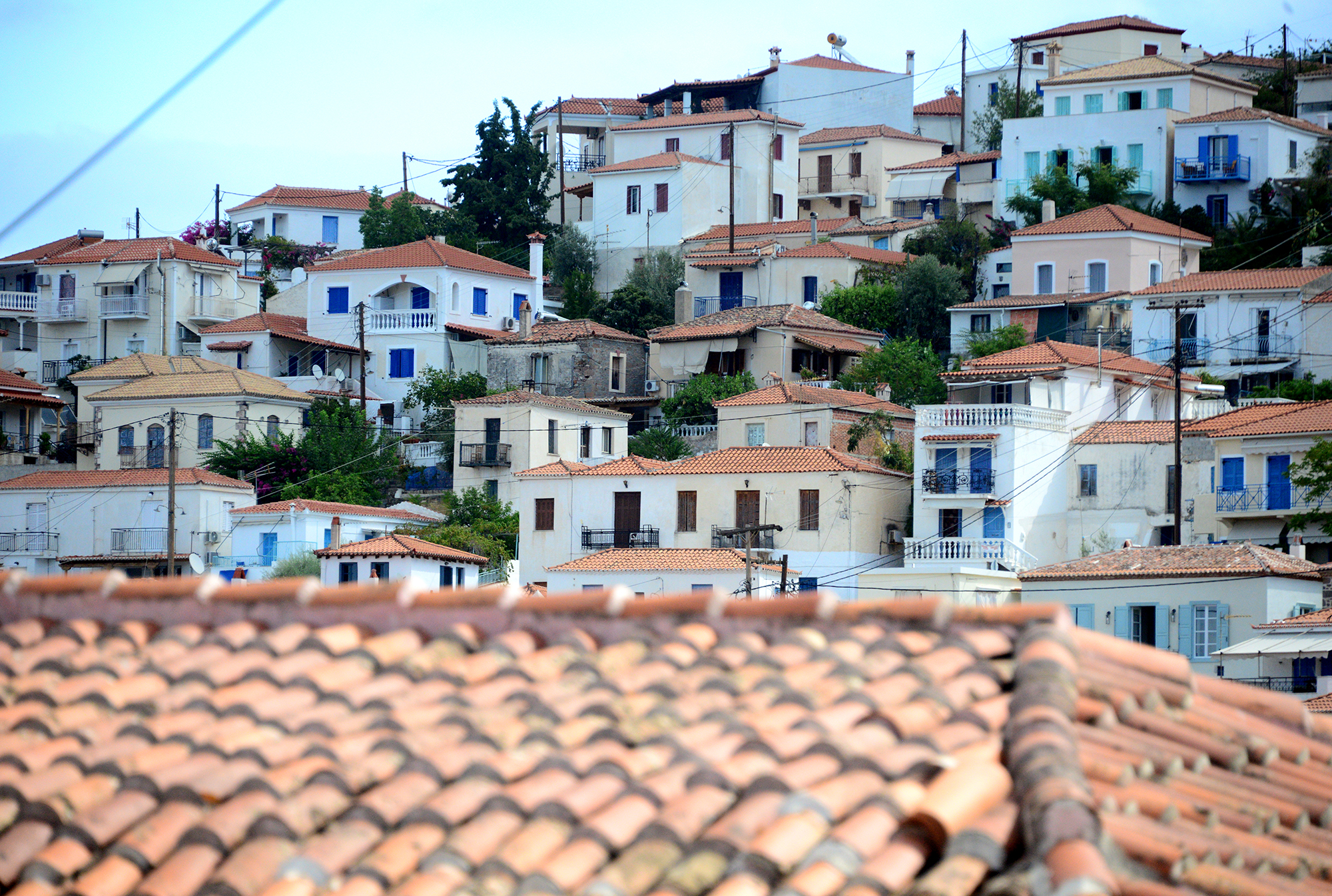
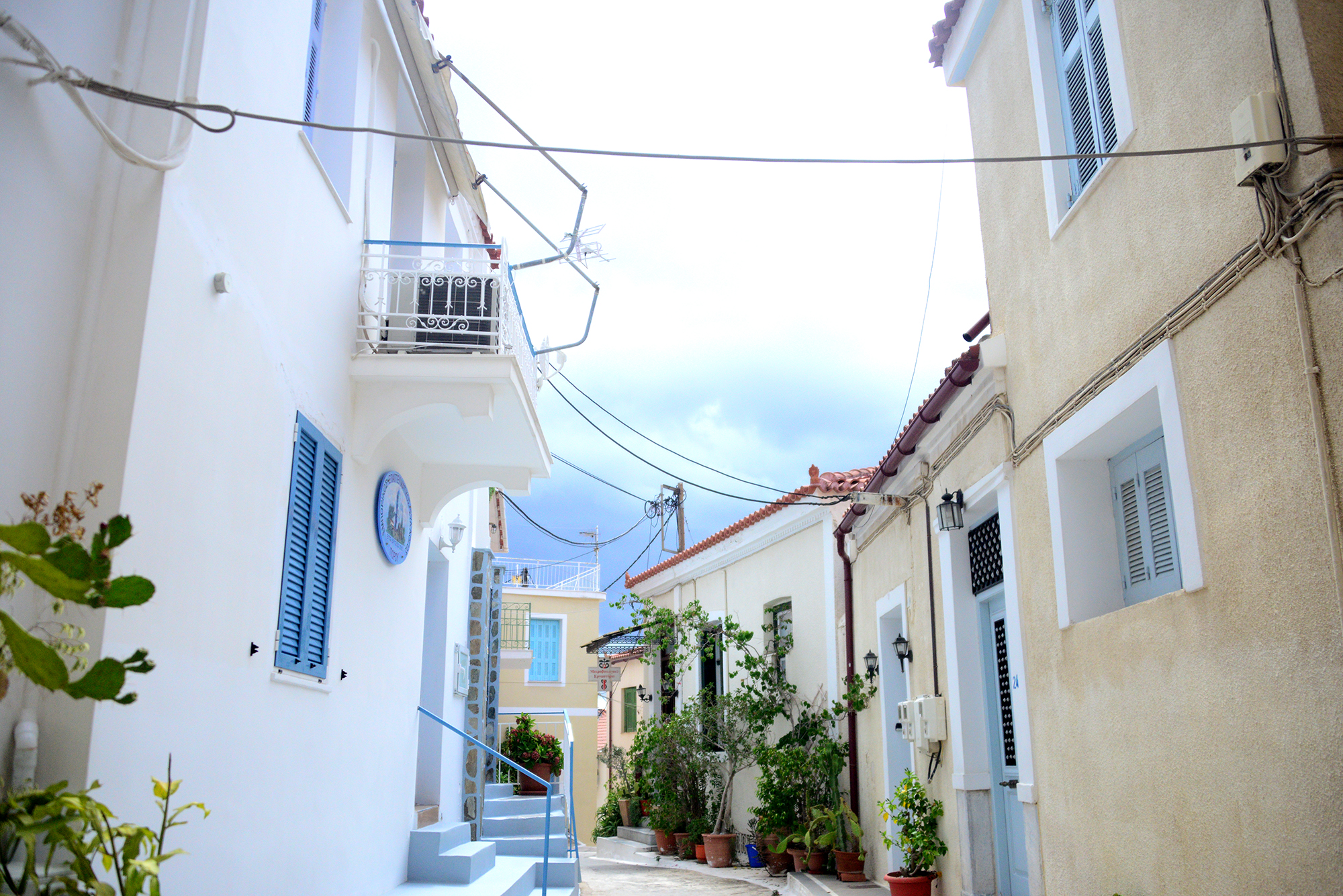
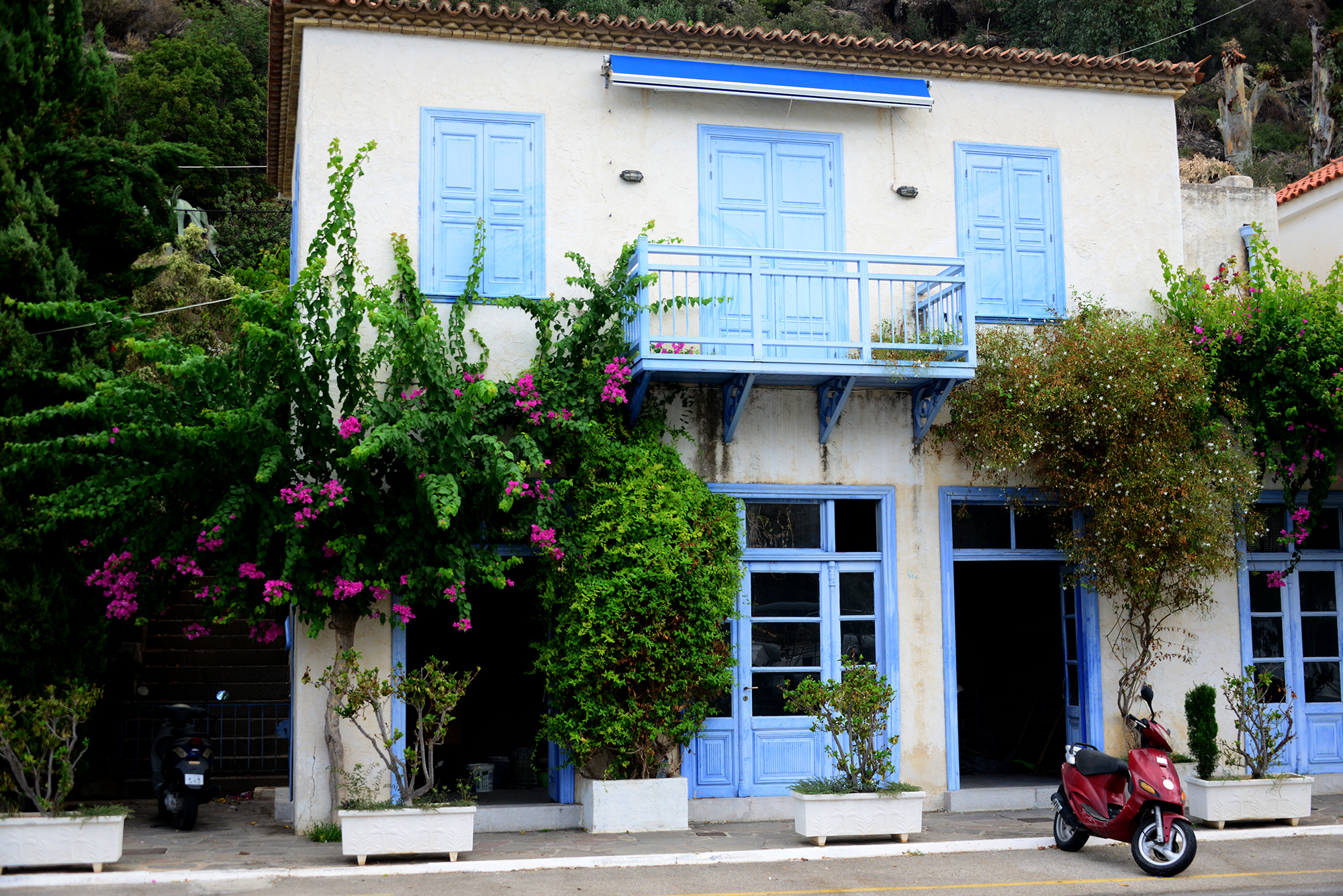
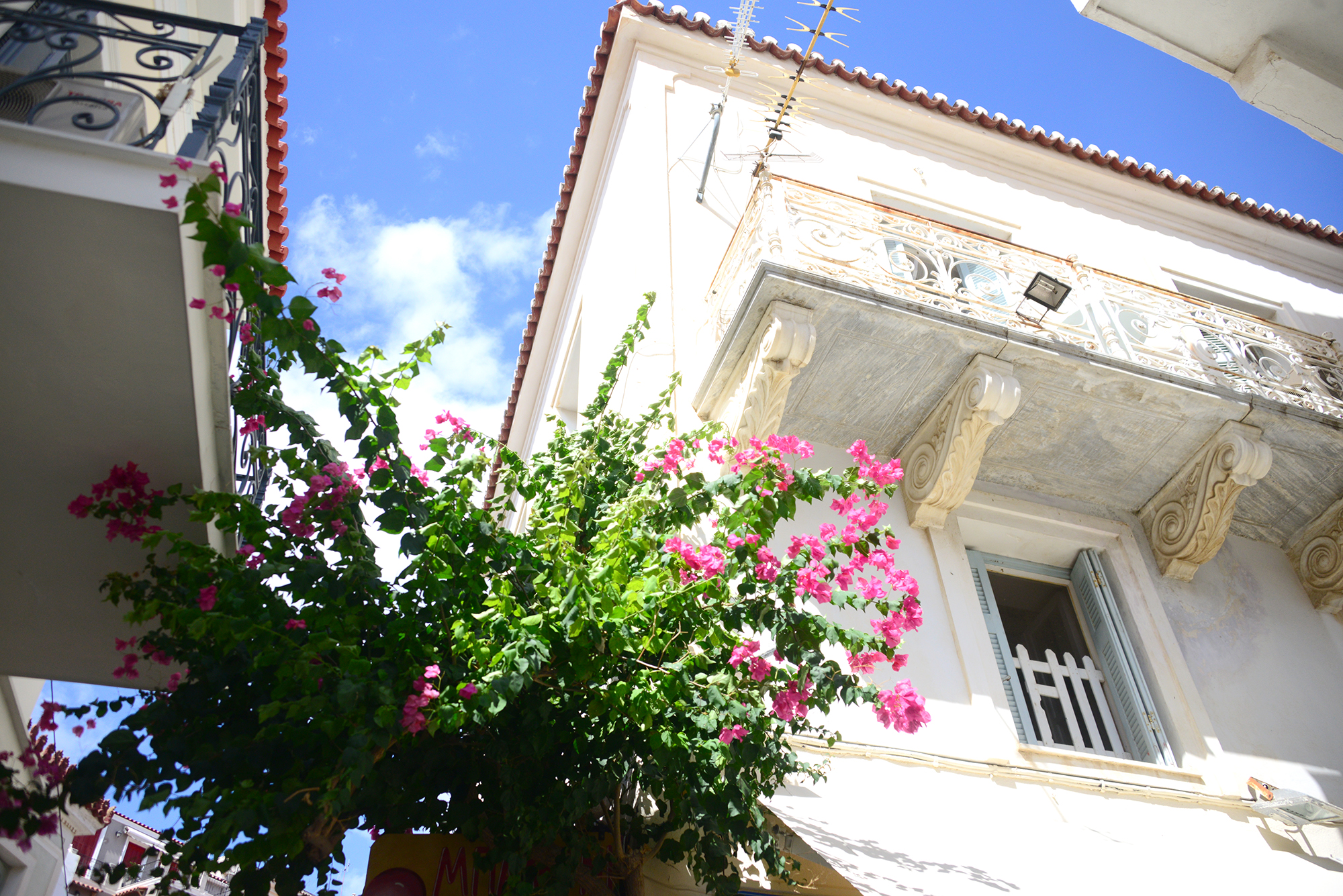
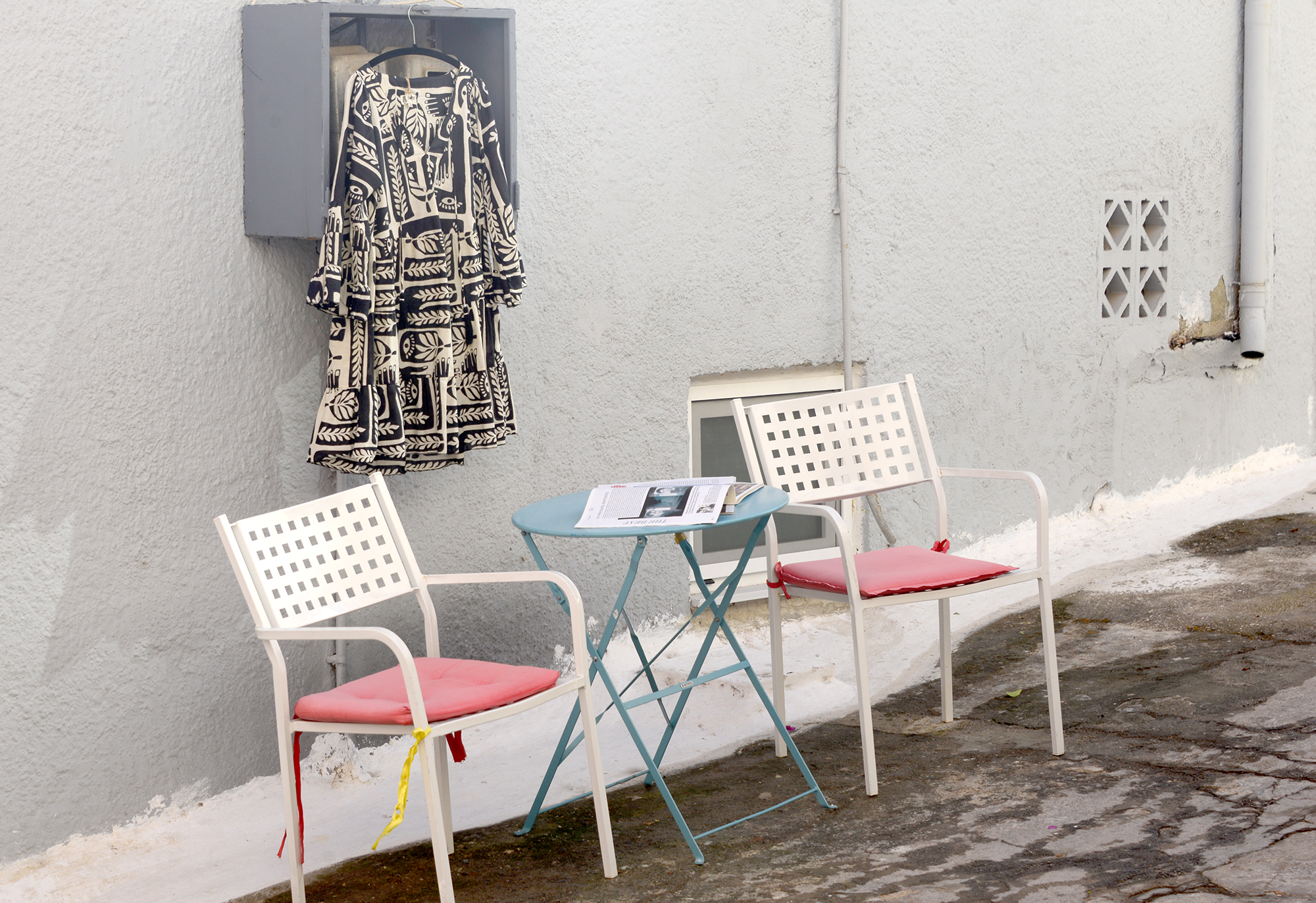
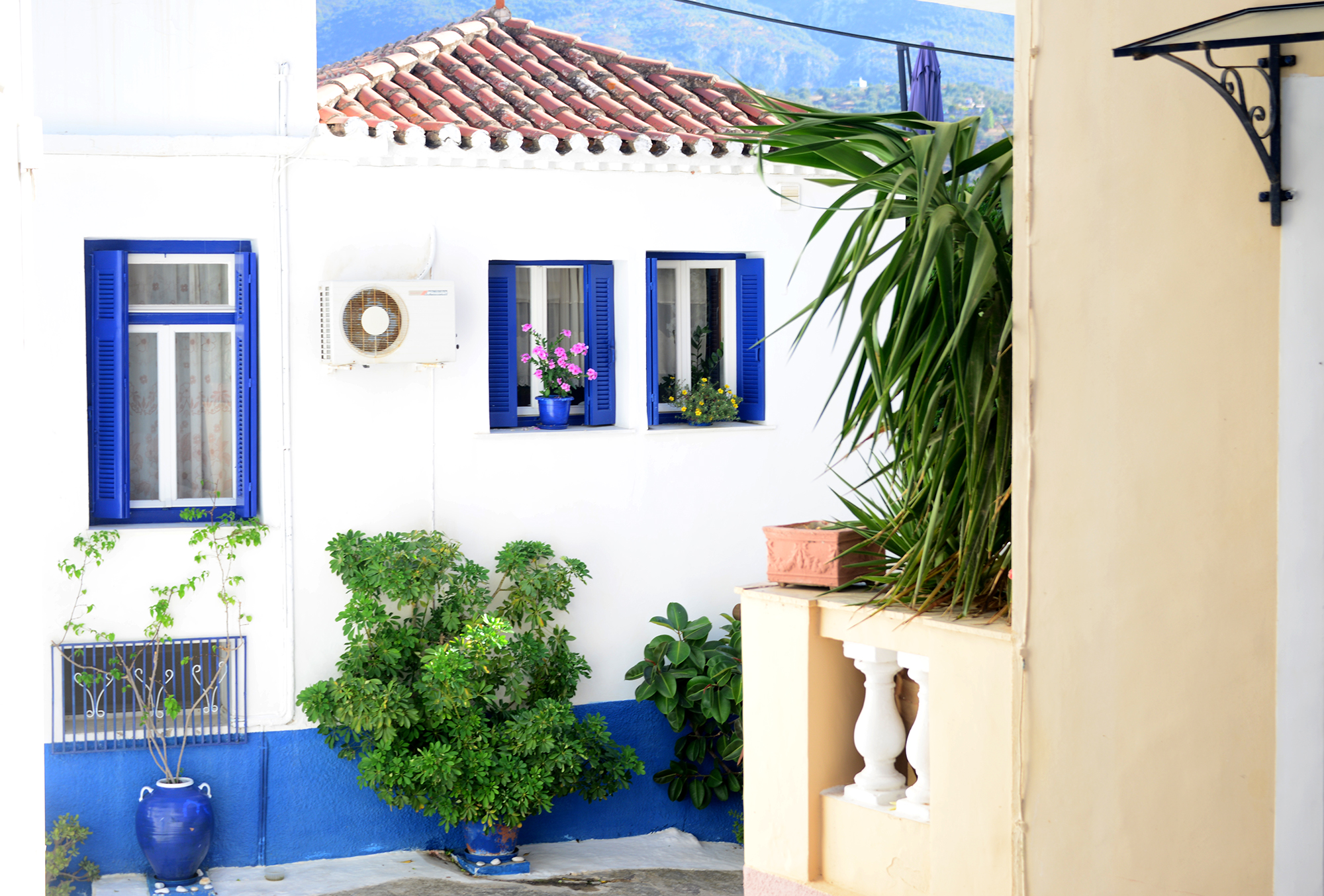
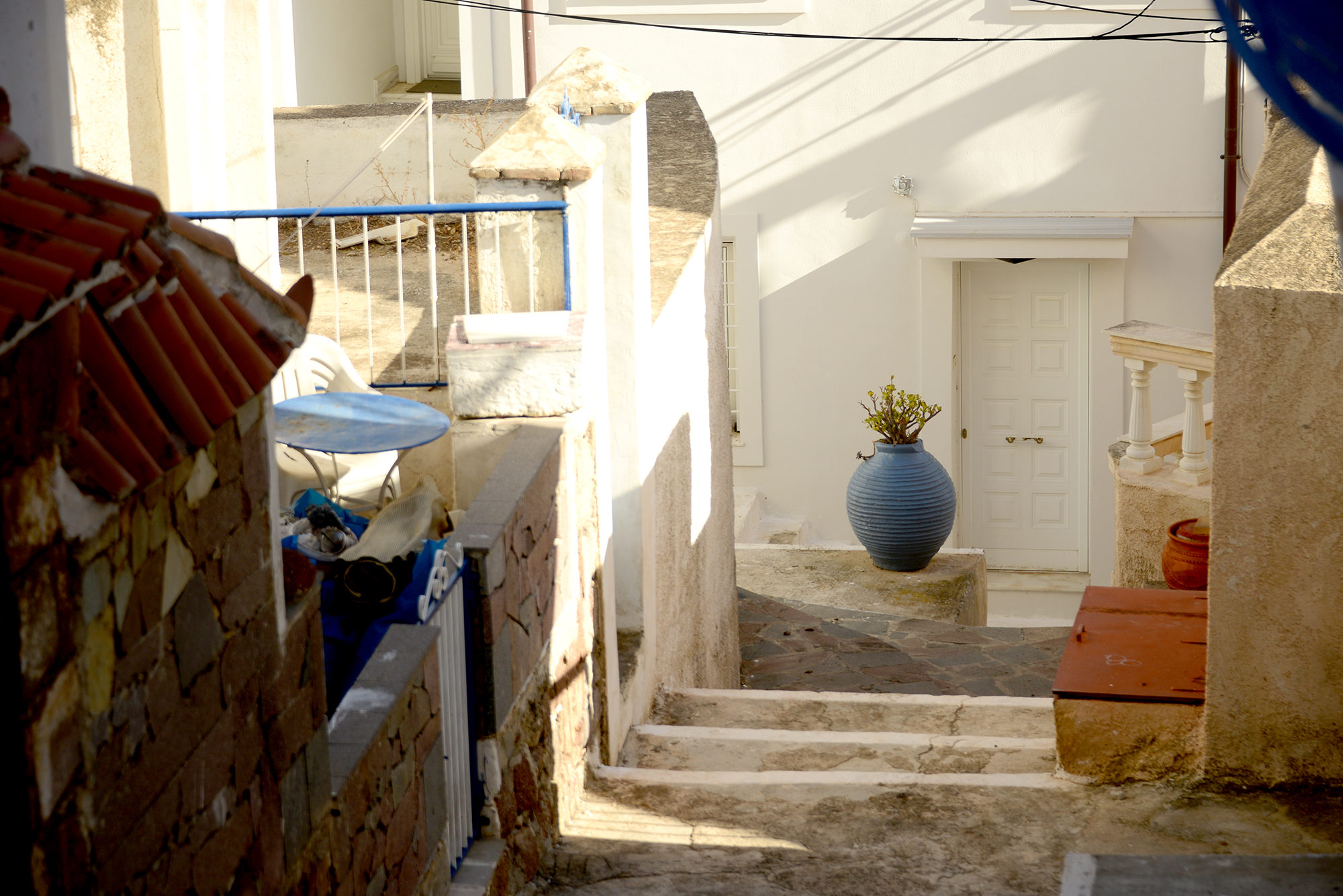
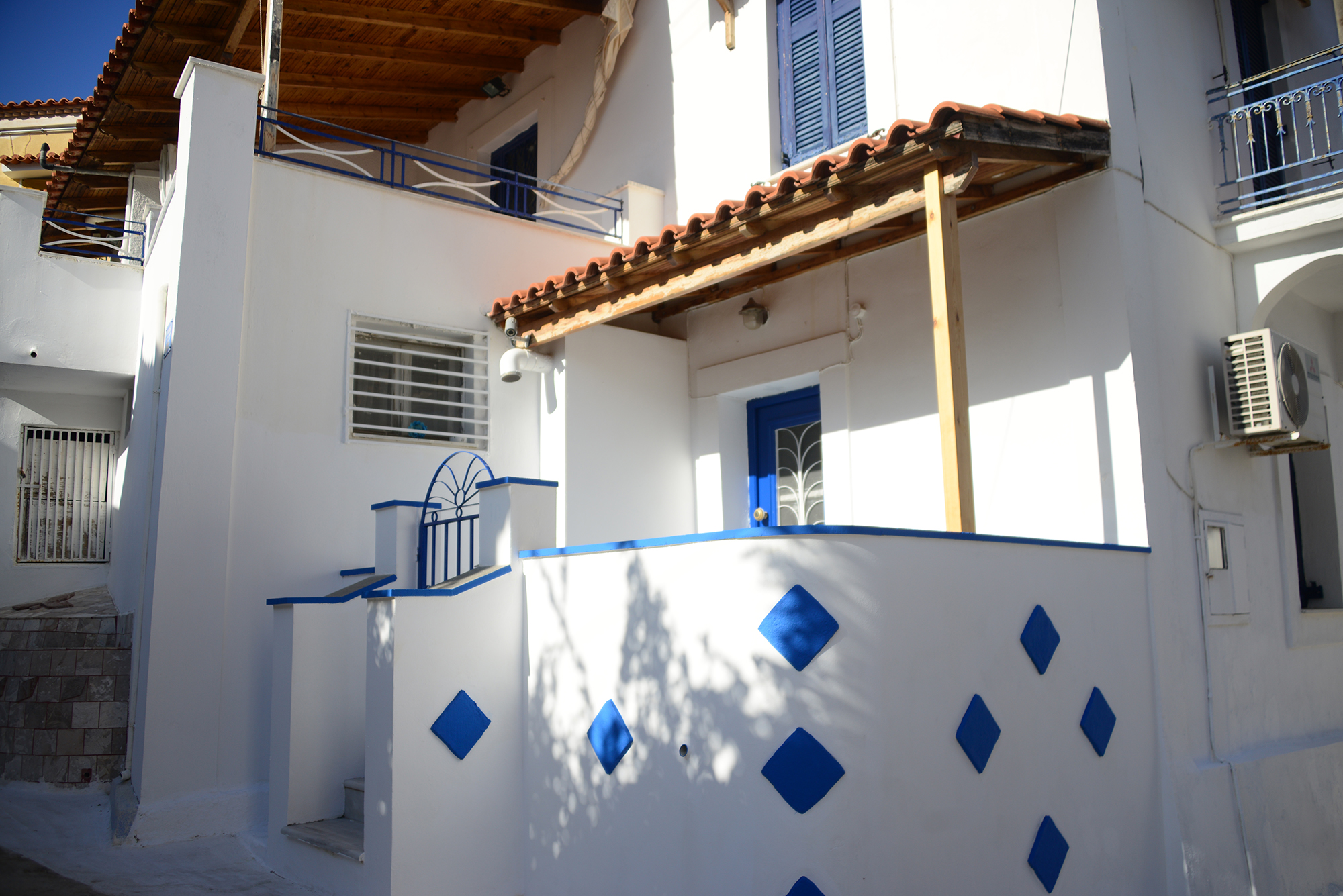
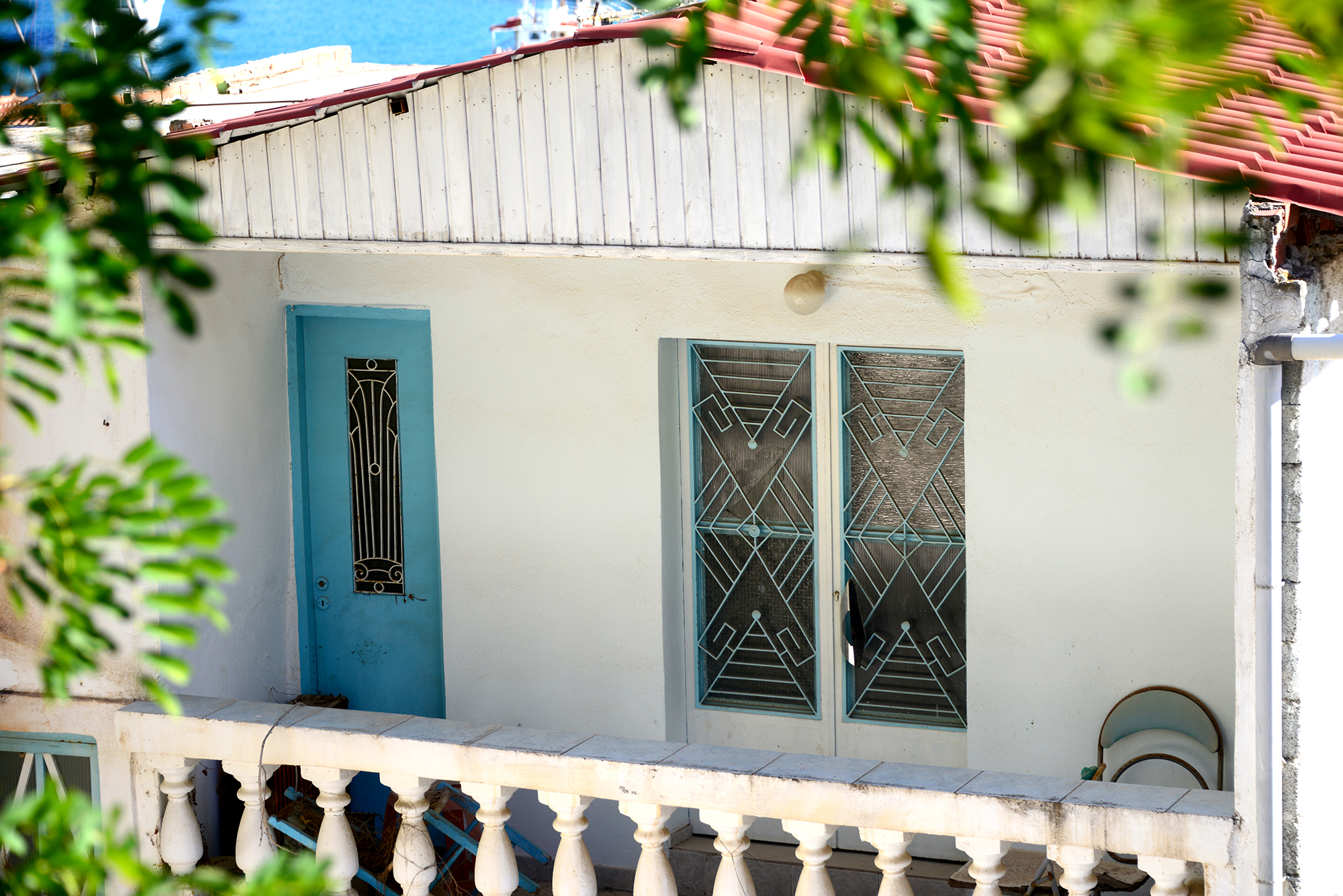
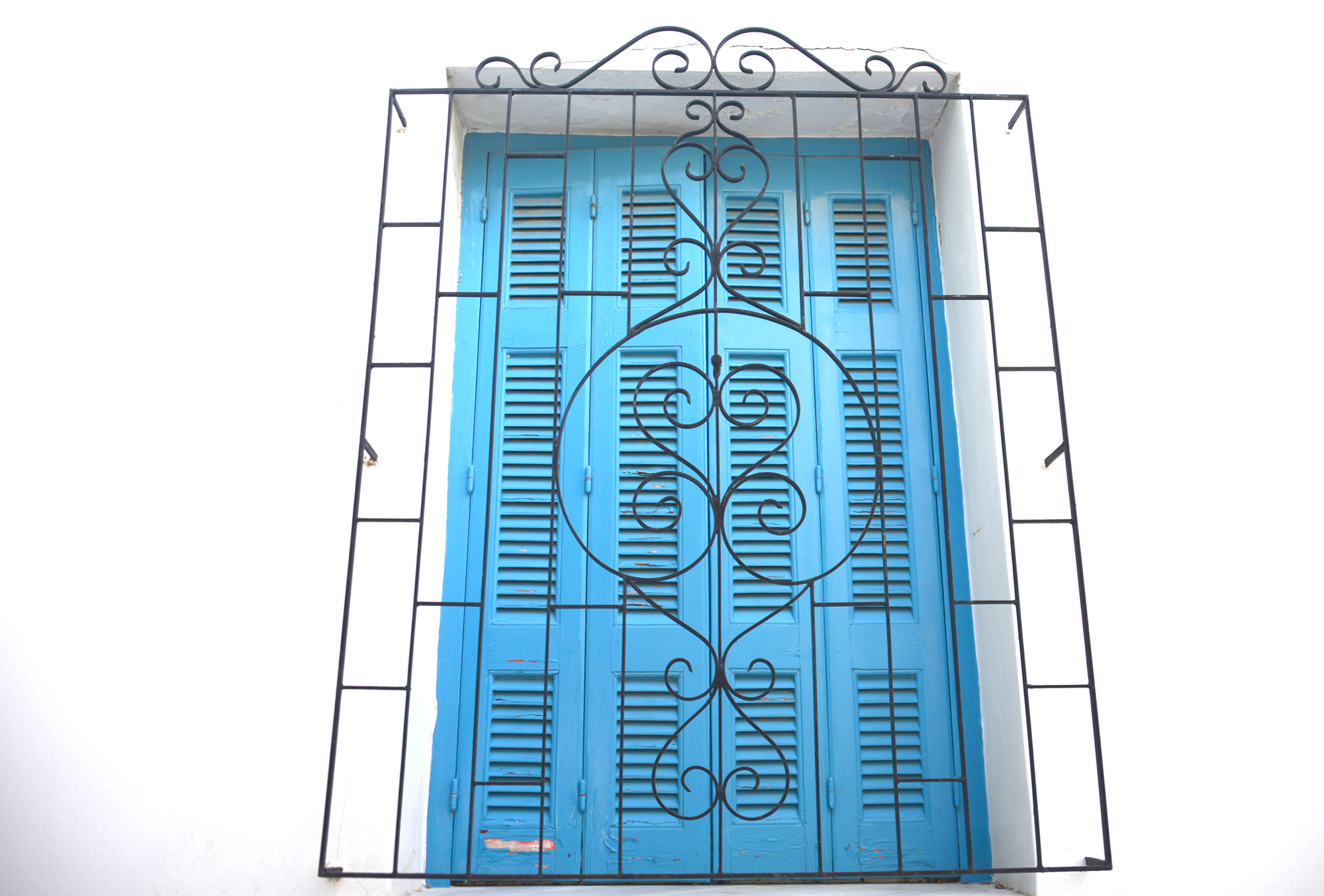
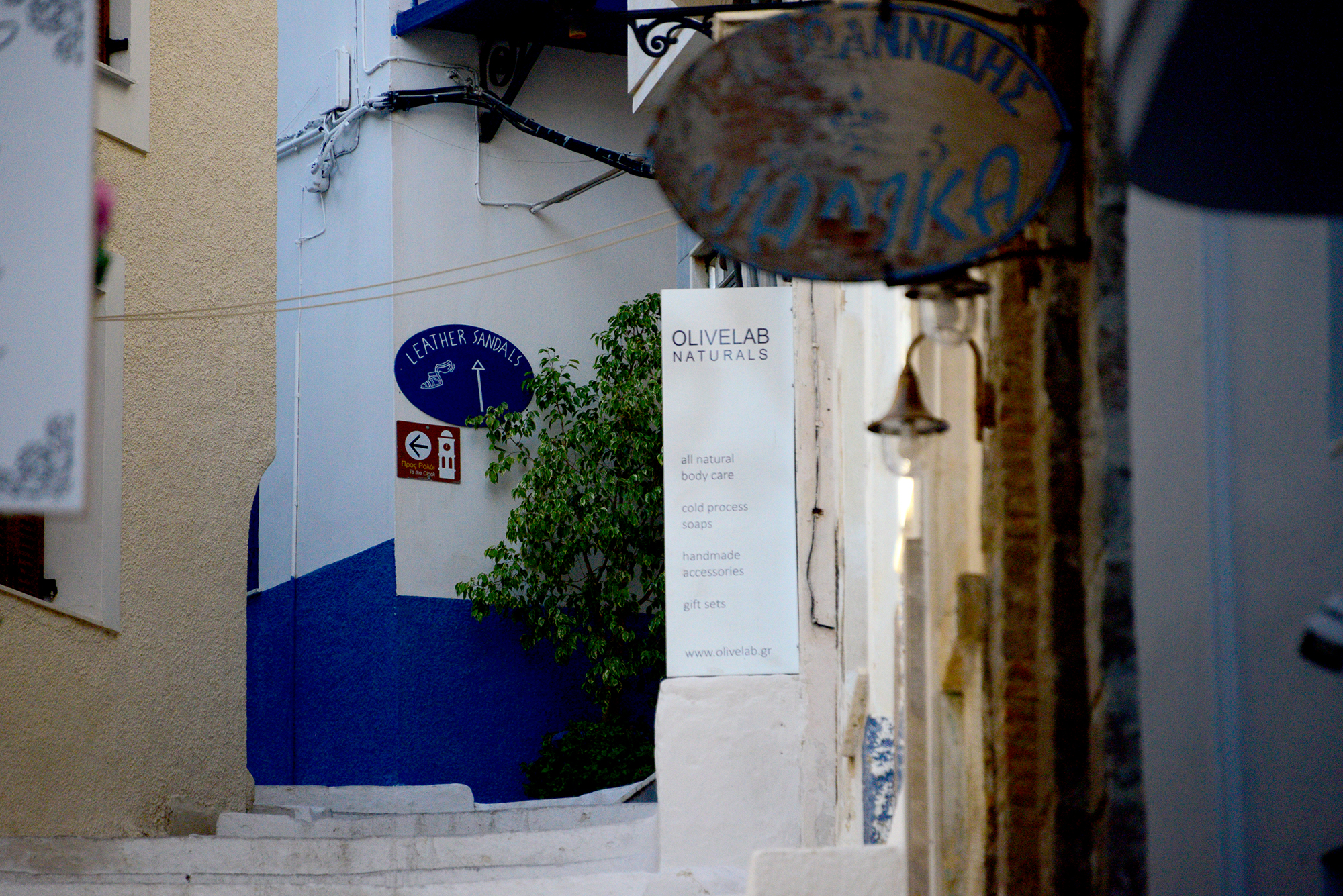
Riding the wave of euphoria, I finally found the scenic route to the bell tower, with lovely, whitewashed houses complete with surprising art deco elements, and bumped into a busy area which clusters many shops and restaurants, including the Sokaki Taverna, which serves simple but delicious local staple dishes, and the Glykisma sweet shop, which has splendid baklavas and orange cakes. It can be safely said that, compared to Hydra, prices on Poros tend to be lower- a plate of good if unspectacular soutzoukakia with a side dish and a glass of red house wine cost 11 euros altogether. On the final stretch before returning to the port to catch the evening ferry, I discovered a hidden gem: the Olivelab Naturals store, which has a great selection of body care and home décor items. I am confident I could have looted the thing like the Crusaders entering Constantinople, but I held back in the name of conscious shopping. I still do consider it reason enough to take a break from the ferry ride on your way to Hydra, or when travelling back to Athens.
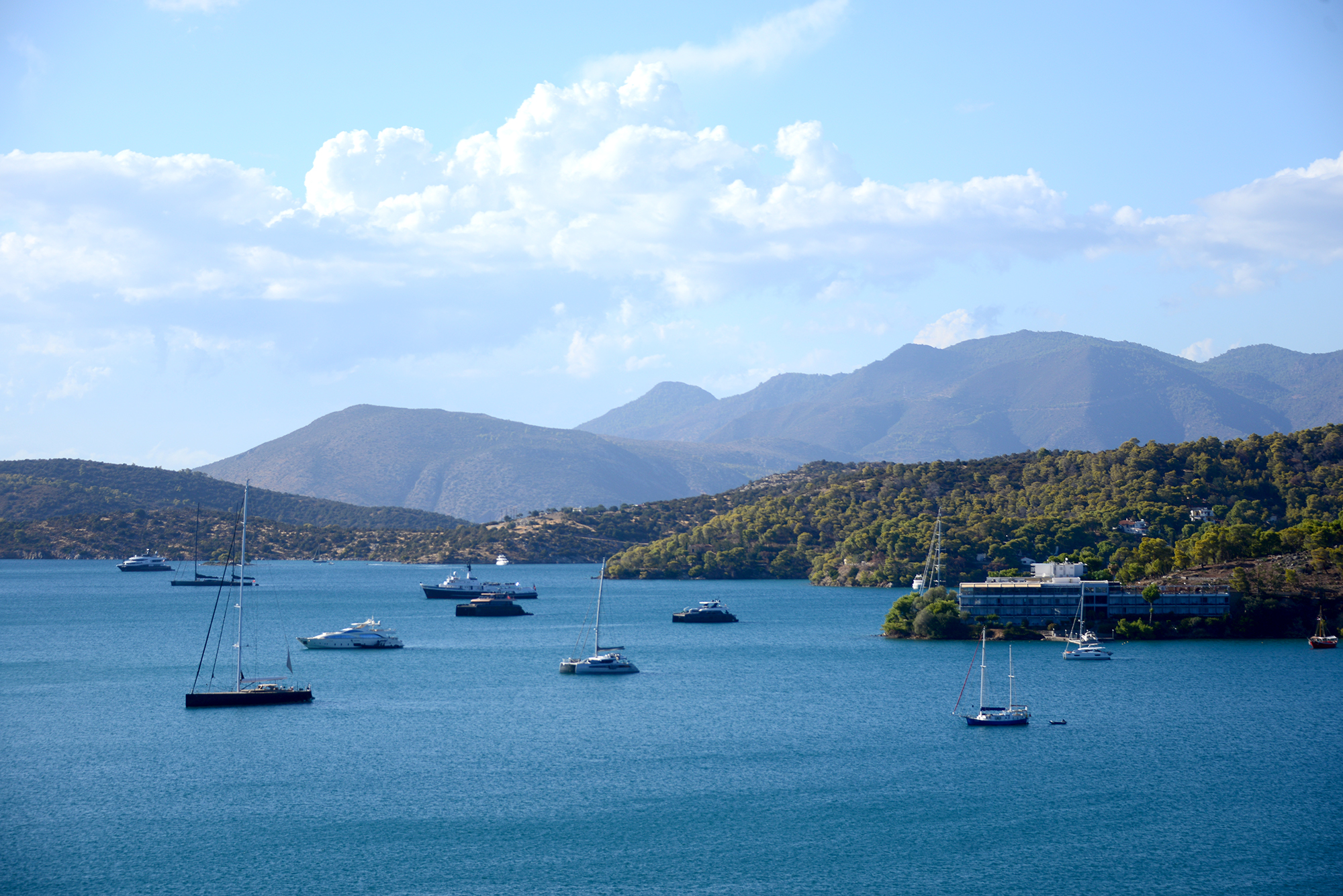
I am, however, not sure if I would want to stay more than for a brief intermezzo, but perhaps one day I will give Poros, the whole of it, sanctuary, museum, and beaches included, another chance. The light is undeniably wondrous, and there is something compelling about these slabs of land huddled so close to each other, but also belonging firmly to the sea, covered in lush vegetation, the crisp green of olives and cypresses melting seamlessly into the near-green, almost-blue of the sea.













 Pocket Diary Budapest