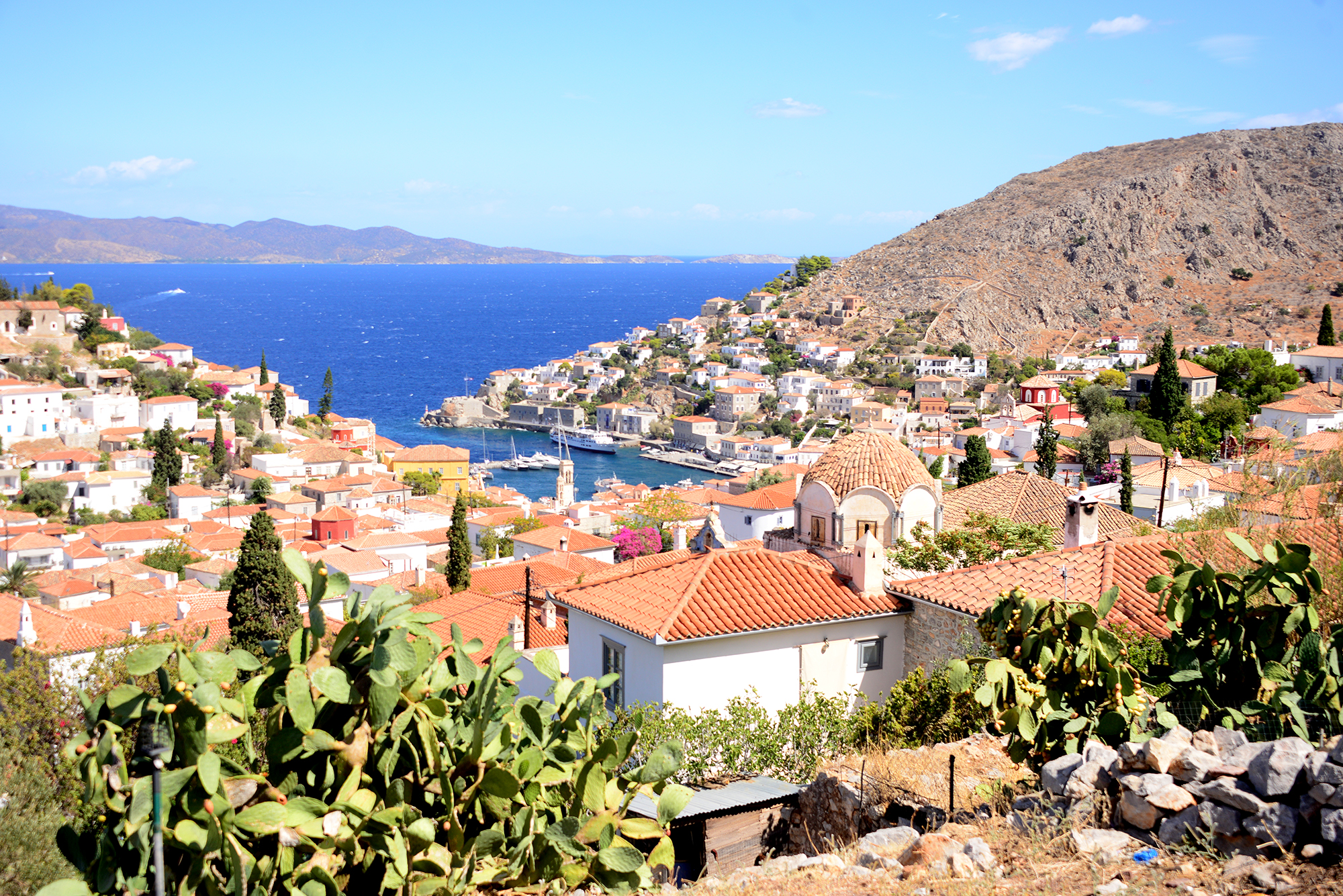
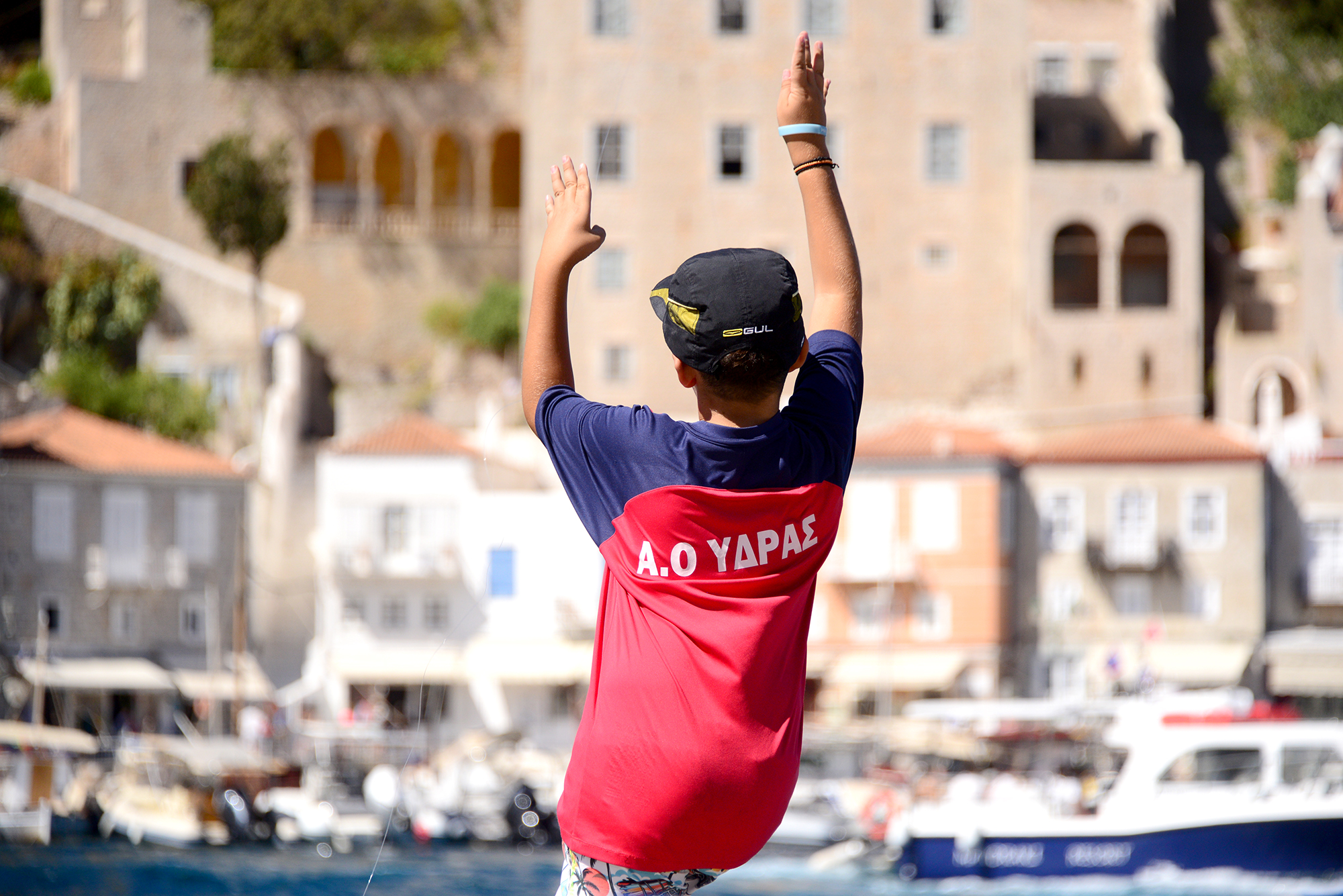
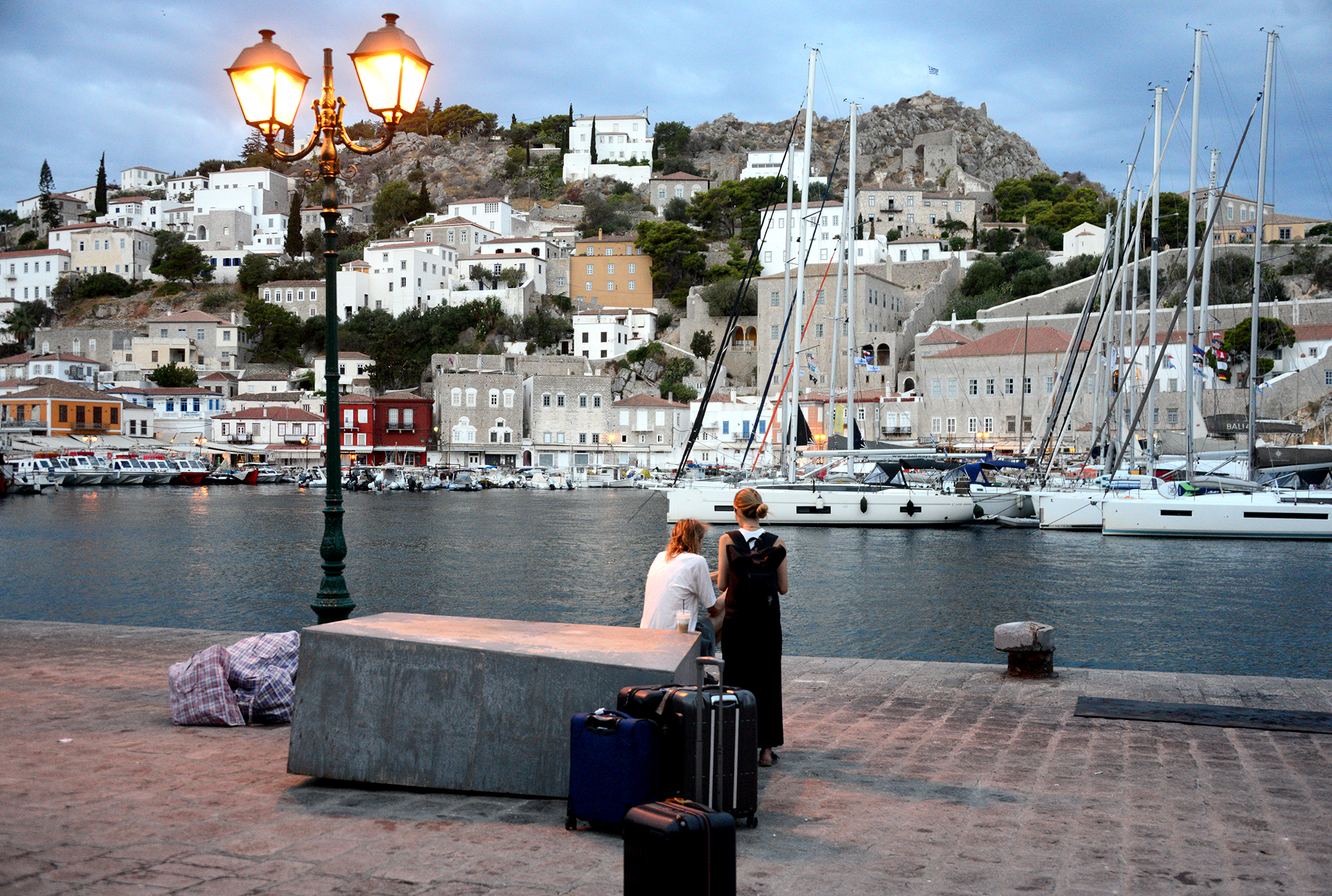
As we arrived on the island. A sentence which is, likely, the most commonplace way to start a piece about Hydra. So, as we arrived on the island, the sky was very blue, the sea was very smooth, and the sun was very high above the horizon, steadily beaming salty, furnace-like heat. It was very unlike last year’s arrival, in the eye of storm Daniel. I felt almost disappointed, as if this was simply too easy, and our stay would prove uneventful. I felt a little jealous too, of the people who rushed to the sides of the Flying Cat to take in the sights of the port for the first time. A serious debate. Which is the better feeling. Seeing the port for the very first time, brimming with excitement and expectation. Or seeing it again. And again, until it feels almost like a homecoming. Since we invariably leave Piraeus at the same time, it’s always the very same boat running the connection. The Flying Cat 4. Things don’t change on Hydra, I told myself. But in fact, they do. Incidentally, I was reading Adam Nicolson’s How to Be Me, which features Heraclitus, he of ‘you never step in the same river twice’ fame. And you never step in the same sea, either.
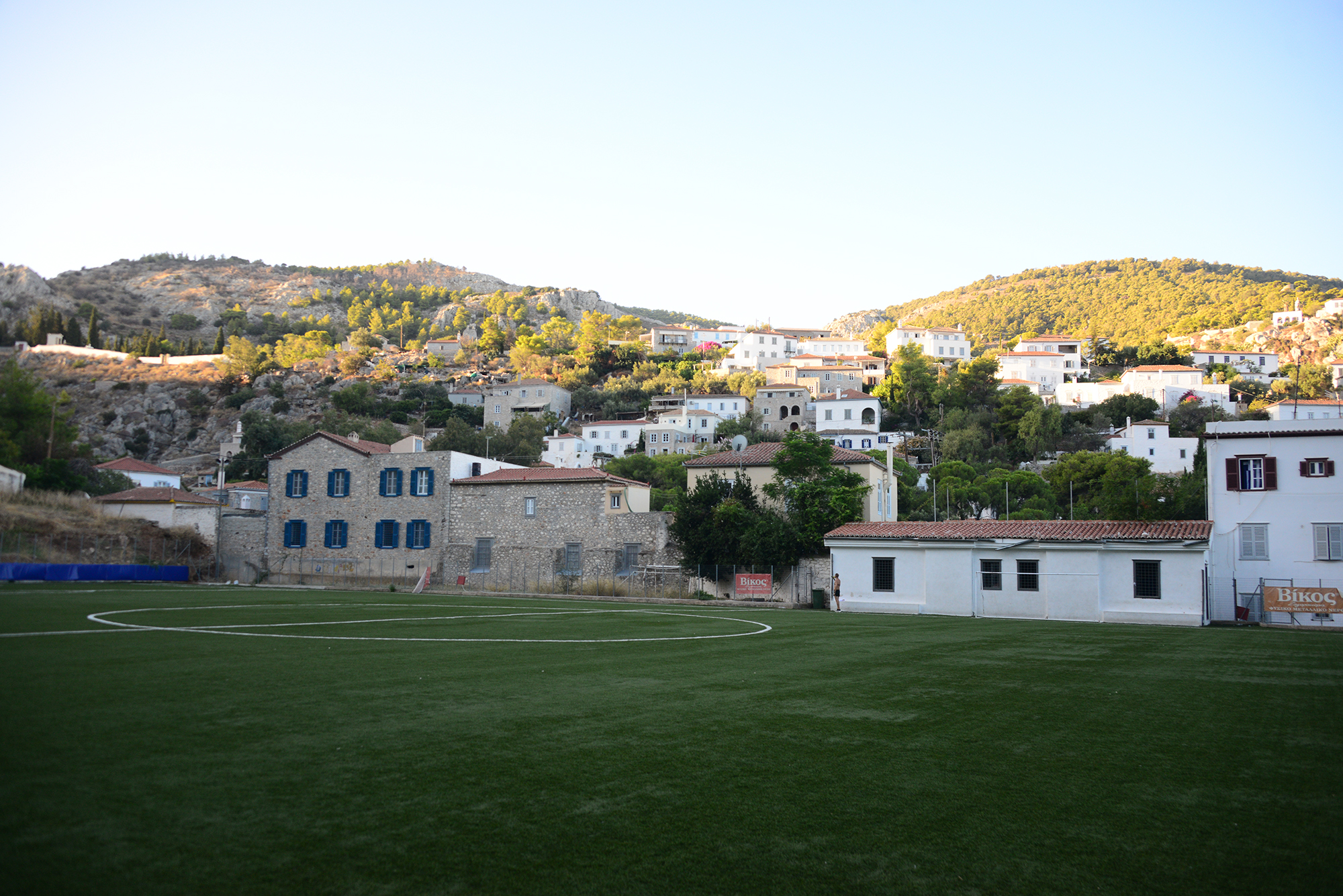
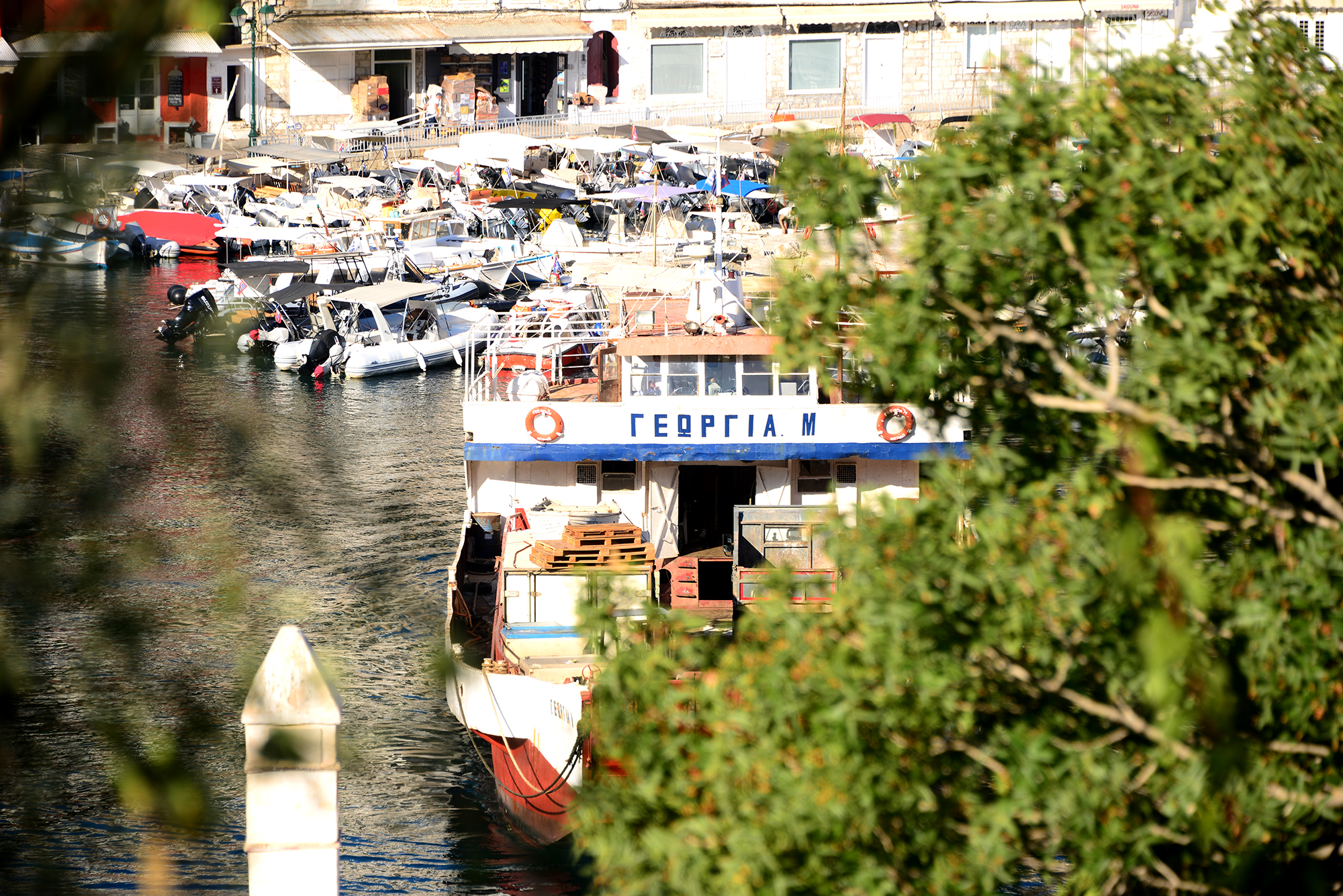
Nor are you the same person. Much improved by reading presocratic philosophers, I am now a person who runs in the morning, even when on vacation. There are several options for the dedicated runner, on Hydra, and it seems that very many people read presocratic philosophers and/or follow Tik Tok influencers. If you run enough, especially with little water and later in the day when it’s blindingly sunny, you might even start pondering how philosophers functioned quite like influencers back in the day, and so then today’s Tik Tok influencers are…I rest the thought here. Nevertheless, many people run on the two seaside roads leading towards Vlychos and Mandraki, and some hardcore fitness freaks run on the grueling trails leading up towards the monasteries and across the spine of the island. Me, I run circles on the pretty little astroturf pitch, and it’s not (just) me calling it pretty, it has been featured in several series on the most beautiful pitches in the world. There are some dedicated, and evidently fitter, runners out there every morning. A little nod, and then I’m off on a slow jog, chuckling to the Football Weekly, and contemplating the inevitable progress of time and the passing of the seasons: every morning, the sunlight breaks from over the hills at a later time. When it finally lands on the pitch, the plastic grass gleams golden, and the heat becomes unbearable. Time to retreat- for me at least, the locals seem immune to these challenges and run on. Allow me one last football themed side quest: shirt mania has reached the island, your classic Brazils and Argentinas, styled as edgy resort wear, punctuated with the occasional local gentleman sitting on the terrace of a port side café, sipping his freddo cappuccino, inspecting the disembarking of wares from the Georgia (the boat, not the country), and casually wearing an Olympiakos Piraeus shirt, UEFA Conference League Winners patch proudly displayed on the shoulder.
After the run comes coffee, and I am starting to wonder if I have some sort of Stockholm syndrome when it comes to having coffee in Greece, and in particular, the immensely popular freddo espresso and freddo cappuccino varieties. In the unrelenting heat, they start to make sense, including the fact that people will slosh them around until they become essentially slightly coffee flavoured cold water. Compared to our first visit, I find good coffee in many more places, Lavein, The Lemon Trees, even the one in EU bakery tastes better now, especially in the context of it being the only place open ridiculously early in the morning- that would be 7, right before the first boat to Piraeus docks in the port. It’s a splendid pastime, sitting at the weather battered tables in front of the bakery at the crack of dawn, the tip of the surf occasionally licking your ankles, and you just watch the world go by. Or stay by, like the lady who was painting her nails while having breakfast. It was a highly engrossing undertaking, as she would occasionally miss the outline of her nails, and not mind the least bit. She eventually lifted her hands, coral blue paint smeared quite unevenly, and sighed with pleasure: ‘Nice!’.
Over in Kamini, there’s a new establishment with a slight Berlin millennial vibe, complete with a pun for a name, Kam.in. They’re serving coffees described by a distinguished older gentleman as of ‘the wretched sour kind’ and come closest Hydra can come to the standardised brunch units mushrooming all over Europe, albeit, with a local twist. Not just zingy Greek herbs, but also an open casket funeral solemnly snaking by, the priest leading the procession, Orthodox church flags blown by the hot breeze, the scent of incense mingling with that of the coffee and the olive omelettes. It is the funeral of an old woman, she looks at peace, the last chapter of a life well lived on an island, ever the same, ever changing. Coincidentally, I’d just read about open casket funerals in Pavlos Matesis’ superb The Daughter, as it is called in English, though both the original Greek, and the title of my Romanian copy is ‘The Mother of the Dog’, which I believe is more befitting the story. I always find it intriguing when a translation changes the title, but it came in handy with Elizabeth Jane Howard’s The Sea Change, helpfully rendered in French as Une saison à Hydra. I admit to having been unfamiliar with Howard’s writing, which I now find to be a criminal omission. Her style and psychological observations are brilliant, and she surely has a knack for evoking a place- I recognised every bit of 1950s Hydra in the book.
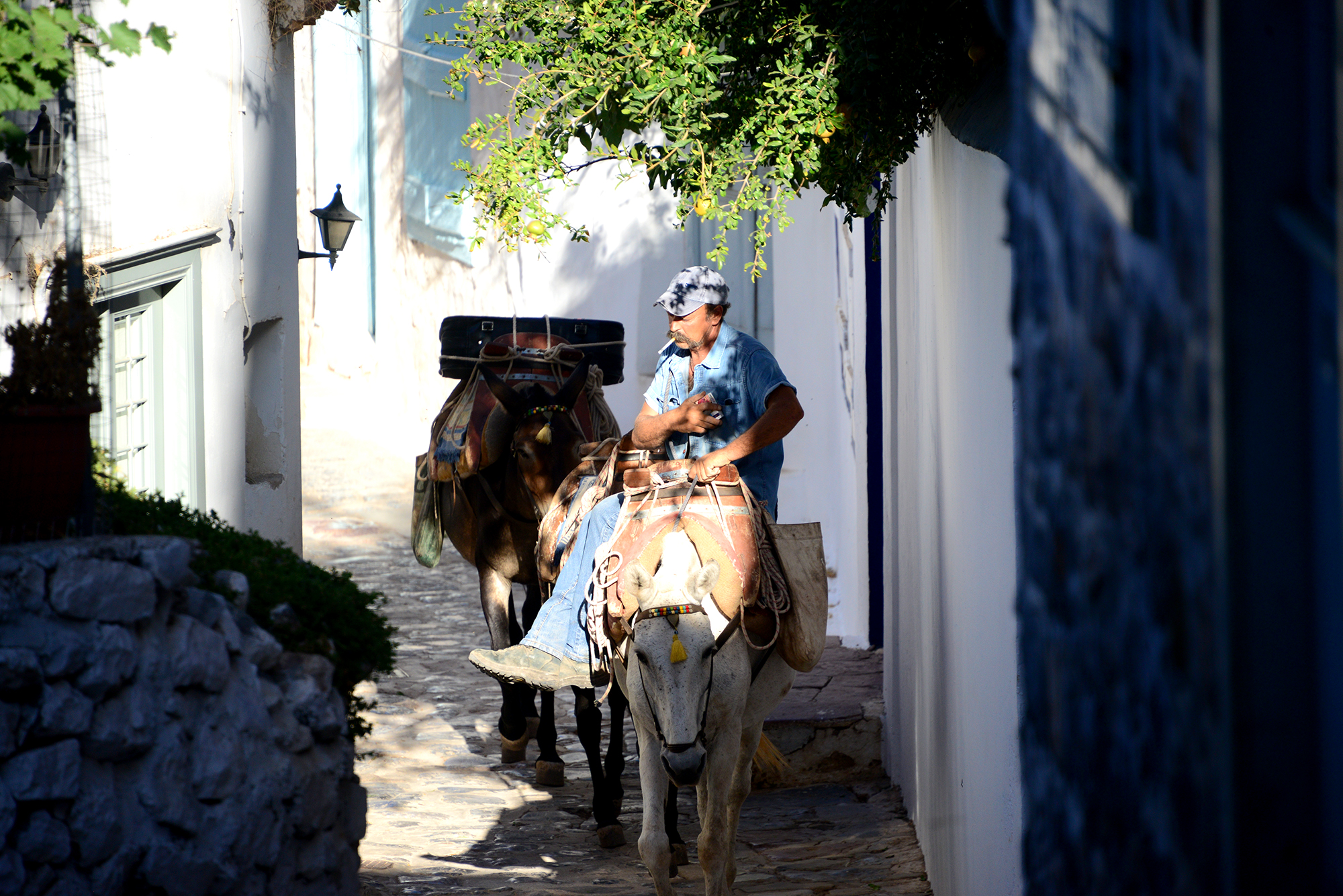

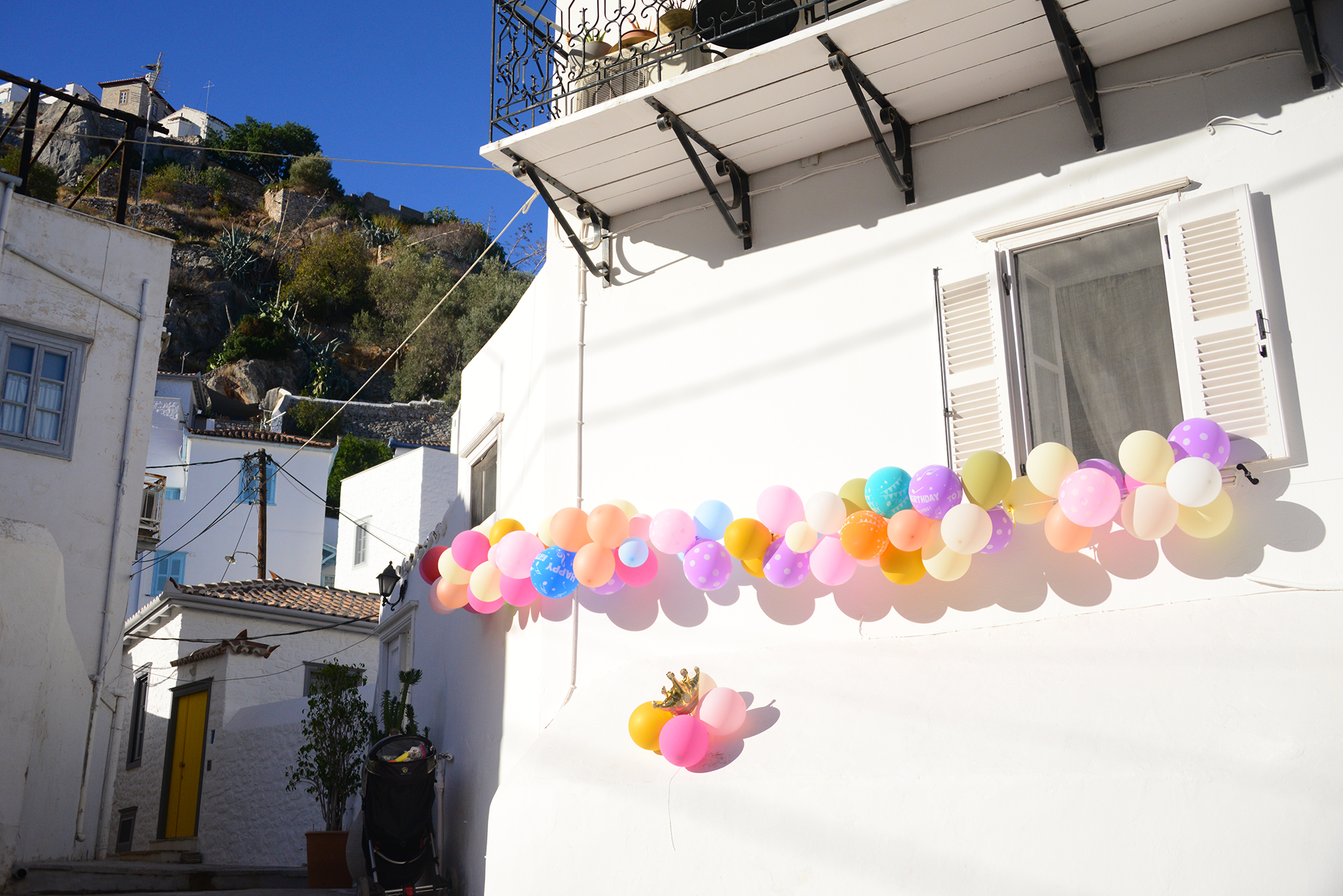

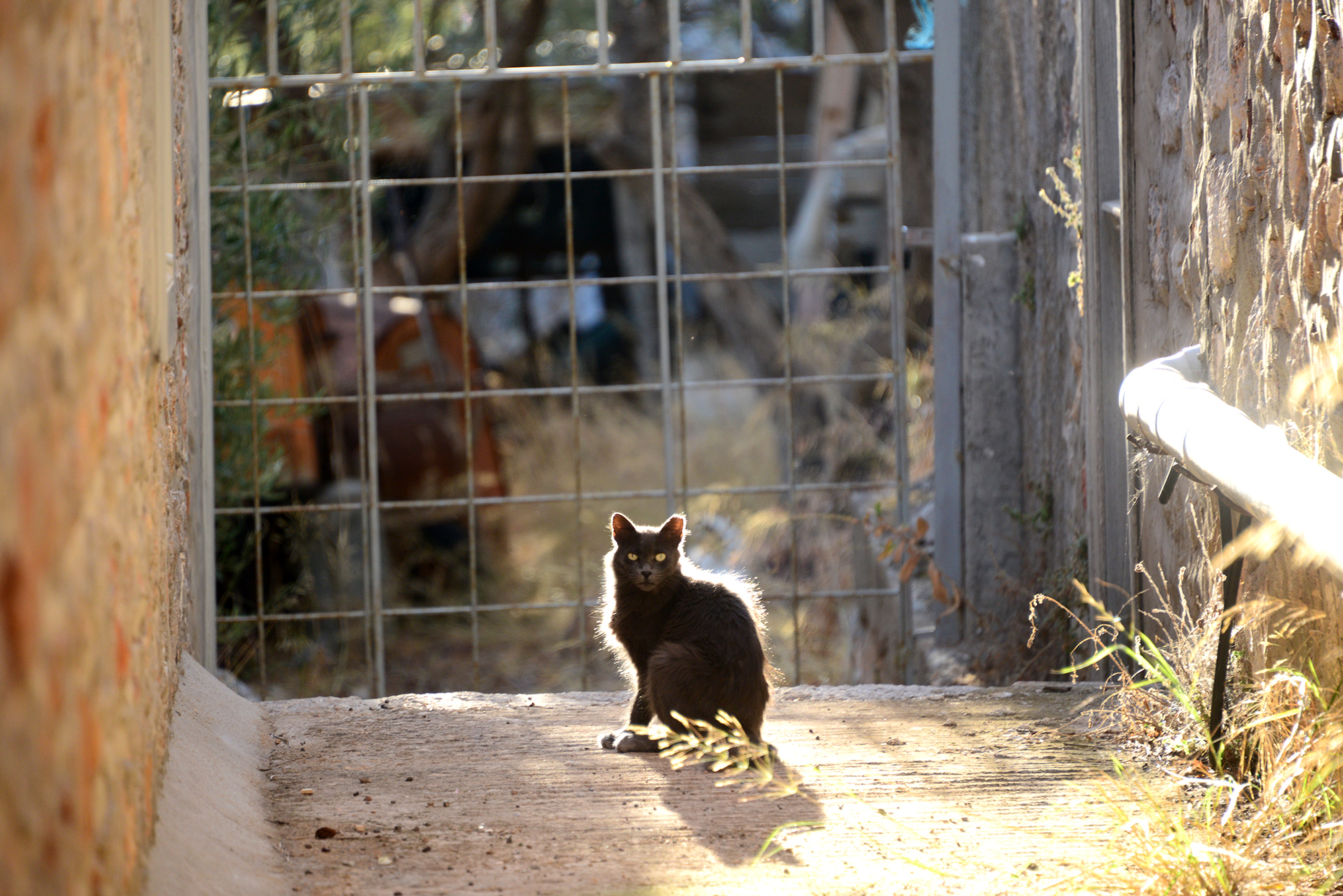
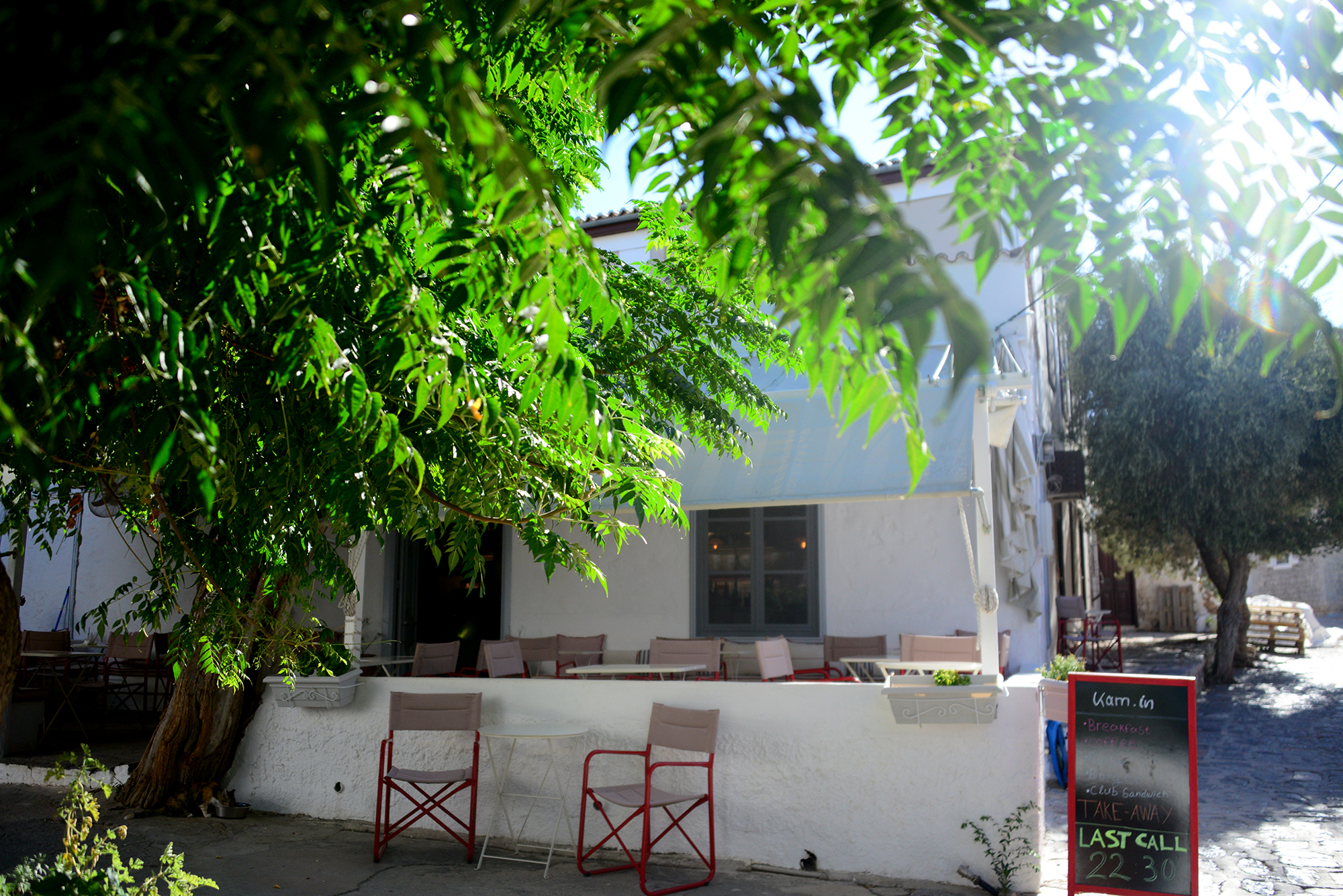
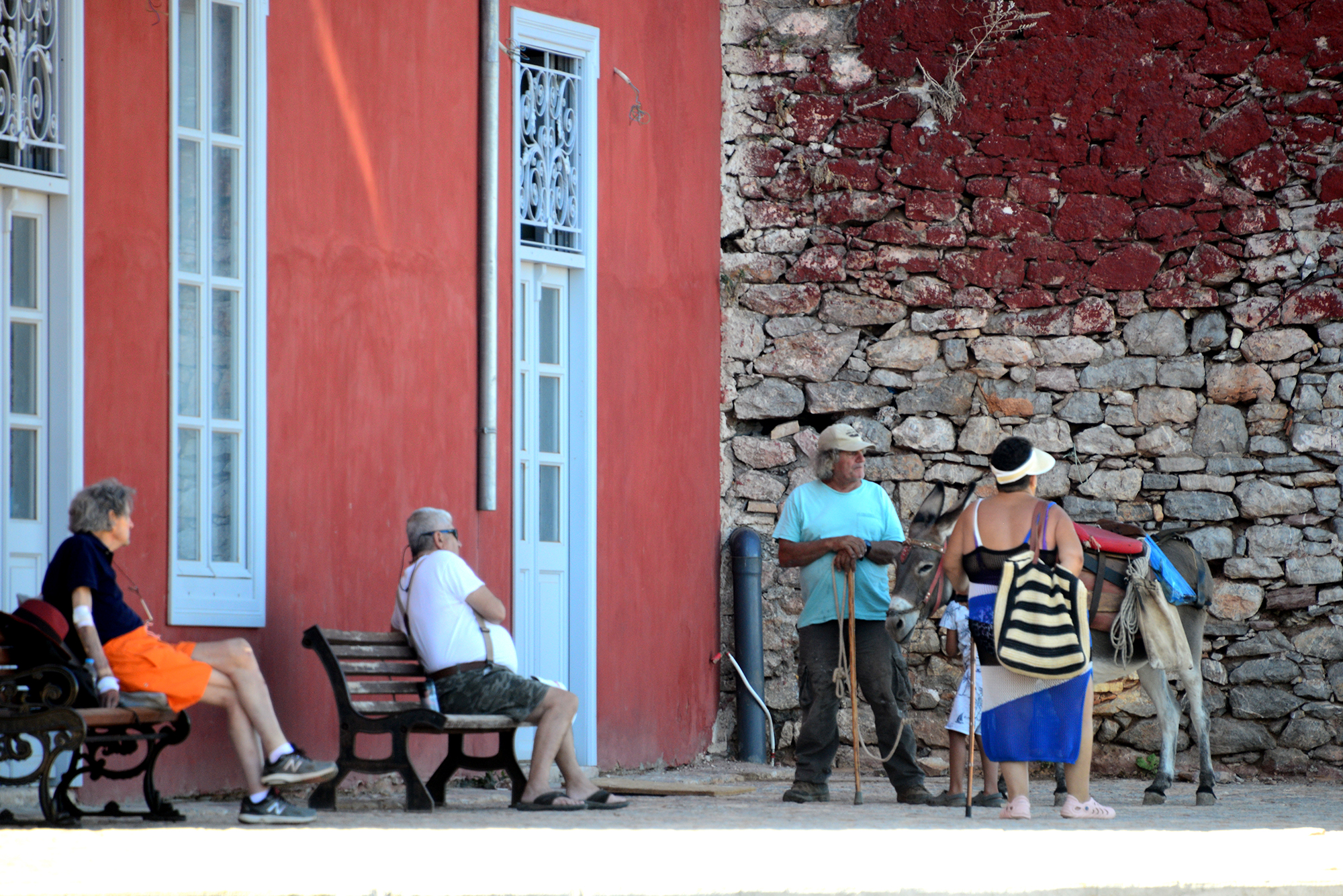
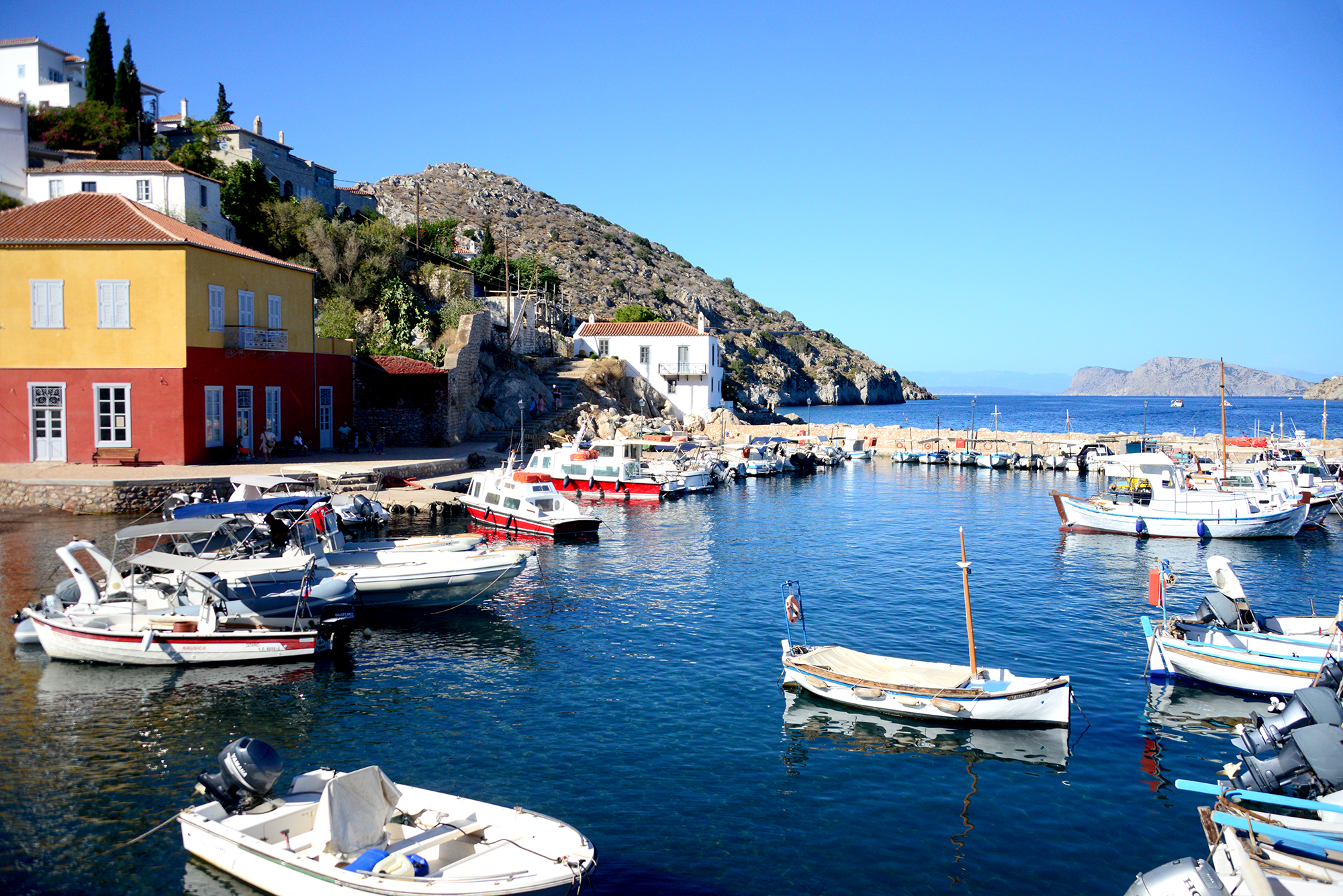
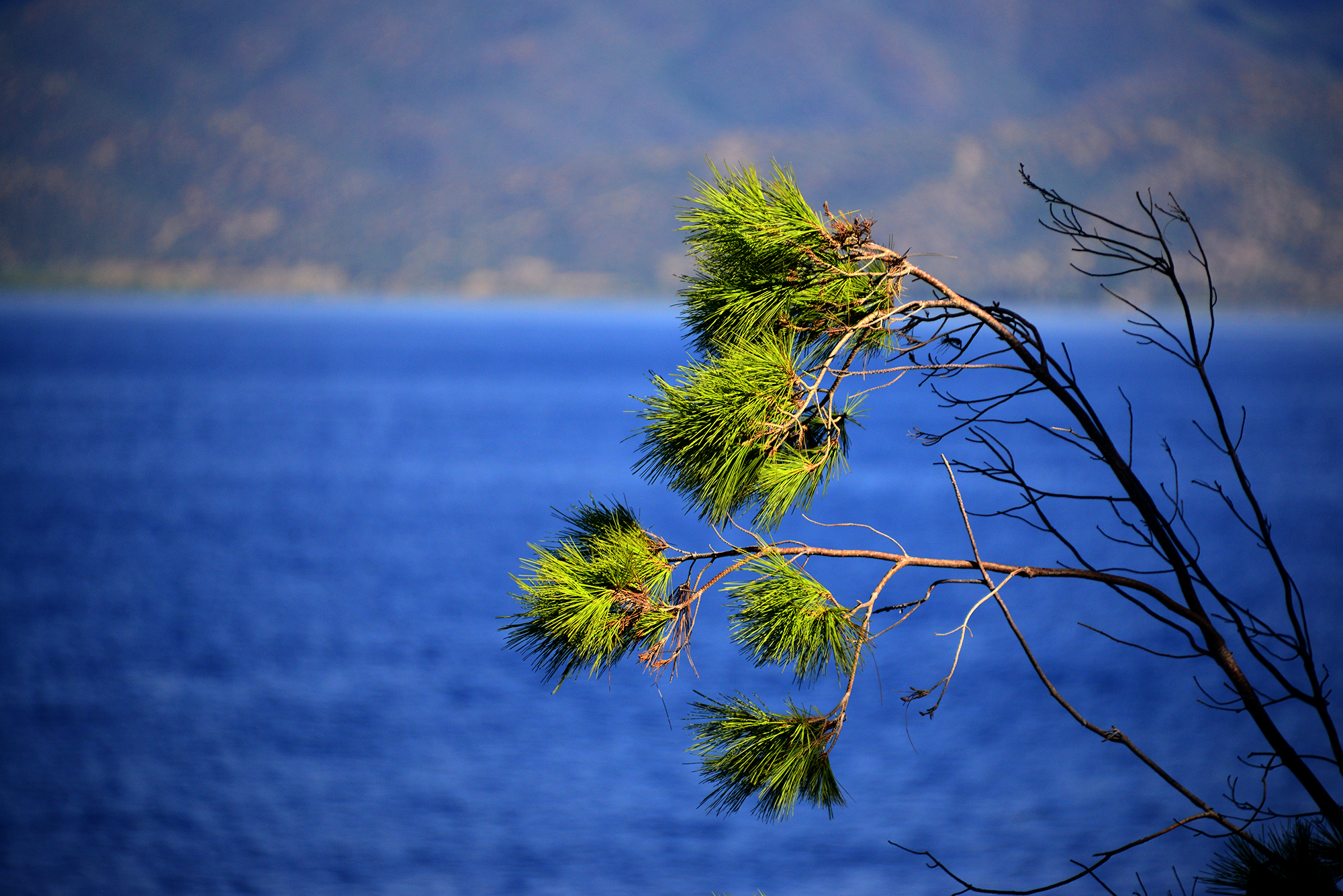

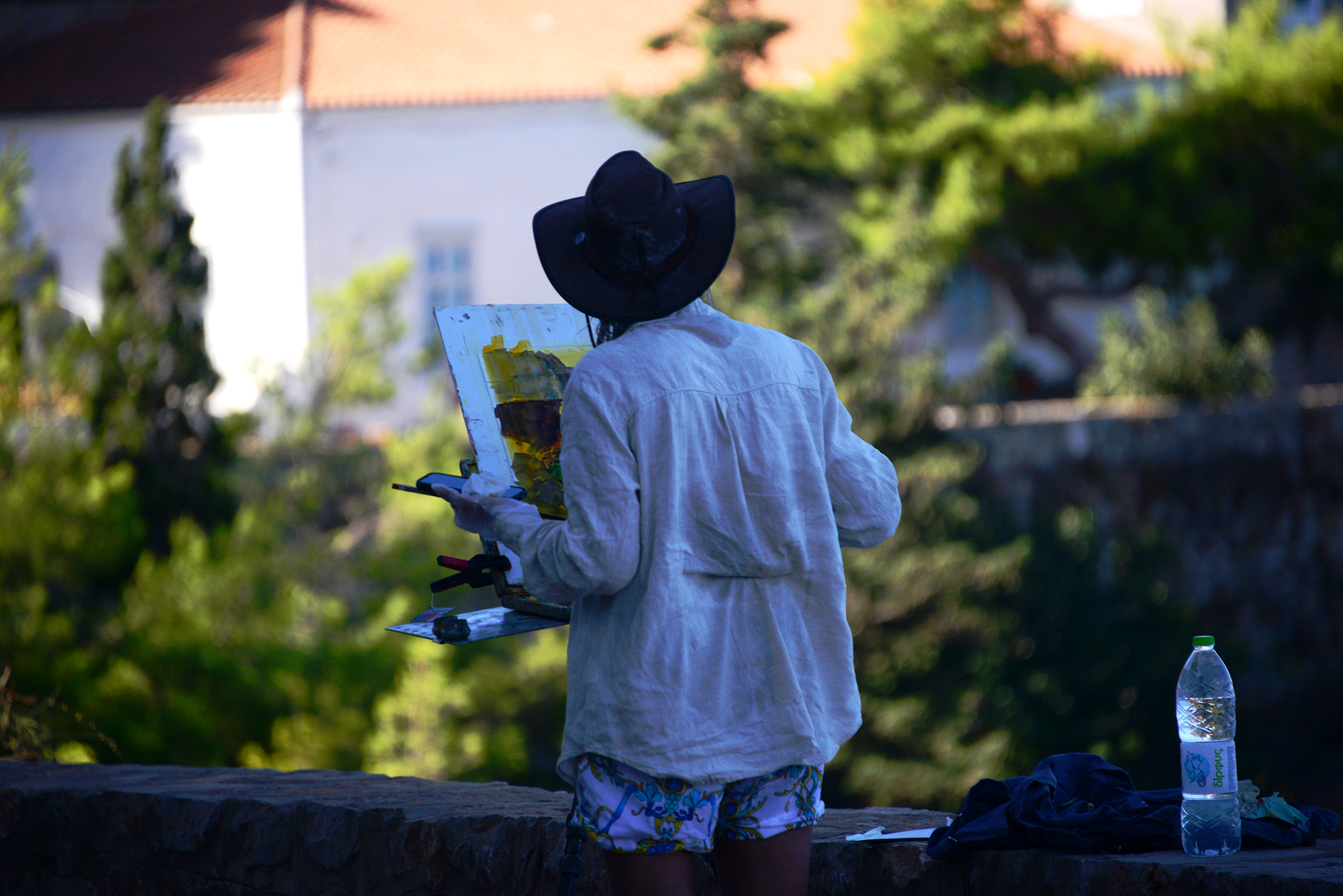
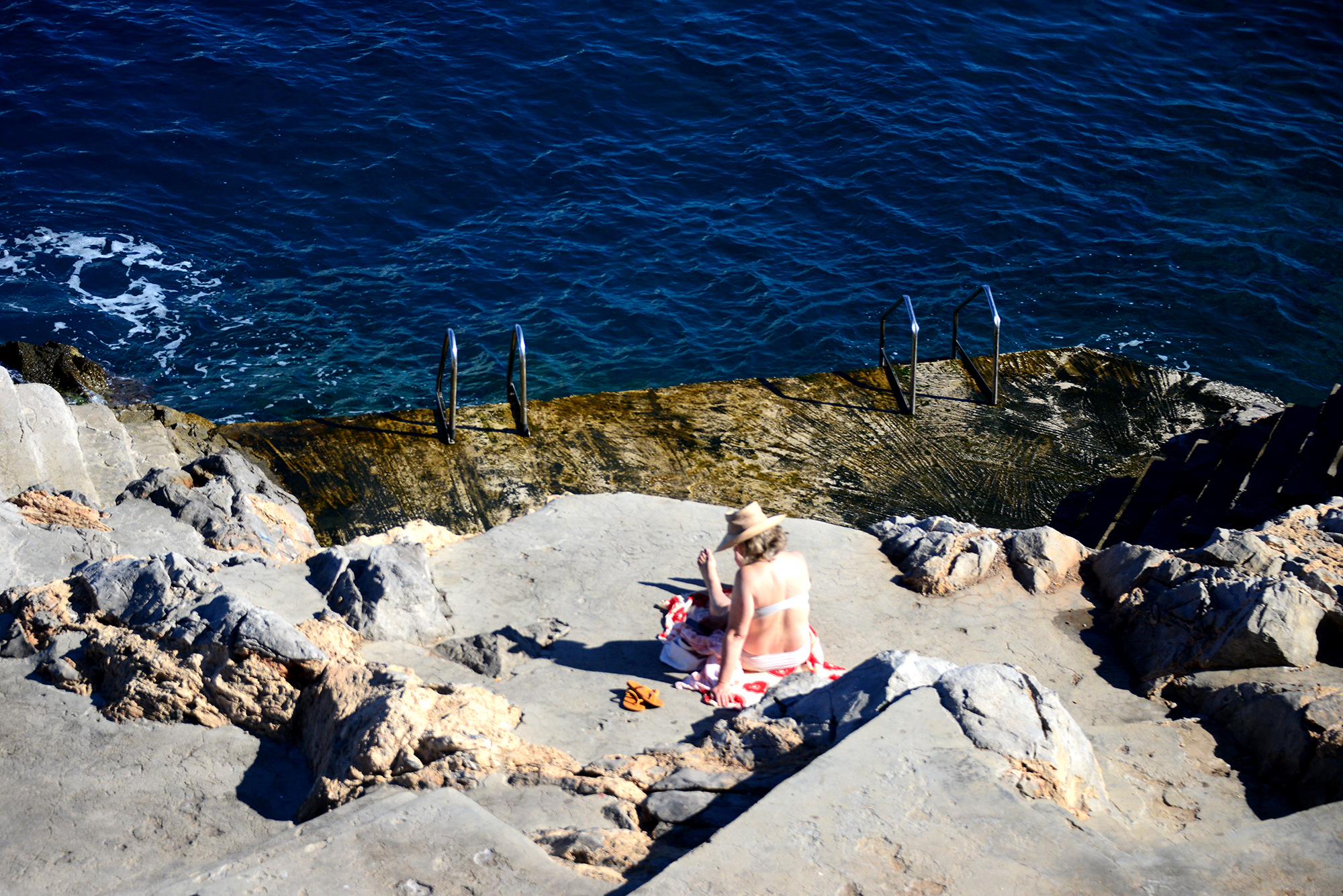
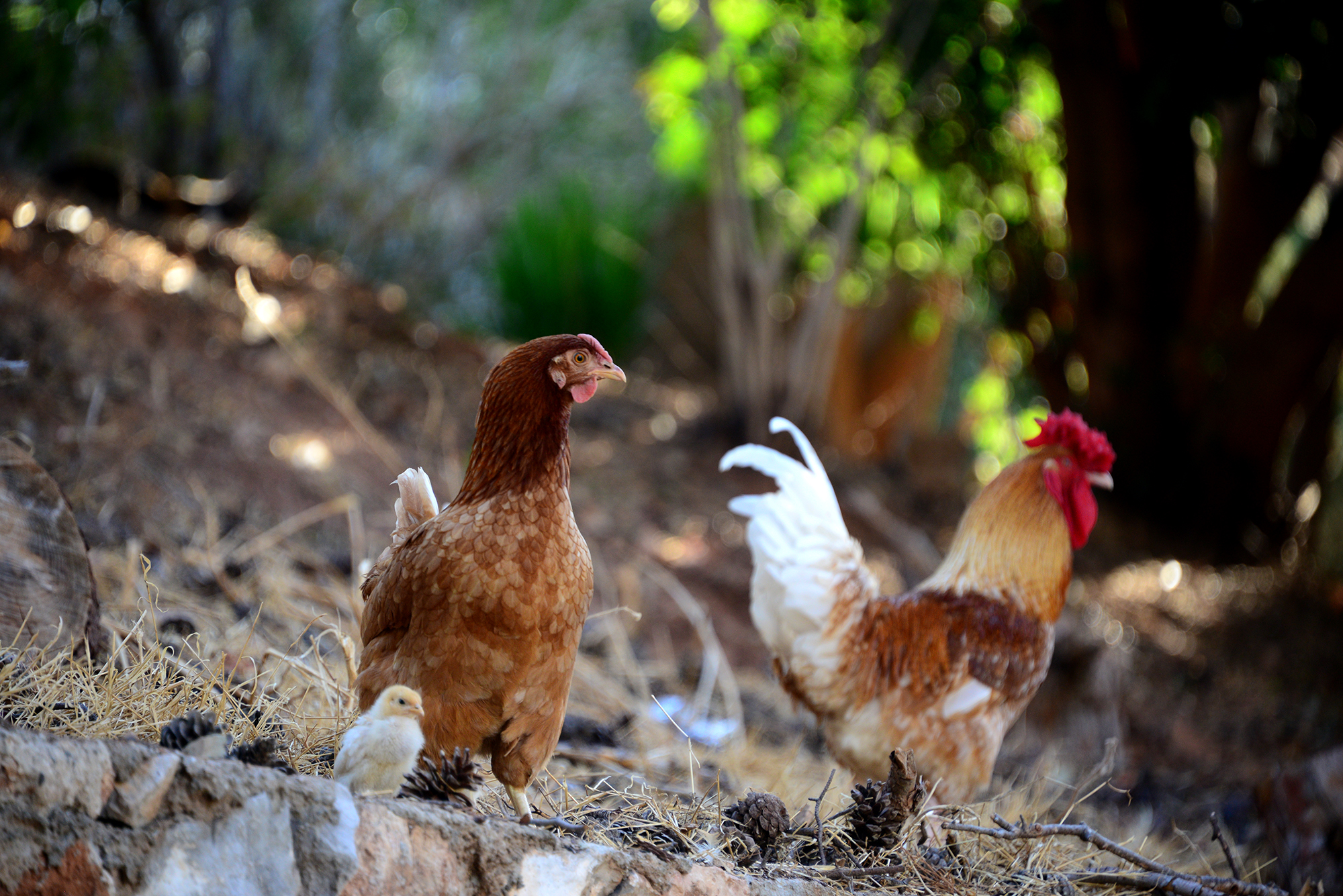
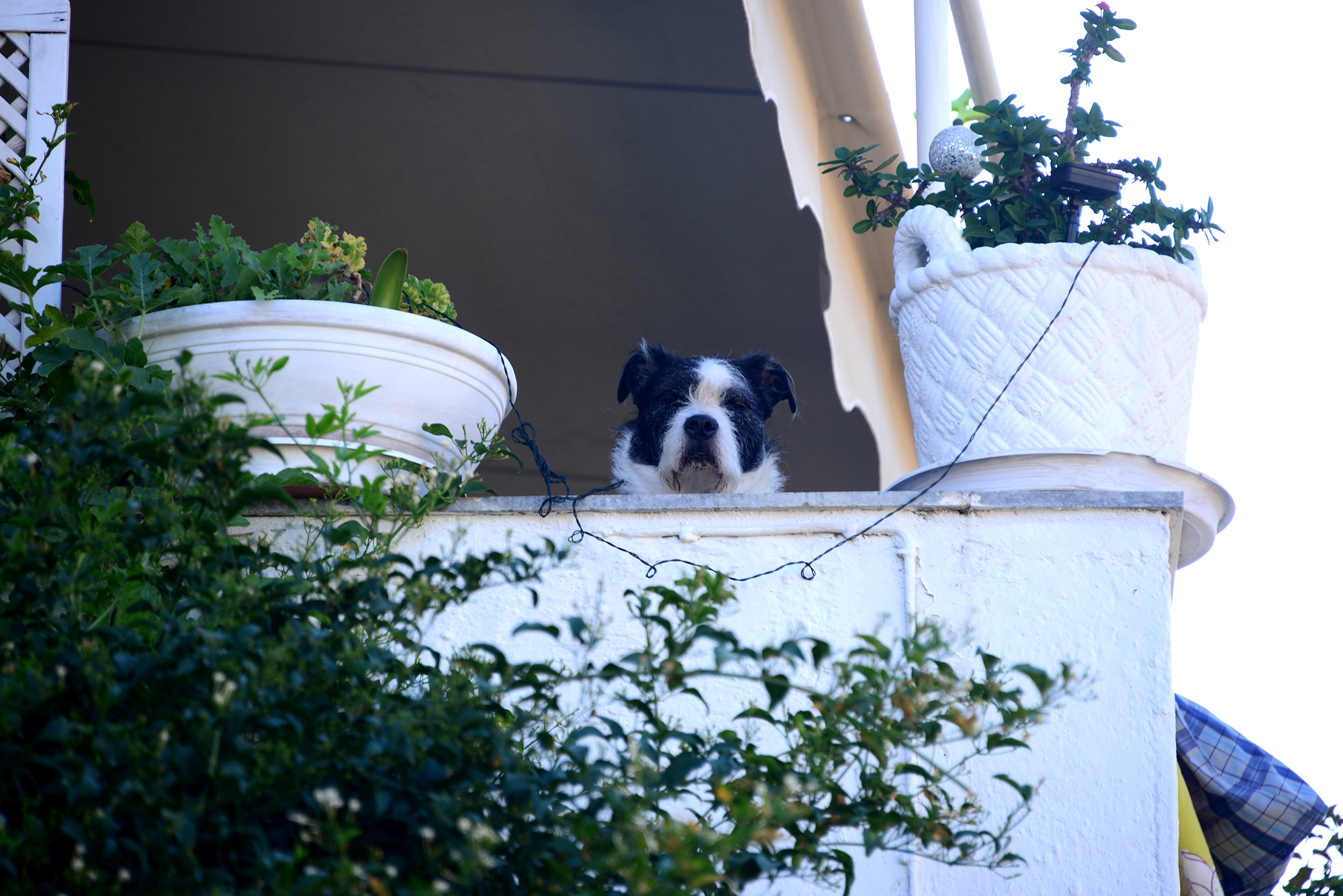

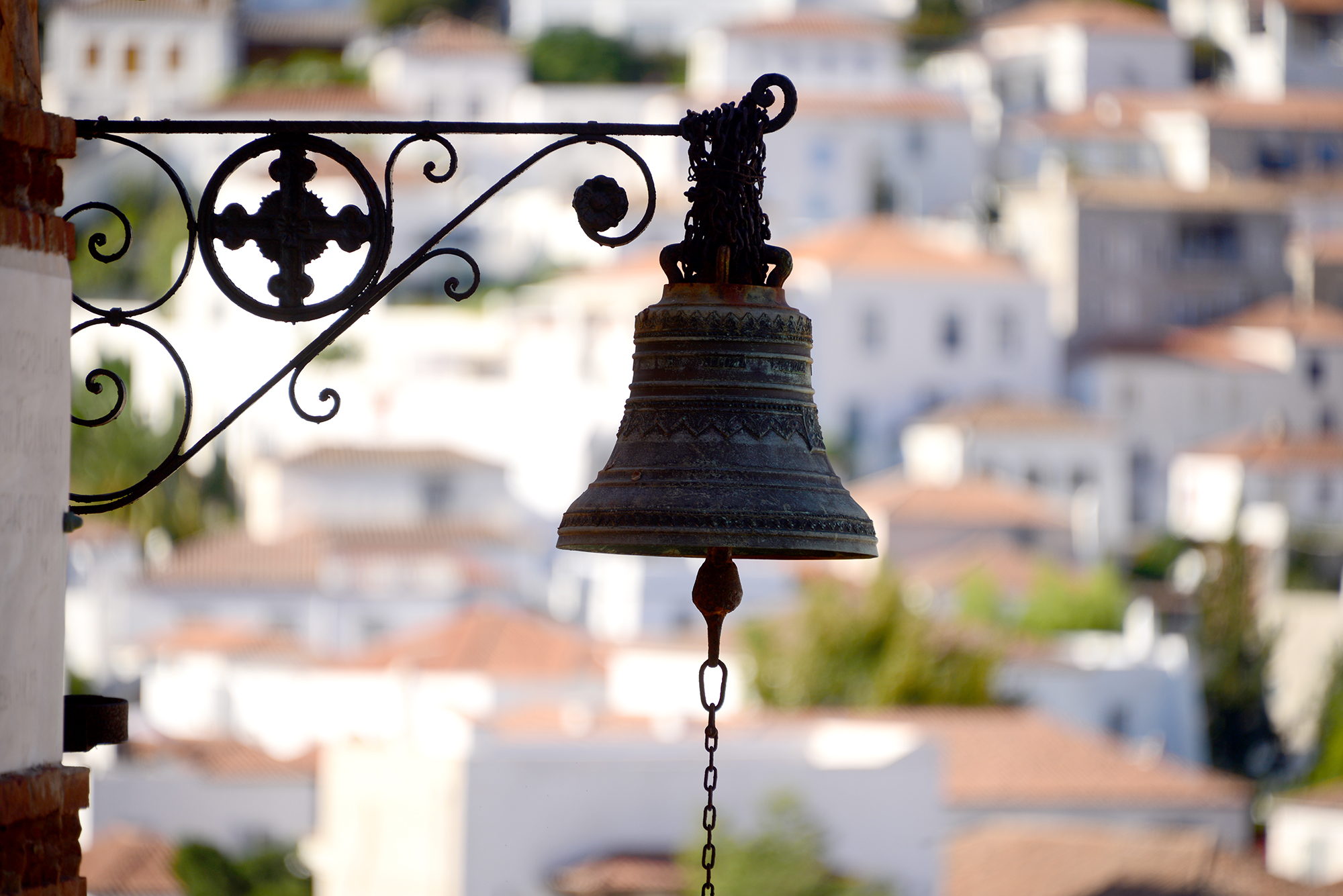
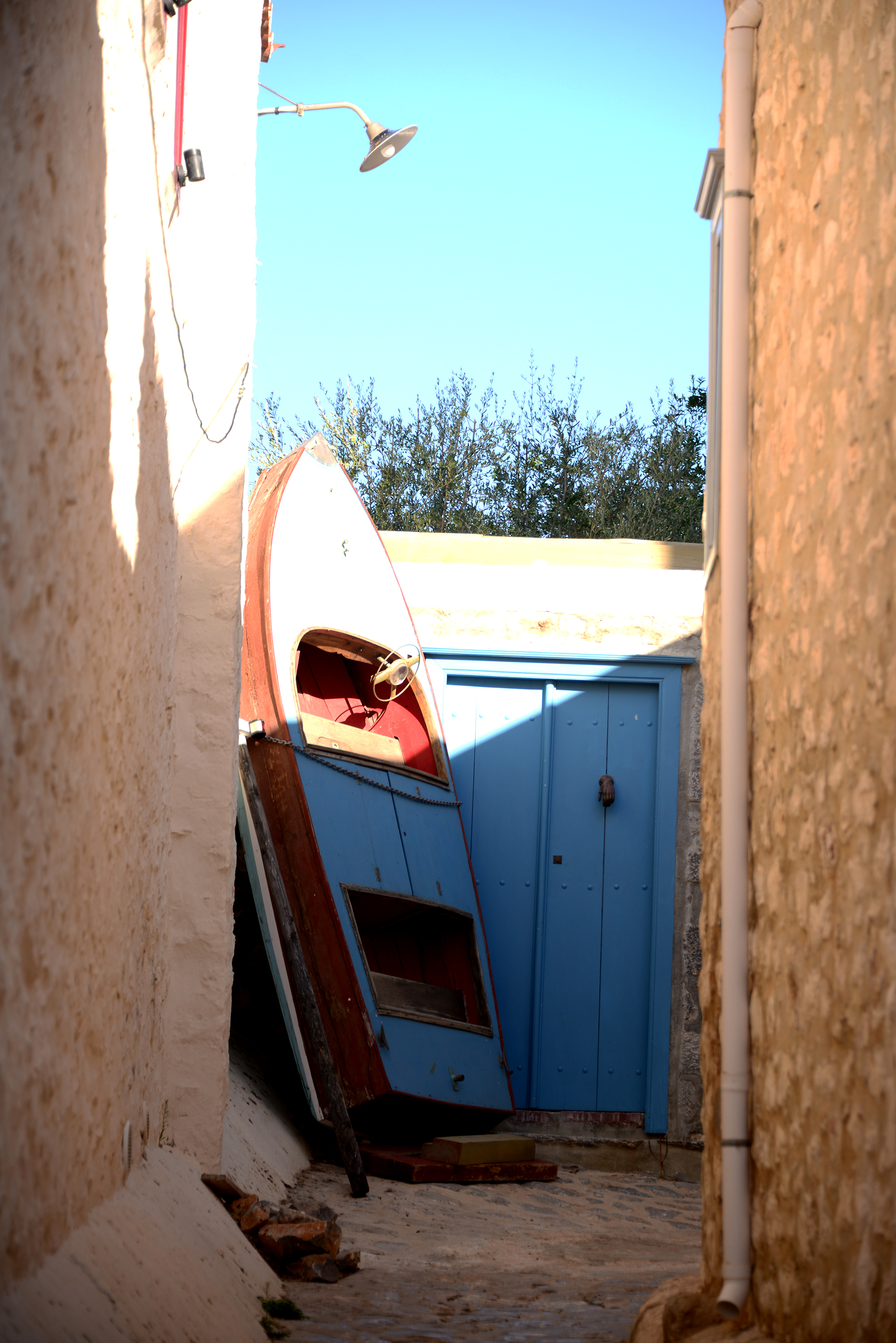

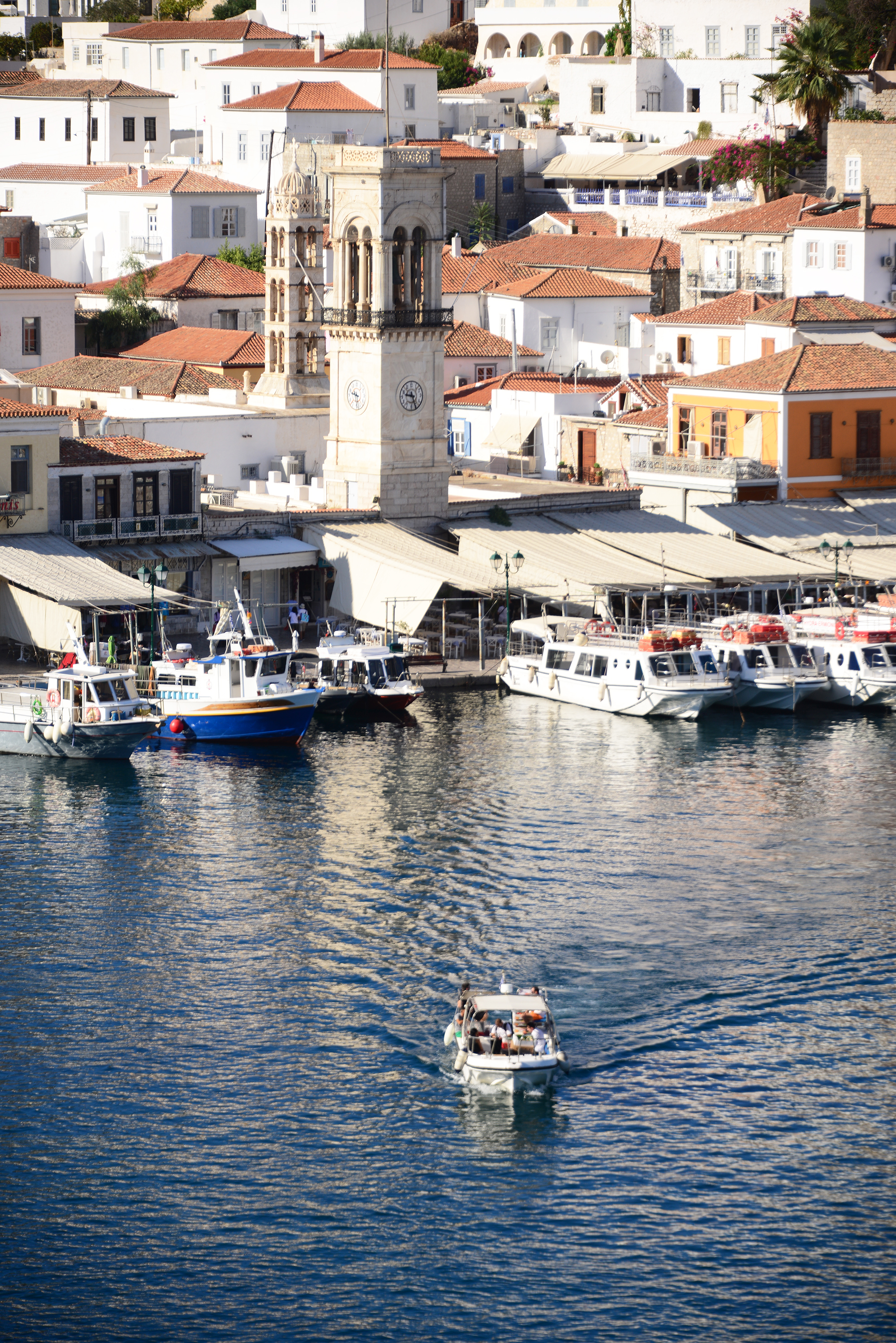
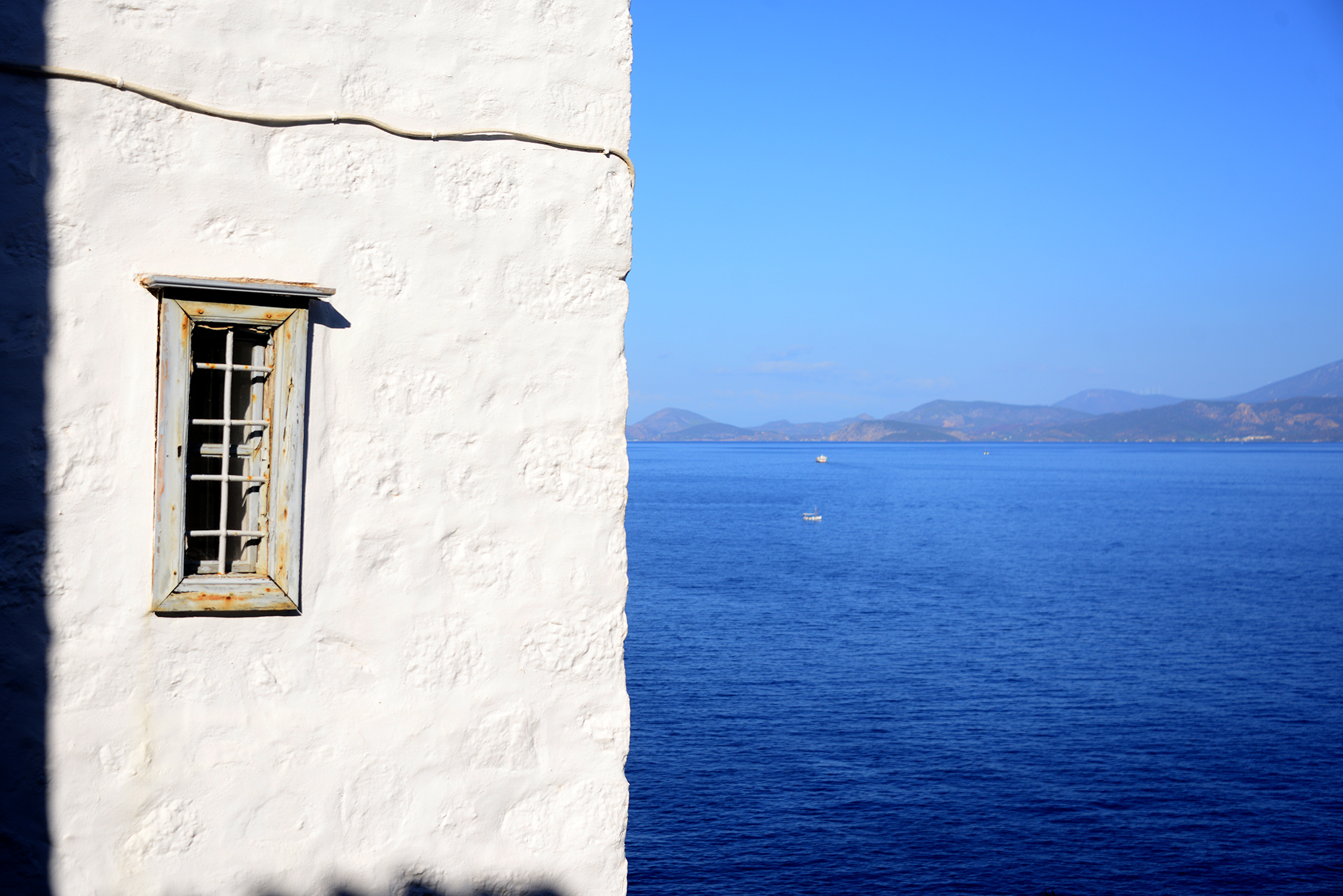
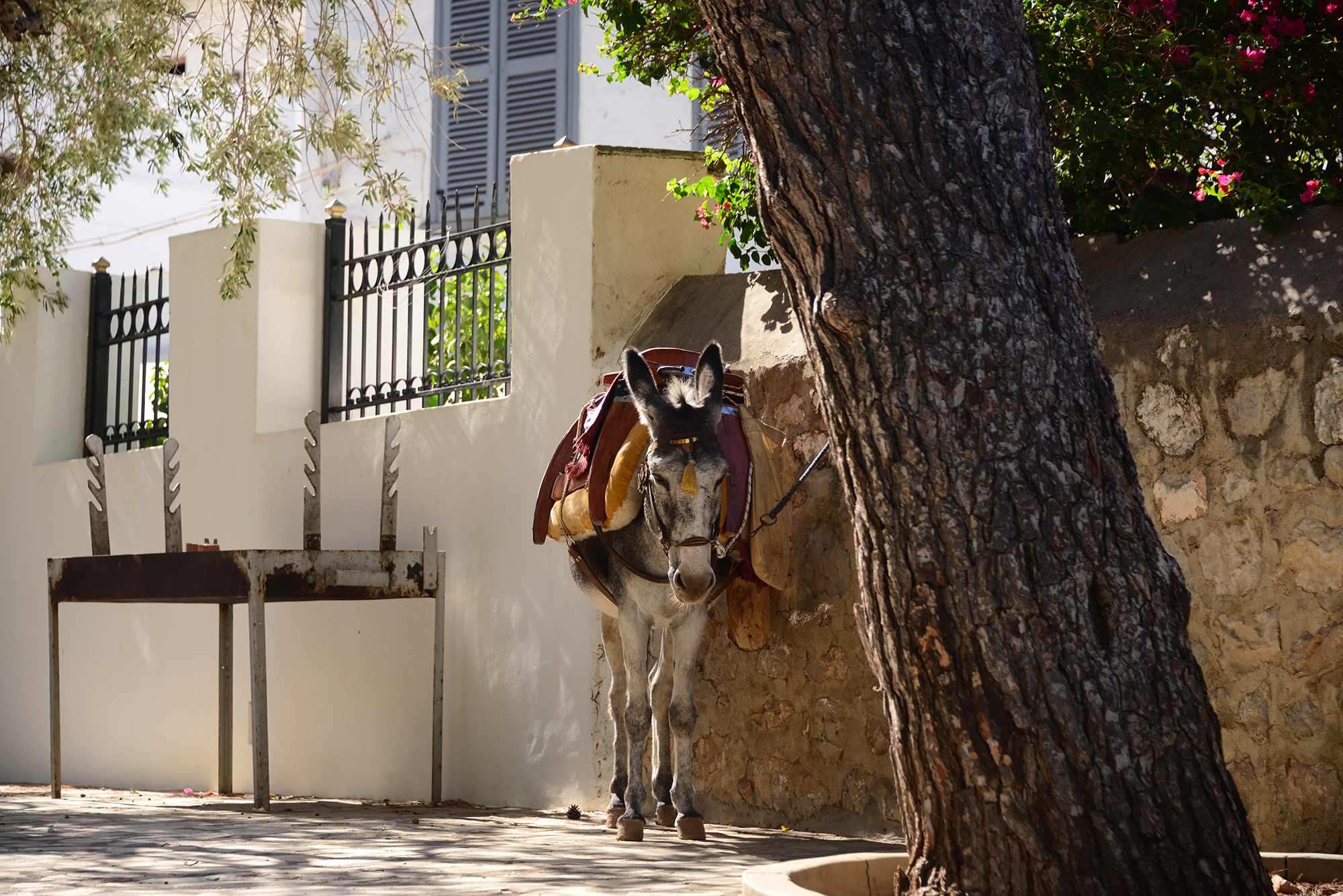
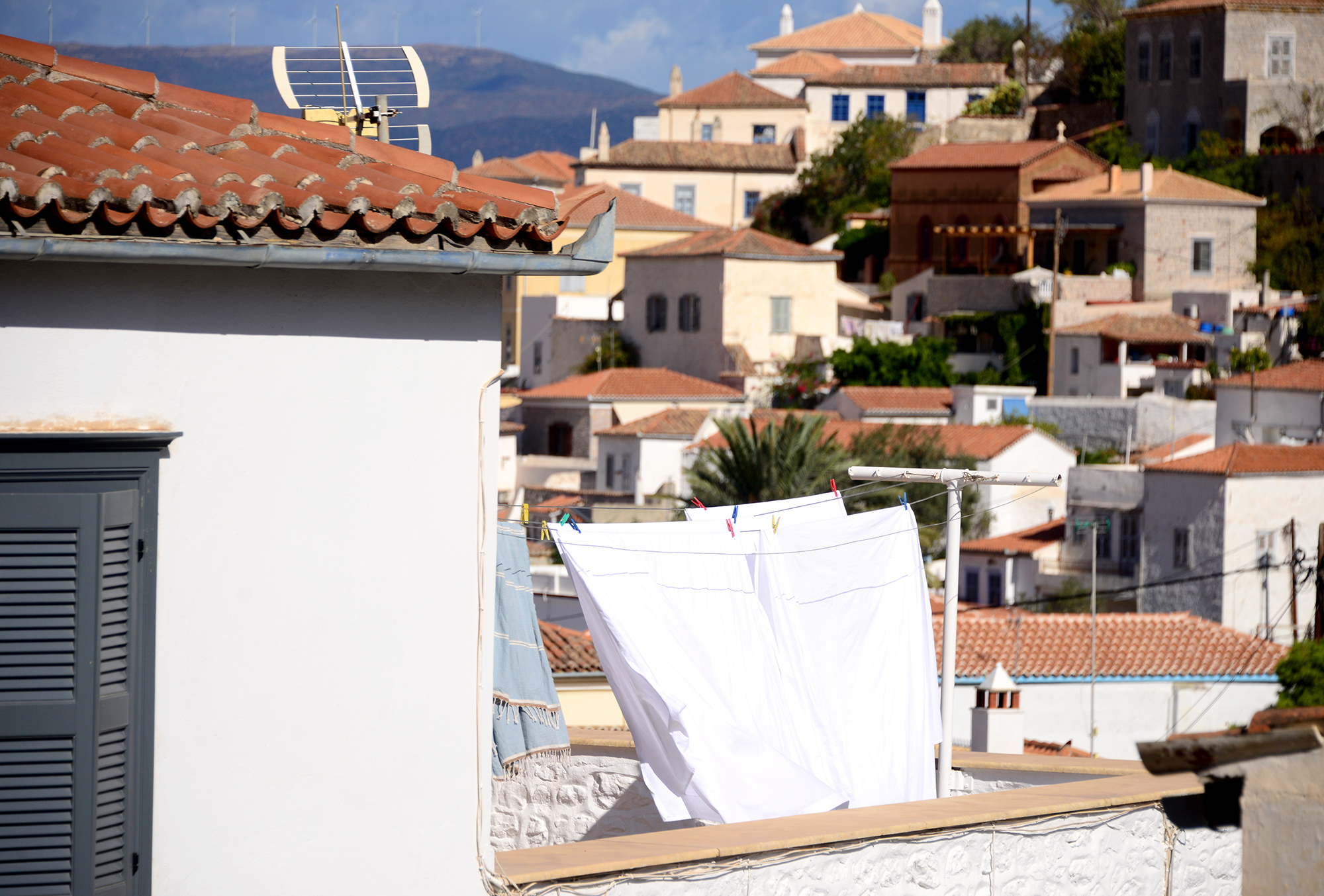
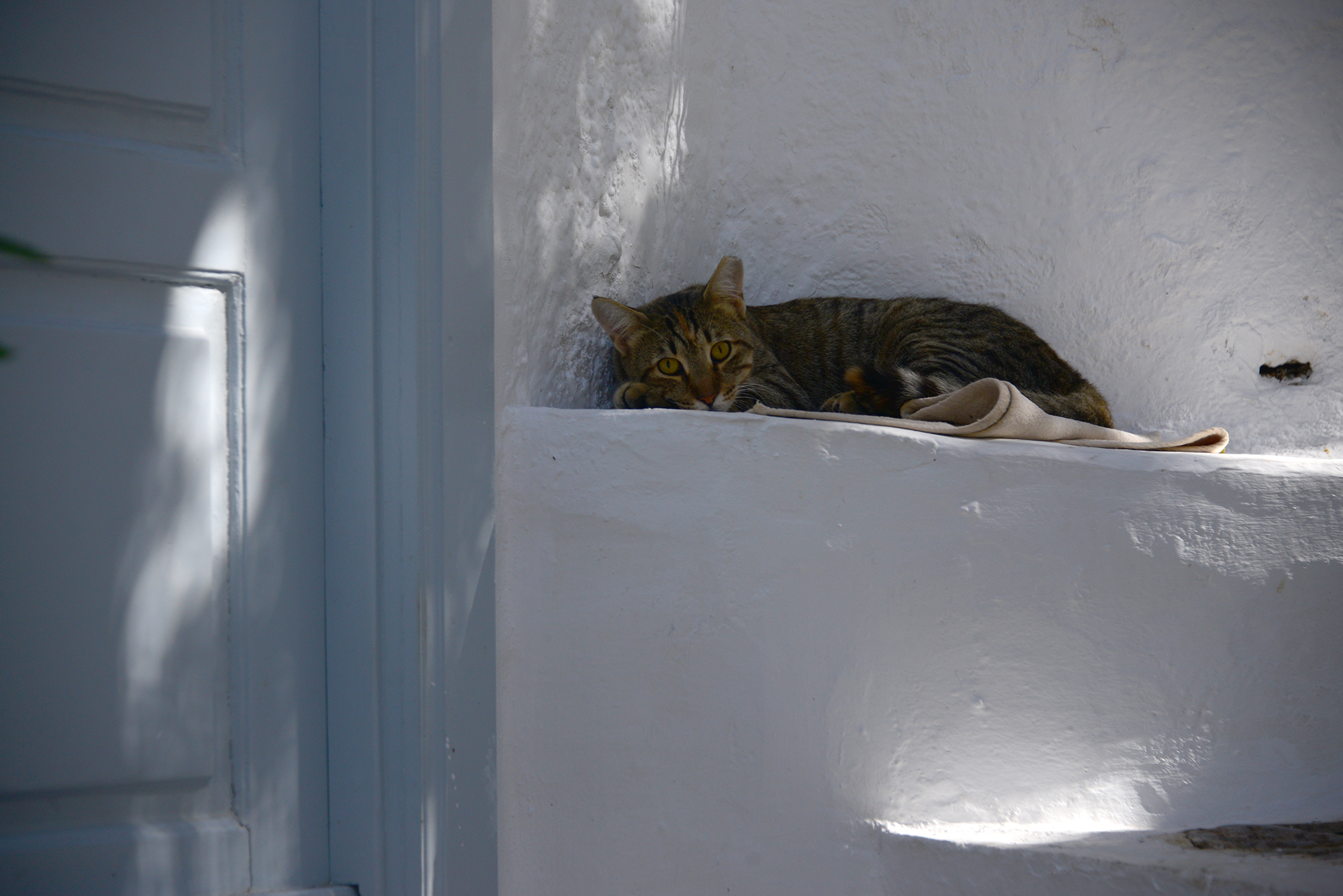

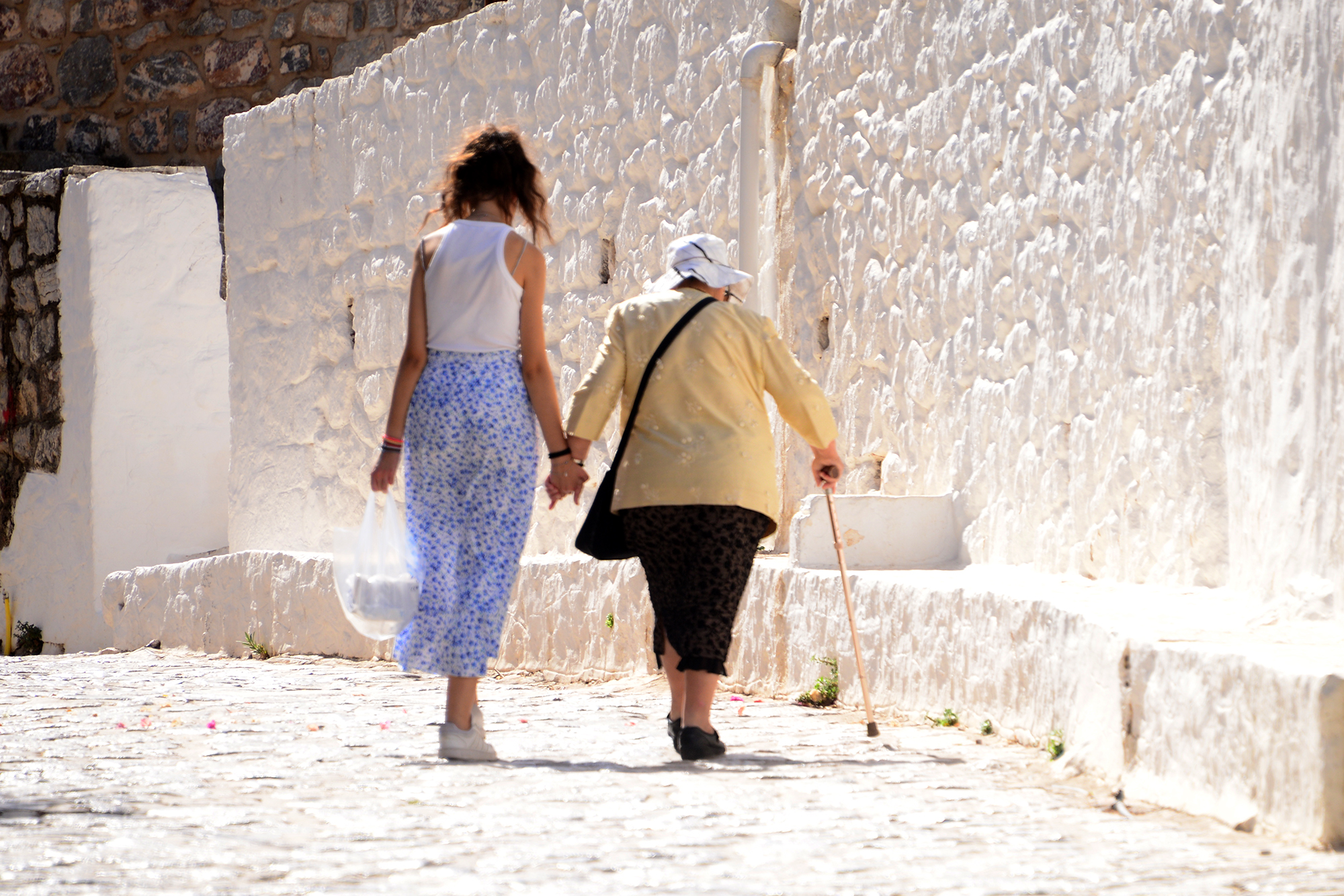
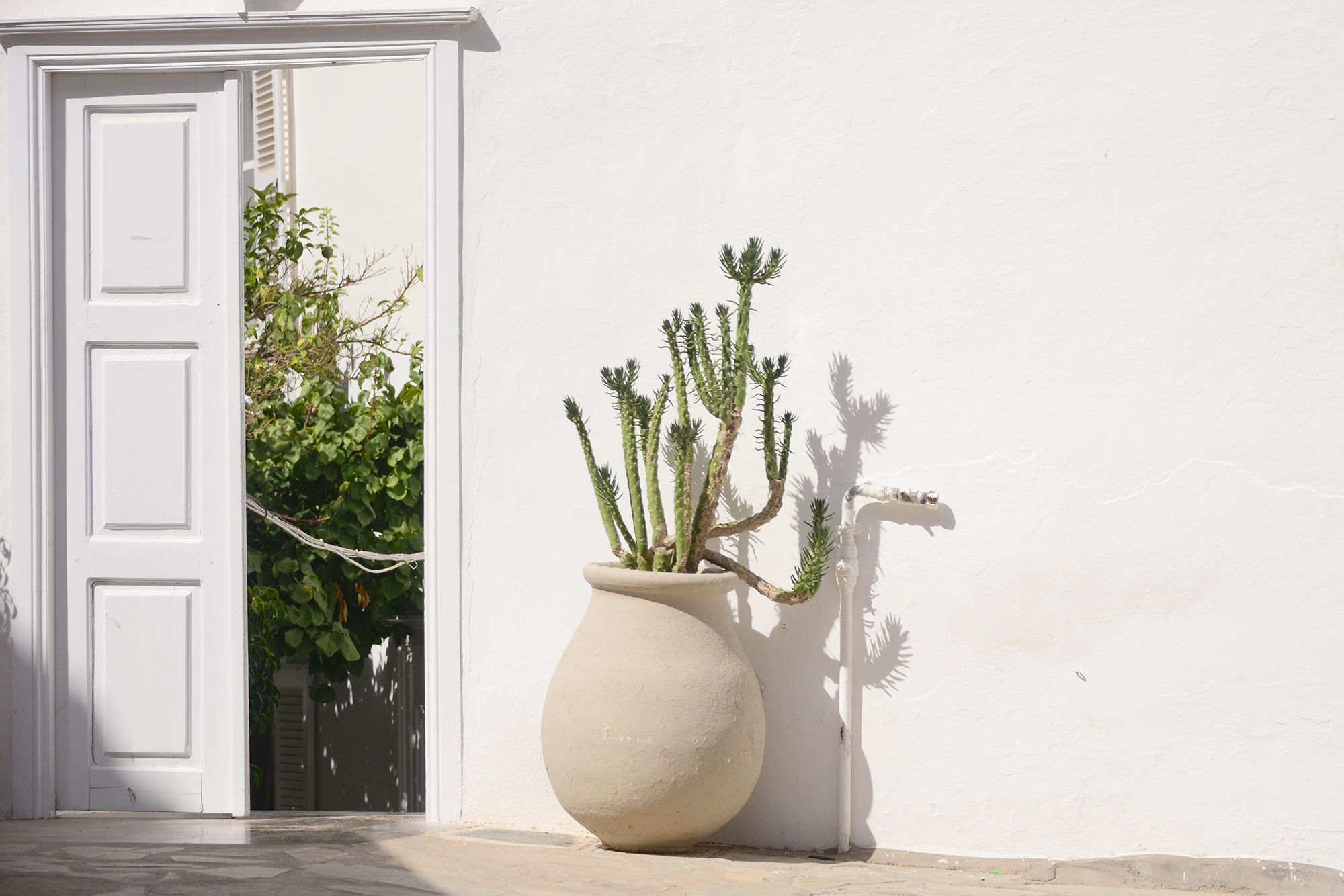
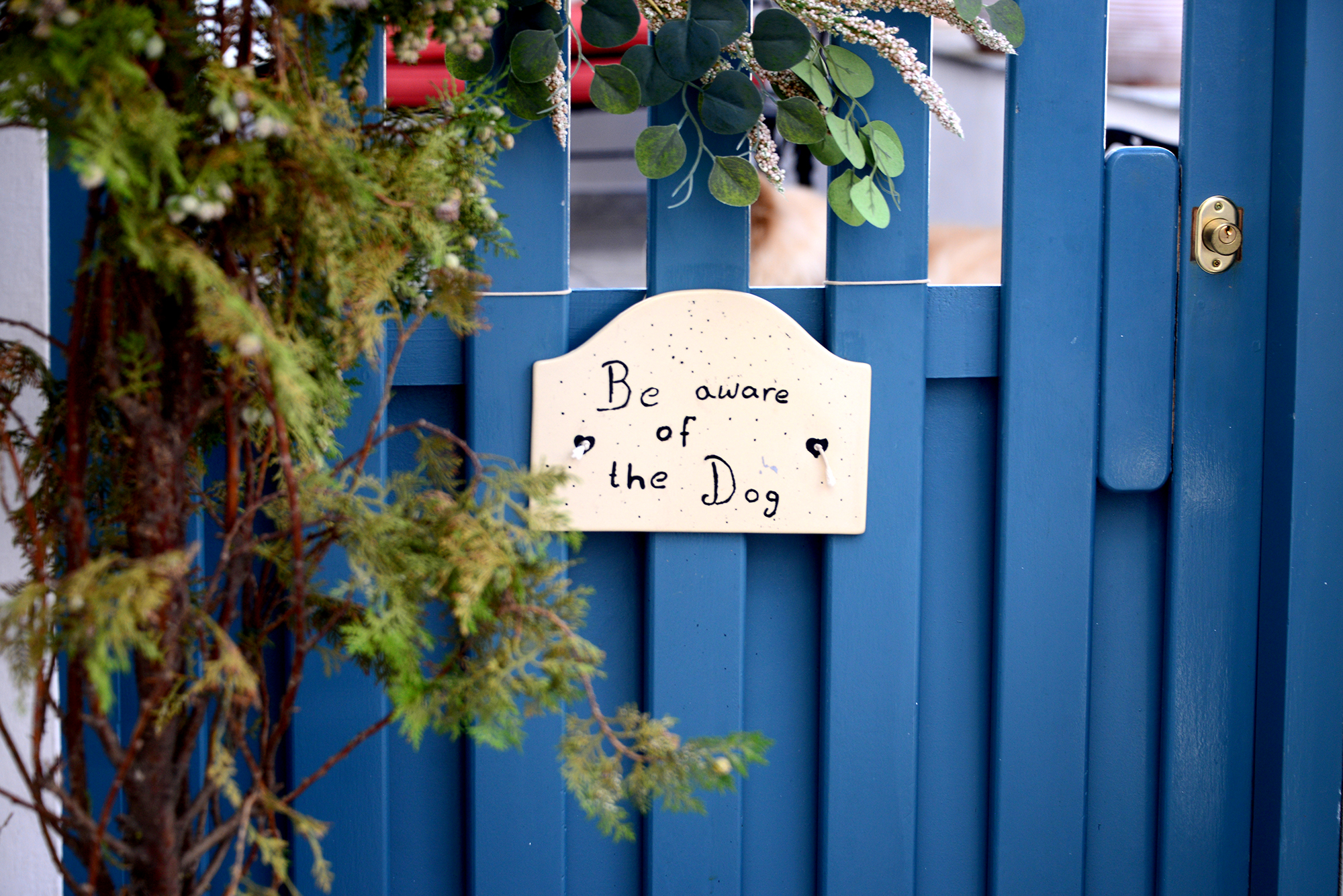
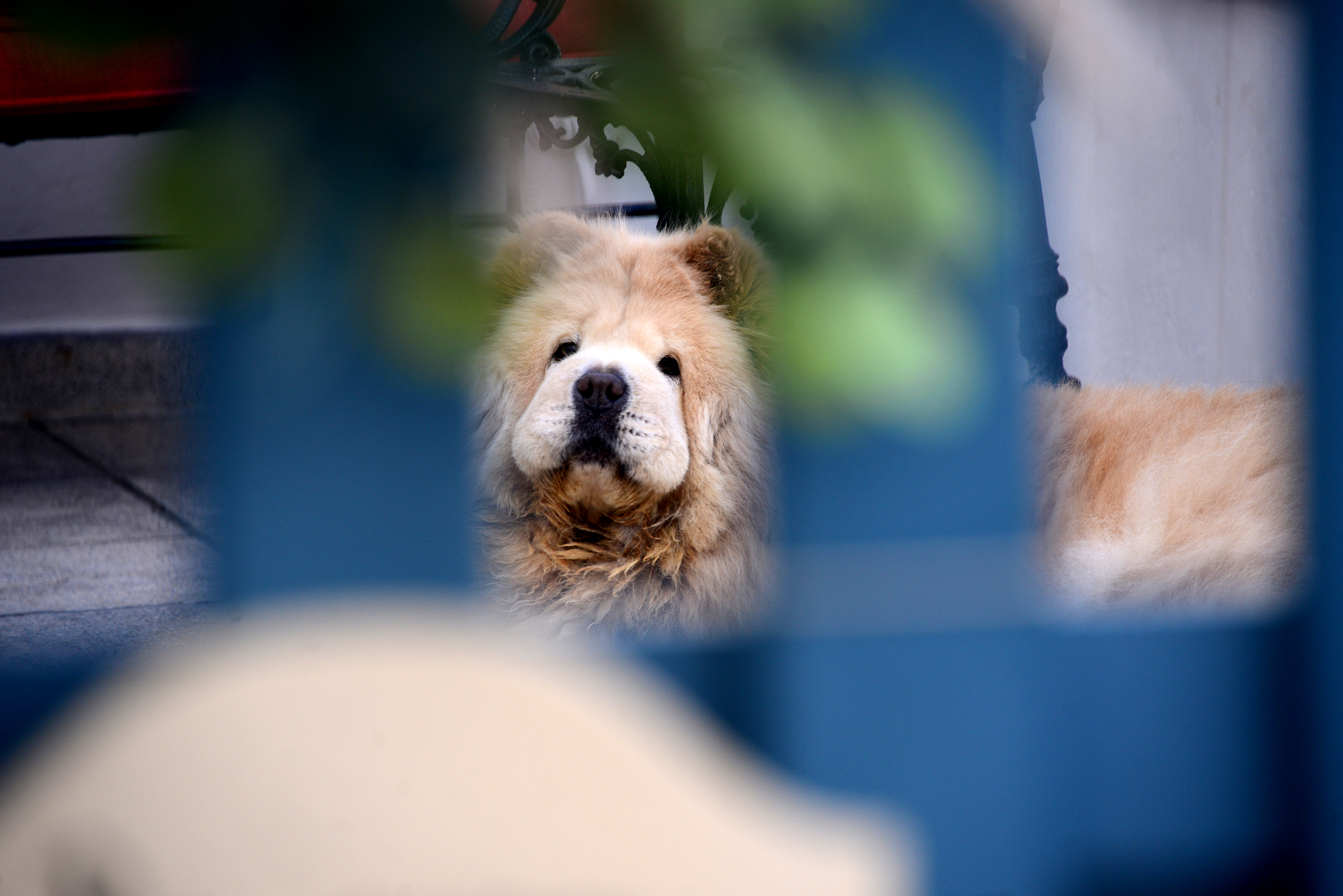
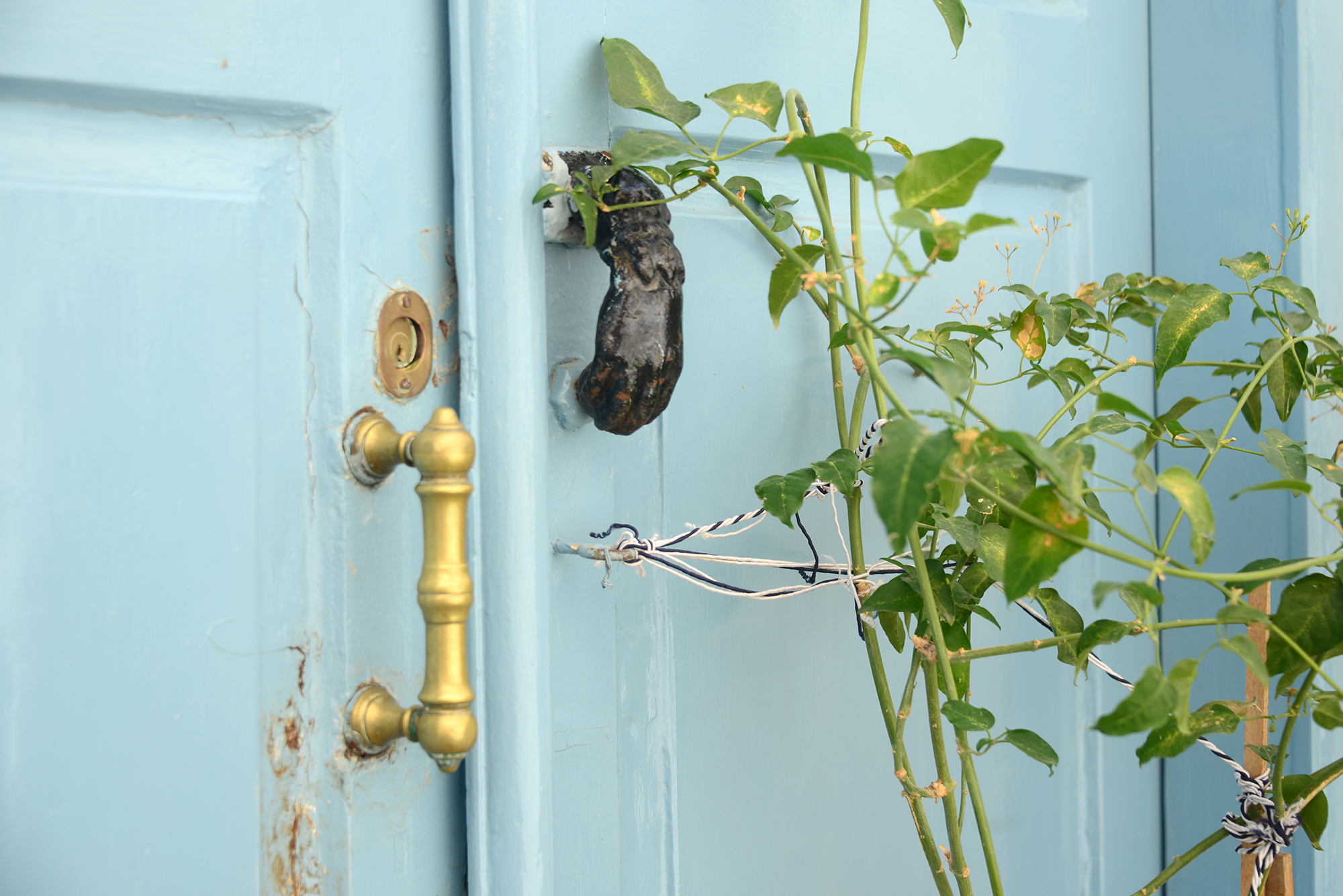
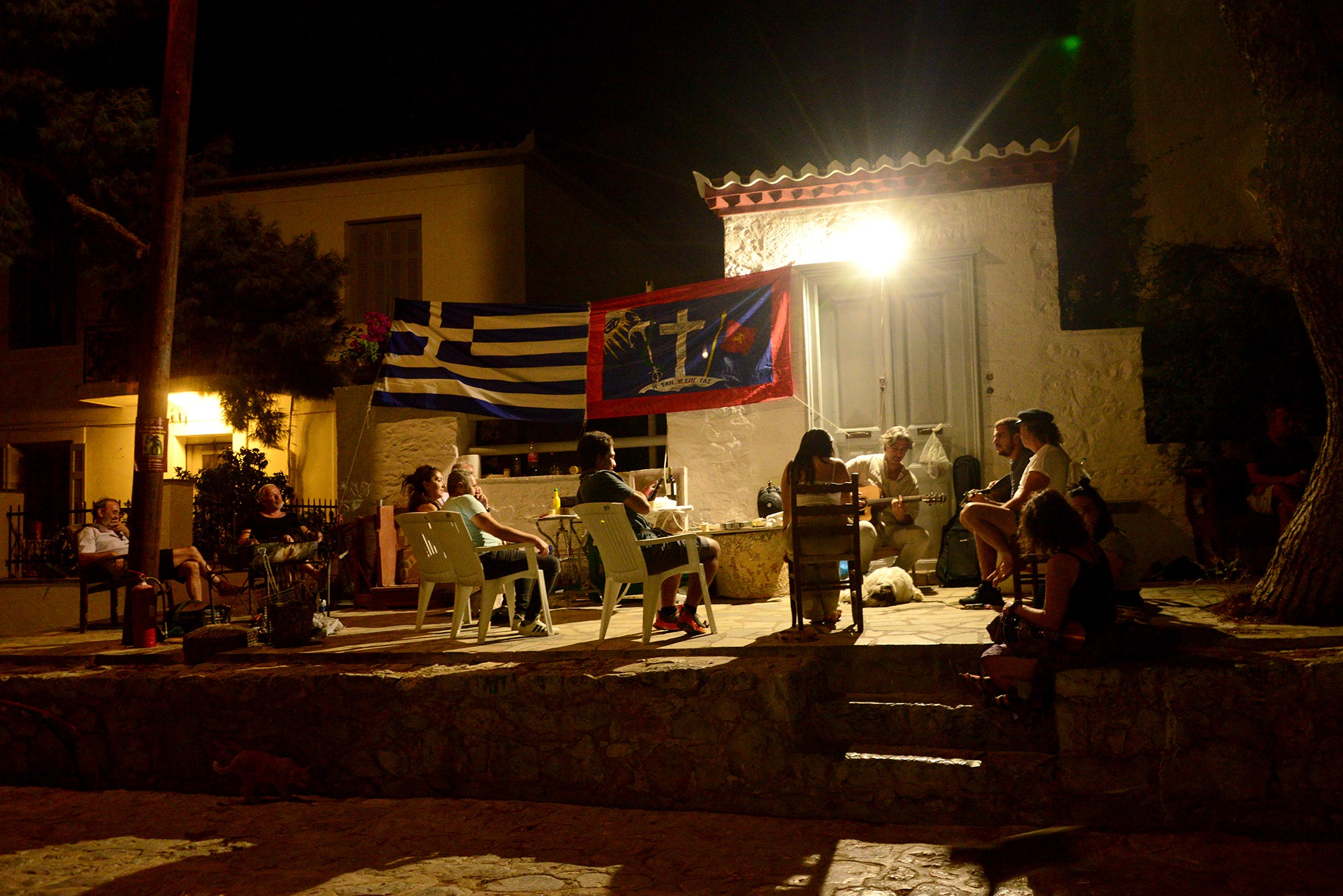
The meeting of life and fiction reminded me of our first Greek island trip, to Corfu. I’d just developed the habit of bringing ‘locally themed’ literature, started off with Gerald Durrell’s My Family and Other Animals, and was chuckling at the description of the Durrells being taken aback by the interdiction to throw paper in the toilet. The silly old days, I thought, as I headed towards the small beach bar’s restroom. And there, large red letters on the wall, the first Modern Greek sentence I learned: Μη Ρίχνετε Χαρτιά Στη Λεκάνη. I learned a lot, that year on Corfu, such as the fundamental openness and friendliness of Greeks. Our guest house was at the foot of a lush hill, atop which stands the Achilleion, Sissi’s summer palace (there is no escaping that woman). I liked to take morning hikes on the route, and one day I saw a particularly splendid looking pomegranate and decided to pilfer it. As I was wrestling with the branches of the tree, I realised that its owner was talking to me. I expected to be told off, yet, in fact, she was offering me two larger pomegranates, even more splendid than mine. So, it was no surprise when one evening this year on Hydra I passed by a group of people playing music late at night, and they offered wine to passersby, inviting them to stay. They welcomed you in their midst, and it was the wine, and the company, and the music, scattered words I now understood, that somehow made me feel part of ancient rituals which, like the island itself, feel ever changing, and ever the same. Go often enough to a place, be it a restaurant, or a shop, and you will be greeted like a friend, treated to small presents, asked about your life. And it doesn’t feel empty, there’s a genuine interest to know others. After a few seasons on Hydra, you won’t only be coming to a place, you will be returning to people.
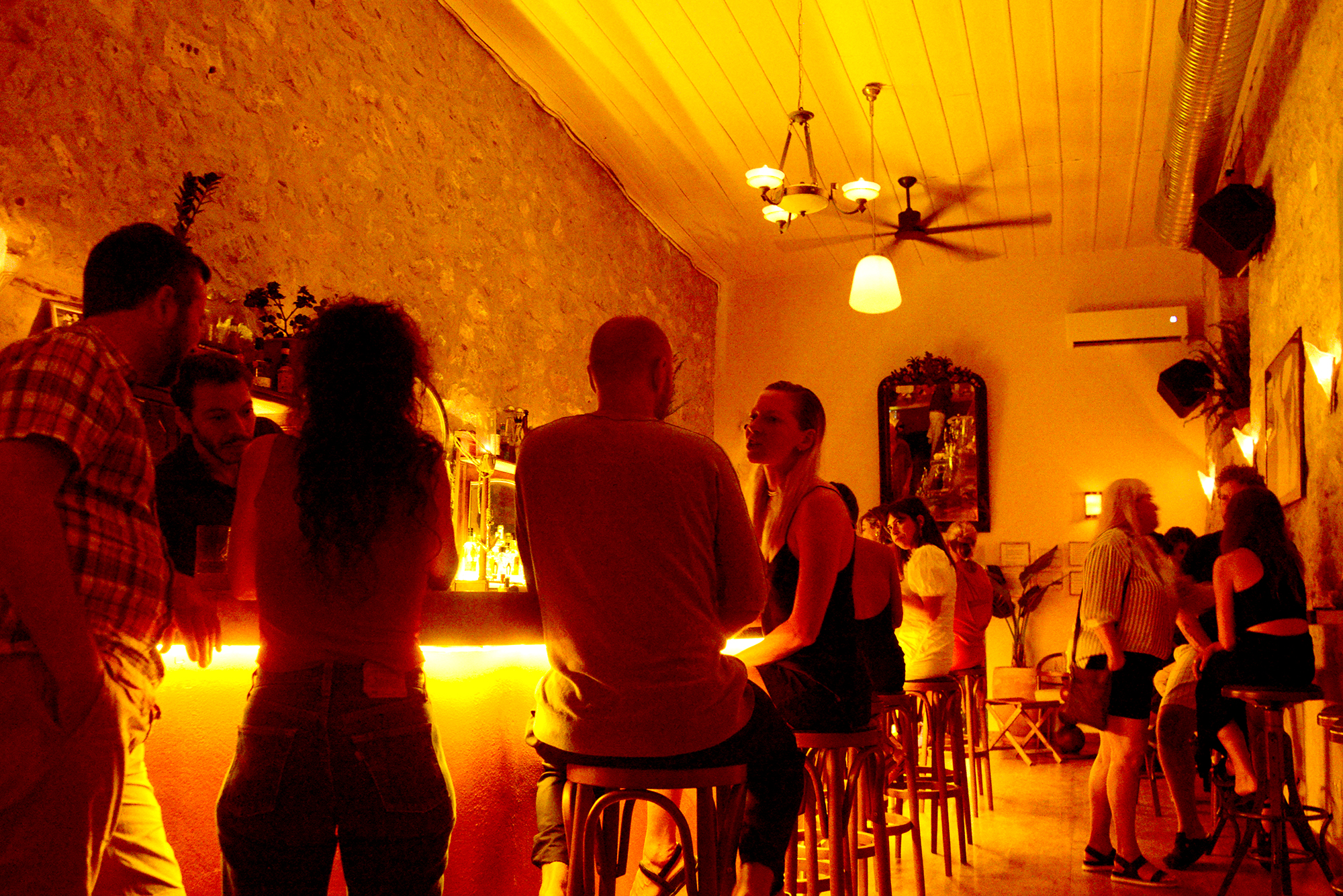
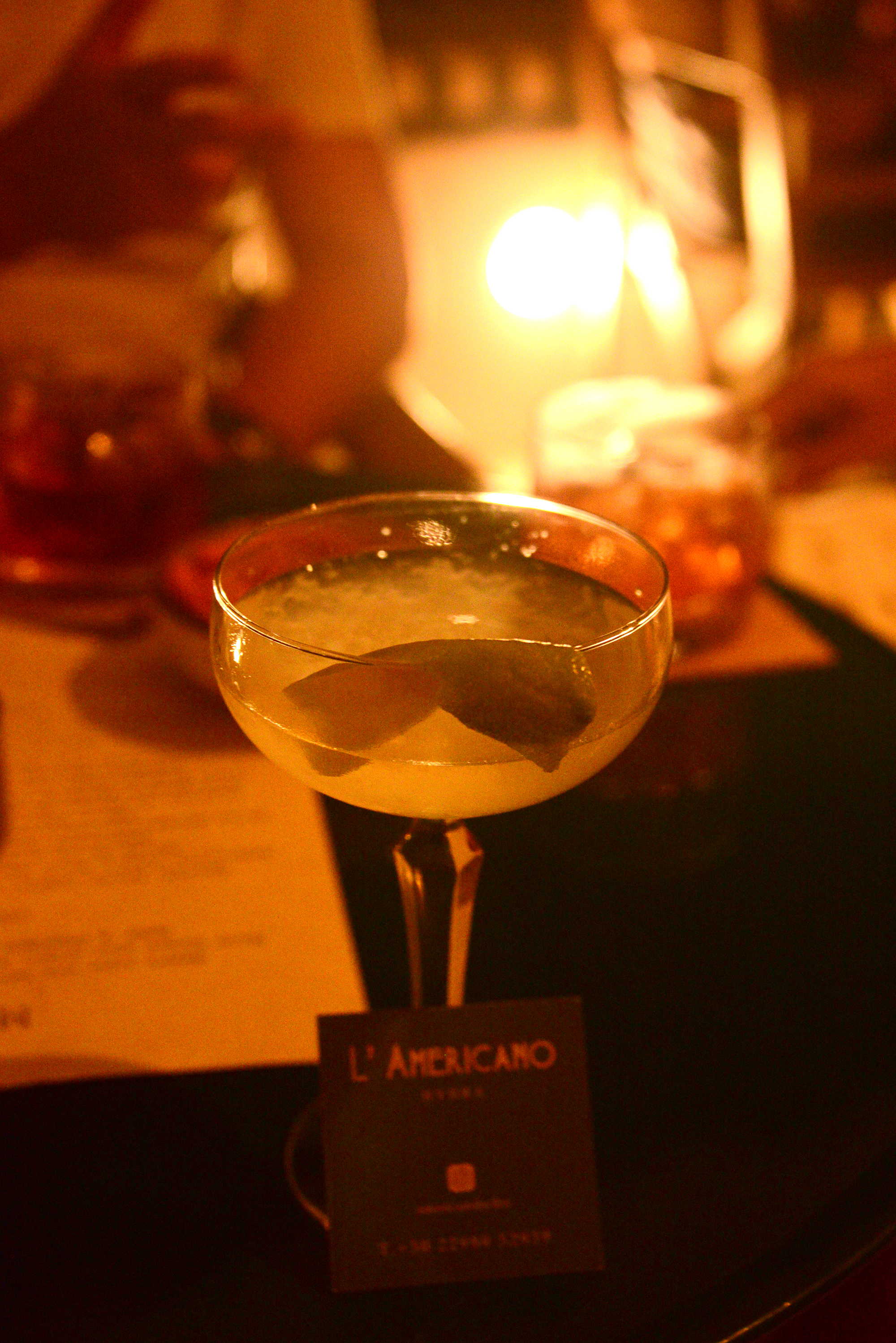
There were, unavoidably, a few terrible disappointments. Techne has discontinued the making of the Tribute to Leonard cocktail. Wisely, we had taken note of the ingredients, and are now on a quest to get the proportions right. It sometimes took Leonard Cohen five years to write a song, so hopefully in five years we’ll figure out the golden ratio as well. We did have excellent starters in Techne which, to our surprise, contained cauliflower and broccoli, and we were taken aback to discover that not only are they good for you, but they can even be made to taste well. (The sauce, the secret is always the sauce.) At Sunset restaurant they had run out of White Negroni. How can that be, one wonders, and the answer is that Breaking Bad style, they cook the base in an olive and caper infusion, and that base had, alas, been consumed. Greek ingenuity did snap into action, and we were presented with a less sophisticated (uncooked) alternative, delicious, albeit not as smooth as the original. The best addition to Hydra’s nightlife scene is undoubtedly L’Americano. It’s everything a cocktail bar should be- it looks right, it sounds right, it has the right people, and, very importantly, the right drinks. They also have a signature twist on the Negroni- a spicy one, but I became strangely partial to their Hemingway Daiquiri, which is strong on rum, a spirit I don’t much fancy. That’s what Hydra does to you, you go there as an enemy of cauliflower and rum and return as a new woman you’d never known you had inside.
This year’s perfect evening was therefore a pilgrimage from the port to Lulu’s, where we had soutzoukakia and moussaka, and enough tsipouro and red wine to work up the courage and ask Irini, the lady of the house, who’d worked there for forty years, if she’d known Leonard Cohen. And of course she had, he’d even sung for her, and suddenly I could very clearly hear him say Irene with that soft Canadian accent of his. And then we’d move over to L’Americano, and then back to the port, to watch the stars, the twinkling signals of ships, planes, windmills, and in the distance, the sea of light surrounding Athens.
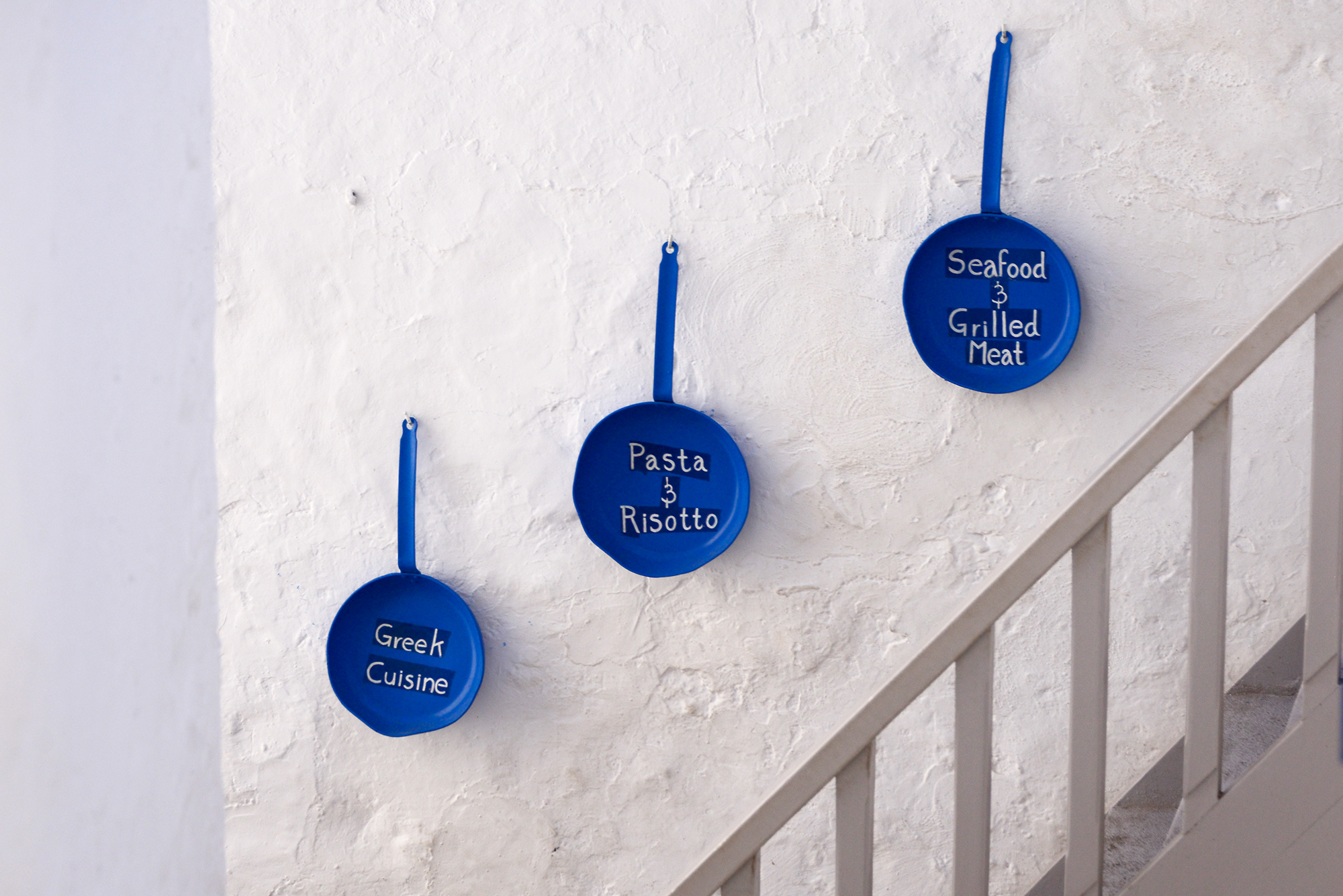
We’d made it a goal to try new places this year, and we have: Taverna Christina near Kamini has an experimental but delicious twist on the tzatziki and the chicken souvlaki comes with potato salad, another exciting but less explored route, as is going for Curacao liqueur when concocting a drink dubbed Aegean Blue. Right off the port on Tompazi street we checked out Psinesai Grill House, where I was delighted to discover wine infused pork that tasted eerily similar to the fresh pork I’d had as a child- Eastern Europeans will easily guess that these were prepared right after the animal was sacrificed in your grandparents’ back yard, a ritual which never ceases to equally intrigue and horrify Western readers. In Psaropoula, which, as the name would suggest, specialises in fish, and has a stunning view of the port and an equally stunning ginger cat patrolling the terrace, I had pasta. And it was stunning- let me anger any possible Italian readers by saying that it was a take on the classic tomato-cheese combo made even better by the cheese being Greek- now that the Taste Atlas has confirmed what we all know, I can confidently state that I liked Graviera before it was cool. Giasemi falls a bit off the beaten track- inasmuch as there is a beaten track on Hydra- and is highly rated by some, but we found the food to be good, but not exceptional, and the service a little fussy and slow.
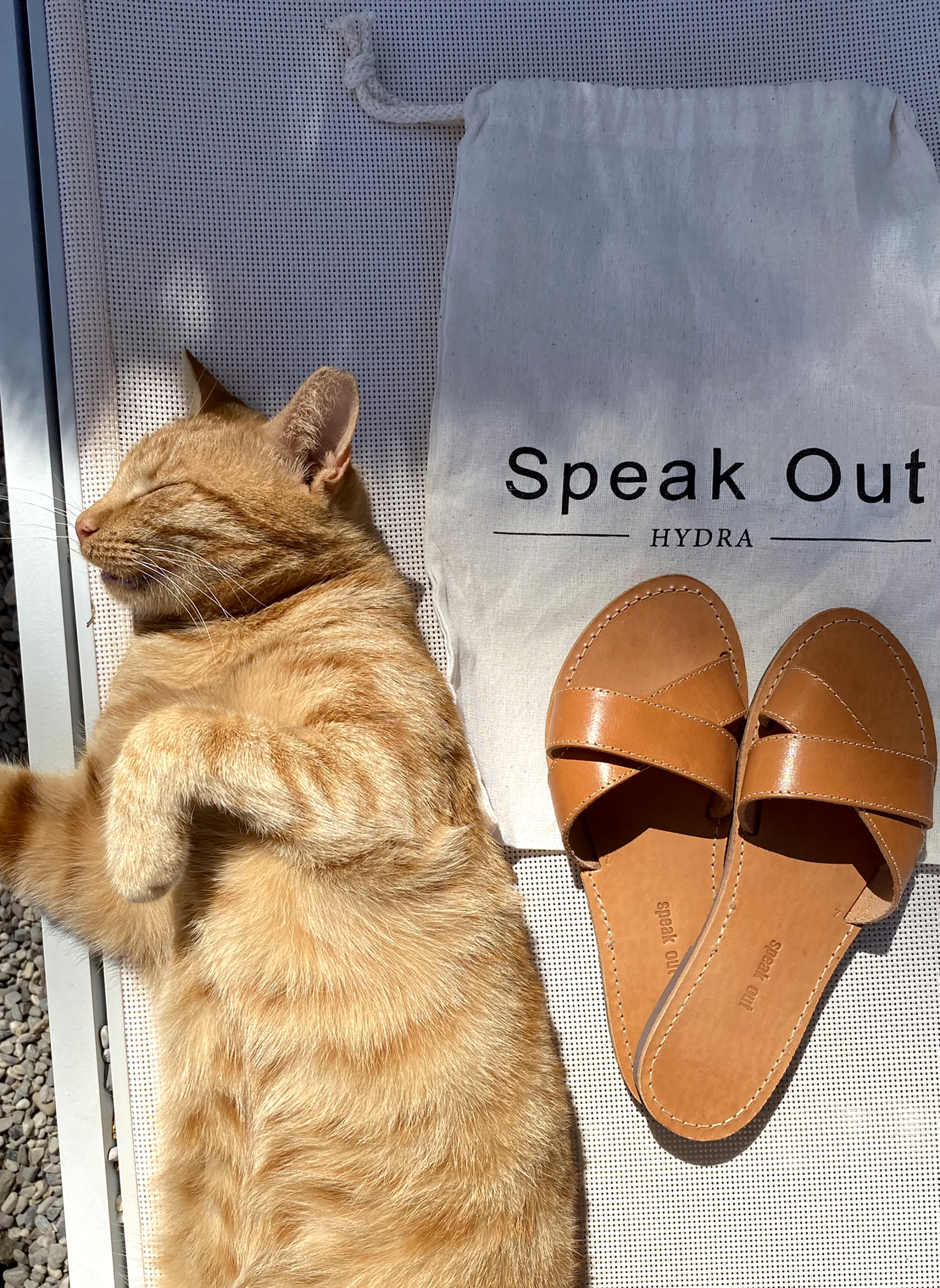
There have been big changes on Mandraki beach as well- not the resort, or the ‘rich beach’, as a Romanian catamaran adventurer called it, but the ‘plain’ little beach right after the turn of the road. The restaurant, now called Lefteraki’s, has a new look, but thankfully they kept the same portokalopita, which comes with sumptuous ice cream and is still the best on the island. The major change is the improvement of the amenities- new, more comfortable sun beds, a changing cabin, a beach bar. We were delighted by this development but were soon to learn that some of the locals were less enamoured with the project. What used to be a less frequented beach with lower prices has now become a busy and hip hangout. Generally speaking, in the few years since we’ve started coming regularly, Hydra has steadily grown in popularity- a bit of a Moo Deng of the Greek islands, if you will. While the algorithm obviously knows I like to see as much of Hydra as possible on social media, I have noticed images popping up on the profiles of random people I know from different walks of life. With so many other islands now overrun by tourist hordes, Hydra has become tantalisingly attractive, particularly for a certain crowd of quirky, slightly artistically inclined people. I am not passing judgement here, as I realise I am very much a part of this crowd, it’s a simple observation, with perhaps a little worry of what is to come in terms of the island remaining livable, for locals and visitors alike. In a decidedly positive note, the ginger kitten we’d nicknamed The Menace of Mandraki last year has now grown into a wise overlord of the beach. Aggression has been replaced by insinuation and calmly looking gorgeous, adorable and hungry at the same time. Rafa, as he is know, is so good at his job that he managed to convince a group of French people to feed him caviar. He’d also make an excellent Vogue cover, colour coordinated with my newest precious loot from my favourite store on the island, Speak Out. I’ve raved about Christina’s sandals already, and now I can confirm that the slippers are equally beautiful and comfortable. There are many more lovingly curated wonders in her store, an absolute must visit place if you’re on Hydra. Another must, if you come in early autumn, is the Hydra book club, open daily in the building of the Historical Archives Museum. I call this, in the most positive way possible, a highly dangerous place. Just as with Speak Out, the key is that this is not simply a store, be it of objects, or books, but somebody’s careful selection of things they like, and would want to share with others. Long and the short of it, I bought books again. As somebody who flies with Ryanair, I simply like to play with fire when it comes to the luggage allowance. It makes me feel more alive.
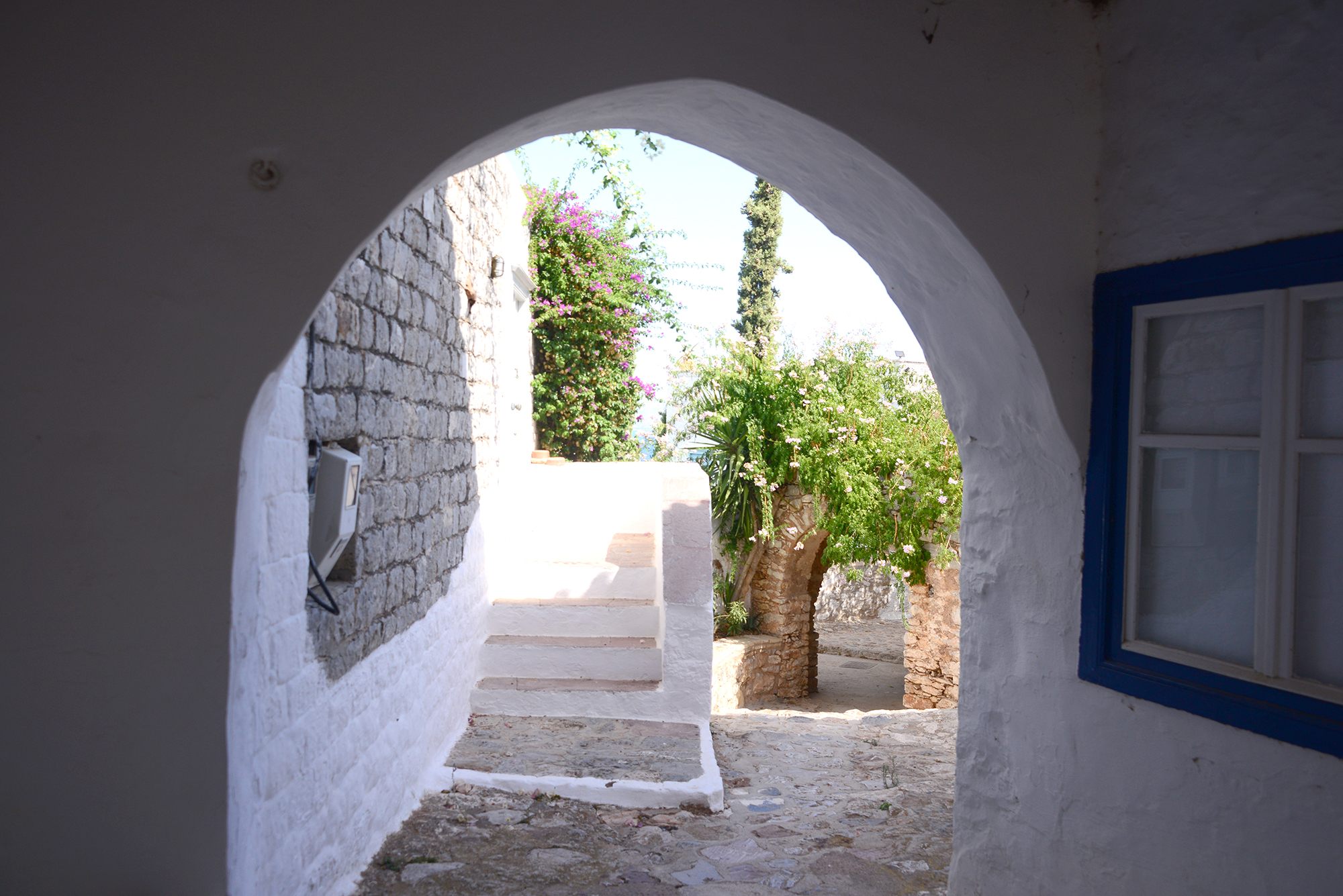
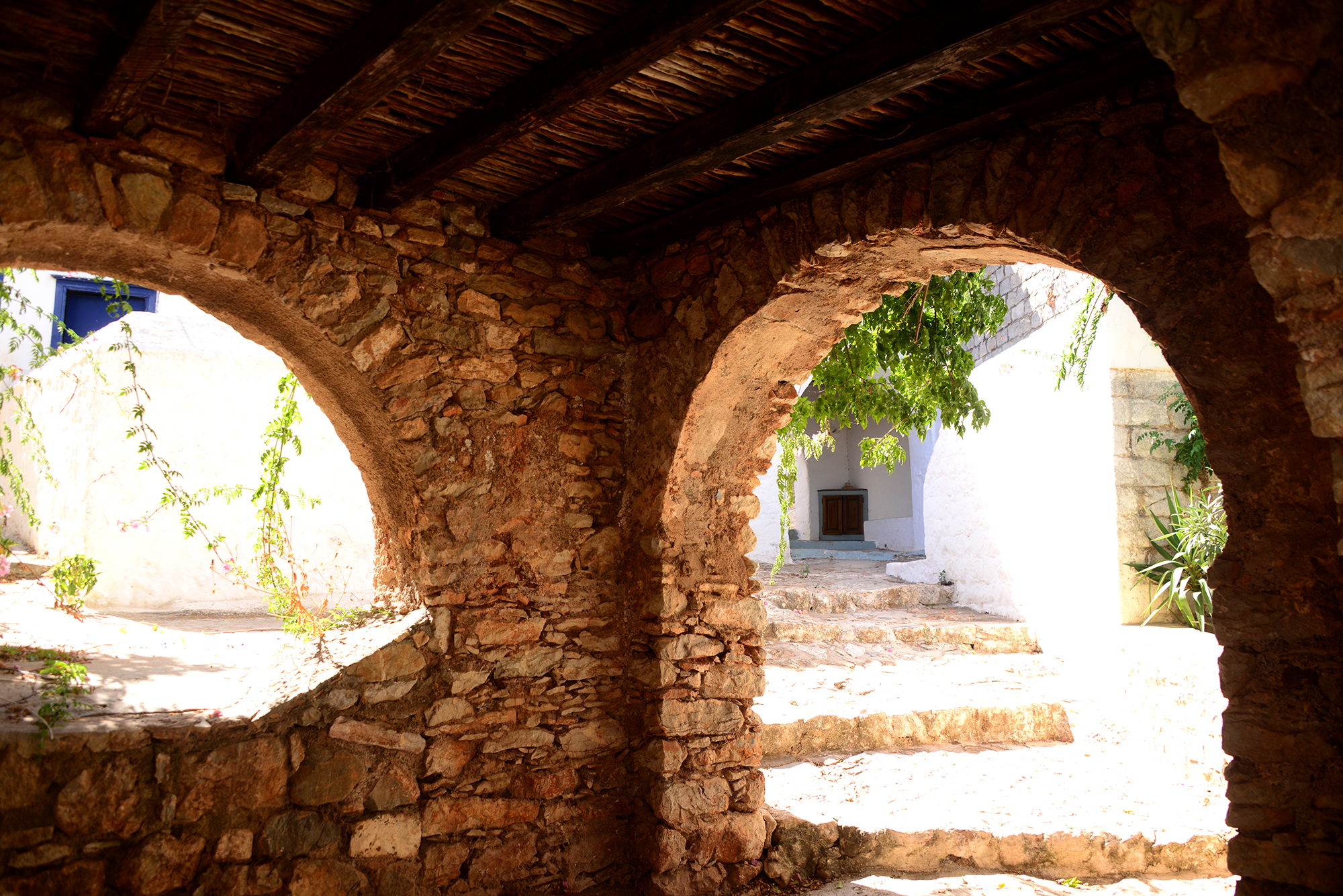
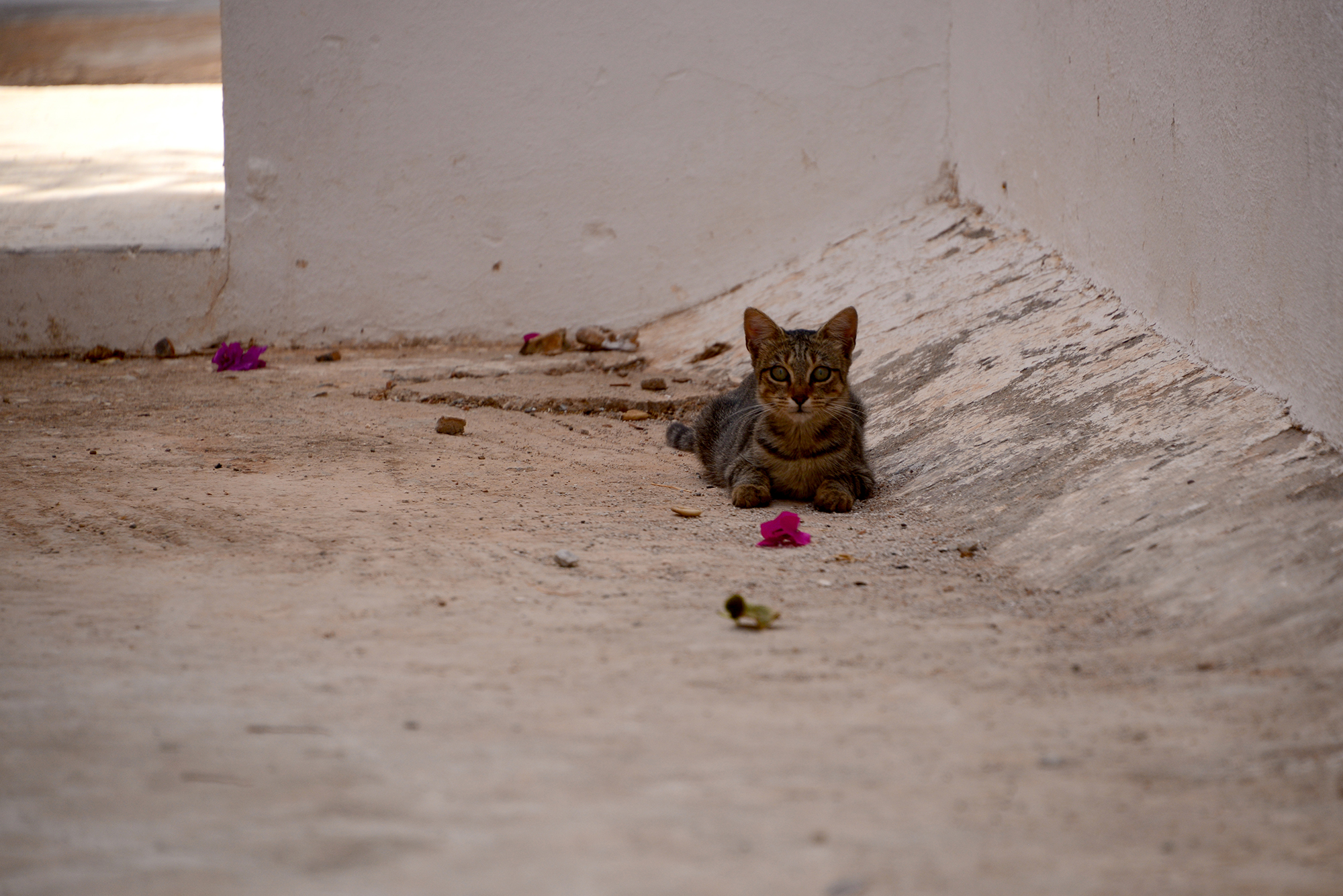
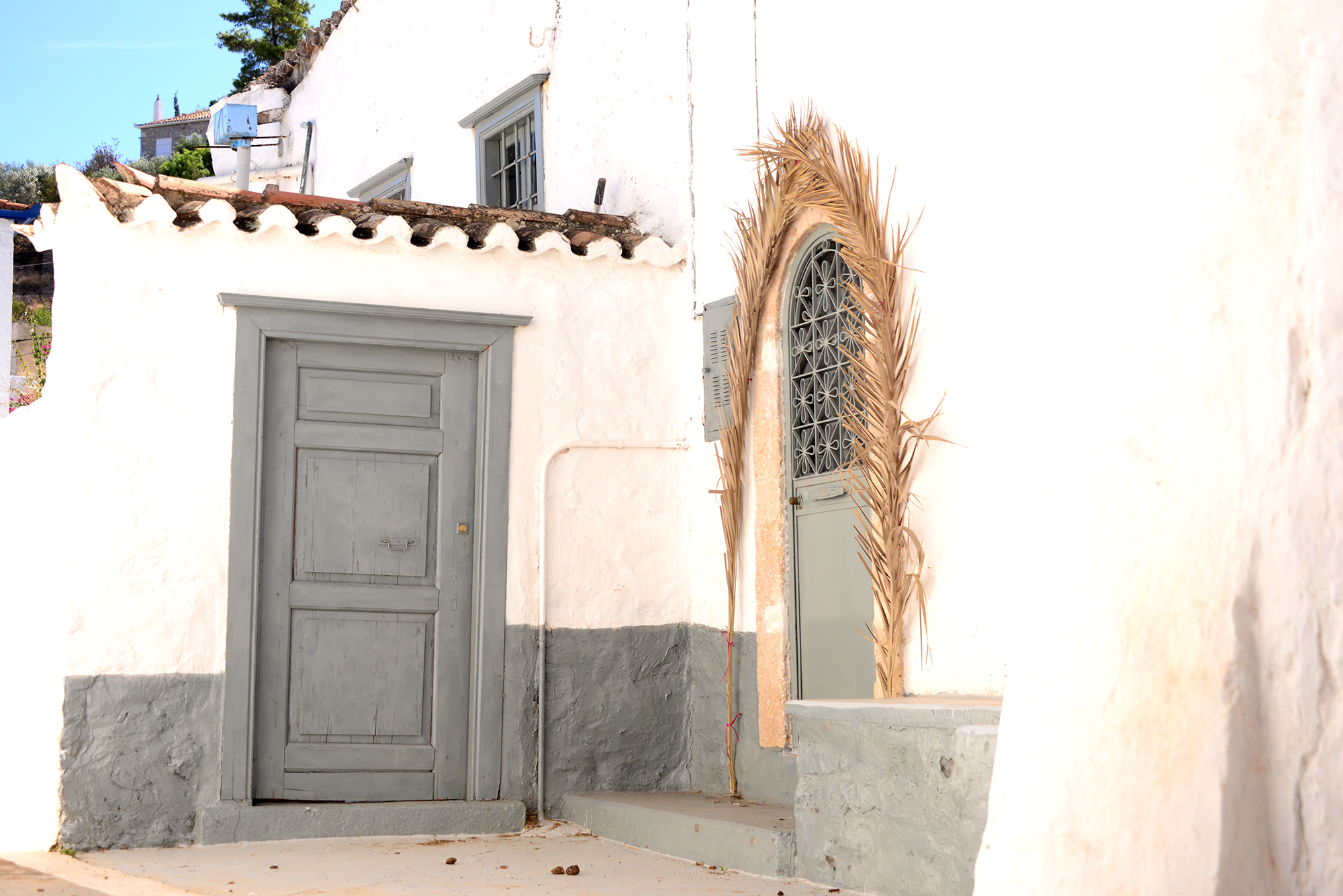
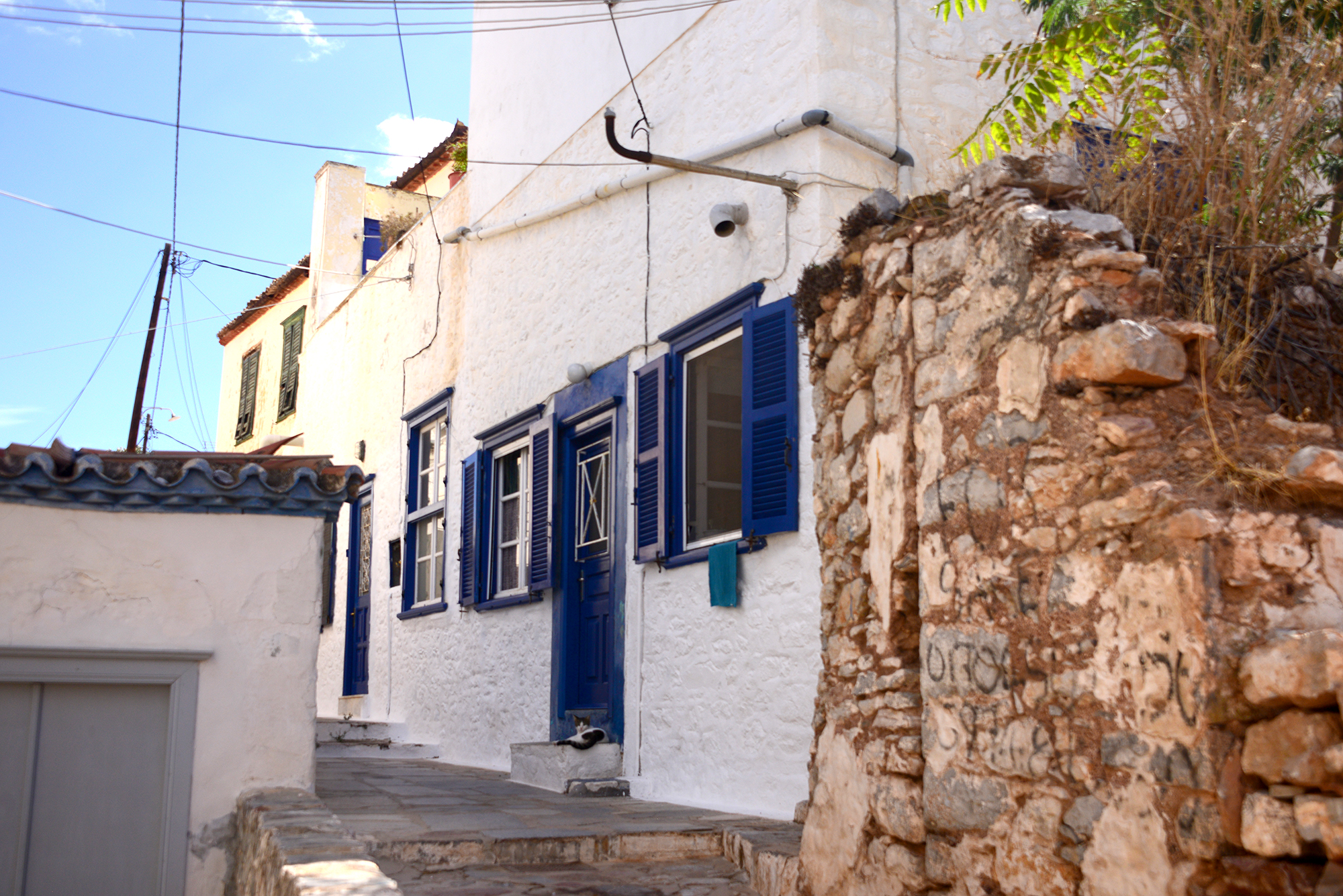
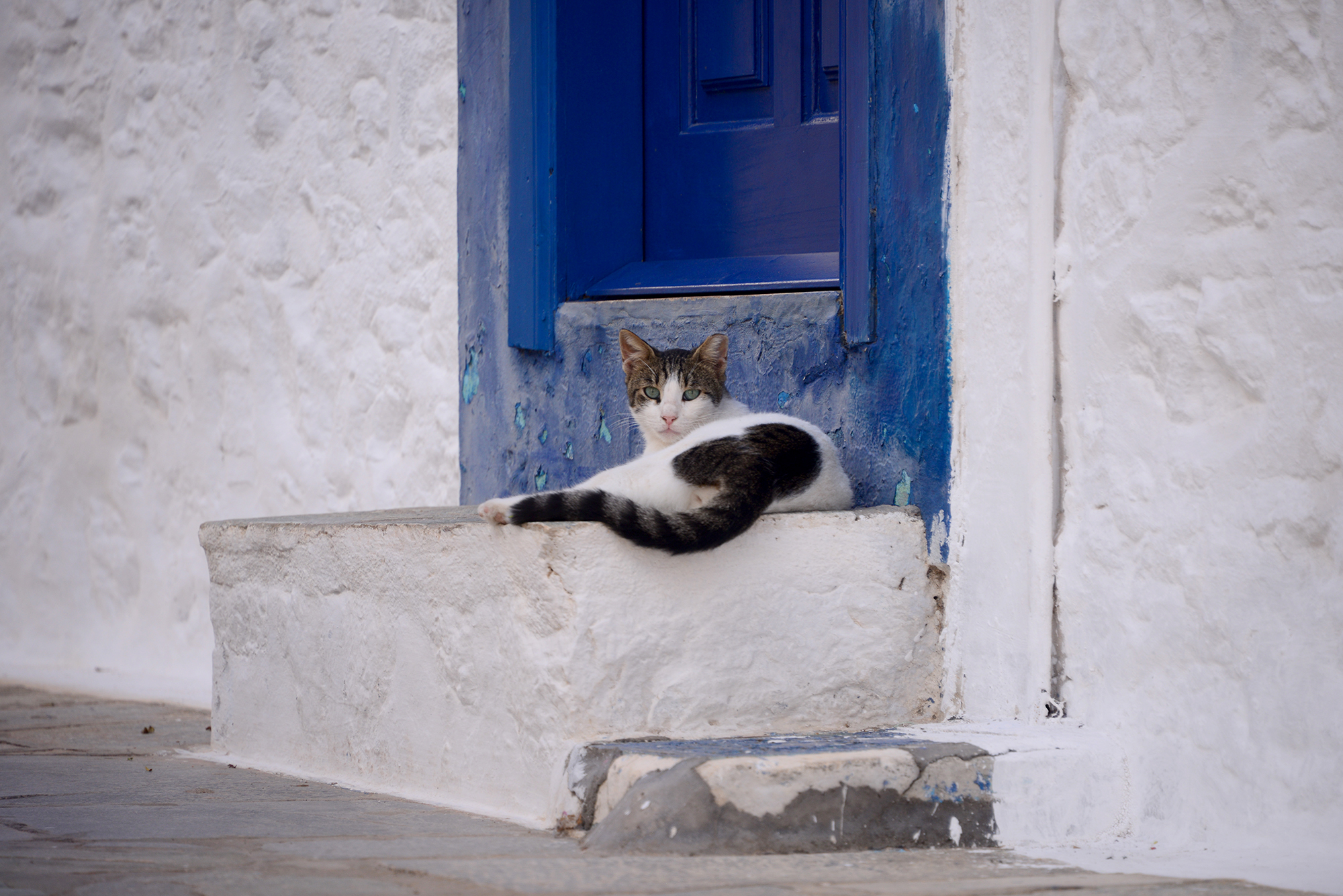
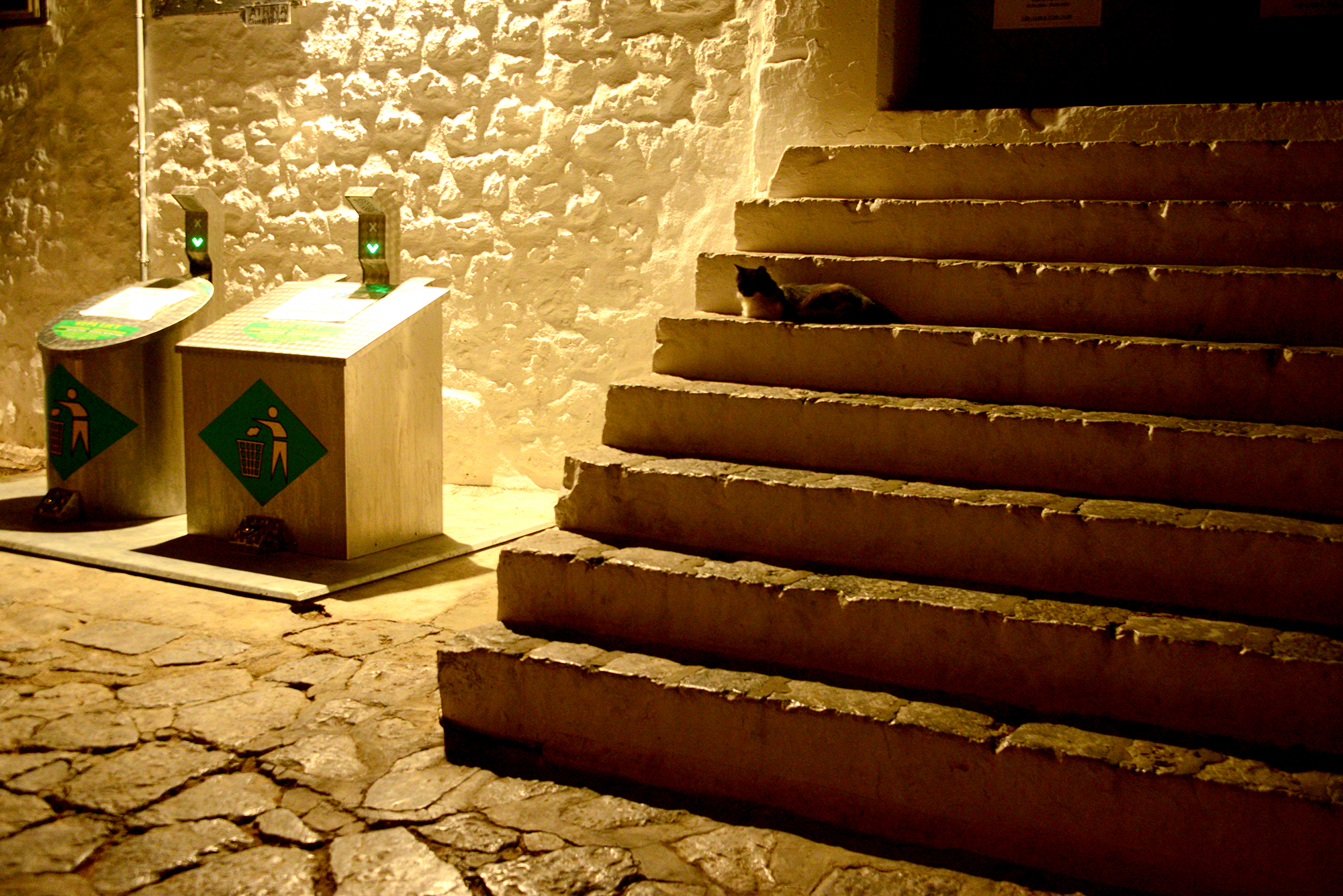
If you crave some alone time, but don’t want to hike all the way up to the monasteries, you can consider a walk to Kiafa, the old quarter which preserves traces of Hydra’s let’s call it pirate-y past- perched high on the hill, it was perfect as a lookout for incoming enemy ships, and it had a mazy structure of walls, some of them still standing, which connected houses to each other, making escape routes easier in case of need. Today, it has some secluded villas for rent, and some property for sale, but it’s otherwise closest in life rhythms to a traditional Greek village- come early afternoon, it’s peacefully enveloped in the scent of slowly cooking food, cats purr away on doorsteps, the silence occasionally punctuated by the cries of children or the hum of a TV or radio. Speaking of radio- I have long given up on most commercial stations, and only very accidentally bumped into Radio Kosmos on our guest house TV’s sound only menu. It has however proven to be a most pleasant discovery, a way of shaking my senses from a certain Spotify algorithm induced monotony. Wandering through Kiafa I had to remark on the much-improved quality of the mobile network, which had the habit of impolitely disappearing ever so often in previous years, especially on narrow streets up the hill. In further surprises, the garbage disposal area outside the football pitch has now been upgraded with the speaking gates of Hades- two underground waste collection containers which can be opened by pushing a pedal and will then proceed to blurt out instructions in both Greek and English, to the incredible merriment of the area’s children, who play with them relentlessly.
As our boat pulled out of the port. A sentence which is, likely, the most commonplace way to end a piece about Hydra. So, as our boat pulled out of the port, I could not help but smile condescendingly at my initial sense of mild disappointment. Hydra may be a little island, but it contains multitudes, and while on the surface it remains almost unchanged, it always has a few unexpected tricks up its sleeves.







 Pocket Diary Budapest
One Comment Add yours