It was criminally early on a spring Saturday, and we’d headed south across Europe above a cover of clouds. But as the plane made its descent, I could clearly discern the outline of Pisa, a bit upriver from the estuary of the Arno. We veered out above the sea to line up for landing, passing scattered islands and large ships making their way to Livorno, then rice fields and football fields, their greens bleeding into each other. Pisa International Airport looks like a subdued affair at first, one of those boxy Mediterranean airports which seem to have been improvised out of a local factory’s disused hangar when the number of tourists suddenly justified a sky port. But looks can be deceiving. As the briny sea breeze ruffled my hair, I noticed a definite whiff of efficiency. I also noticed that the hangar bore the name of one of the city’s most famous sons- Galileo Galilei. And yet we were moving.
We were whisked to the central station in a tiny driverless carriage dubbed a Pisamover, a toy of sorts, or something more fit for an amusement park- the vehicle has a more ferocious brother in Bologna, to whom we will return later. Since it was still unreasonably early, the activity around the station was limited to a few sleepy commuters and the bus drivers of the city transport hub having espressos. In sunglasses, though it was overcast. In the middle of the road, where other bus drivers were bound to maneuver. Nobody budged an inch but eventually all was sorted. It was almost a programmatic ballet, purposefully making driving even harder, to demonstrate the skill of the man behind the wheel. The nature of the vehicle is secondary, as we’ve all learned from Clarkson’s Farm, Lamborghini make both super cars and tractors, so Italians will be adamant to excel at driving any vehicle they can lay their hands on and look very good while doing it.
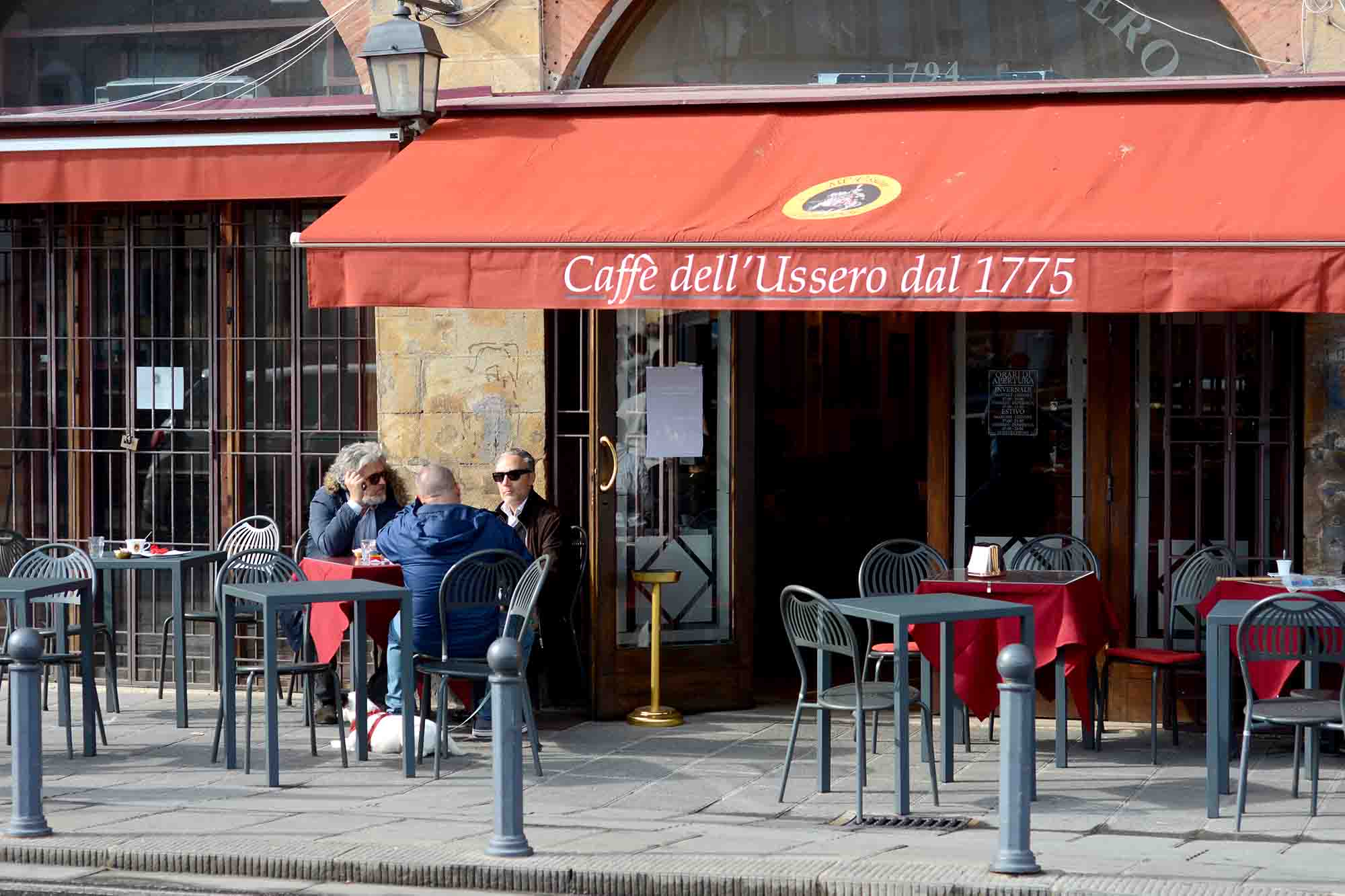
Importantly, though, the trip from the airport to the centre of the city took about twenty minutes, not counting the brief break we made to find our bus in the above-mentioned hub. Both the bus and the ticket dispensing machine were easy to find, and the latter worked perfectly and accepted card payment. What sort of utopia of hassle-free travel is this, we thought, as we left our luggage at the hotel and were offered espressos by our host. For the record: this was but the first of many espressos we had. They were all good espressos. And cheap. There has been a lot of (quite emotional) talk about the rising price of coffee in Italy, especially during the pandemic, when the traditional one euro occasionally surged to one and a half, and even, blasphemy, two euros. The latter price is interesting, because, of course, it is the double of the original, but it was occasionally justified by the fact that you would pay using one coin only. And the way you would pay is entering the bar, greeting staff, exchanging pleasantries, talking about the weather and the absolutely disgraceful refereeing in the Roma-Milan game, not once mentioning the coffee, but as you slid, elegantly, the one-euro coin, an espresso would be slid, elegantly, in return over the marble countertop. I took this to be mostly an anecdotal argument, until I saw it enacted live at a coffee and wine stall at Firenze’s main market hall, where both the sharply dressed older gentlemen and jovial stall owner complained that paying with these two coins (the price was 1.20€) is just not ‘as beautiful as it used to be’. The 1.20 € price was the highest we encountered during our stay, with most places, especially in Pisa and Bologna, still going for the 1 €. Undoubtedly, places with higher prices exist, and our only advice is, don’t go there.
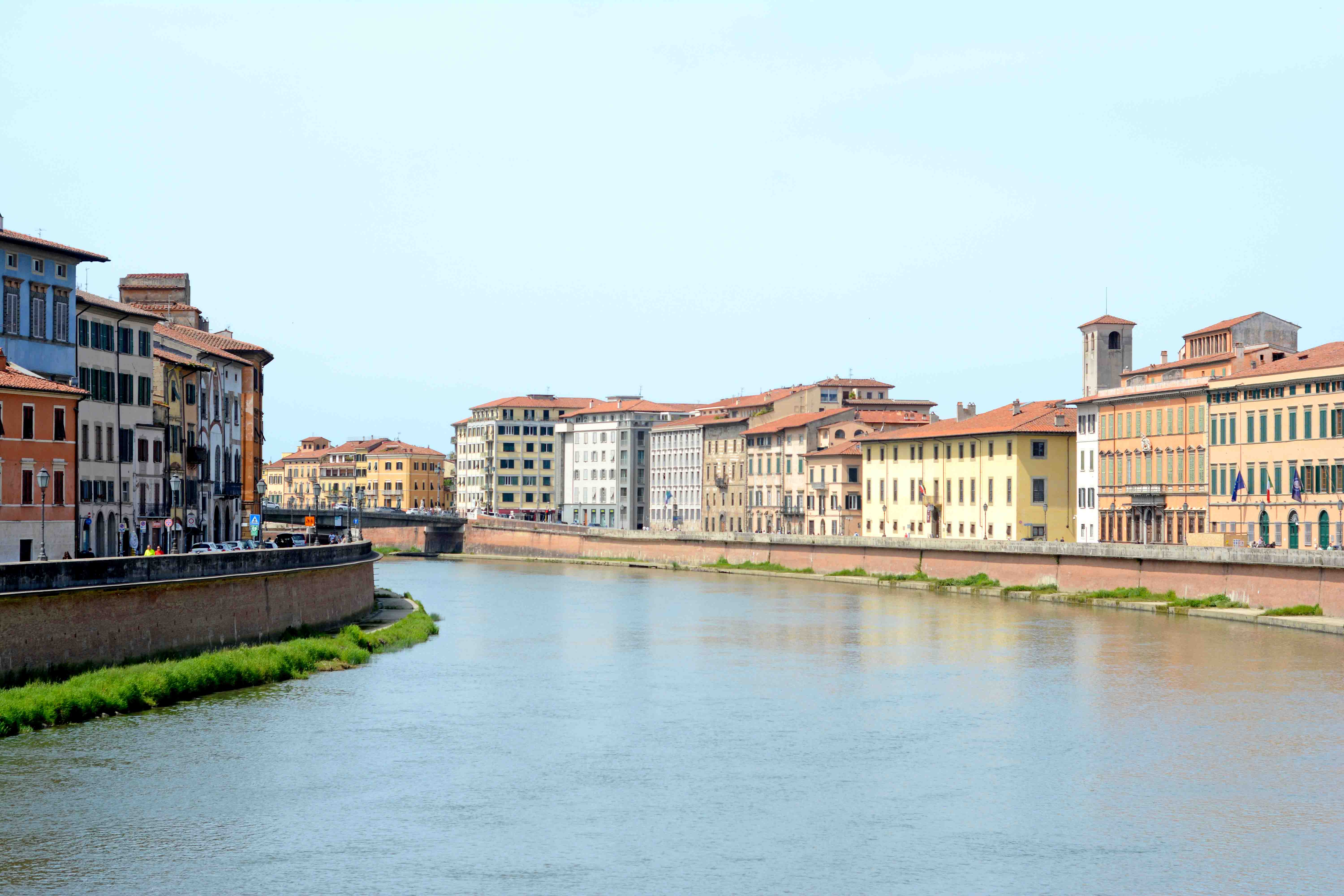
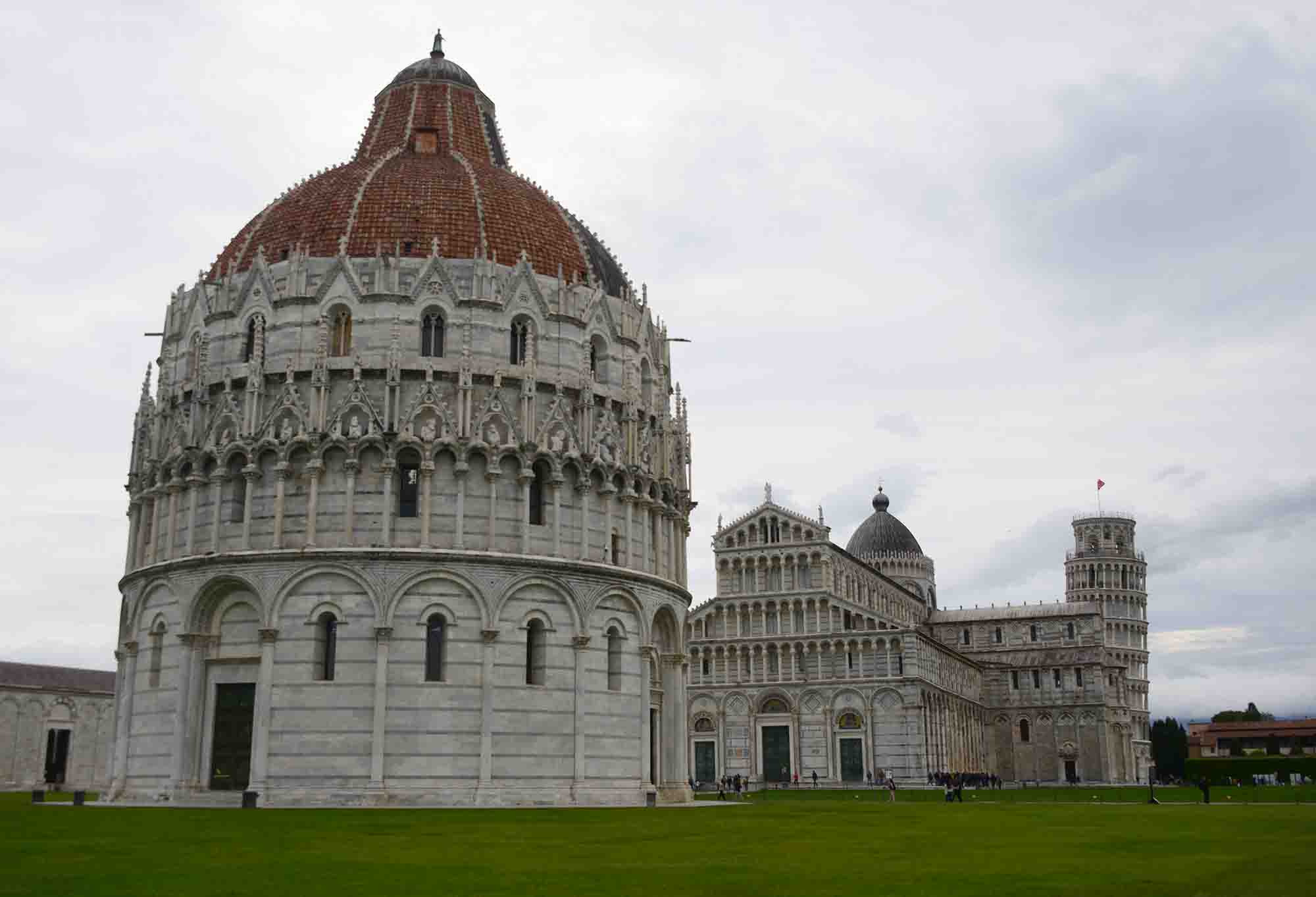
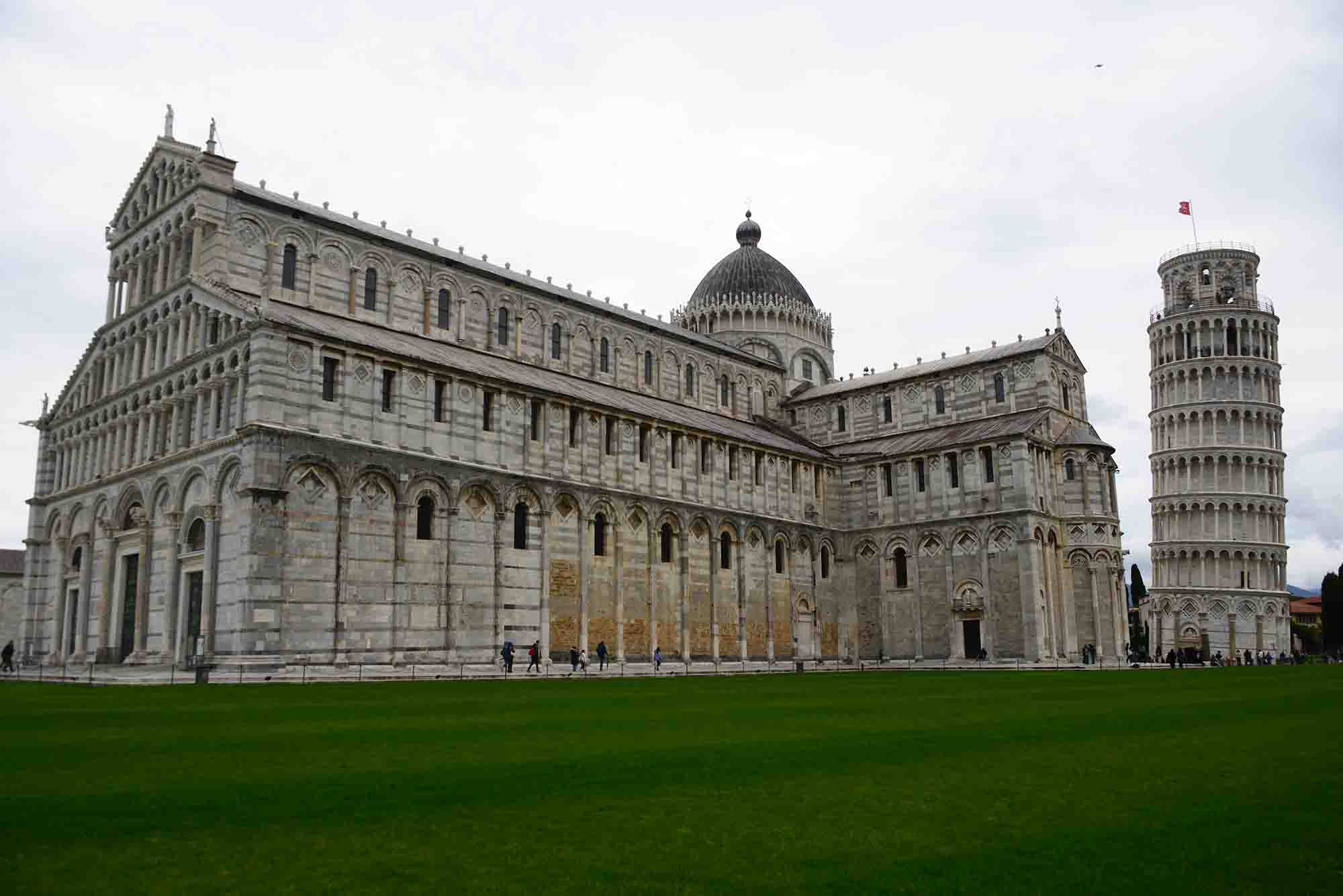
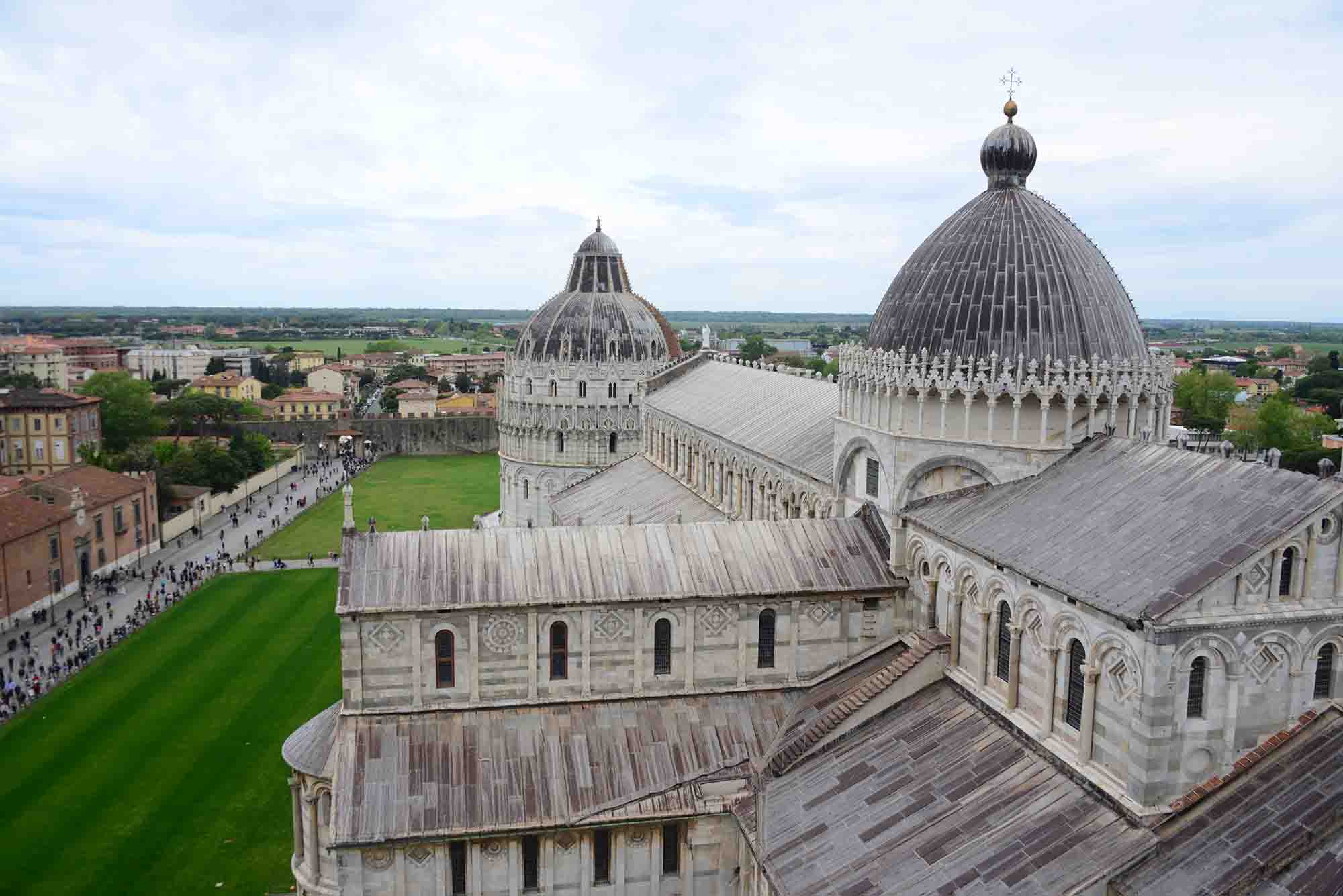
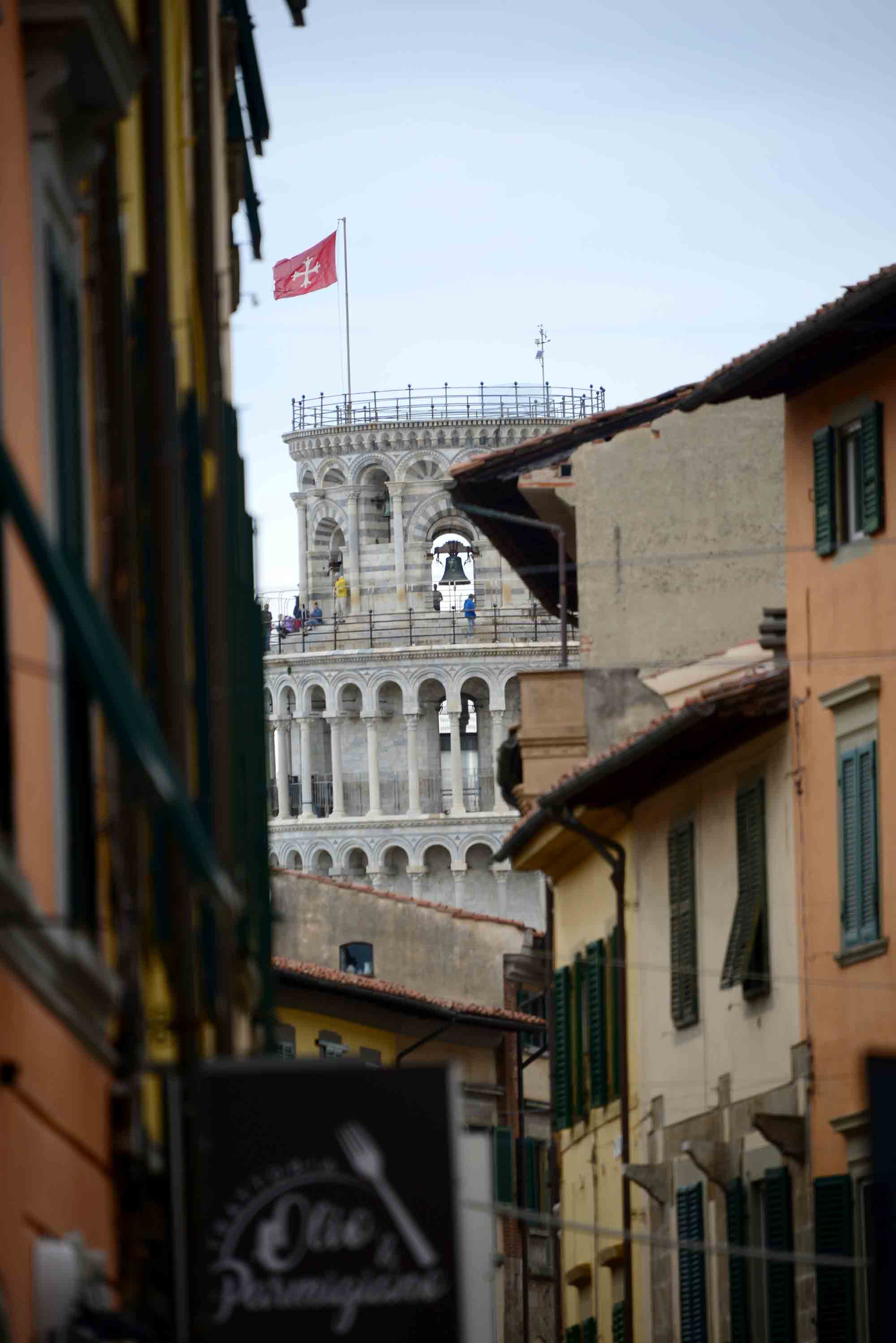
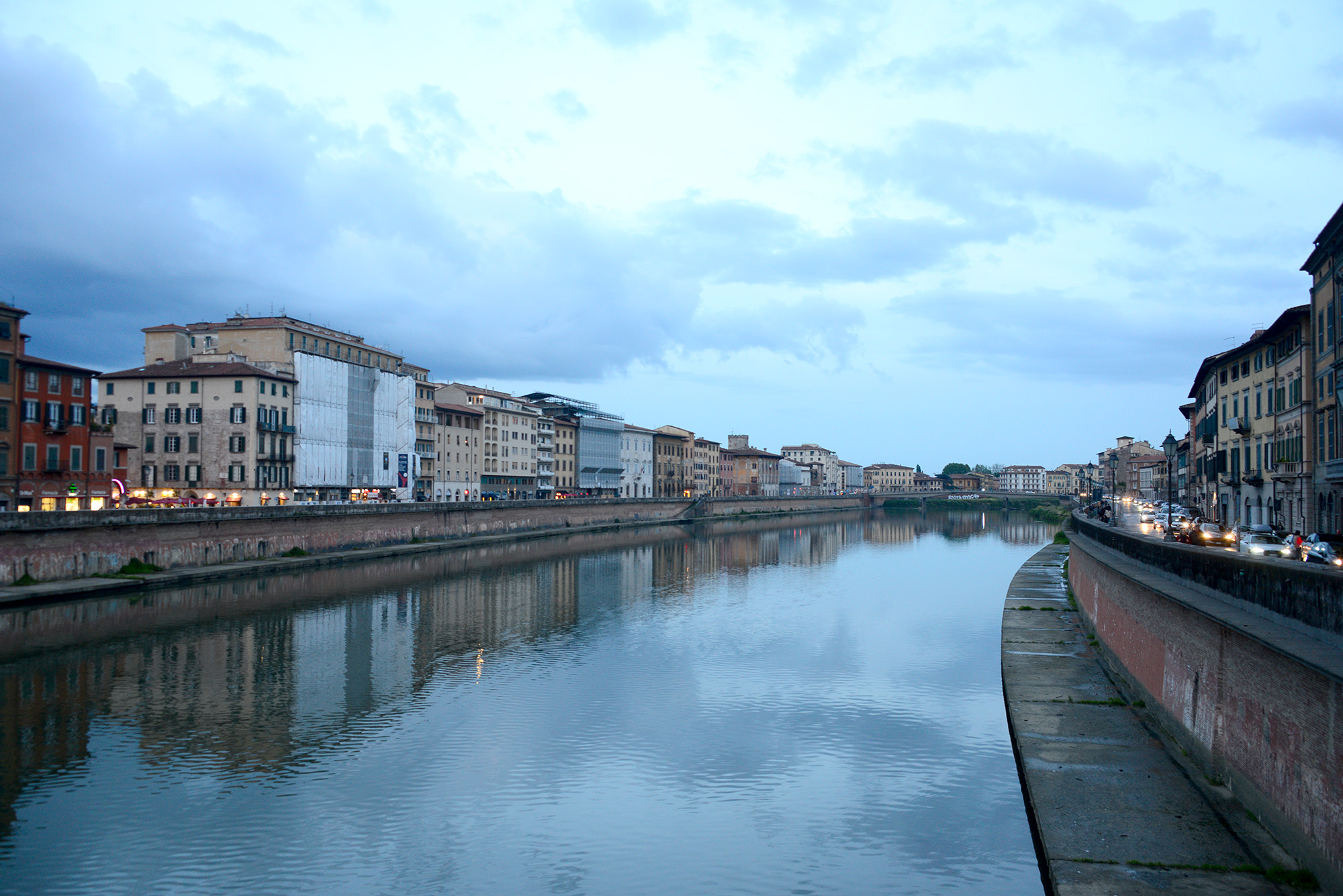
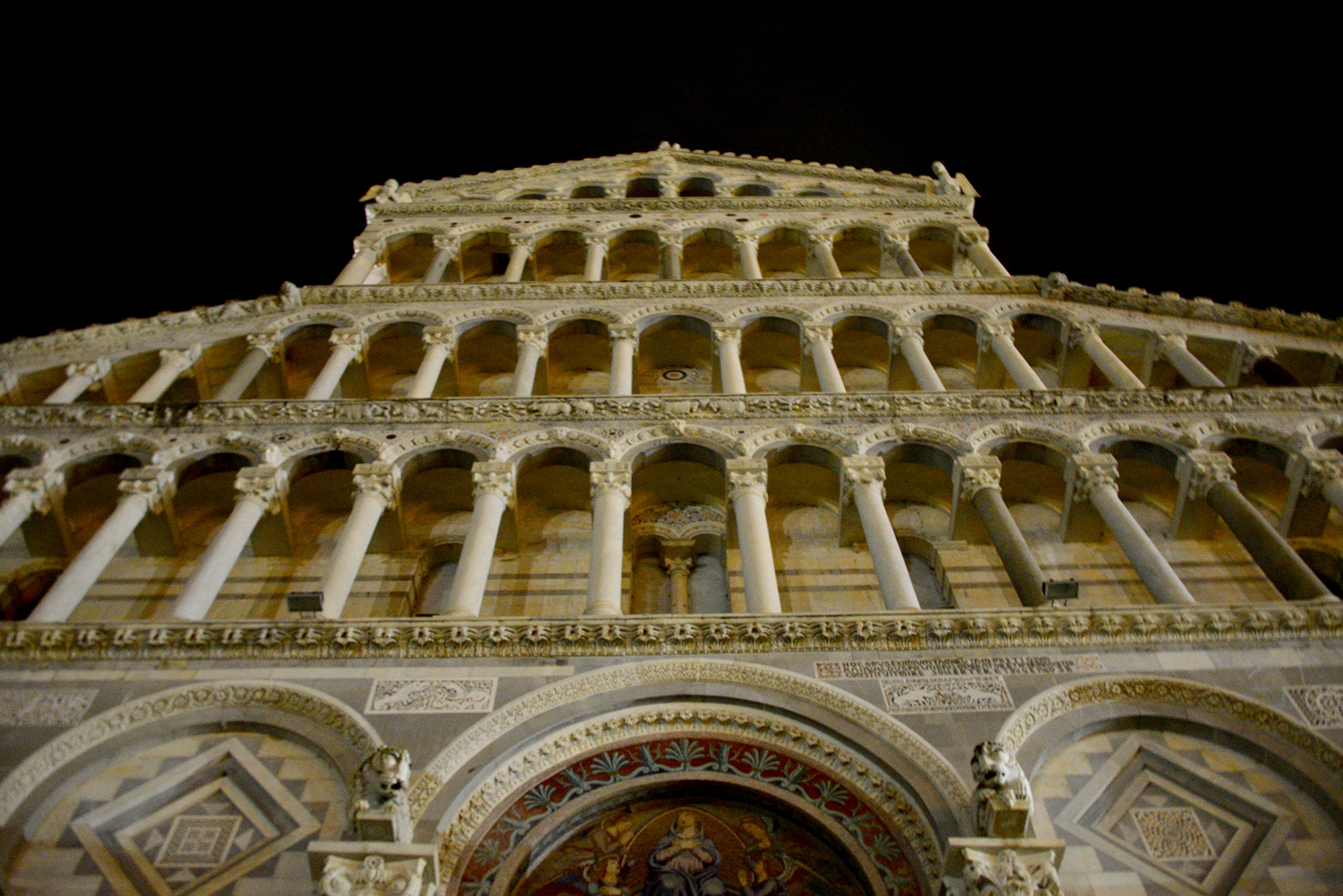
‘Don’t go there’ is my overarching feeling about popular tourist attractions, so I must confess I simply never wanted to see the Leaning Tower, and, by extension, Pisa. The only reason I was looking at the Leaning Tower, still ridiculously early on a Saturday morning, was that Ryanair fly to Pisa but not Firenze. And once again I have to thank my low-cost guardian angels for their fortuitous interventions in my sedate little life. Pisa is wonderful- notwithstanding the tower. Or let’s give credit where its due: the Tower is such an efficient tourist magnet that it sucks the throngs out of the rest of town, which you can visit at your leisure while everyone else is propping up the tower. Which doesn’t need propping up- the latest stabilisation works have made it safe for the foreseeable future. The cathedral, alongside its bell tower and the baptistery, or The Pisa Tourist Hive, as I fondly thought of it, were built during the heyday of Pisa as one of Italy’s maritime republics, in the 10th and 11th centuries. While we often tend to think more in terms of Venice and Genoa, who were powerful for more extended periods of time, Pisa preceded them in wielding power in the Mediterranean. Pisans like to emphasize that theirs is an Etruscan settlement (the city’s name might come from the Etruscan word for ‘river mouth’) which was already a large trade centre when Genoa was still a small fishing village. Nowadays Pisa proper is farther from the sea due to the buildup of sediment on the coast, so it combines the charms of a river town and a sea town- I am adamant that no town is truly great without being adjacent to a body of water, whether flowing or still, and Pisa is among the select few to have both.
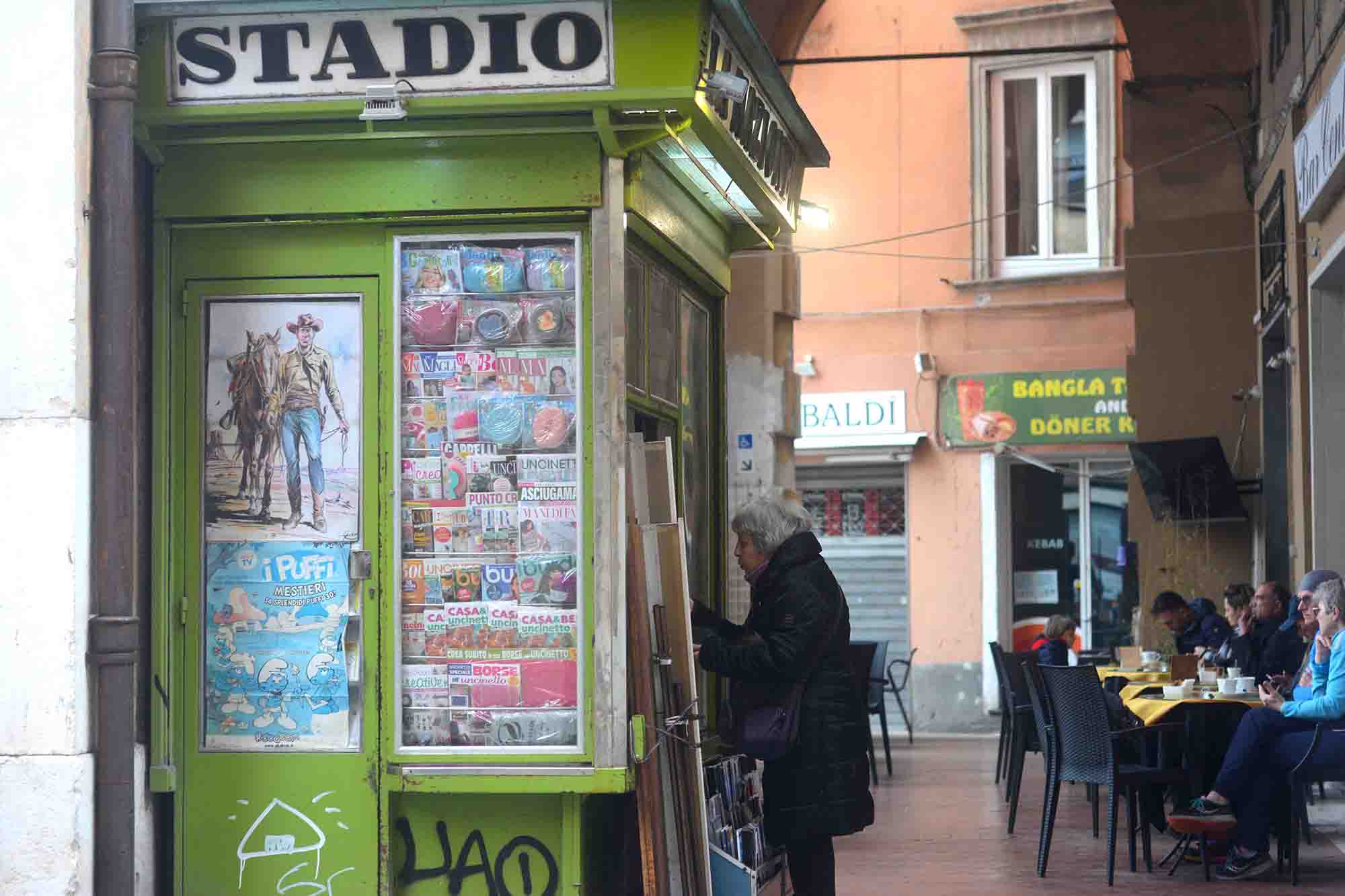
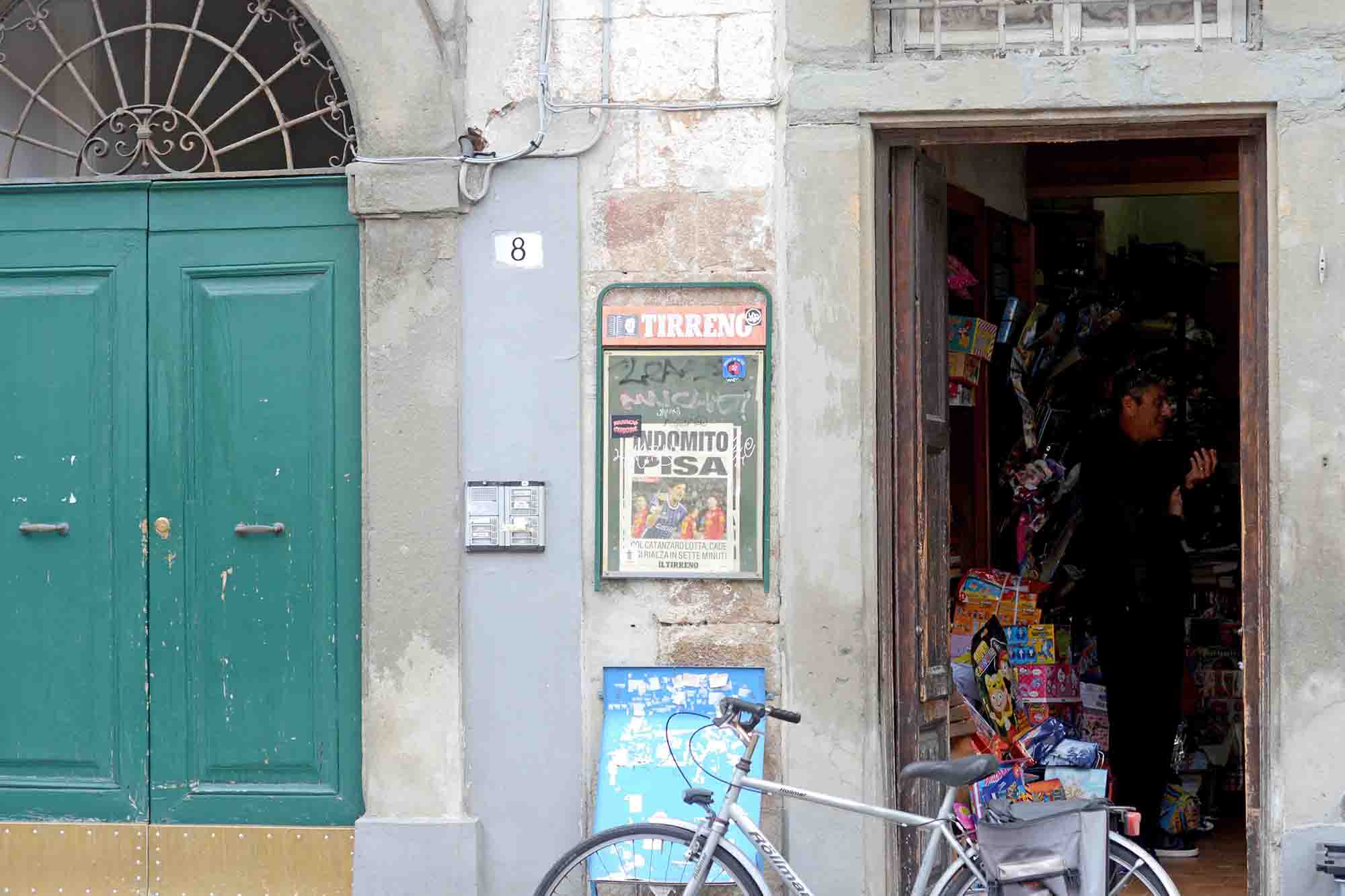
Perhaps we got lucky with the slightly overcast weather too, which dissuaded day trippers from visiting, so Pisa felt like a good place, made more to the measure of locals than visitors. Whereas in Florence the constant flux of tourists on their way to yet another museum almost completely cancels the natural rhythms of the city, in Pisa real life bubbles to the surface. As the morning progressed, there was the thud of rising shutters, the clinking of coffee cups, conversations on the way to the farmers market, joyful cries across squares as acquaintances recognised each other. There was the gentleman walking his dog to buy the local paper- we soon identified the lovely green stand where he was headed to. Italy is a country that, overall, is quite verbal and doesn’t read that much (students tend to score low on the understanding of texts in the somewhat ironically named Pisa assessment) but newspapers, often regional ones, are religiously perused, usually first thing in the morning. In Pisa, the battle is between Livorno based Il Tirreno and Florence based La Nazione-both will have local editions for Pisa, and the news will be promptly discussed over coffee. Football will unavoidably be discussed- a young boy was frenetically excited as he recounted, over the phone, the wildly unrealistic permutations which would have secured Pisa a playoff spot for the Serie A. Alas, none of it came to pass, but pride of place was more than evident in his thirst for footballing glory. Albeit the club is currently owned by a Moscow born British businessman, in an ever growing trend of foreign owners investing in beloved local clubs, extra perks added if they have a pretty historical town attached to them that might inspire cult following abroad.
We’d discovered quite a lot of Pisa as we made the rounds waiting for aptly named panineria Porci comodi to open- while the immediate translation would be comfortable pigs, they’re rather more the lazy kind. Opening is at 11, approximately. When they open, they’re still not open, because they need to quickly grab a coffee and a cigarette. But once they are truly open, they’re living proof that a humble panino can be a work of art. There are several variations of what you can get in the panino, of course I will always and forever go for the mortadella, while the blog’s industrious co photographer went wild and got the raw pork salami and commended it as poetry turned into meat.
In the afternoon we sheltered from the brief drizzle on the terrace of Bacco in piazzetta, an unfussy wine bar where local patrons mixed with an array of tourists, ranging from a polite Austrian couple to a table of Scandinavians still drunk stiff after the previous night. The bar’s staff treated the Scandinavians with benevolent, almost parental care. Of course, these poor souls from the frozen North will implode under the weight of Italy’s luxurious lifestyle of amari, spritzes and sumptuous wines, so they were fed hearty portions of lasagna to cure their ills, and probably set them on course for another tragic debacle. We’d been adamant to have one glass of wine only, but somehow more of those also happened, plus a taster of Italian gin and a tagliere of hams and cheeses. After having investigated the history of Bolgheri wine -believe it or not it is connected to Bulgarians, namely the Bulgarian tribes which accompanied the Lombards in their sacking of the remnants of the Roman empire, I was well disposed enough to conclude, as if no one had ever thought of that before, that the key to the success of Italian cuisine is that it is in fact quite simple, but uses ingredients of the highest quality. Finding good beer in Italy is, however, more complicated, but in what I feel is a positive global trend, most big towns will have at least one craft beer taproom. In Pisa, they took the concept one step further, and Scaccomalto doubles as a board game bar, in line with their name, a pun on the Italian words for check mate and malt. Their selection centres on their own microbrewery brand, Mudita, and we have nothing but words of praise for the two IPAs we tried.
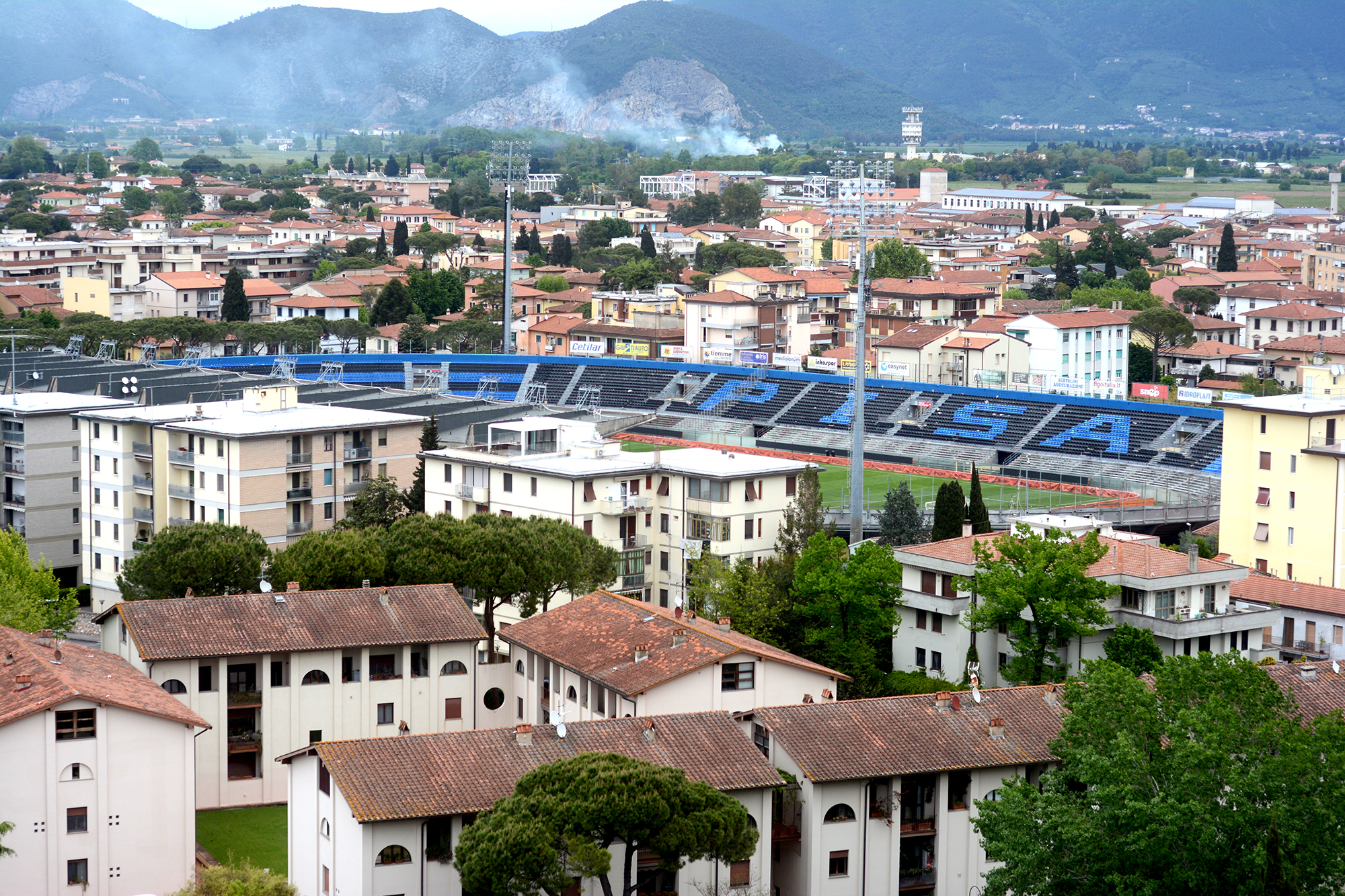
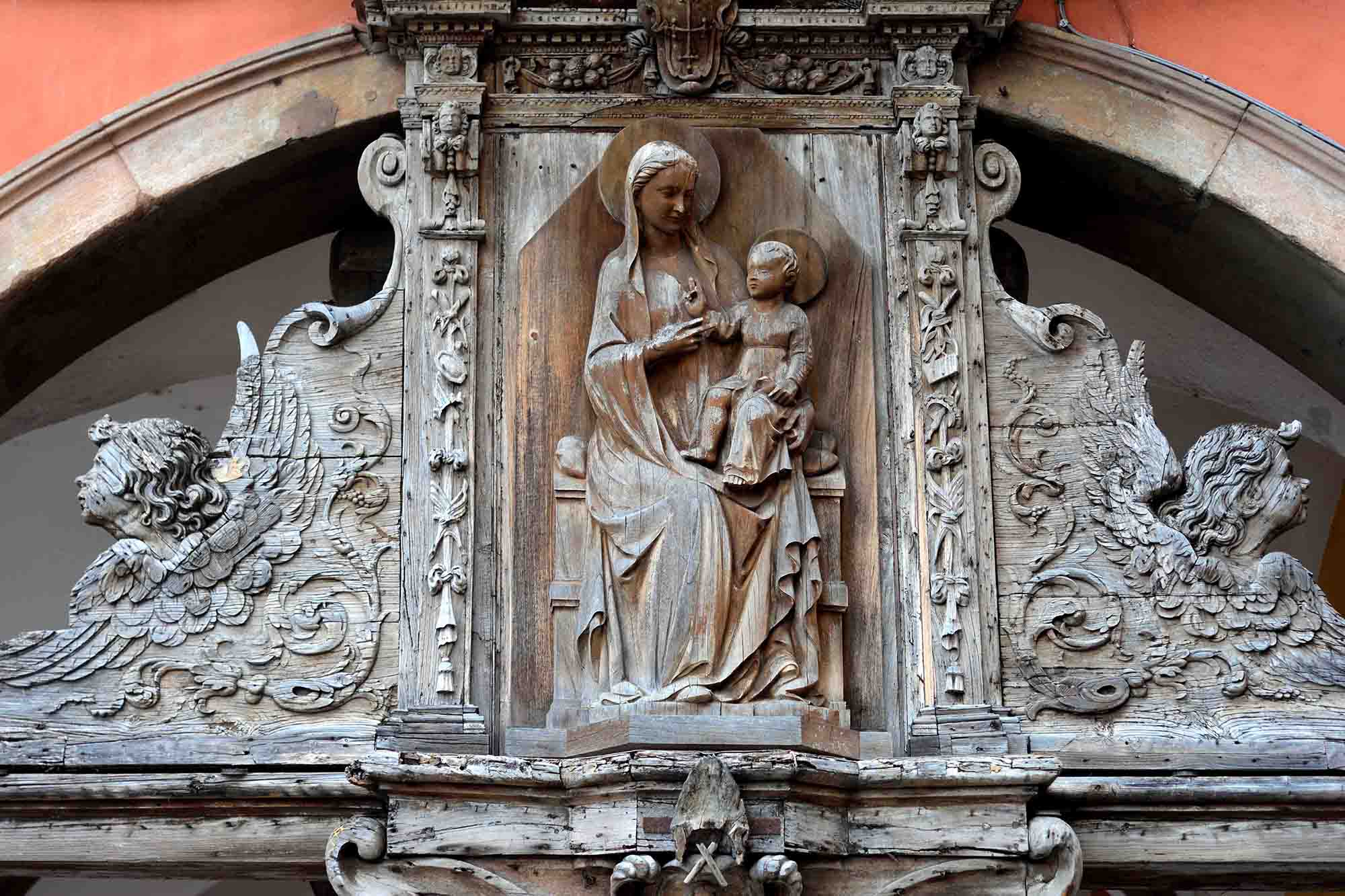
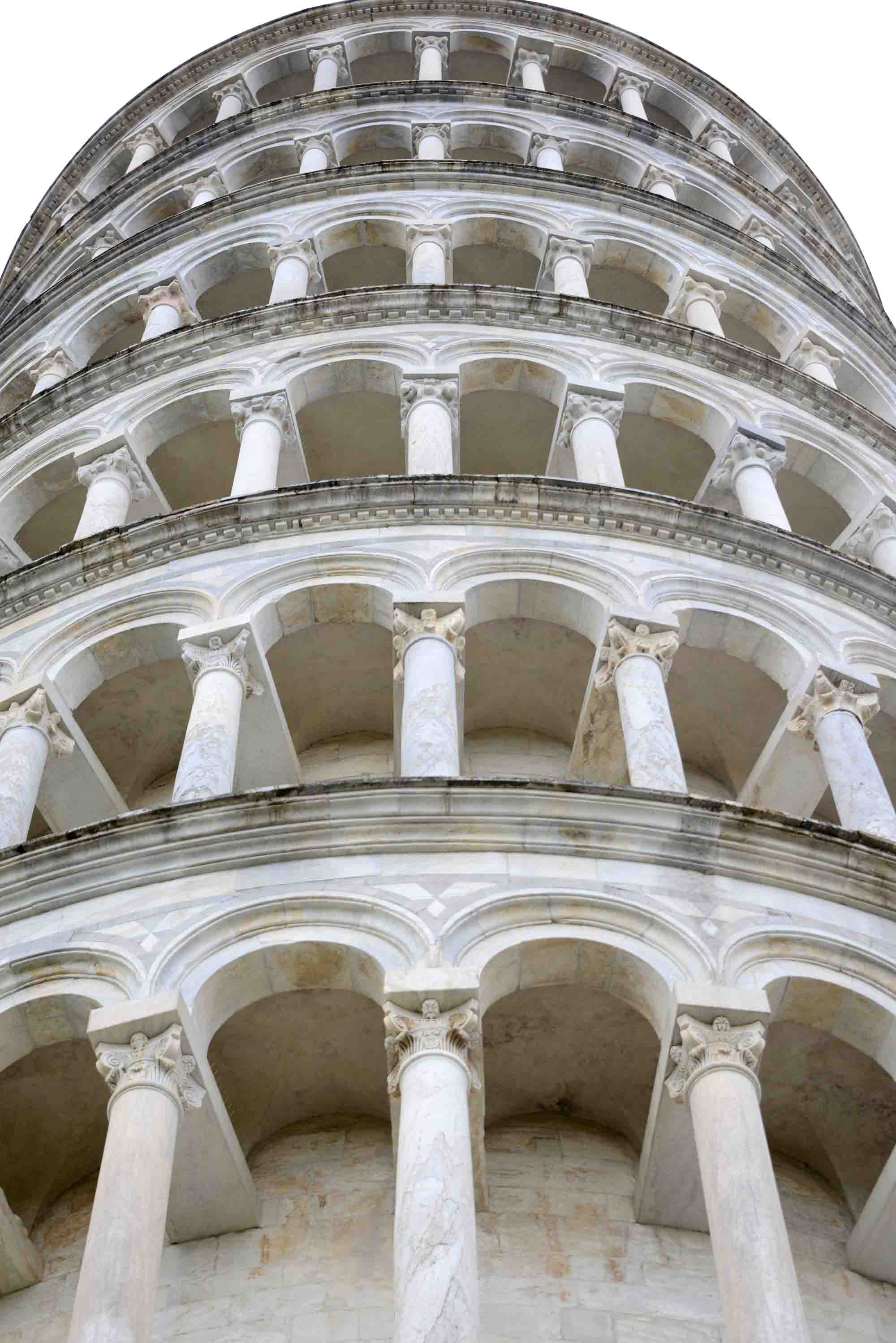
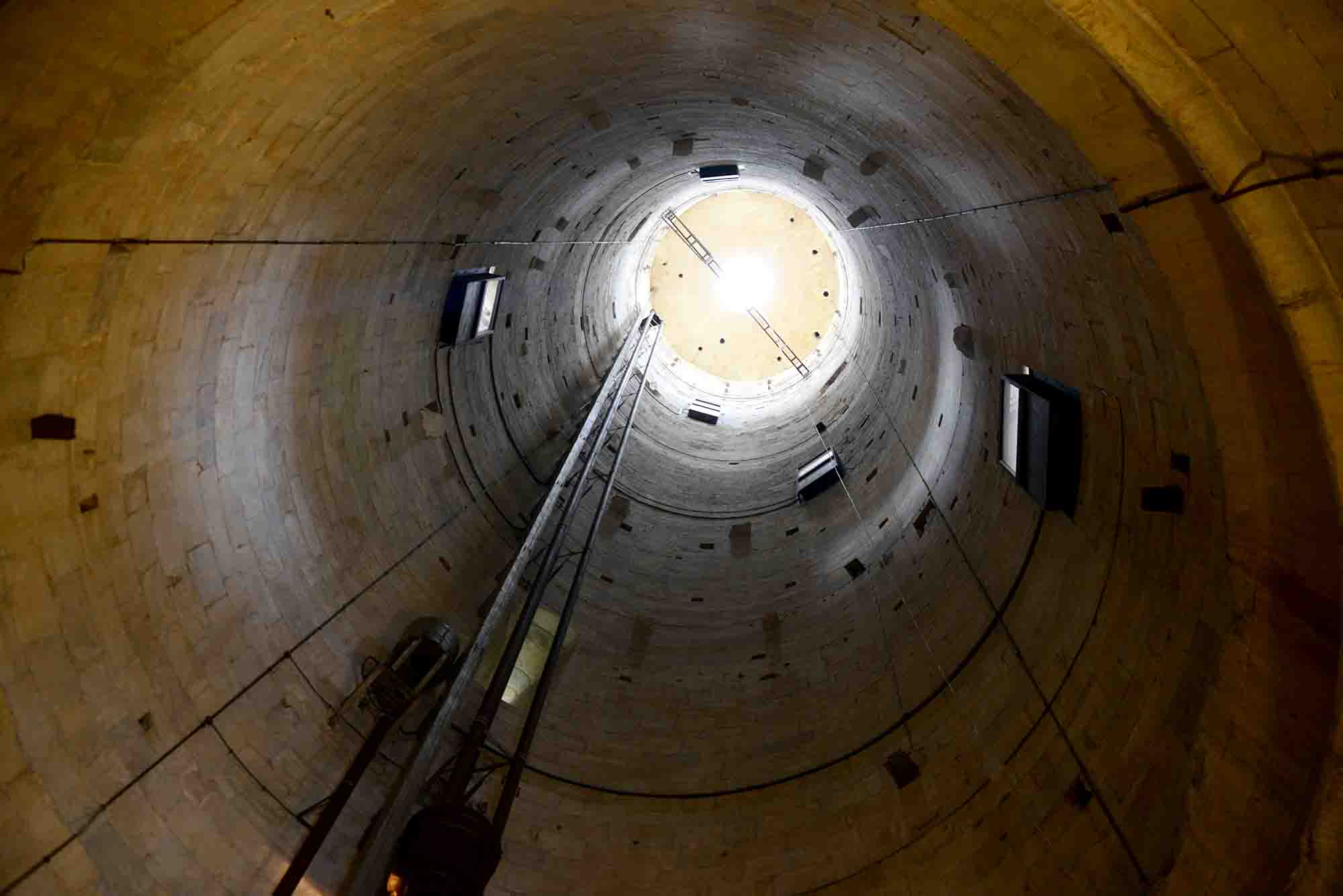
We continued living the good life and eschewing museums- I firmly believe that a first visit to a town should be more about exploring its atmosphere than staring at dozens of similar medieval Madonnas, but the naming of the Museo delle Sinopie did awaken the curiosity of the blog’s industrious co-photographer, who spent a significant part of his childhood in the city of Sinop, on Turkey’s Black Sea coast. Just as with the Bulgarian suspicion- the answer is yes again; sinopia is a natural pigment which was often used for the underdrawings of frescoes and was exported from Cappadocia through the port of Sinop. The one concession we made to mass tourism was climbing the tower, since our early arrival meant minimal queuing, and my mind, ever focusing on the essential, registered the important things: it’s empty on the inside, basically a giant, fancy cannolo. And from the top, while everyone was focused on the cathedral, the baptistery, and perhaps the outlines of the Apennines, I inspected the football stadium.
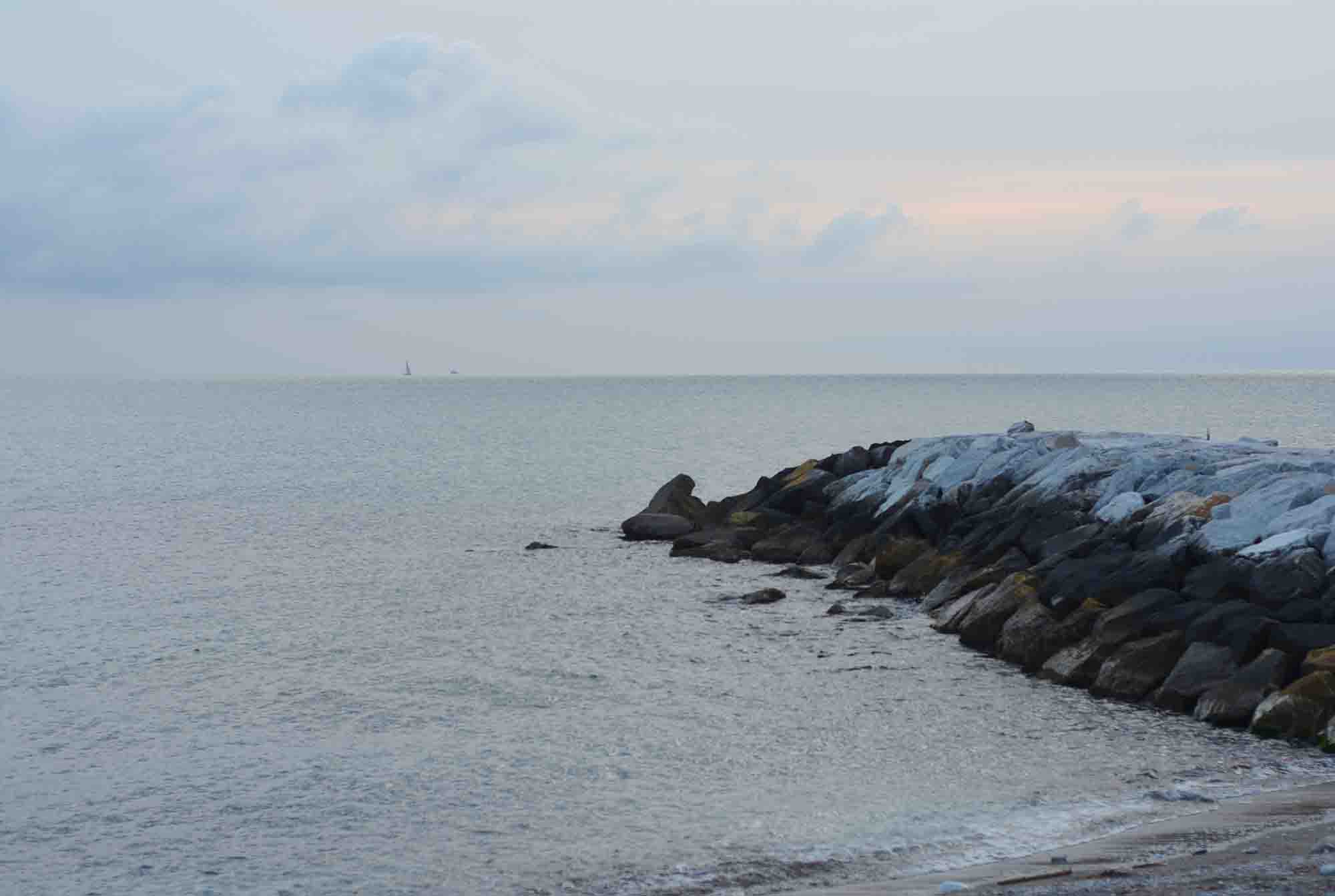
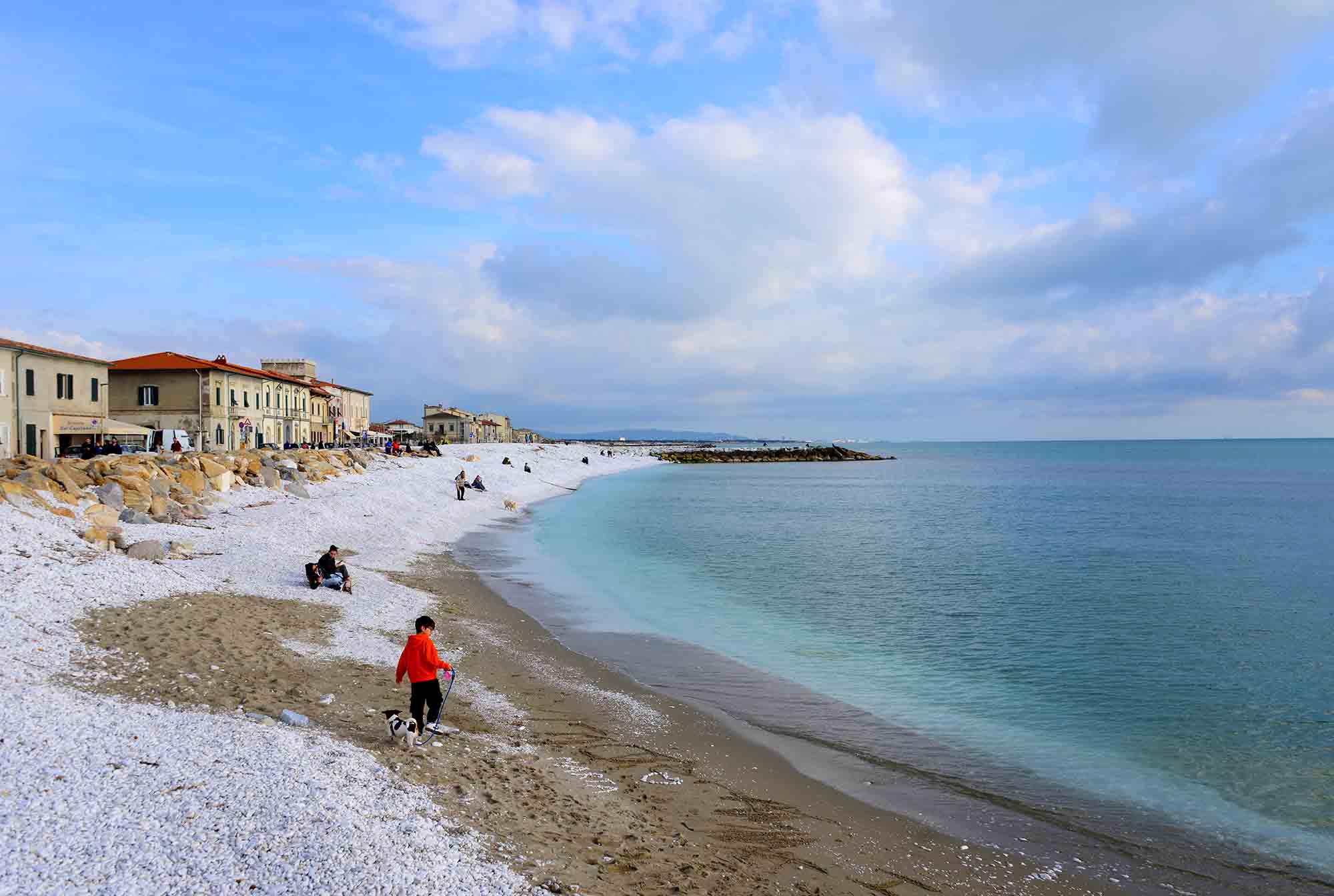
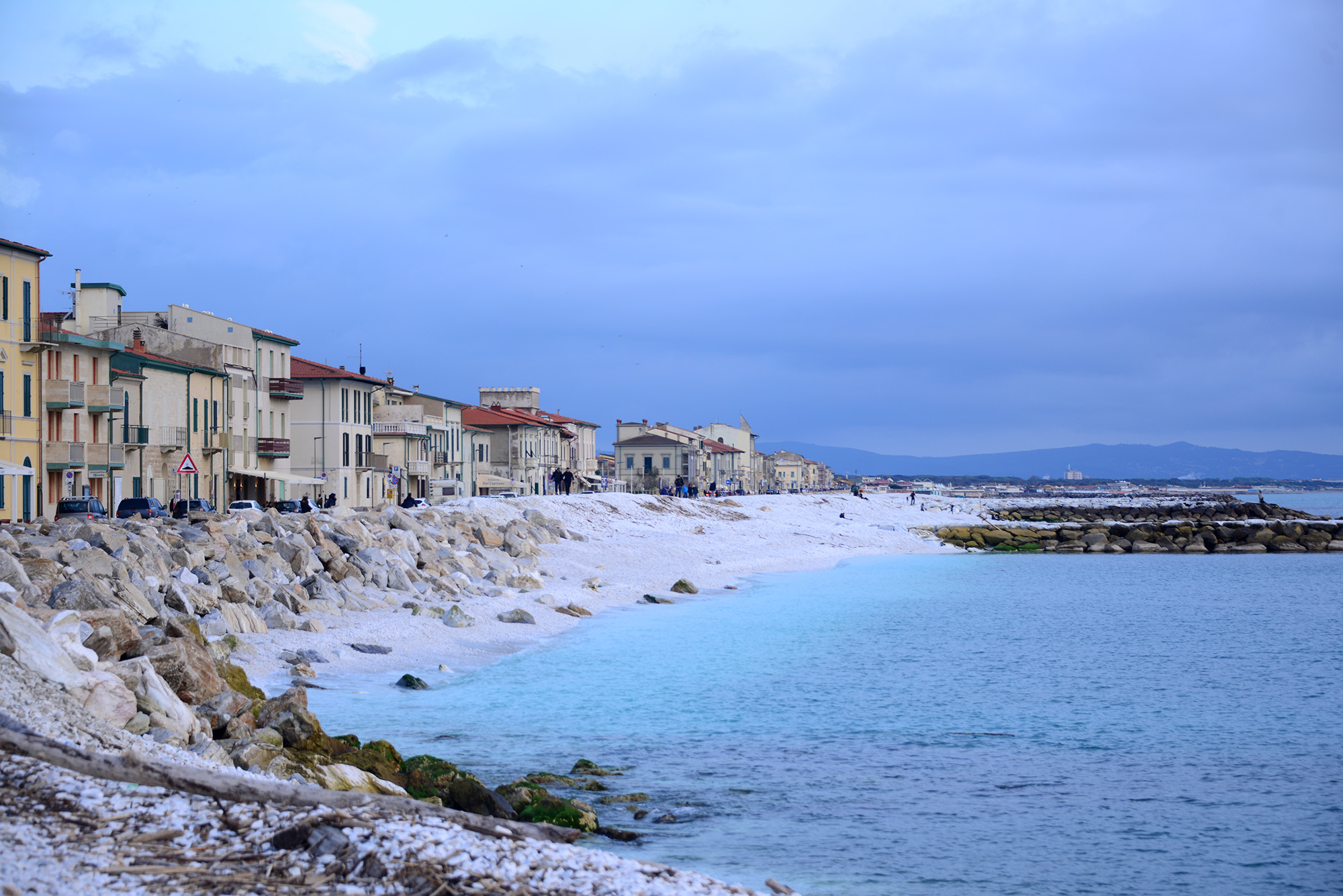
On the afternoon of our stay, we also made it to the marina, about half an hour’s bus ride along the Arno and the seemingly never-ending Gabriele D’Annunzio boulevard. The beaches themselves, still closed in the off season, are probably not much to speak of in summer either- rocky formations along the shore make swimming somewhat fraught and dangerous, and the looming closeness of Livorno’s industrial port does not bide all that well for water quality. Yet there was something charmingly melancholy in the atmosphere, as we walked along the promenade dotted with little mementoes from Bud Spencer films- the Marina di Pisa was used as a location for a couple of them in the late seventies and early eighties. As I watched the sun dip over the edge of the horizon, illuminating the last sailboats out at sea, I remembered my grandfather watching Bud Spencer films- or, as he pronounced it the Hungarian way, Bó Pencel. He loved them, and what he loved best was watching them while eating about a dozen frankly quite sticky sweet rolls my grandmother had made, and suddenly I could hear his raucous laughter and feel the scent of hot powdered sugar. The best kind of travel takes you not only through space, but also through time.





 Pocket Diary Budapest