Untimeliness in putting the Marseille experience to paper (or, more precisely into a word editor which systematically objects to my choice of English spelling and reverts to the one it likes best) means that in the meantime, Marseille has been on the verge of obliteration by riots or bin fires several times- as a matter of fact, it was an ongoing bin fire when we arrived, in late March. More precisely, a composite of bin fires, untended garbage piles which were consolidating into a new southern range of the Alps, and the occasional strike, which always invariably impacts the service you need, at the time you need it. The fact that we managed to both land and take off from Marseille airport without a hitch was in many ways, a lovely surprise.
Why would you go to such a place out of your own accord, one might enquire, and the answer will either be on a business trip or visiting friends. For us, luckily, it was the latter. I would, however, venture that visiting friends in less expected places is one of the only forms of legitimate tourism. You’re there on an important mission- building and maintaining human connections, you’re there to share experiences (and, necessarily, wine, when in France) and you will chance upon things you might not have considered otherwise.
The blog’s industrious co-photographer had just been brought back to life with copious doses of pain au chocolat, coffee and a morning shot of homemade tipple, because visiting friends comes with the added perks of such niche delicacies being available. He was investigating a mirror contraption in the old port when I scared the living daylights out of him by screaming the Greeks. As a Turkish person, the impending arrival of Greeks does not always feel like good news to him, but I then reassured him that they had arrived 2600 years ago, from the city of Phocaea, close to modern day Foça, in Turkey. The city they founded would become one of Europe’s oldest continuously inhabited settlements, and a hub where people from far away would congregate. When you’re lectured about the tragic dangers of immigration in Marseille, the only sane retort is that there was never anything else but immigration happening in Marseille, beginning with that pesky Greek migrant, Protis, marrying Gyptis, the daughter of a local Celt king. Arguably, since he came from a far more cultured land at the time, Protis was technically speaking and expat and not an immigrant, but let’s not get bogged down by that.
Traffic is always two way of course, so the French did not shy back from using Marseille as the lynchpin port of what they hoped would be a bourgeoning empire, and as a centre of trade. Marseille saves you the hassle of thinking about what souvenirs to buy, when that shameful little tourist itch surfaces. Just go for the soap. Traditionally made from olive oil, seawater and the alkaline ash of sea plants, these days it can accommodate other plant oils as well. It’s generally sold in considerably larger blocks than your run of the mill Mediterranean olive oil soaps, so it might not be the friendliest option for low-cost carrier luggage, but you can always ceremoniously walk around the airport with a breeze block of soap claiming it’s for immediate personal use. If you’re feeling a little edgier than soap, you can consider the Tarot de Marseille. Currently the most popular tarot deck in use, disappointingly, it has little to do with the city itself: based on an Italian deck of cards, it was rebranded only in the 1930s by local cartomancer Paul Marteau. If nothing else, it bears witness to the business acumen of the city’s sons and daughters.
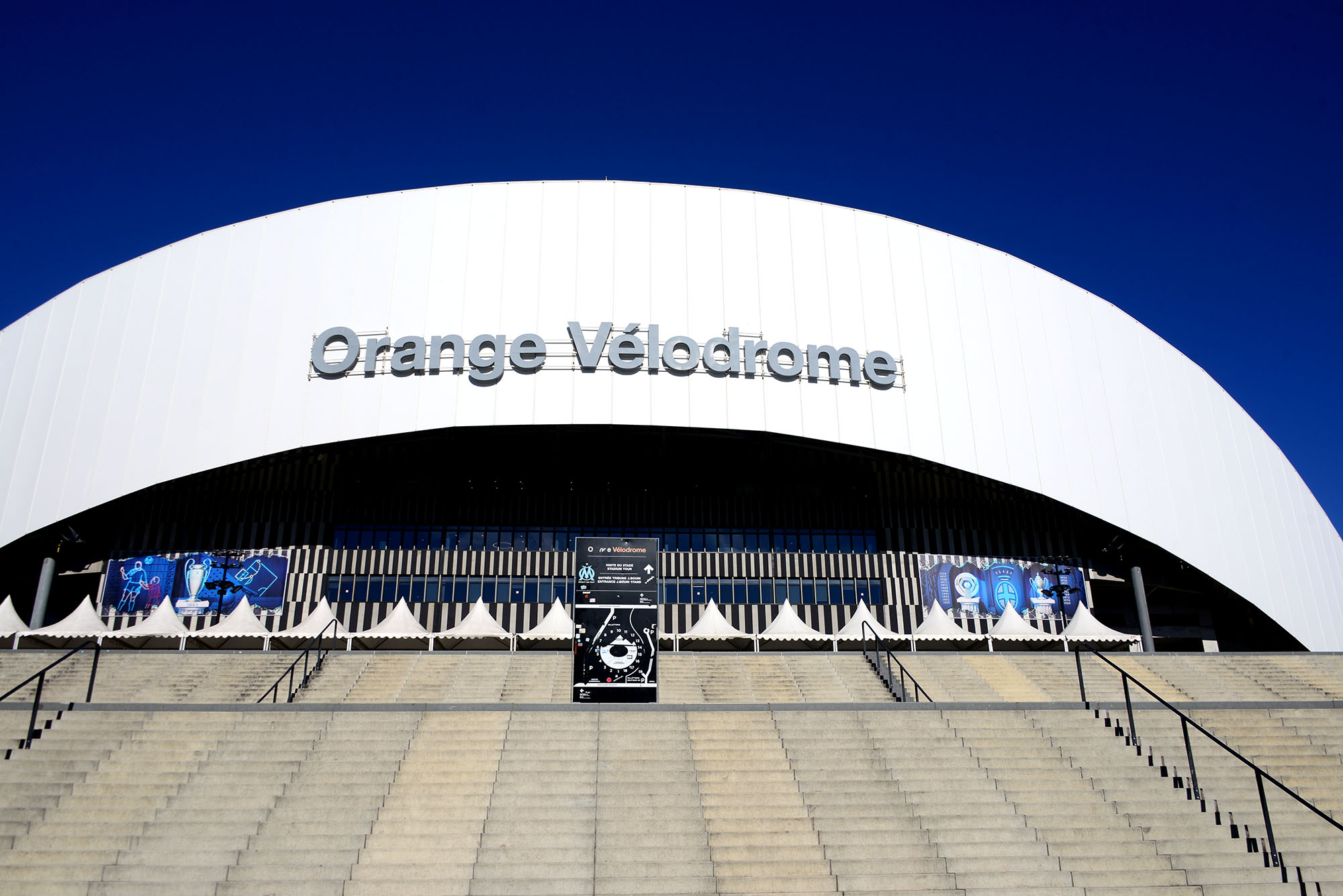
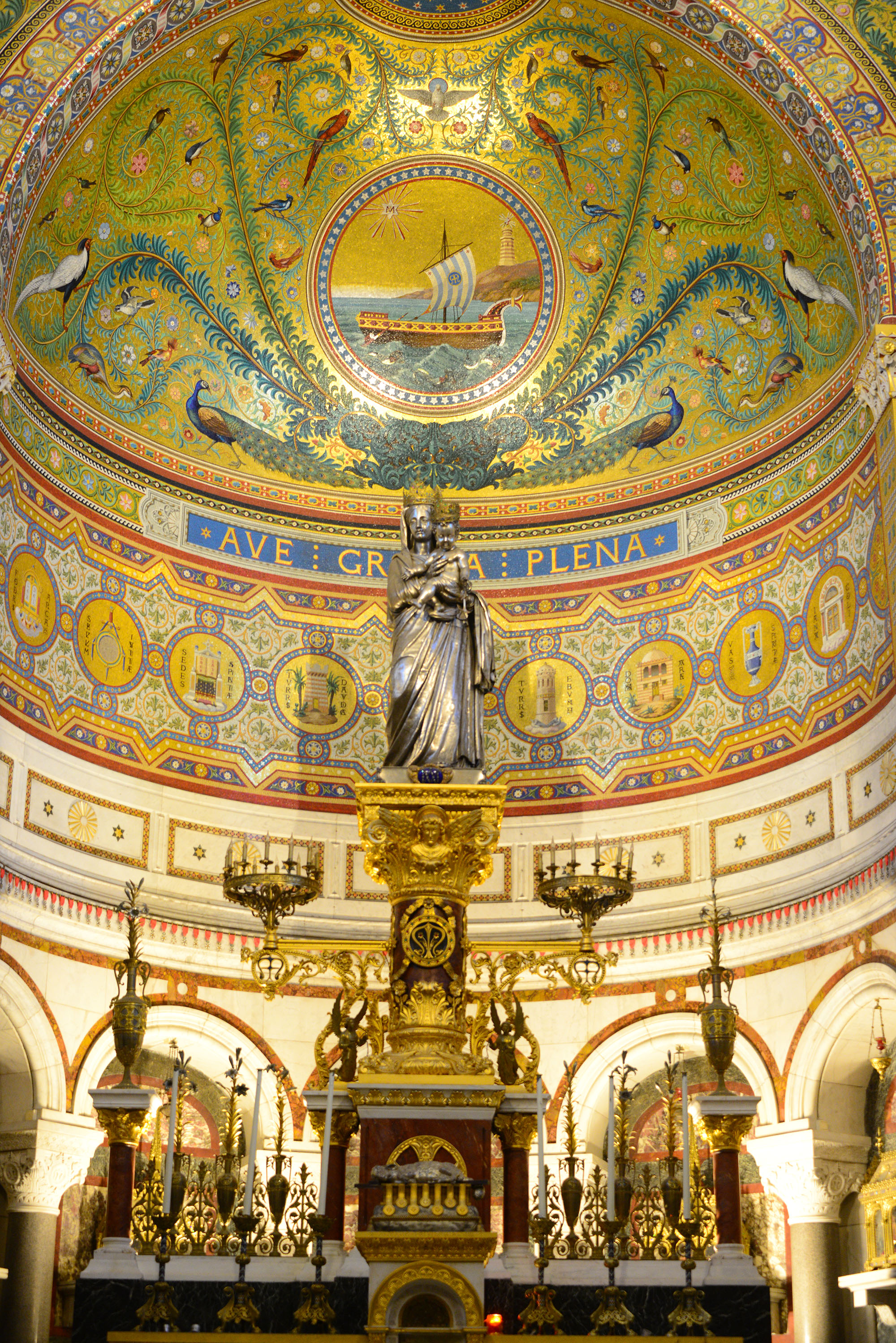
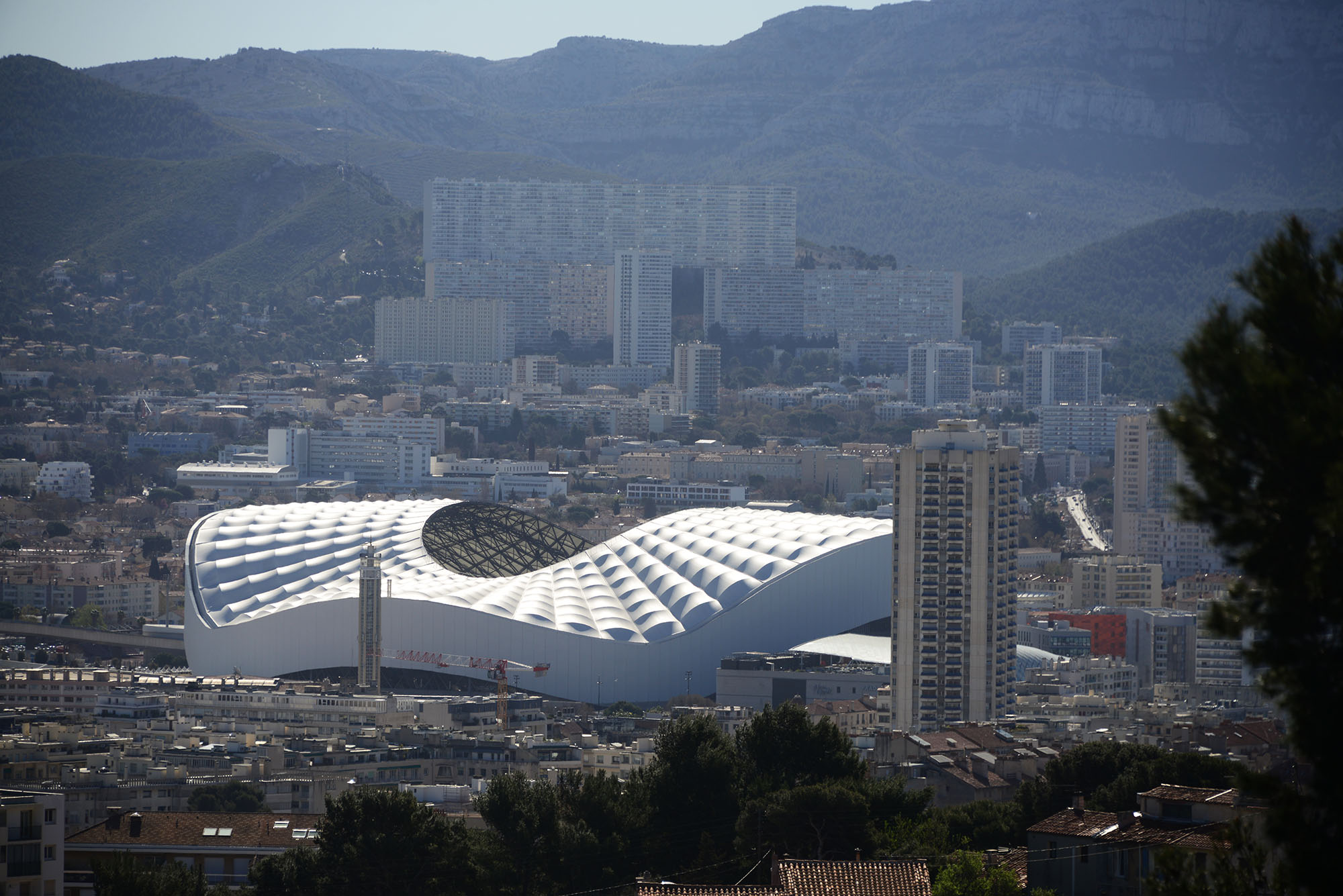
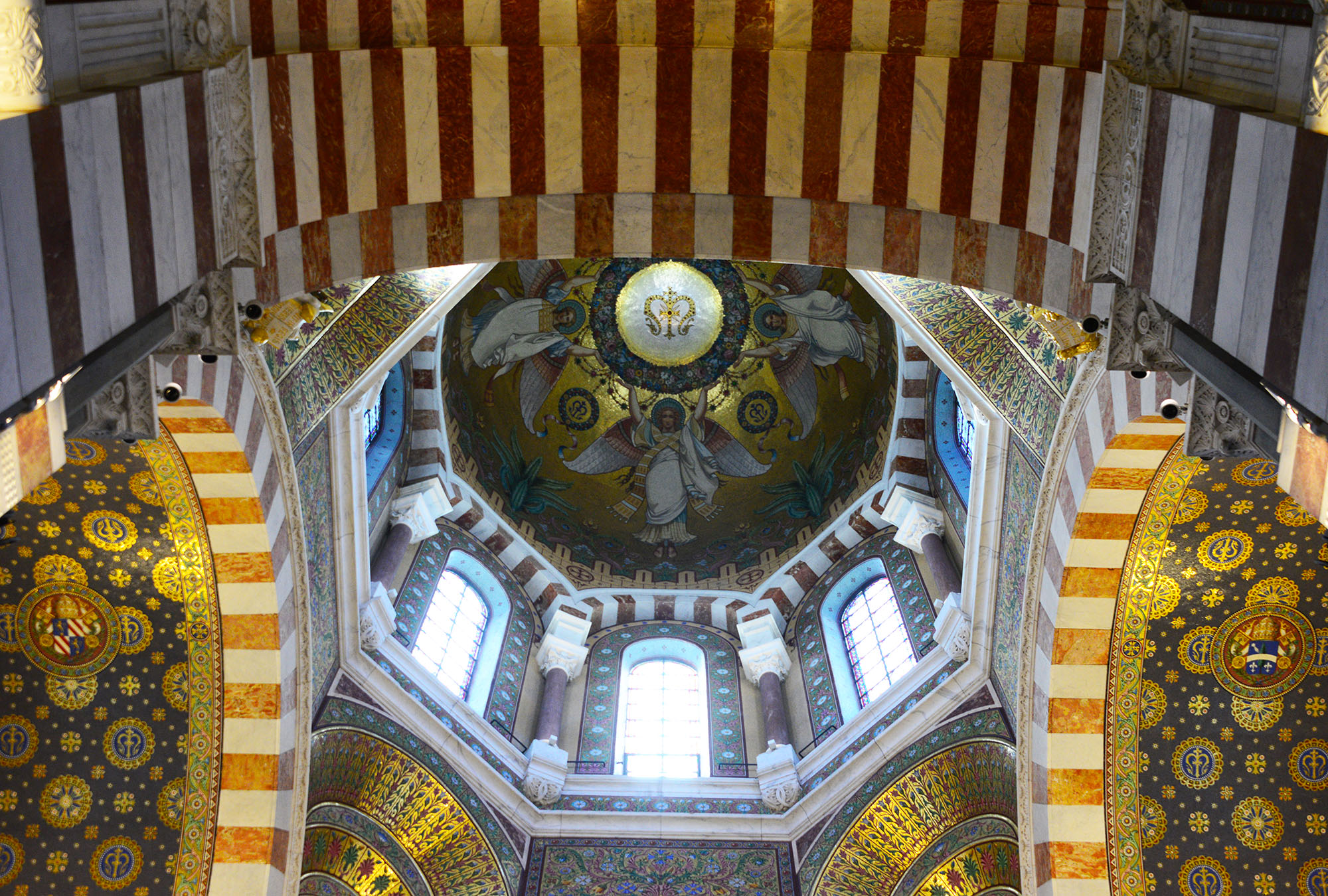
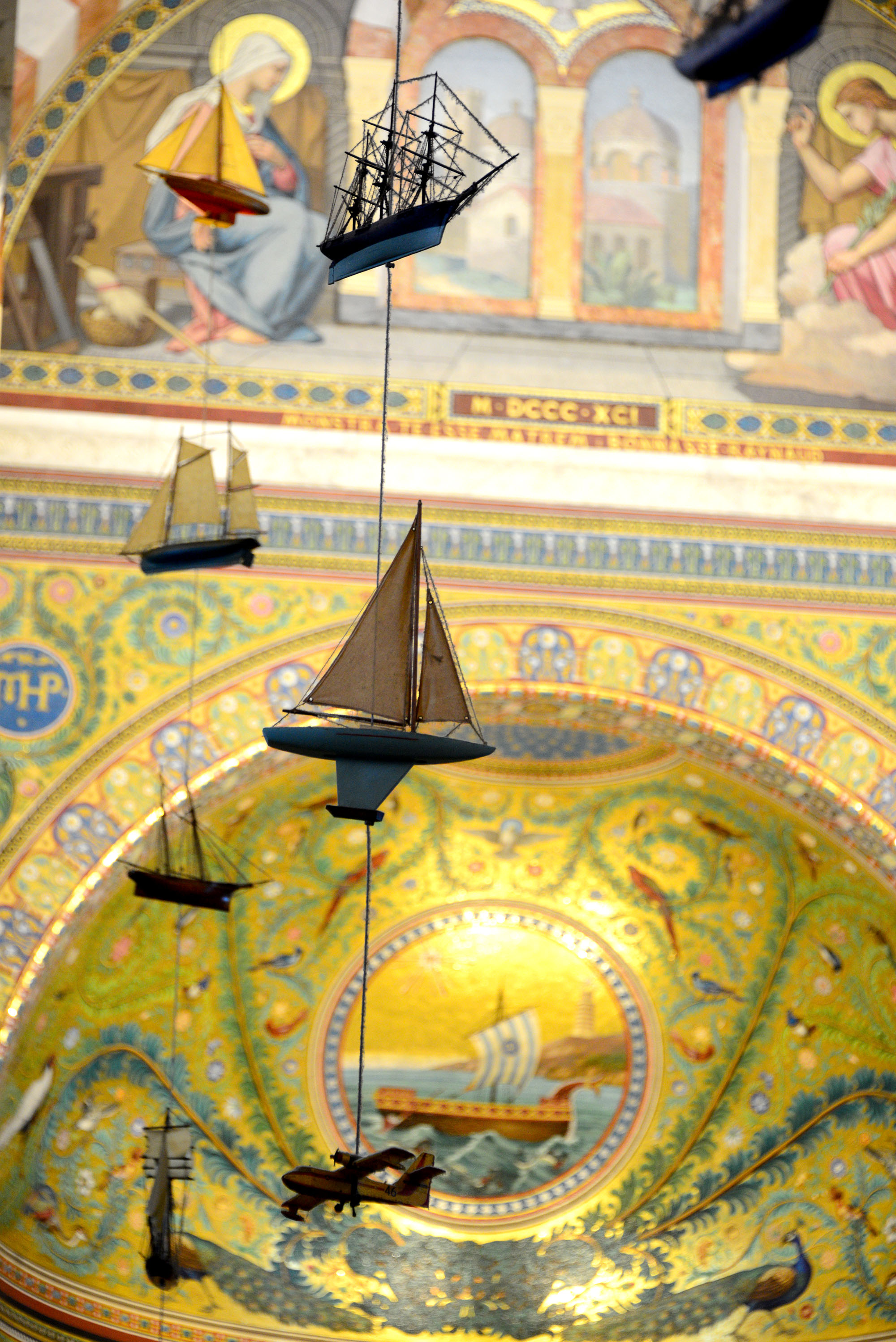
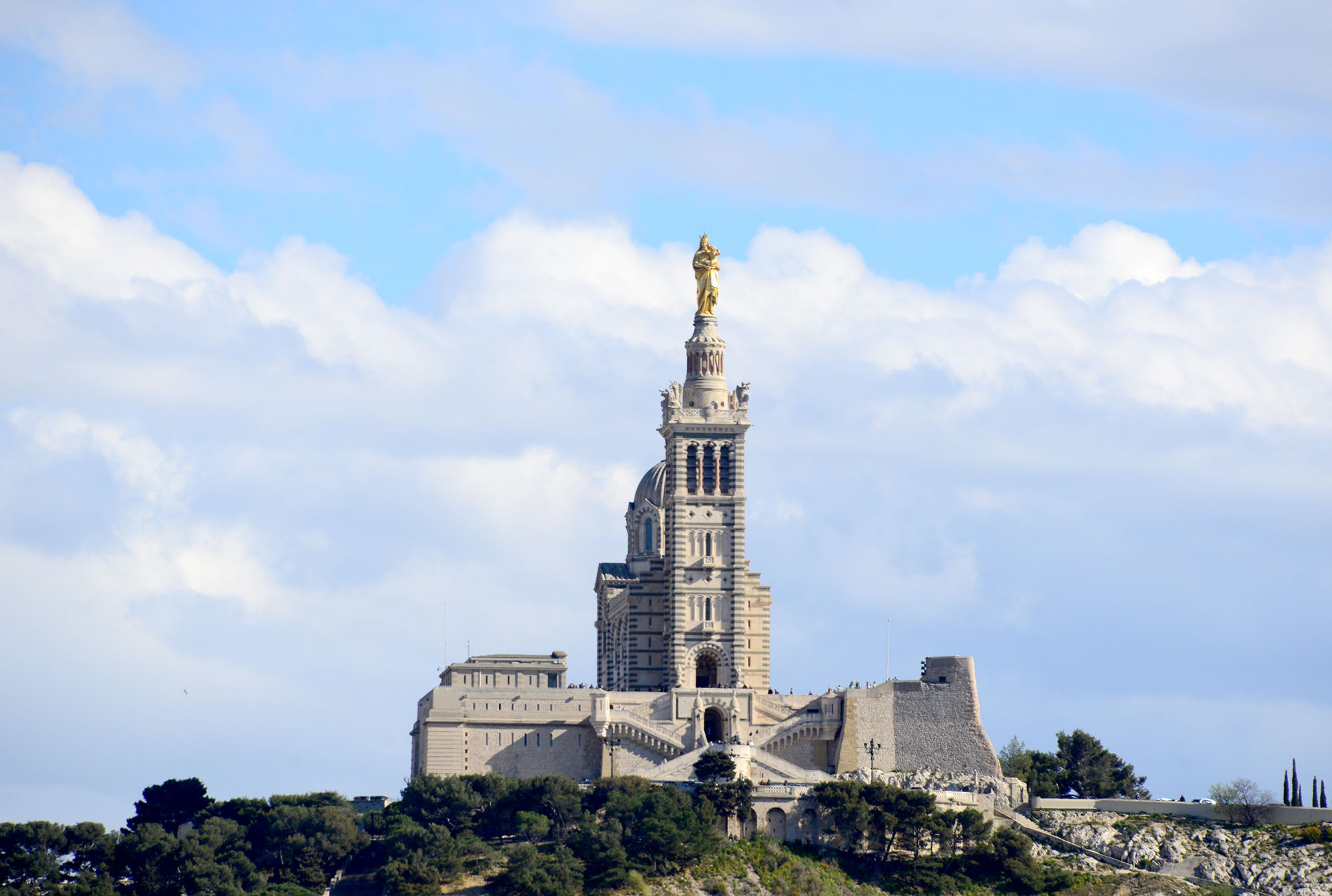
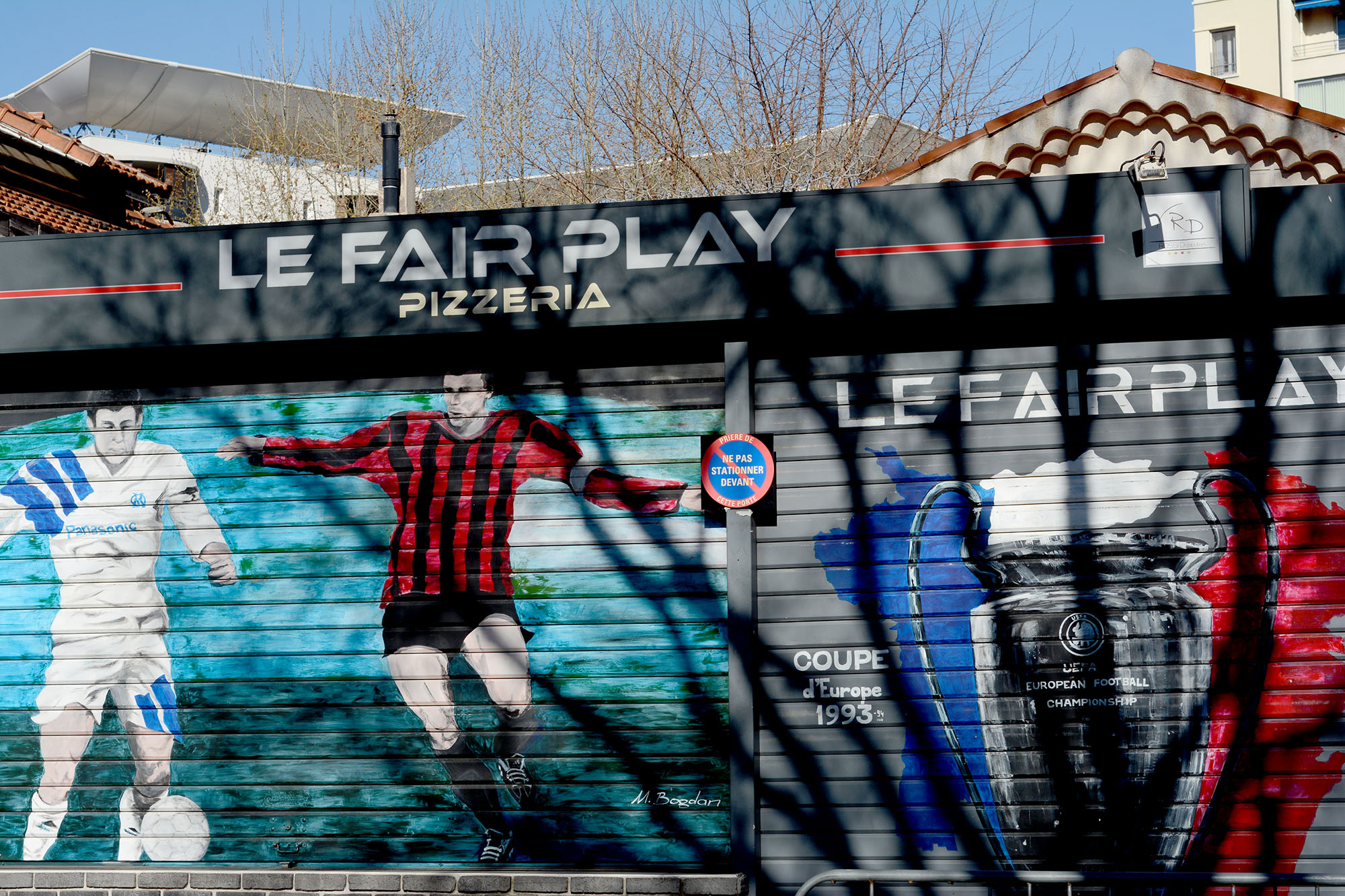
High above the Vieux Port, on the La Garde rock (which has probably given the city its name, Massala coming from the Greek word for, well, mass) towers the cathedral of Notre Dame de la Garde. It’s a good to have, because it anchors you anywhere you are in the city, but a pain, minus the chocolate, to climb to. Every now and then Marseille will throw some stairs, or, as we shall see later, rocks at you. And when you’re not careful, it will try to obliterate you with the mistral, the strong northwesterly wind of southern France, which burns your face, your soul, and gives you fever dreams about how you’ll end up a Gallic Dorothée, blown to some distant land in the company of a poodle and a croissant. The Notre Dame, known to locals as the Bonne Mère, the good mother, comes with all the gilded paraphernalia of a Catholic church, plus the shirt of Dimitri Payet in one of the entrance halls. For some time, as a child, Marseille wasn’t simply Marseille to me, it was Olympique. The two just didn’t work separately. The glory days of OM were, alas, brief, and after their flash in the pan Champions League win of 1992, I honed my burgeoning French skills by reading long Paris Match pieces about how club owner Bernard Tapie bought, sold, and cheated the club’s way into the European elite. It would, however, be simplistic to reduce the club’s victories to Tapie’s manoeuvres: they had undeniably built an excellent team, captained by a certain Didier Deschamps, who would later lead France to the feverishly coveted pinnacle of world football. Best Olympique can do these days is second in the French league, but probably not even Tapie’s undertakings could match Paris Saint German’s unlimited money and resources. As opposed to Paris, though, Marseille is a city ablaze with love for football and its team. High on the plateau, by the towering golden basilica, a small girl ran to her father and scolded him that he was taking a picture of the wrong thing: behind them, shimmering in the gusts of the dusty wind, was the unmistakable silhouette of the Stade Velodrome.
French football fans, and not only those of OM, are known to be particularly unruly. The French in general, have an air of unruliness to them. There is, always, in a French person, the potentiality of storming a Bastille. The nihilistic dissatisfaction with life nursed in cafés and brasseries occasionally bursts onto the streets, as we’ve seen recently, as we’ve seen in the past. While the major events of the French revolution are centred around Paris the French anthem is, of course, La Marseillaise, known as such because it was being sung primarily by volunteers from Marseille marching towards the capital. In a Frenchly sophisticated and confusing way it was however written in Strasbourg.
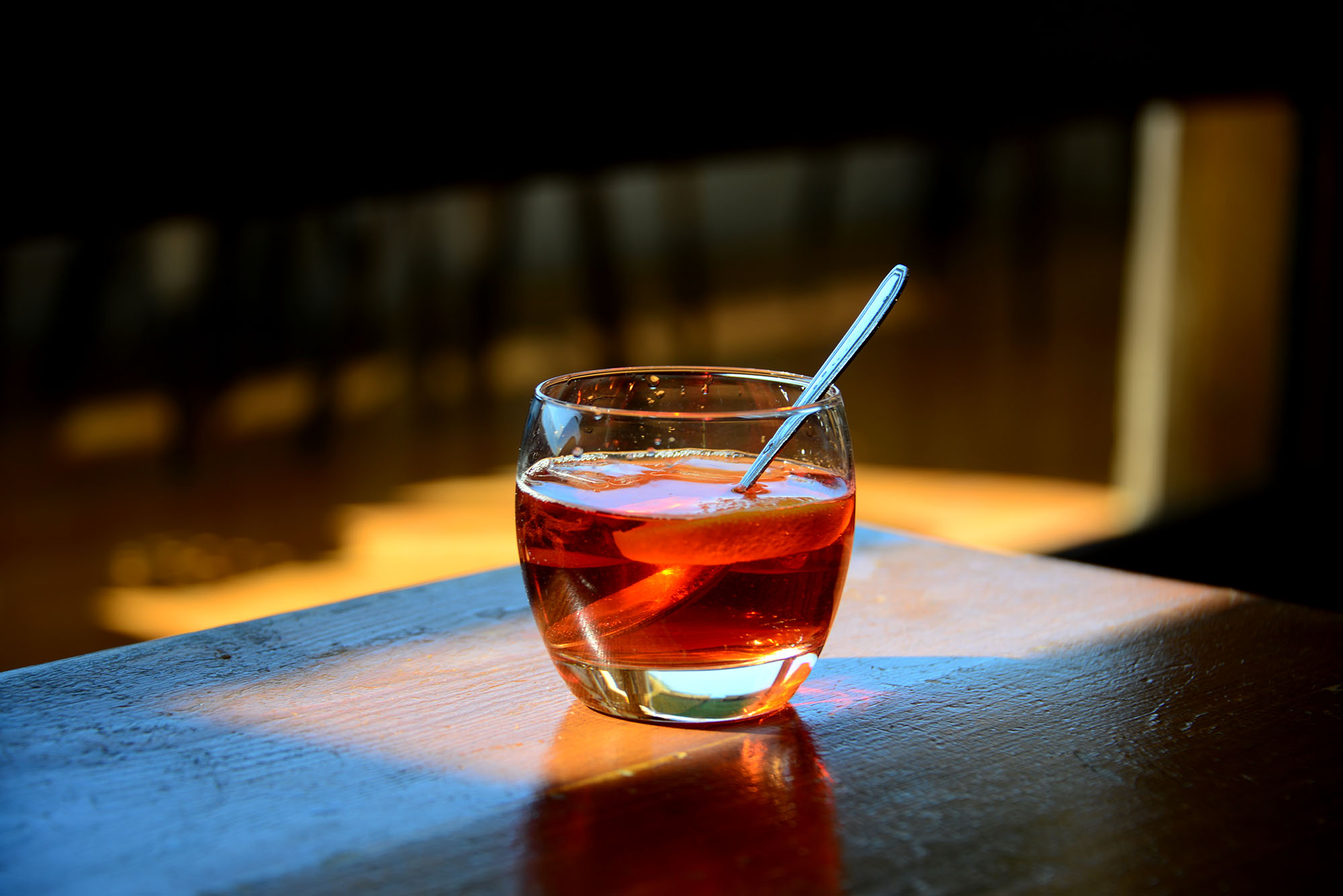
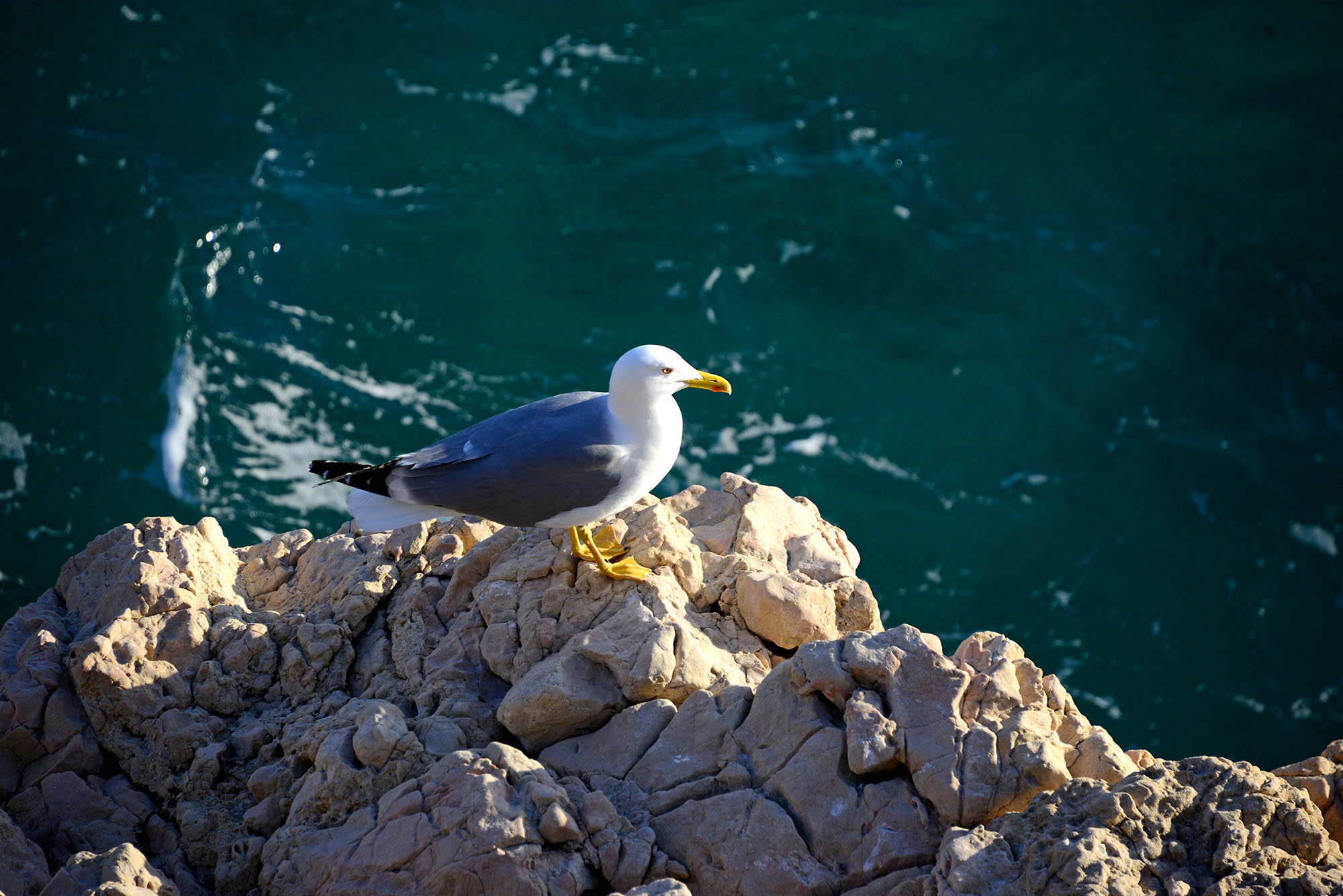
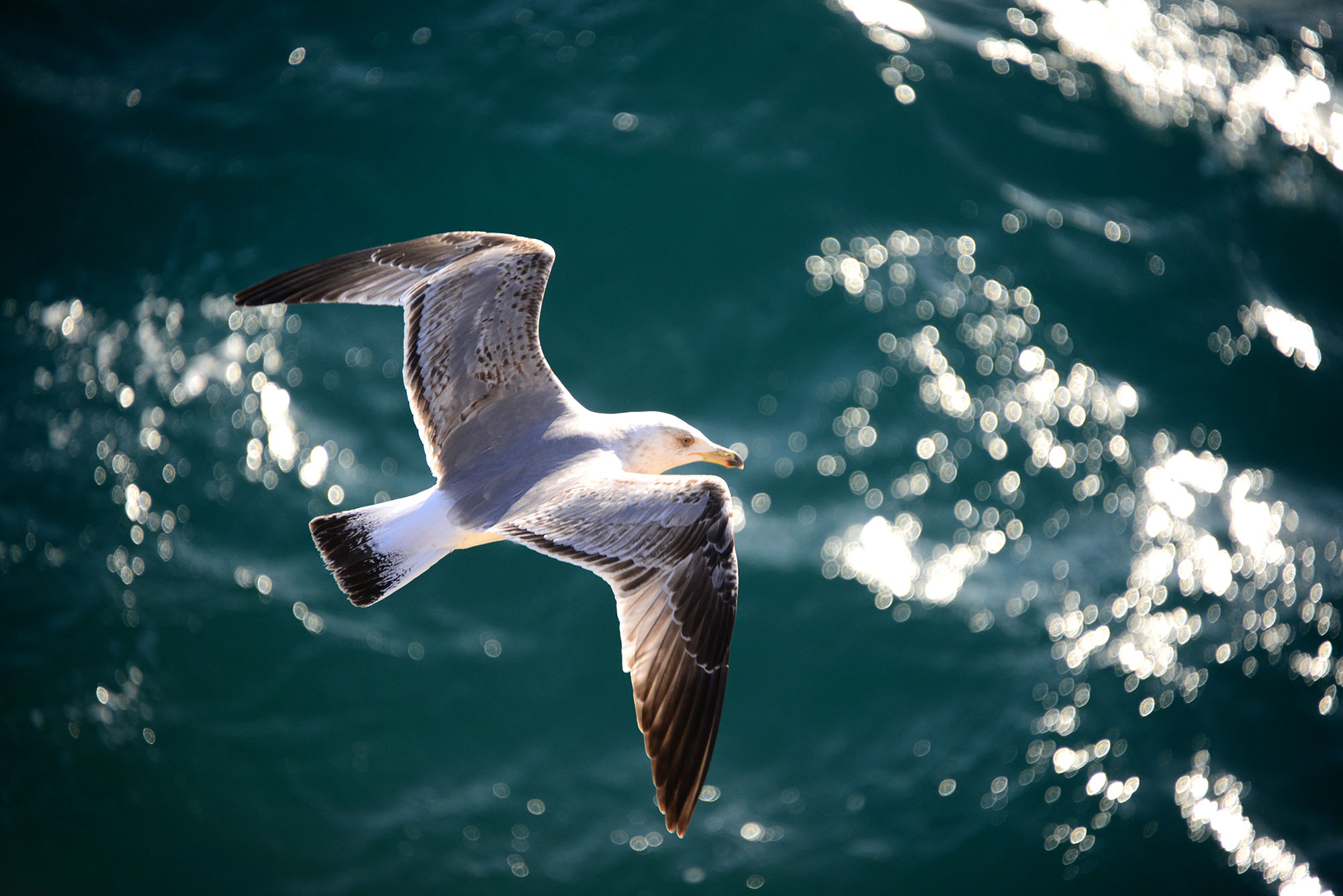
The central neighbourhoods are teeming with life, almost overflowing with it. On the Cours Julien, you hear dozens of tongues and can choose from dozens of exotic cuisines. We went for Senegalese, had lovely chicken stew and the blog’s industrious co-photographer horrified the waitress by shotting pastis straight from the glass. Her desperate cry of monsieur je vous porte de l’eau (sir I am bringing you water) might still be echoing through the Marseille docks alongside the cries of seagulls. (French seagulls are a breed of their own and would definitely storm a fortress if given half the chance). It’s time for a confession, too: I don’t like French cuisine. Don’t get me wrong, I like French food. They have sumptuous butter. The most insignificant looking corner shop will have divine bread. Don’ even get me started on the gooey, lovely cheese. And if a country with the range and quality of affordable supermarket wines like France didn’t exist, it should have been invented. I simply don’t like it when the French mix stuff together. It’s like they try too hard. My motto in France is please don’t put truffles on that. But they are French, and they will.
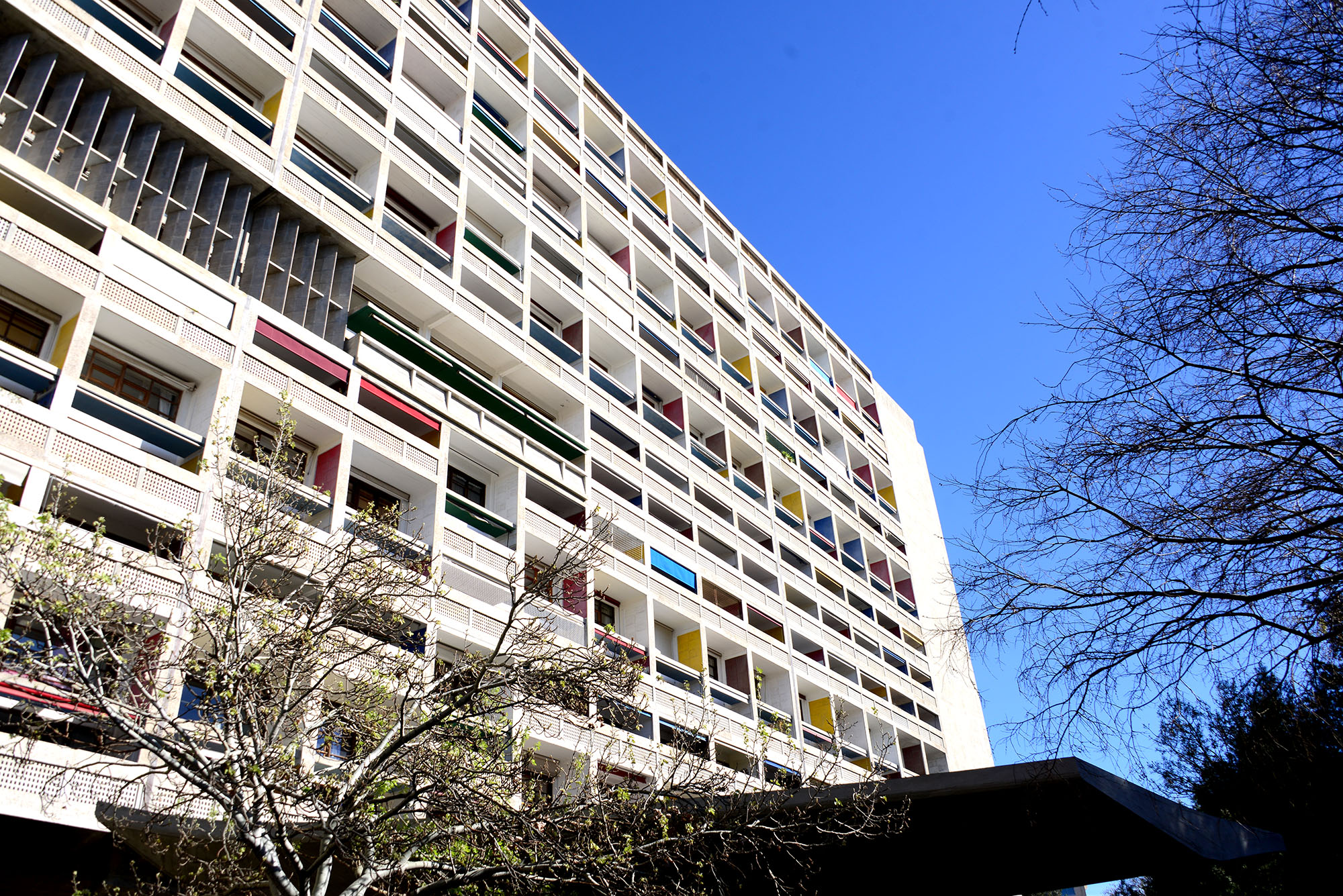
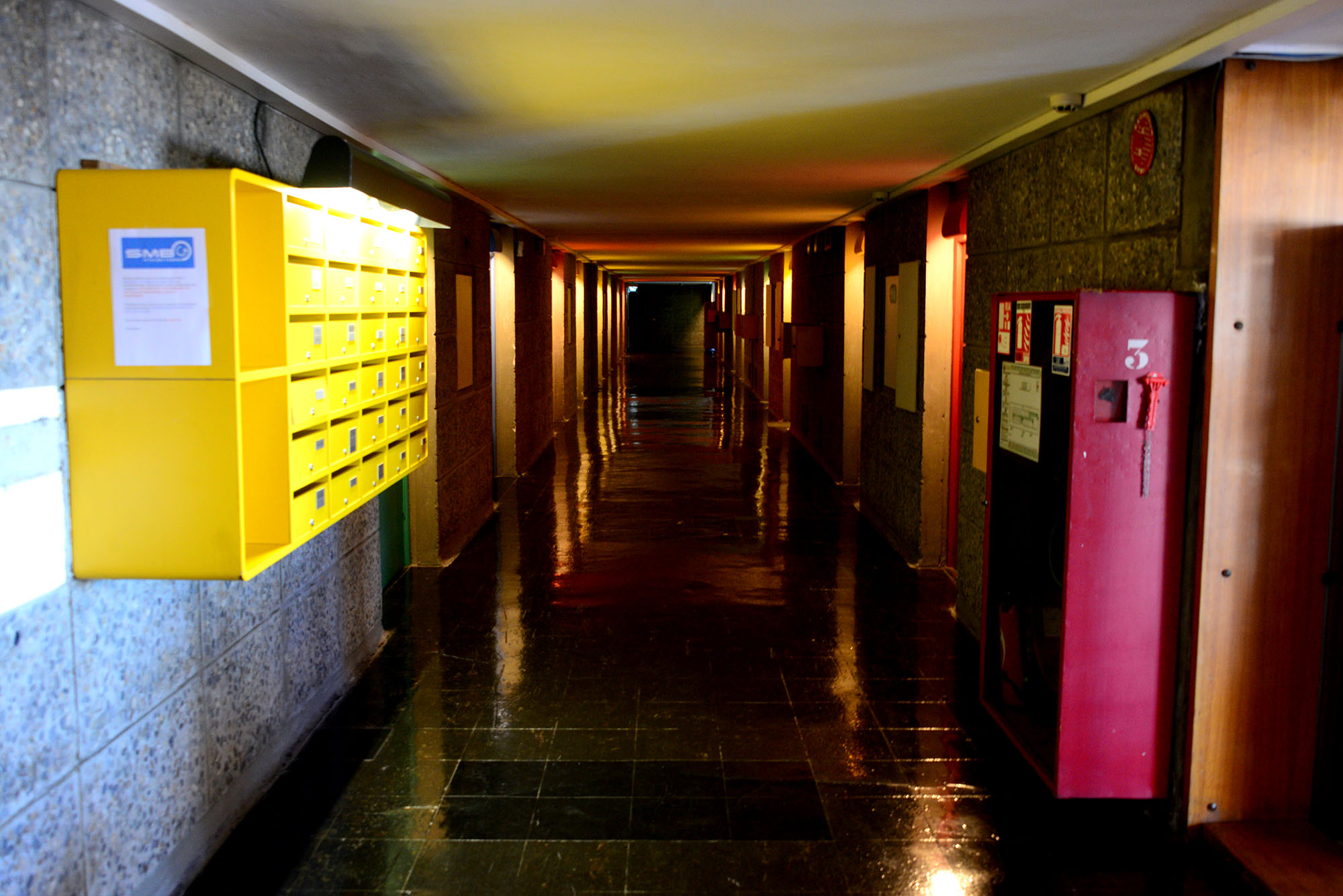
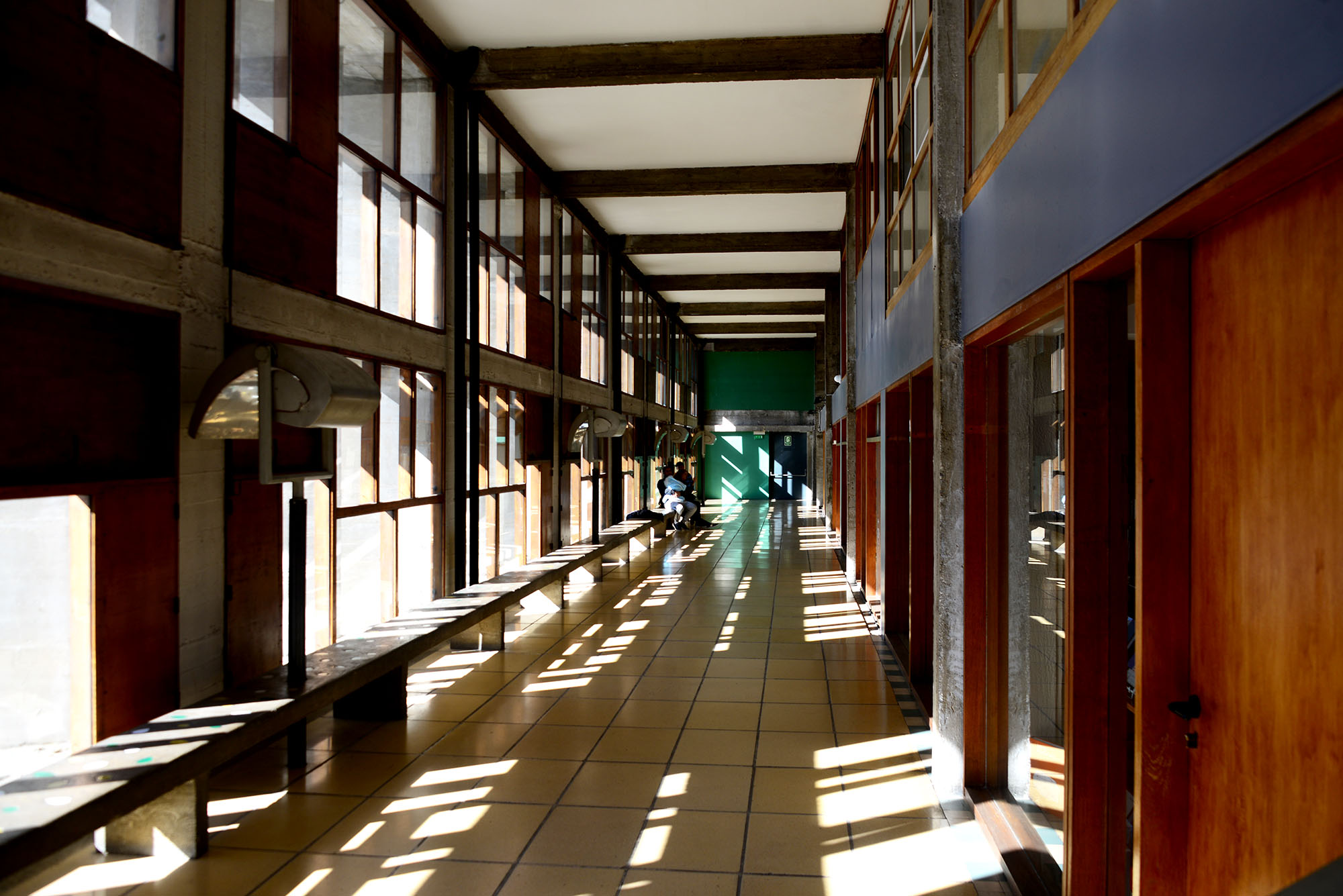
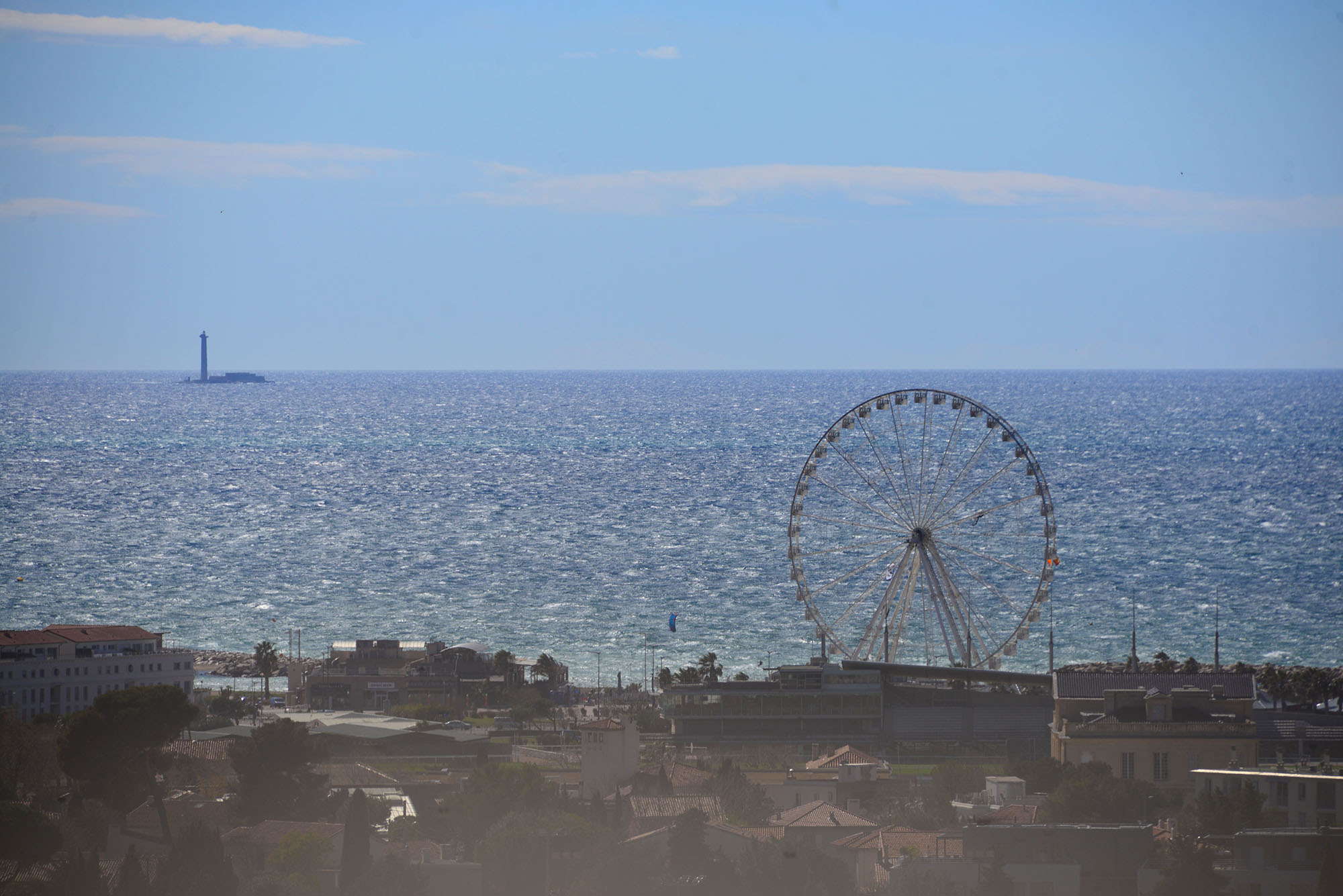
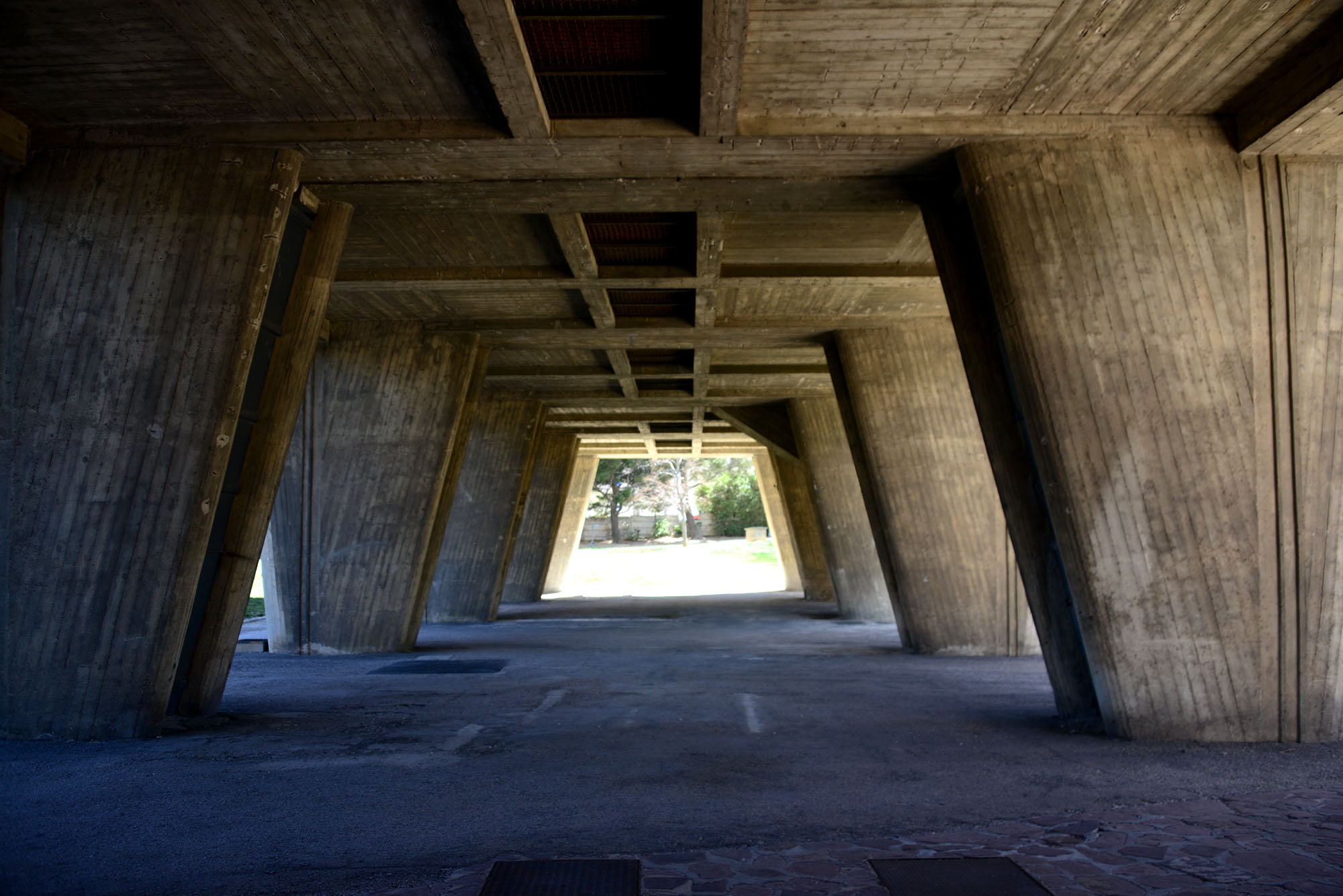
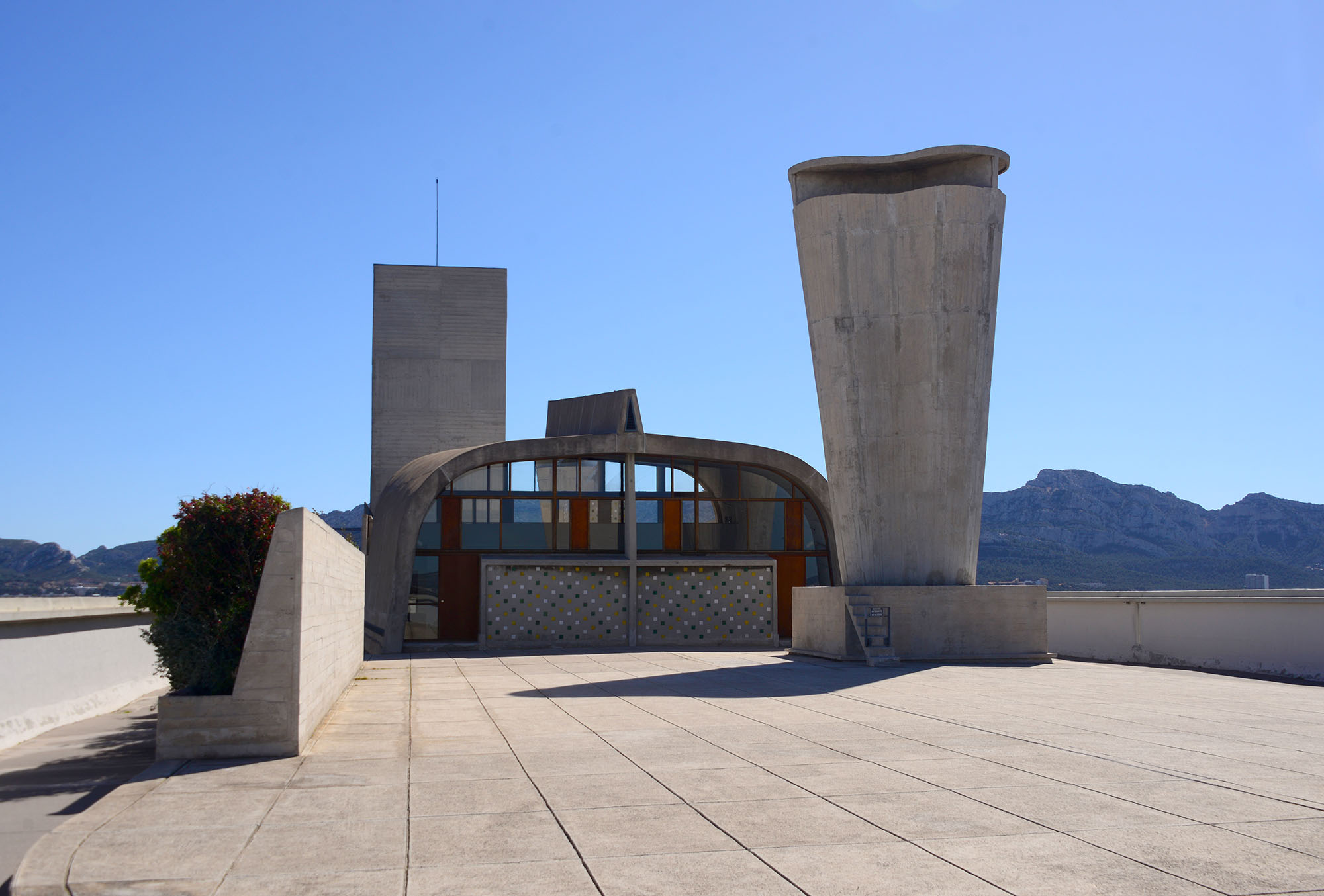
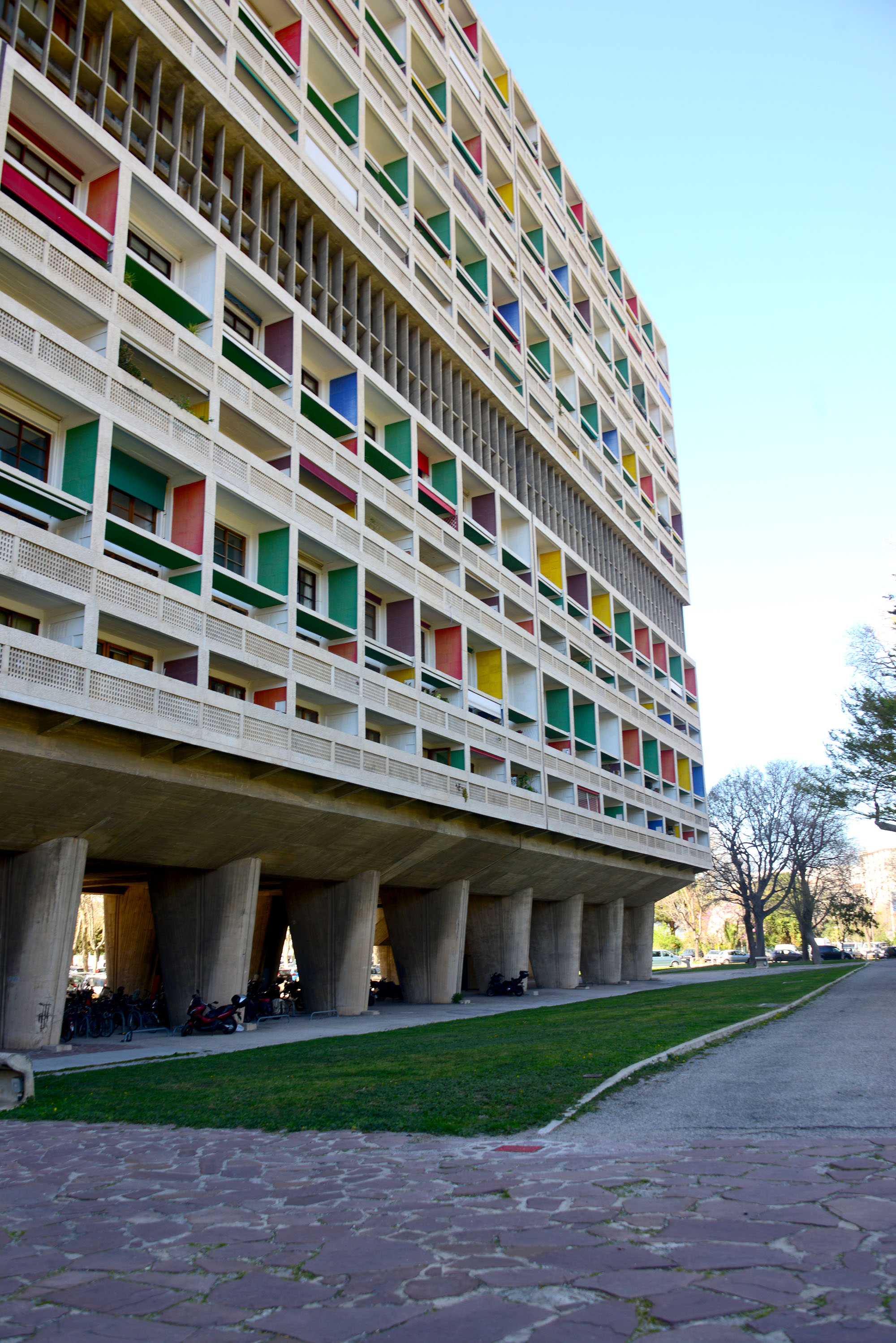
It was thus with a bottle of supermarket red, or let’s call it rouge, because everything sounds better in French, that we ended up on the roof of Le Corbusier’s La cité radieuse. As the name would suggest, the architect meant it as a city onto itself, within one building. Built between 1947 and 1952, it was meant to be the first of a series, offering functional, comfortable, and affordable housing, alongside amenities such as shops and bars dotted on one of the floors. As many bold dreams, it was only partly successful. Its brutalist shapes were not everyone’s cup of tea, and, while it did try to integrate nature in its design, it is perhaps over-daring to assume that, if you had a choice between a little cove by the sea and a concrete behemoth, you’d go for the latter. Admittedly, the underpinning idea was that for those who could not afford the little cove, there would be the choice of good, thoughtfully designed housing. The glass and plastic jungle of Mediterranean housing contraptions which are torn down by fires and earthquakes is evidence that the need is very much there, if only there was more willingness to address it in earnest. And also, that view from the rooftop. Head against hard stone. Vin rouge in hand, the view of the Mediterranean. And rocks jutting on the horizon.
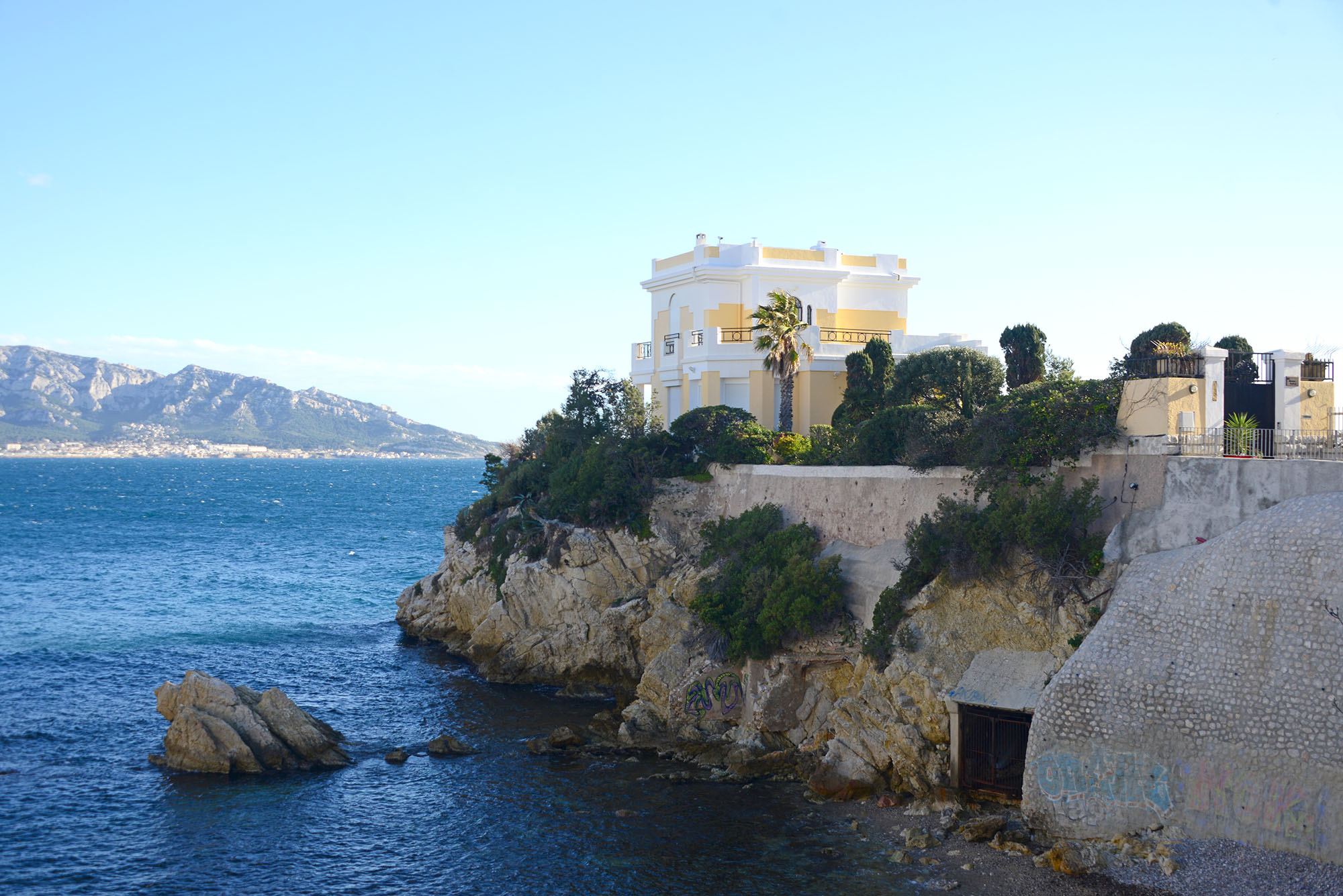
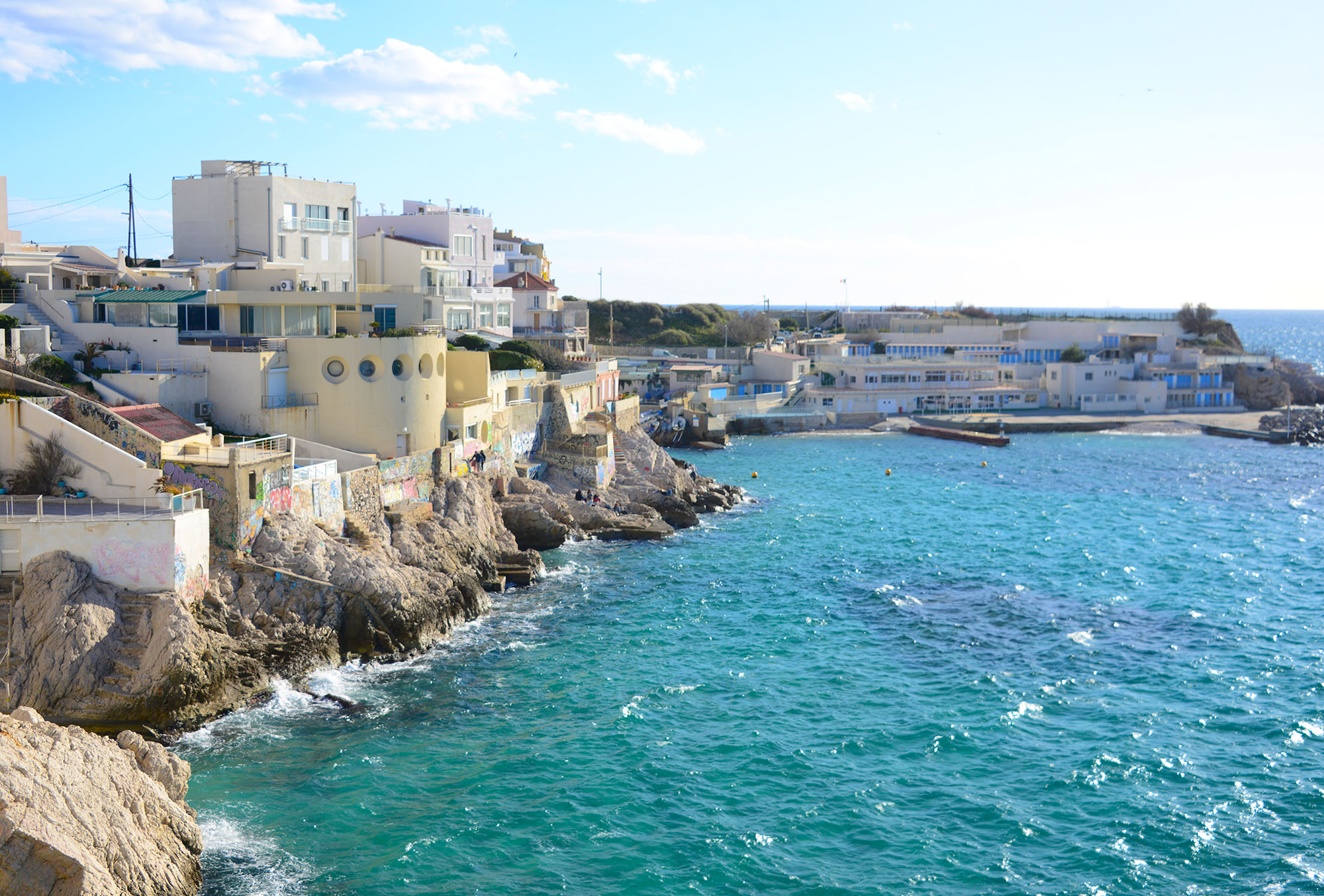
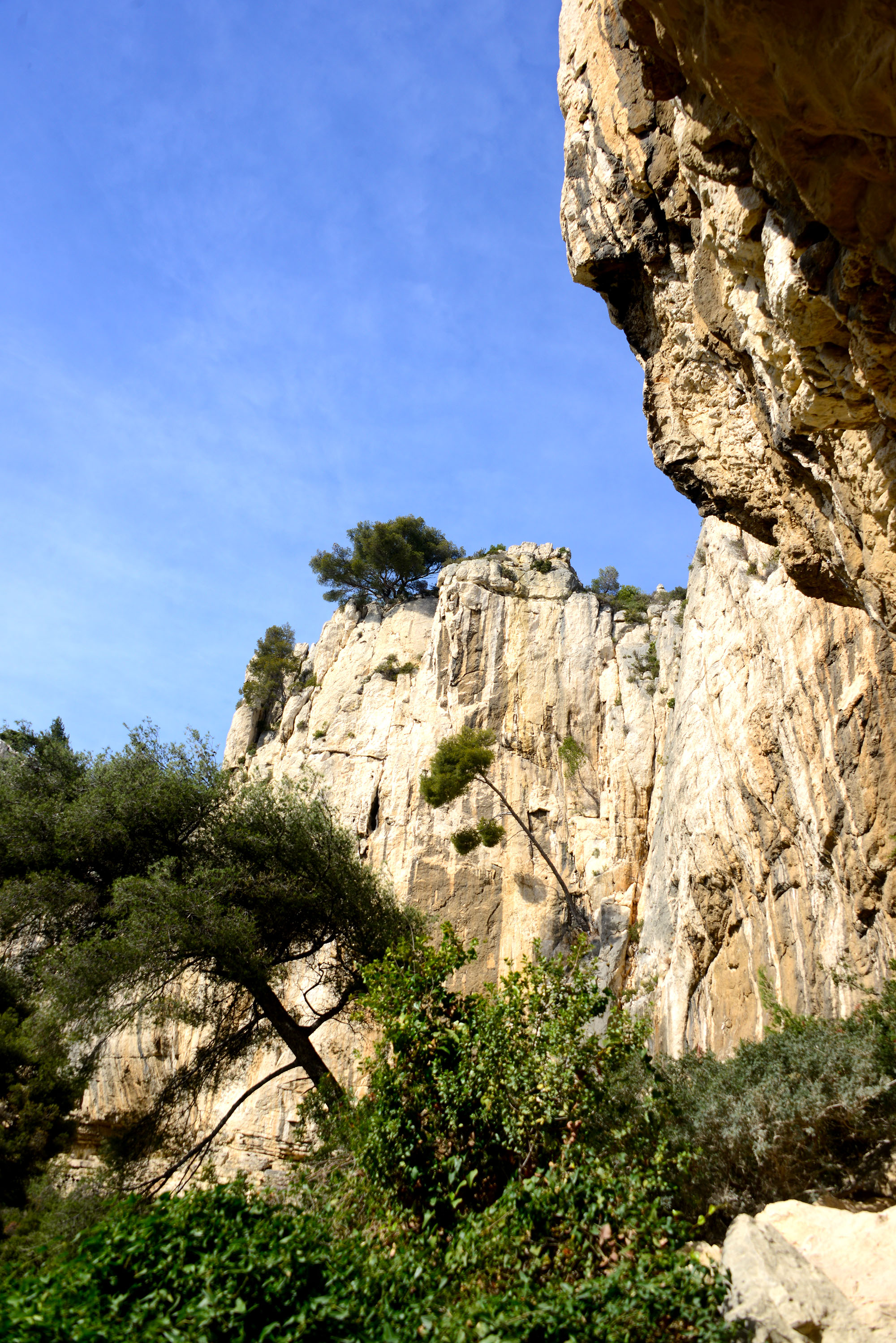
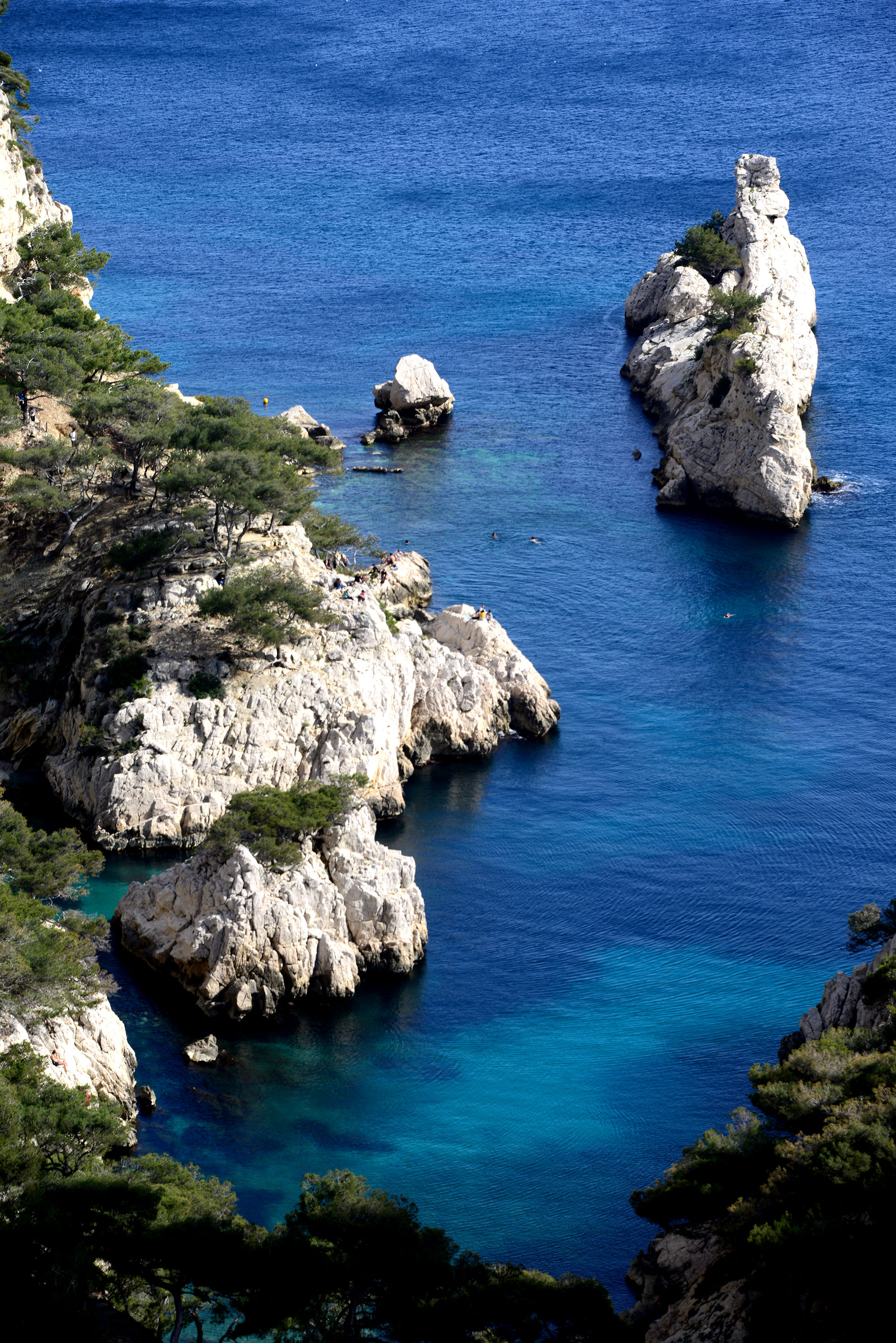
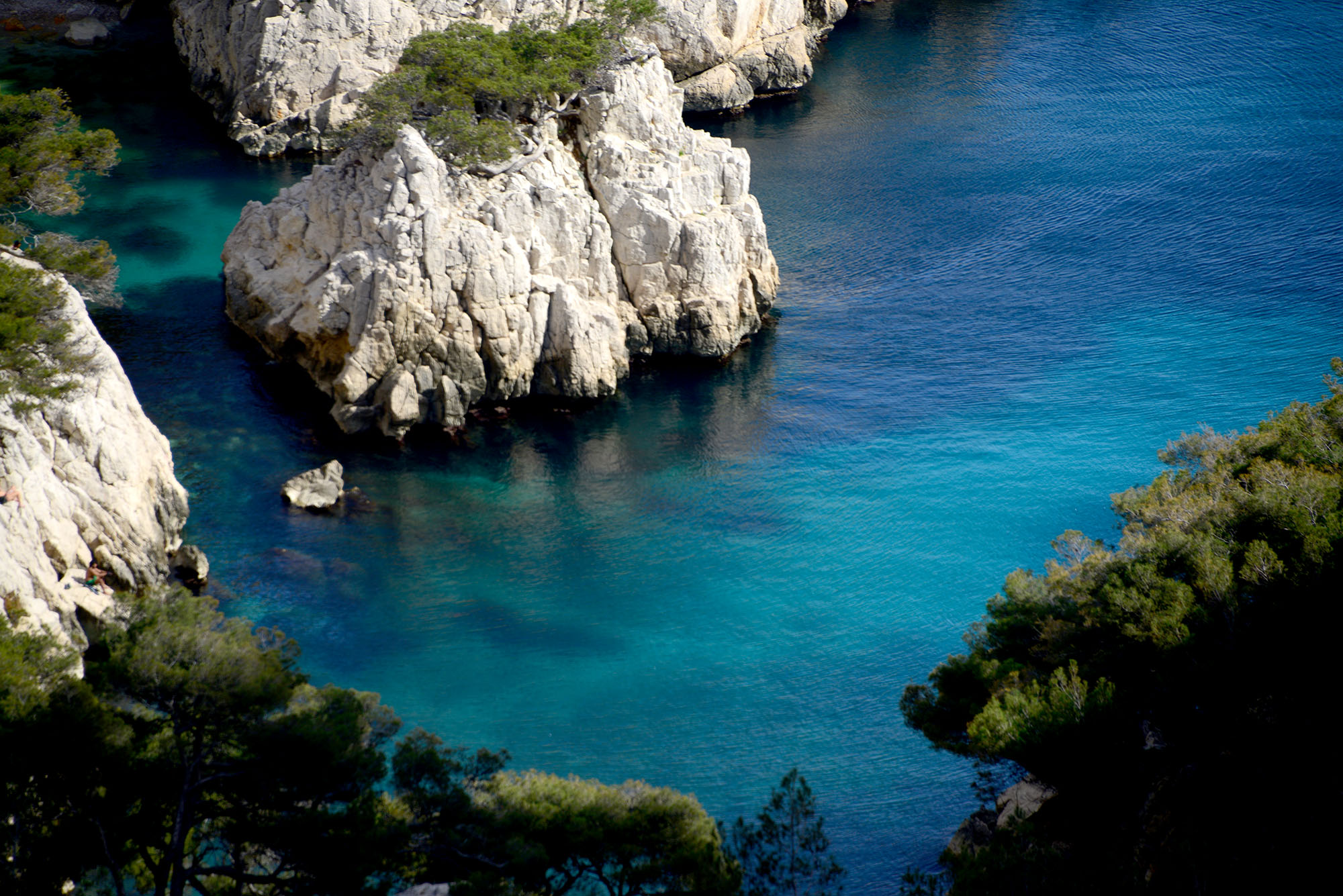
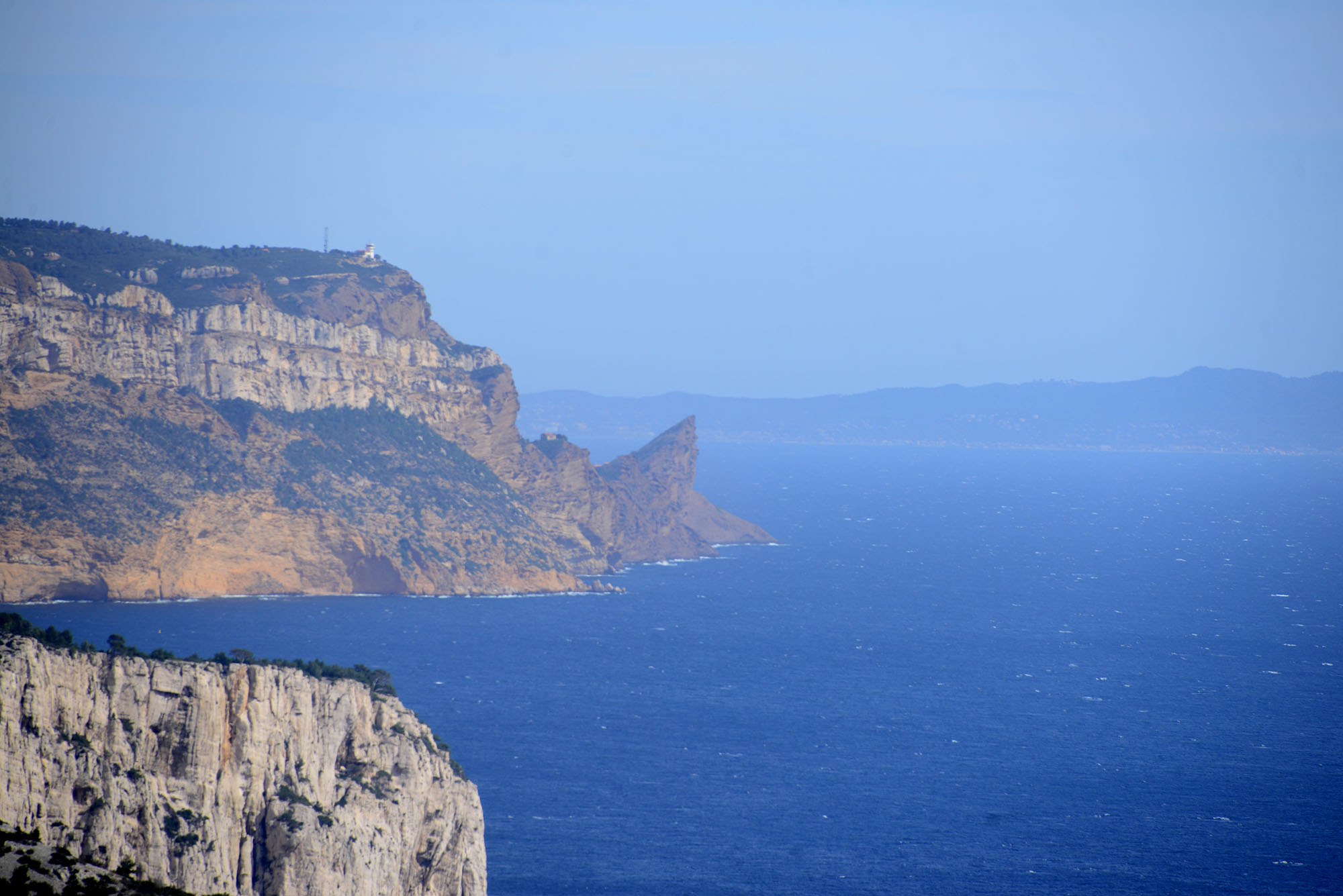
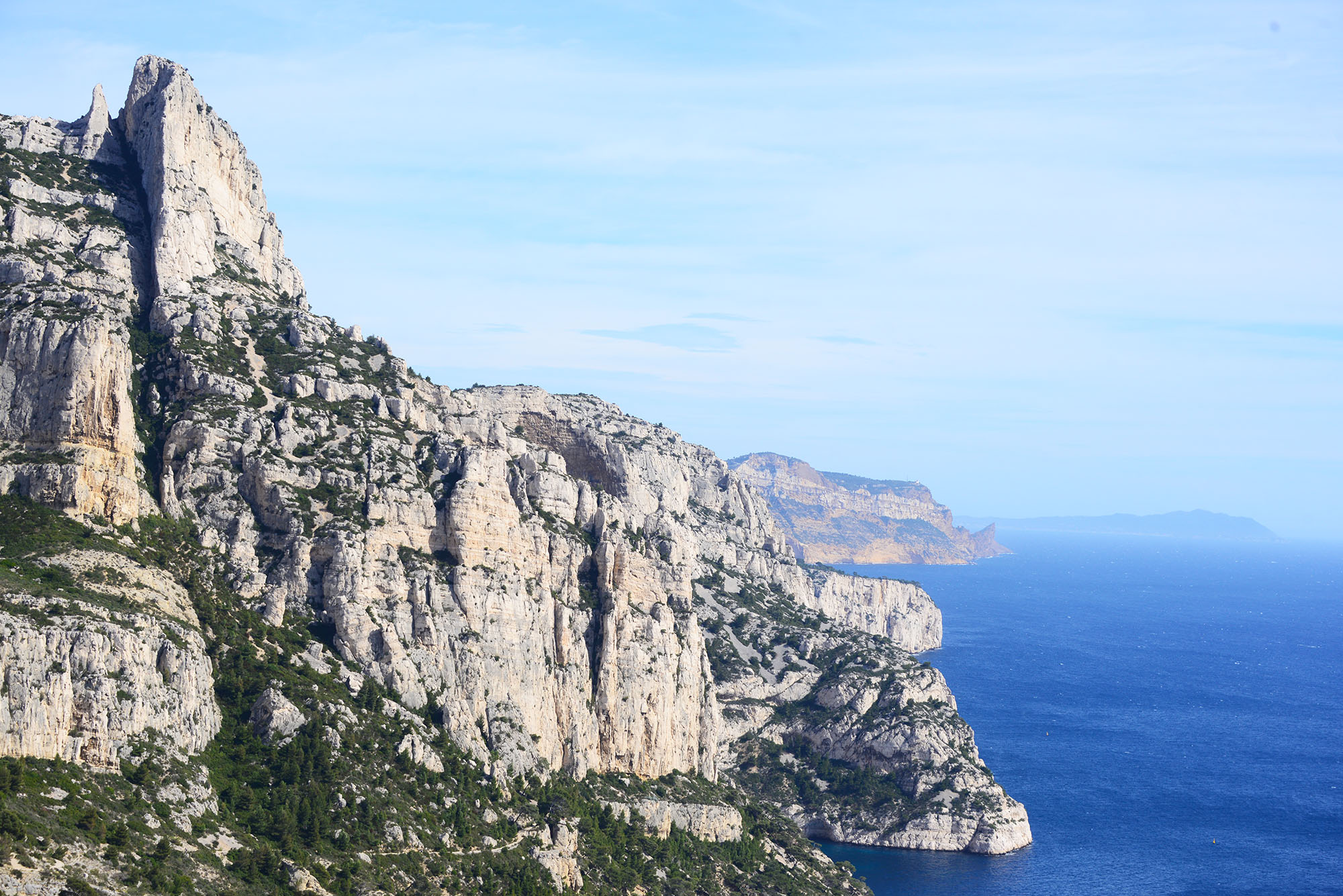
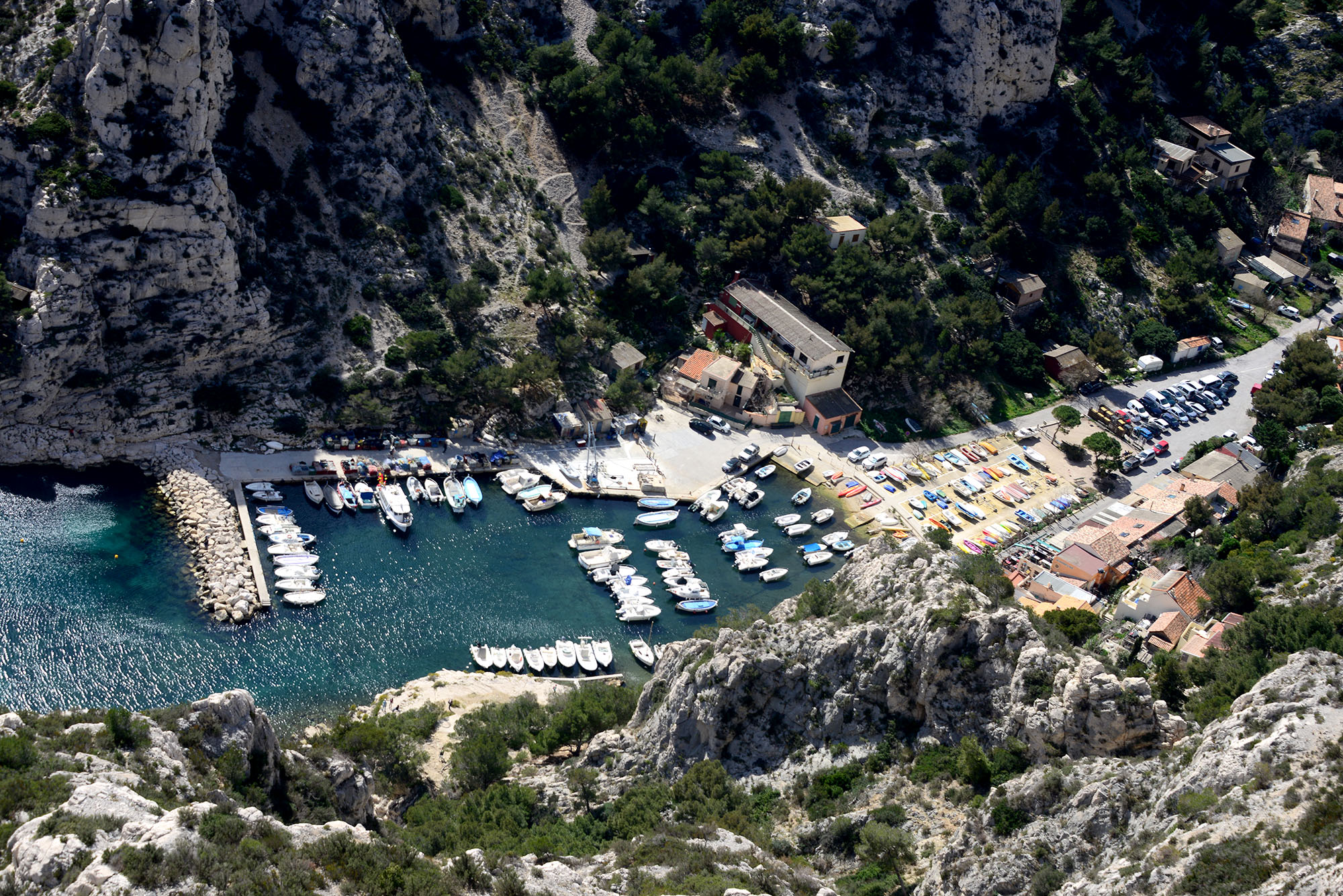
Those rocks are the Calanques. Calanques are Karstic rock formations- fourteen-year-old me whelps with glee, for nothing excited me more than rattling off Karstic rock formation types in geography class, yes, I was insufferable from an early age. Calanques are steep sided valleys created by fluvial erosion, or cave roofs collapsing, which are then partially covered by a rise in sea level. The Parc National des Calanques is close enough to Marseille to be considered almost a city trek, though, in fact, some of the terrain is quite challenging, and several of the rock faces are training spots for climbers. One of the easiest to reach is the Calanque de Sugiton, on a trail leading from the Luminy University Campus, but those with a taste for danger can do a comprehensive calanque hike from Marseille all the way to La Ciotat. Our taste for danger is limited to trying hitherto unexplored types of vin rouge, possibly with a platter of charcuterie, under the balmy Mediterranean sun, considering whether to pour another glass of wine, or start a revolution.
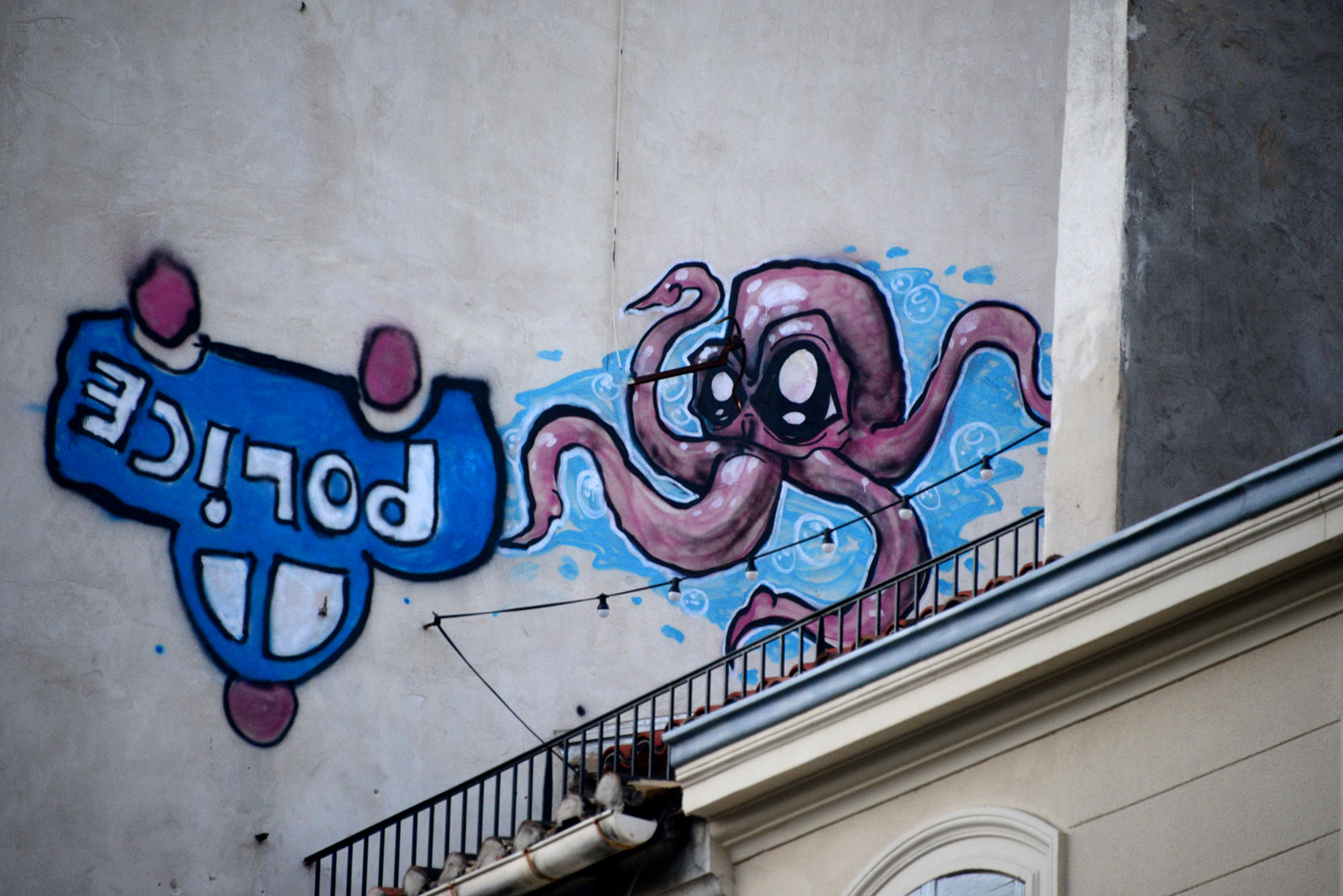
A touch of practicalities: We had fine coffee in Deep Coffee Roasters, and they come side by side with the entertainingly named Poulpe Fiction, where you can find a wide range on un-tacky souvenirs. The Senegalese restaurant that will forever be haunted by the man who drank pastis with no water is Ziguinchor, and we had a nice lunch with a view in Ciel Rooftop-do book ahead, because everyone else wants that view too. The Grand Halles du Vieux Port is a food court the French way, so just a little fancier than our plain old food courts, and nearby you can also buy food for thought at the Librairie des Arcenaulx Jeanne Laffitte. The French are partial to a good graphic novel, and Librairie Tsundoku has a great selection, but to the industrious photographer great chagrin, hardly any of it is in English. Entry to the Cité Radieuse is free, but you need to sign the visitor roster on the ground floor. The Luminy Campus, from where you can hike to the Calanques, can be reached by bus B1 from the Castellane station- the same bus also takes you to the Cité Radieuse and Stade Velodrome.












 Pocket Diary Budapest